How media fueled the racist riots: coordinated narratives turned a police operation into a public threat.
by Massimo Introvigne
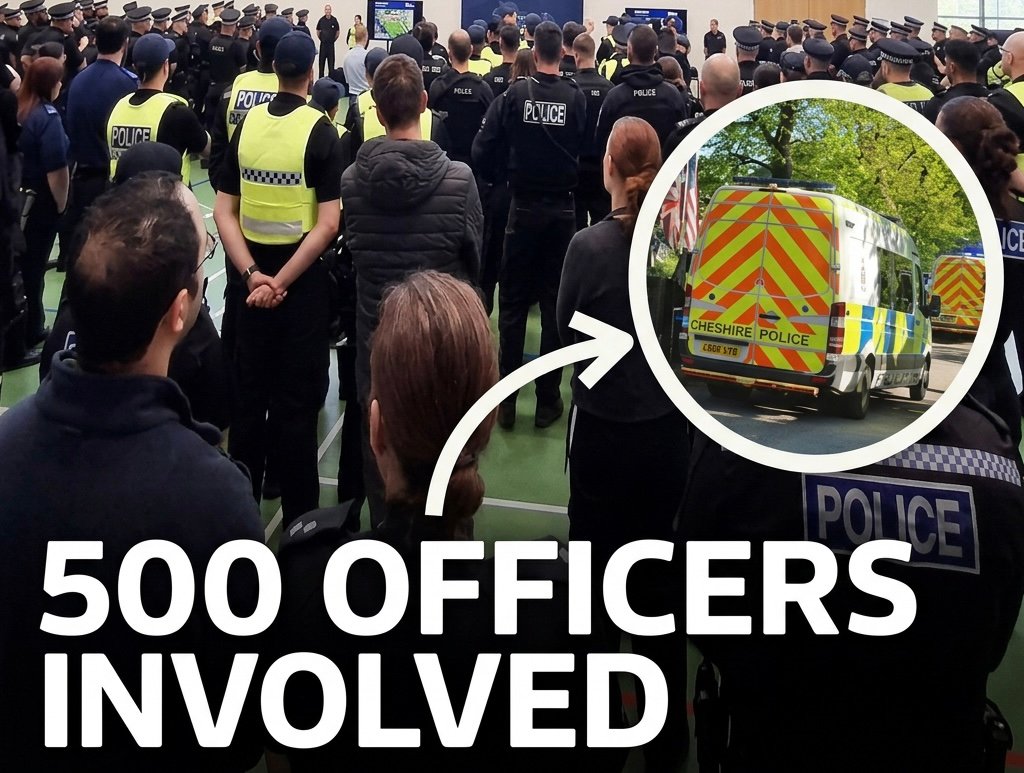
The raid on the Ahmadi Religion of Peace and Light (AROPL) in Crewe on April 29, 2026, was already extraordinary in scale. What followed in the hours and days after the operation revealed a second phenomenon that demands equal attention: the rapid construction of a media narrative that shaped public perception before any judicial process had begun. The speed, tone, and coordination of the coverage created a climate in which a vulnerable minority religion found itself exposed to hostility, suspicion, and danger. The consequences of this environment were immediate and severe—racist riots and violence, as detailed in a previous article—, and they raise questions that go far beyond a single police action. They concern the responsibility of the press, the ethics of reporting during active investigations, and the fragile position of minority faiths when powerful institutions converge on a single storyline.
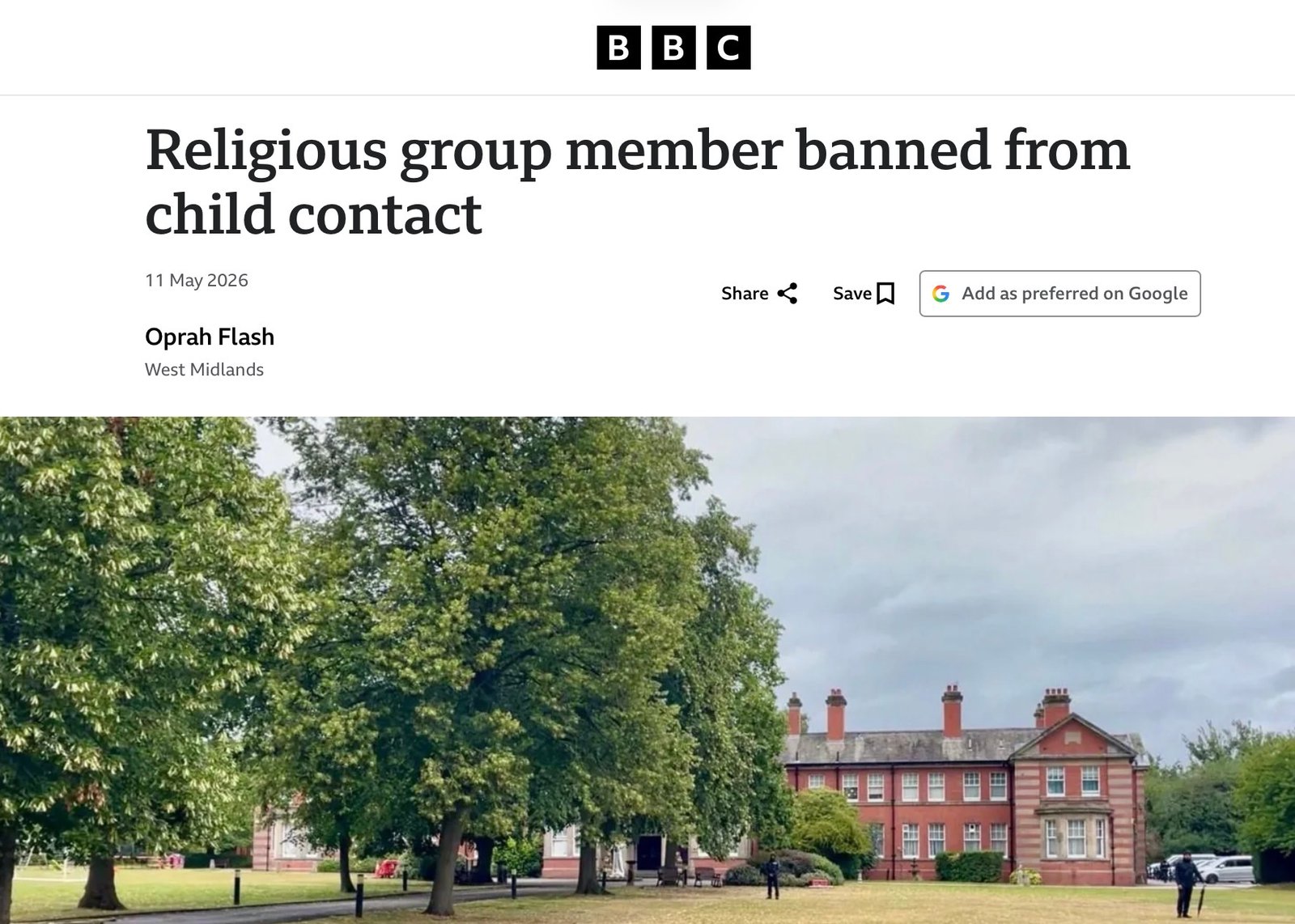
Within minutes of the first forced entry at Webb House, major outlets across the United Kingdom and abroad published headlines that treated allegations as established facts. The BBC announced that a member of the community had been banned from contact with children, a framing that suggested sexual misconduct even though no such charge had been filed. The article used the individual’s full name, exposing him to reputational harm at a moment when his health was already precarious. “The Telegraph” described the religion as a fanatical sect and invoked imagery that echoed the vocabulary of anti‑cult activists and anti-immigration far‑right groups. Local outlets repeated claims of sexual offences, modern slavery, and forced marriage as if they were confirmed realities. “The Washington Examiner” went further, presenting the community as a “heretical Muslim cult” whose members were accused of a catalogue of crimes. These portrayals circulated globally before any evidence had been presented in court.
The timing of the coverage raises questions that cannot be ignored. “Sky News” began broadcasting details of the operation at 09:10 GMT, barely twenty minutes after the raid began. The network possessed information about the number of officers involved, the number of properties targeted, the alleged offences, and even drone footage of the forced entry. Such material does not appear spontaneously. It suggests preparation, access, and a level of coordination that goes beyond routine reporting. Other outlets contacted the community in rapid succession, each with narratives already formed and deadlines so compressed that meaningful responses were nearly impossible. The pattern resembled a synchronized media rollout rather than independent journalistic inquiry.
Inconsistencies between police statements and media reporting added to the confusion. Cheshire Constabulary initially announced that ten individuals had been arrested during the raid, including a Mexican national. Later reporting revealed that this person had not been present at Webb House and was arrested more than a week later. Yet the earlier figure had already shaped public perception. When the tenth arrest was finally made, it appeared to confirm an expanding investigation, even though the individual had been listed in the original warrant. These discrepancies contributed to an atmosphere in which the public believed that new revelations were emerging, when in reality the narrative had been set from the beginning.
The repeated use of the word “cult” played a decisive role in shaping public sentiment. Scholars of new religious movements have long documented the emotional power of this label. It evokes danger, manipulation, and criminality, regardless of evidence. When major publications deploy the term during an active investigation, it becomes a tool of social conditioning. “The Telegraph” reference to a “Temple of Doom Cult” was especially consequential. It circulated widely on social media, where it merged with existing prejudices and conspiracy theories. The combination of the word “cult” with allegations of slavery, sexual offences, and forced marriage created an impression of guilt that no subsequent clarification could easily undo.
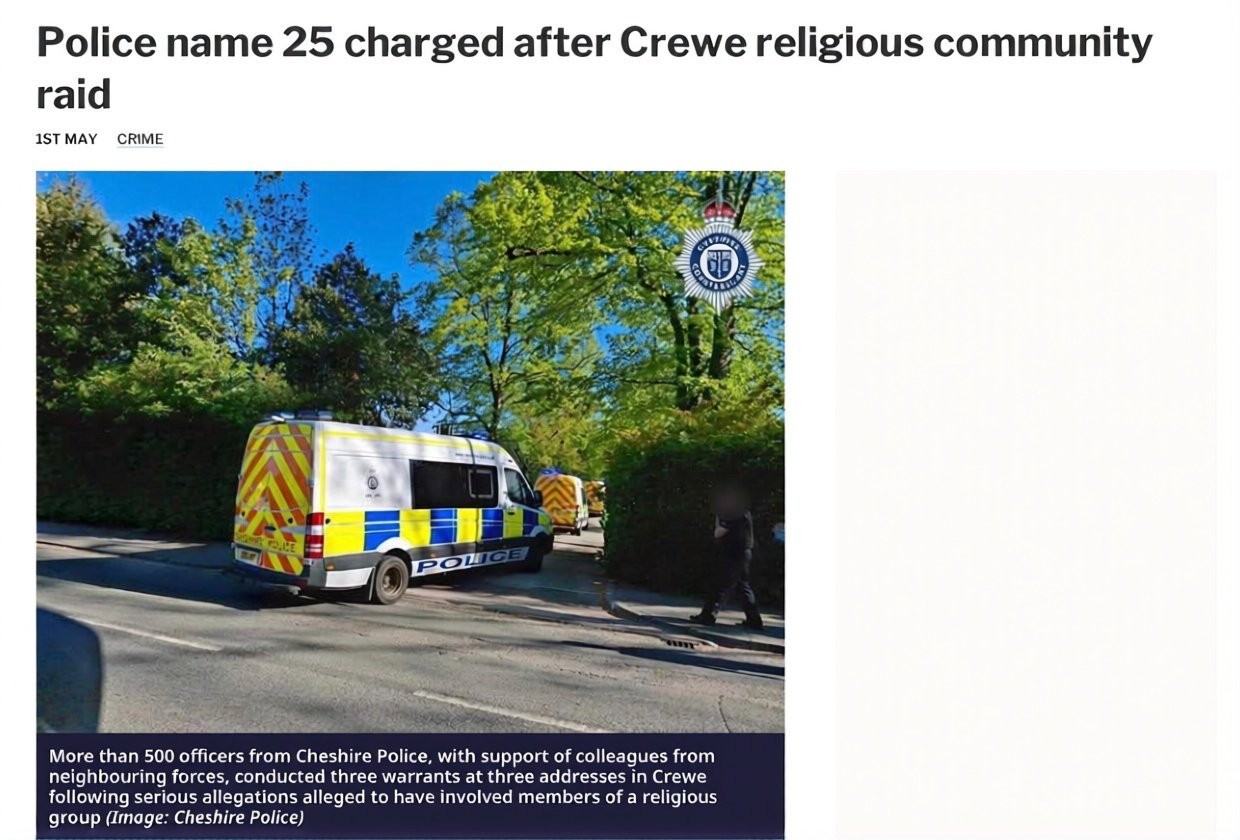
The dissemination of police‑generated footage deepened these concerns. “BBC News” broadcast images bearing Cheshire Constabulary insignia, including drone shots and forced‑entry recordings. “The Guardian” published photographs of officers assembled before the raid. The speed with which these materials appeared suggests that distribution channels were prepared in advance. When law enforcement and media collaborate in this way, the line between reporting and public relations becomes blurred. The public receives a narrative shaped by images of force, urgency, and danger, even when no charges have been filed.
The release of names before any formal accusation added another layer of harm. Cheshire Constabulary published the identities of those arrested only two days after the raid. Once names are linked to allegations involving slavery or sexual offences, the stigma becomes nearly permanent. Even if no charges are ever brought, the association remains. For a minority religion already facing hostility from far‑right groups and fundamentalist critics, this exposure created immediate risks. Members reported harassment, intimidation, and threats. Some were filmed in public. Others were followed. Many limited their movements. The climate of fear was not an accidental by‑product of the raid. It was the predictable outcome of a media environment that amplified suspicion and hostility.
The events in Crewe illustrate how powerful institutions can shape public perception when they act in concert. A dramatic police operation signals danger. Sensational headlines reinforce the signal. Online platforms magnify it. Prejudices already present in society find new targets. The result is a form of moral panic that places vulnerable communities at risk. Scholars of moral panic have documented this pattern for decades. The Crewe case follows it with unsettling precision.
The responsibility of the media in such situations is immense. Reporting during an active investigation requires restraint, accuracy, and awareness of the potential consequences. When allegations are presented as facts, when labels with heavy emotional weight are used without justification, and when operational footage is broadcast before courts have examined evidence, the press becomes an actor in the unfolding drama rather than an observer. The consequences for the Ahmadi Religion of Peace and Light were immediate. The community found itself exposed to hostility, vandalism, and violence. The climate created by the coverage contributed directly to the dangers its members faced.
The protection of religious freedom depends on more than legal guarantees. It requires a media environment that does not place minority faiths at risk through careless or sensational reporting. The events surrounding the raid on Webb House show how fragile this protection can be. They also show how urgently accountability and ethical reflection are needed. A society that values fairness cannot allow headlines to become weapons. The consequences are too serious, and the damage too deep, for silence to follow.

Massimo Introvigne (born June 14, 1955 in Rome) is an Italian sociologist of religions. He is the founder and managing director of the Center for Studies on New Religions (CESNUR), an international network of scholars who study new religious movements. Introvigne is the author of some 70 books and more than 100 articles in the field of sociology of religion. He was the main author of the Enciclopedia delle religioni in Italia (Encyclopedia of Religions in Italy). He is a member of the editorial board for the Interdisciplinary Journal of Research on Religion and of the executive board of University of Pennsylvania Press’ Nova Religio. From January 5 to December 31, 2011, he has served as the “Representative on combating racism, xenophobia and discrimination, with a special focus on discrimination against Christians and members of other religions” of the Organization for Security and Co-operation in Europe (OSCE). From 2012 to 2015 he served as chairperson of the Observatory of Religious Liberty, instituted by the Italian Ministry of Foreign Affairs in order to monitor problems of religious liberty on a worldwide scale.