A Russian spiritual teacher, a young mother who rejects the label of victim, a bizarre prosecutor, and a gravely ill defendant prompted us to act.
by Stephen Eric Bronner

A courtroom in Patagonia may seem distant from the crises our organization usually confronts. For more than a year, however, the federal justice system of Argentina has hosted a dispute that touches religious liberty, the long reach of Russian repression, and the limits of prosecutorial zeal, at the expense of a gravely ill man and of a young mother who refuses to be told who she is.
The American Council on Justice and Conflict Resolution (ACJCR), which I lead as President and Executive Director, was established to serve citizens caught in crisis. From our office in Fort Lee, New Jersey, we bring together analysts, activists, diplomats, scientists, scholars, journalists, and educators who examine scenarios and options, help negotiations move forward, and act as an unofficial conduit where official exchanges are impossible. Our symposia, seminars, and podcasts gather the most unlikely partners around complex issues, and our network of non-governmental organizations and civil society representatives in many countries allows us to intervene wherever human rights are threatened.
On October 13, 2026, ACJCR filed a disciplinary complaint with Argentina’s Office of the Attorney General (Procuración General de la Nación) concerning Oscar Fernando Arrigo, the Chief Prosecutor who heads the federal prosecutor’s office in San Carlos de Bariloche and provisionally coordinates the General Roca district. Readers who have never heard of him, or of the man his office has prosecuted, deserve a brief account.
Konstantin Rudnev is a Russian spiritual teacher and dissident and the founder of a spiritual school known as Ashram Shambala. In Russia, independent religious groups are routinely branded as “cults,” and their leaders end up in court on false charges. He was convicted, imprisoned, and served his full sentence. He later moved to Argentina, where in 2025 he was arrested and charged with human trafficking under article 145 bis of the Argentine Criminal Code.
The alleged victim of that trafficking is Elena Makarova, a young Russian woman who traveled to Argentina to give birth as thousands of Russian women do every year so that their children may acquire Argentinian citizenship. She has rejected the role assigned to her from the start. In a handwritten letter of June 2025 addressed to the judge, she wrote that she had never been a victim of Rudnev and asked to be removed from the list of victims, and in several filings in September 2025 she described pressure to accept that label, weeks of isolation with her newborn child in a federal shelter, and obstacles in reaching her lawyer. According to her later submissions, the prosecutor’s office received the letter. It did not forward it to the judge, and a criminal case was opened against her attorney after he defended her account of events.
Rudnev, meanwhile, spent long months in the high-security federal prison of Rawson. Twice Argentine judges found that house arrest with electronic monitoring would be enough to neutralize any procedural risk, first in October 2025 and again in April 2026. The prosecutor’s office appealed both times and obtained a reversal from the review judges in October 2025 and from the Federal Chamber of Cassation in June 2026. In between, the National Ministry of Security certified that his home in the province of Buenos Aires was suitable for electronic monitoring, and a court authorized his transfer to a hospital after finding that the prison’s medical unit could not treat him.
His health, already fragile, deteriorated sharply. Medical reports filed in 2026 describe severe nerve damage in both hands, hypertensive heart disease that raises the risk of stroke, a narrowing of the spinal canal that has left all four limbs weak, a suspected transient ischemic attack, and three surgeries between May and September. After the Cassation ruling, he remained at home while further medical evaluations were pending, and the prosecutors continued to press for his return to prison. On October 8, 2026, the official experts of the Forensic Medical Corps of the federal judiciary, who had examined him at home a week earlier, concluded that he “does not meet the physical conditions to remain held in a penitentiary establishment.”

Our council decided to act for reasons at the heart of its mission. A foreign religious dissident from a country with a well-documented record of persecuting minority faiths, a woman who insists she is free and unharmed, and a defendant
whom the state’s own doctors declare unfit for prison all have a claim on the fairness of Argentine justice. Mediation and crisis work teach that conflicts escalate wherever one side stops listening, and this case shows what happens inside a legal system once that occurs.
Our filing leaves judicial decisions to the judges, who alone answer for them, and concentrates on the conduct of the prosecution, namely its motions, its arguments, and the weight it gave to the information in the file at each stage. Its central question is whether the repeated requests for imprisonment rested on a concrete assessment of risks or on a position fixed in advance that no new evidence could move. Argentina’s Organic Law of the Public Prosecutor’s Office imposes a duty of objectivity, and the Federal Code of Criminal Procedure makes pretrial detention exceptional. The same principles appear in article 7 of the American Convention on Human Rights, in article 9.3 of the International Covenant on Civil and Political Rights, in the United Nations Standard Minimum Rules for the Treatment of Prisoners, known as the Nelson Mandela Rules, and in the Argentine law that guarantees persons presented as victims the right to be heard.
Deputy prosecutors, including Tomás Labal and Gustavo Révora, argued at the hearings, and every position came from the office Arrigo heads. We therefore asked the disciplinary authorities to establish whether Arrigo set, approved, or tolerated that line as head of the office and coordinator of the district. We want the prosecutor’s conduct reviewed against his legal duties, and disciplinary proceedings opened if the facts are confirmed, Arrigo sanctioned as appropriate and replaced in the case.
Conflict resolution starts with a simple discipline: the willingness to hear what the other side is saying. Elena Makarova has offered the same version for more than a year, and Argentine state forensic experts have now confirmed what Rudnev’s doctors reported.
Argentina built a proud tradition of human rights advocacy in the years after the dictatorship, thanks to people who refused to accept that institutions could stop listening. Our complaint asks its prosecutors to honor that tradition in Bariloche.
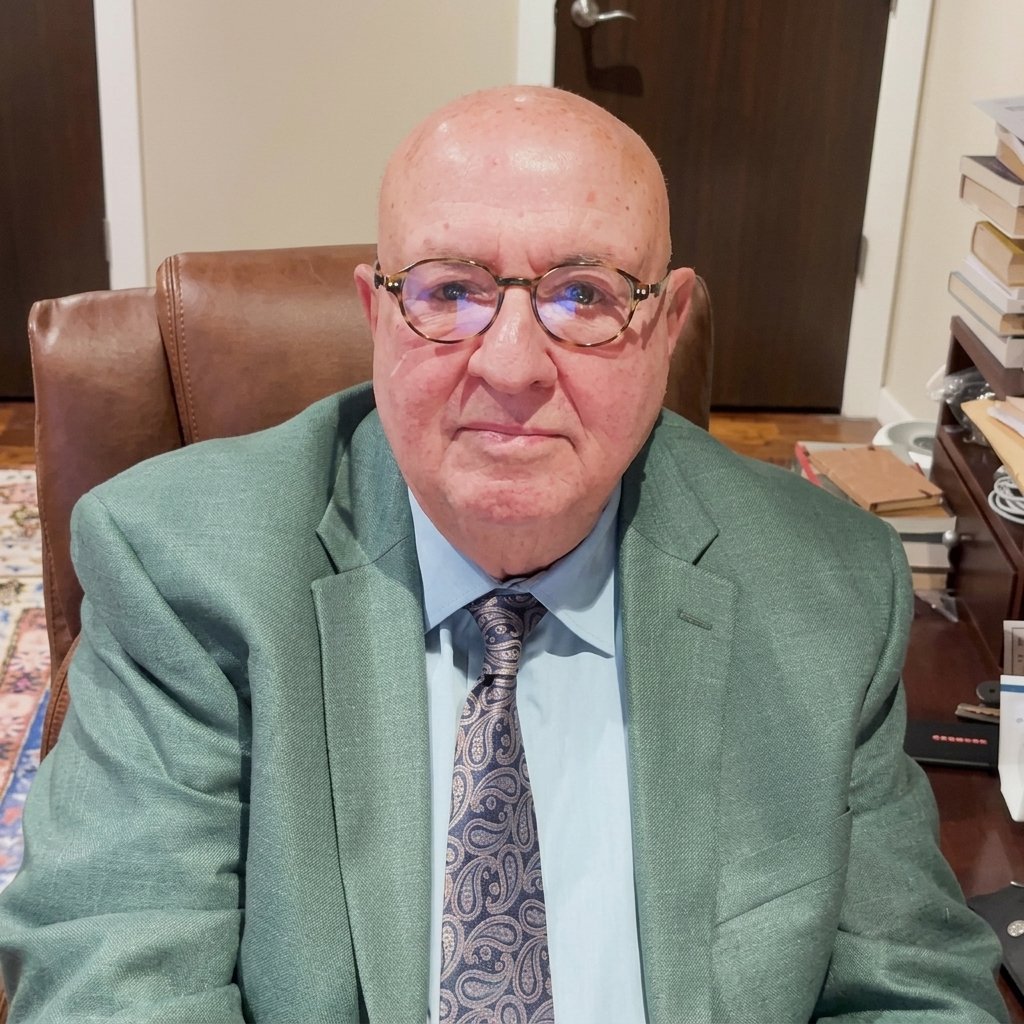
Stephen Eric Bronner is Board of Governors Distinguished Professor Emeritus of Political Science at Rutgers University and President and Executive Director of the American Council for Justice and Conflict Resolution. He received his Ph.D. from the University of California, Berkeley. He chairs the Social Scientific Experts of the European Council for Democracy Development, directs the Independent Experts Peace Initiatives, and is an Affiliate Distinguished Fellow of the Center for the Study of Genocide and Human Rights. He has received the Charles E. McCoy Lifetime Achievement Award of the Caucus for a New Political Science (APSA) and the MEPEACE Award for Contributions to Peace. His many books, translated into several languages, include “A Rumor about the Jews: Anti-Semitism, Conspiracy, and the ‘Protocols of Zion’” (Oxford University Press), “Camus: Portrait of a Moralist” (University of Chicago Press), “Reclaiming the Enlightenment” (Columbia University Press) and “The Bigot: Why Prejudice Persists’ (Yale University Press).