Scholars and human rights leaders ask to reassess the evidence and take the defendant’s health into account.
By Bitter Winter
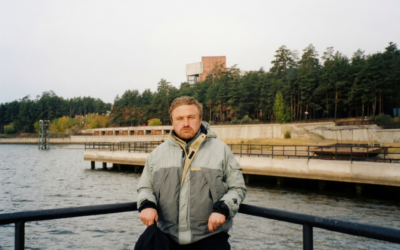
We, the undersigned, are scholars from several countries who specialize in the study of new religious movements, minority spiritual groups, and religious freedom. Many of us have studied these groups for decades, in academic settings and, in some cases, as expert witnesses before courts. We write with respect for Argentina’s institutions and for the independence of its judiciary. We do not ask the authorities to reach any particular conclusion about the facts under investigation in the case of Konstantin Rudnev, which only a fair trial can establish.
Our field has taught us how easily people who are labeled “cult leaders” can become targets of accusations that are hard to verify and harder to correct. The labels “cult” and “brainwashing” were long ago abandoned by mainstream social science as unscientific. Yet once these labels are attached to a defendant, they tend to create a presumption of guilt that precedes the evidence. Unverified stories move quickly from one country to another, from media reports to official documents and back again. A defendant who belongs to a small and unfamiliar spiritual tradition may find it difficult to obtain the fair hearing to which every person is entitled.
Mr. Rudnev’s case shows several of these risks. Much of the information that has circulated about him originated in the Russian Federation, where he was tried and convicted. International human rights bodies have repeatedly expressed concern about how Russian courts treat religious and spiritual minorities. Statements originating there, along with sensational media reports in several countries, have shaped public perception of the case in Argentina. The only person identified as a victim in the proceedings has publicly and repeatedly denied being one. We believe her statements deserve to be heard and carefully weighed.
We note with concern that, according to the information available to us, the drug-related charge is still being pursued and relied on in court, although the laboratory analyses of the substances seized from the defendants did not identify any illicit drugs. A charge that the evidence does not appear to support should not continue to weigh on a defendant’s position, or on decisions concerning his liberty.
We are also concerned about the length of the investigation. Mr. Rudnev has been deprived of his liberty since March 2025, and we understand that he has been offered a plea agreement that would require him to admit offenses he firmly denies. Prolonged pre-trial detention, combined with the offer of an abbreviated procedure based on a confession, can easily become a form of pressure on the accused. Argentine scholars and human rights organizations have themselves raised this concern about the country’s criminal justice system. A confession obtained in such circumstances would serve neither justice nor the credibility of Argentina’s institutions.
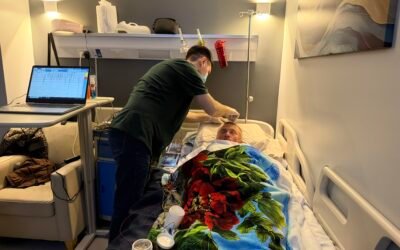
Finally, we are concerned about Mr. Rudnev’s health. He suffers from serious medical conditions that have required repeated surgery. We are informed that the forensic doctors of Argentina’s Supreme Court have concluded that he cannot be held in an ordinary prison ward. The United Nations Standard Minimum Rules for Non-custodial Measures (the Tokyo Rules) and the United Nations Standard Minimum Rules for the Treatment of Prisoners (the Nelson Mandela Rules), which Argentina helped to draft, require pre-trial detention to be a measure of last resort and require that it respect the dignity and health of the accused.
We therefore respectfully call on the Argentine authorities to:
- Ensure that Mr. Rudnev is judged solely on evidence lawfully obtained and tested in an adversarial proceeding, and not on foreign allegations or media narratives that have not been independently verified.
- Give full weight to the statements of the person identified as the alleged victim.
- Reassess any charge that the evidence collected so far does not support, including the drug-related charge.
- Take his health conditions fully into account in every decision regarding his detention, in line with medical advice and international standards.
- Ensure that the proceedings advance within a reasonable time, and that no pressure is placed on the accused to admit guilt as a condition for regaining his liberty.
- Release Mr. Rudnev if there are insufficient grounds for his continued detention, and, should the evidence prove insufficient to sustain the prosecution, discontinue the proceedings and close the case against him.
We are confident that Argentina, a country with a strong democratic tradition and a long commitment to human rights, will make sure that this case is decided fairly.
November 28, 2026
Juana Aguilera, president, Ethical Commission Against Torture, Santiago de Chile, Chile
Alessandro Amicarelli, president, European Federation for Freedom of Belief, London, United Kingdom
Eileen Barker, OBE, Professor Emerita of Sociology, London School of Economics, London, United Kingdom
David Bromley, founder and director, World Religions and Spirituality Project, Richmond, Virginia
Stephen Eric Bronner, Distinguished Professor Emeritus of Political Science, Rutgers University, New Brunswick, New Jersey
Bernard Doherty, Associate Head of School, School of Theology, Charles Sturt University, Canberra, Australia
Willy Fautré, co-founder and director, Human Rights Without Frontiers, Brussels, Belgium
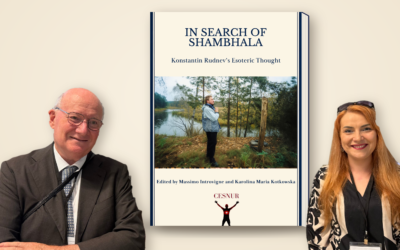
Massimo Introvigne, managing director, Center for Studies on New Religions, Torino, Italy
Karolina Maria Kotkowska, Assistant Professor, Institute of Comparative Studies of Civilizations, Jagiellonian University, Krakow, Poland
Márk Nemes, deputy director, Center for Studies on New Religions, Torino, Italy; researcher, Hungarian Academy of Arts – Research Institute of Art Theory and Methodology, Budapest, Hungary
Susan Palmer, Affiliate Professor, Concordia University, Montreal, Quebec, Canada
Marco Respinti, director-in-charge, “Bitter Winter,” Milan, Italy
Aaron Rhodes, international human rights activist and author, Hamburg, Germany
James T. Richardson, Emeritus Foundation Professor of Sociology and Judicial Studies, University of Nevada, Reno
Bernardette Rigal-Cellard, Professor Emerita of North American Studies and Sciences of Religion and Society, Université Bordeaux Montaigne, Bordeaux, France
Rosita Šorytė, board member, European Federation for Freedom of Belief, Turin and Rome, Italy
Thierry Valle, president, Coordination des associations et des particuliers pour la liberté de conscience, Paris, France
María Vardé, Instituto de Ciencias Antropológicas, Universidad de Buenos Aires, Argentina
René Wadlow, president, Association of World Citizens, Novato, California
Catherine Wessinger, Professor Emerita of Religious Studies, Loyola University New Orleans, New Orleans, Louisiana
Stuart Wright, Emeritus Professor of Sociology, Lamar University, Beaumont, Texas

Bitter Winter reports on how religions are allowed, or not allowed, to operate in China and how some are severely persecuted after they are labeled as “xie jiao,” or heterodox teachings. We publish news difficult to find elsewhere, analyses, and debates.
Placed under the editorship of Massimo Introvigne, one of the most well-known scholars of religion internationally, “Bitter Winter” is a cooperative enterprise by scholars, human rights activists, and members of religious organizations persecuted in China (some of them have elected, for obvious reasons, to remain anonymous).