CAP-LC warns that expanding coercion to “psychological influence” endangers spiritual, therapeutic, and self-development communities.
by Massimo Introvigne
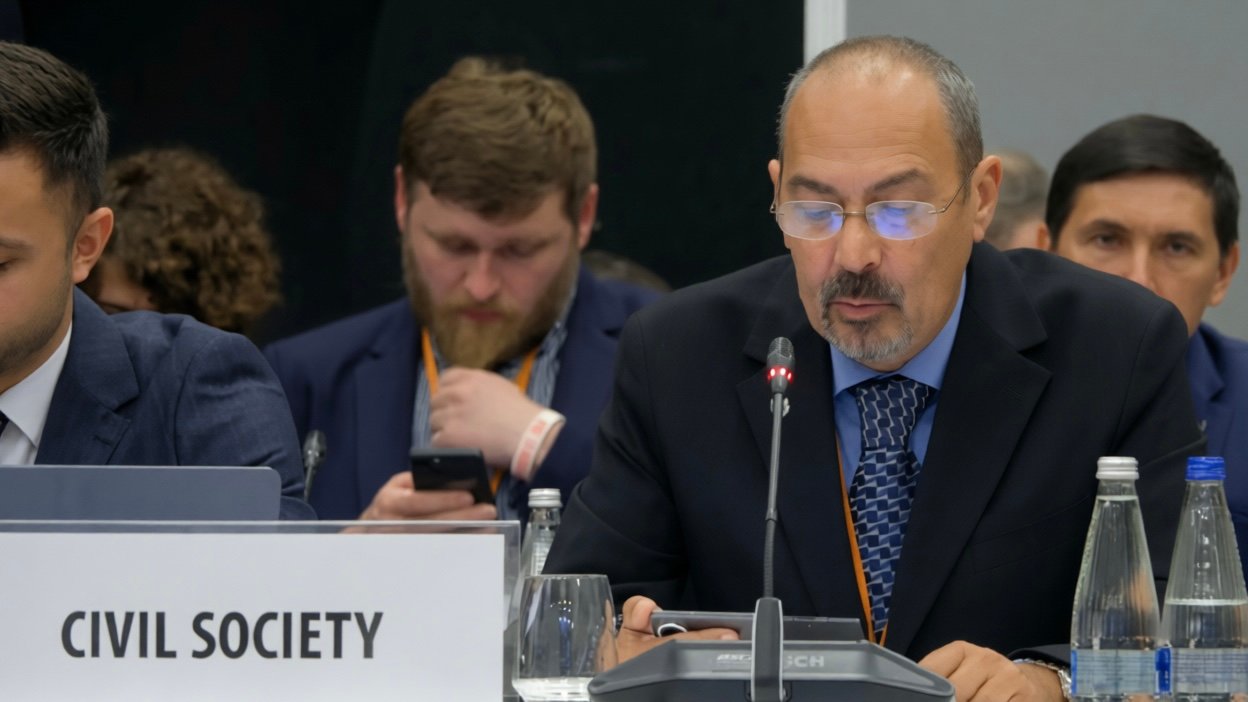
The Warsaw OSCE-ODIHR Human Dimension Conference has its own rhythm. Diplomats, state representatives, and civil society organizations move from one plenary session to another, revisiting themes that have shaped OSCE history. Fundamental freedoms, freedom of peaceful assembly and association, the role of human rights defenders, national human rights institutions, and freedom of thought, conscience, religion or belief form a familiar constellation. This year, however, an ECOSOC-accredited NGO brought to Warsaw a concern born in the United States and already discussed at the United Nations in Geneva.
Coordination des Associations et des Particuliers pour la Liberté de Conscience (CAP-LC), a longstanding watchdog for freedom of religion or belief, delivered an oral statement at Plenary Session 3. The text was concise and precise, yet it opened a window on a development that may affect religious, therapeutic, and self-development communities far beyond the borders of the United States.
CAP-LC stated: “CAP-LC draws attention to a development within the United States that raises significant concerns. Recent applications of the Trafficking Victims Protection Act (TVPA) have extended the notion of coercion into areas involving spiritual instruction and communal life. In the federal OneTaste case, two individuals received severe prison sentences although no physical compulsion, threats, or restraint were alleged.”
The organization did not limit itself to describing the OneTaste case, familiar to “Bitter Winter” readers. It added: “The proceedings relied on psychological influence and on theories of coercive persuasion that academic experts and courts have long rejected. Testimonies from participants reporting no harm were not admitted. This approach creates a precedent that may expose religious, therapeutic, and self-development communities to civil or criminal liability based on subjective reinterpretations of belief and belonging.” CAP-LC urged the United States Congress, currently reauthorizing the TVPA, “to adopt safeguards ensuring that trafficking legislation remains directed at genuine exploitation.” With an eye on the pending appeal in the OneTaste case, CAP-LC also mentioned that “A careful review of the sentences imposed would also reflect humanitarian considerations and reinforce OSCE-recommended commitments to human rights and fundamental freedoms.”
These few lines condense years of debate. OneTaste, a movement founded in San Francisco and associated with teachings on female sexual awareness and meditation, rooted in Buddhist, Hindu, and Western esoteric teachings, has already attracted the attention of scholars of religion, legal experts, and human rights advocates. In previous interventions at the United Nations Human Rights Council, CAP-LC described how the federal prosecution relied on theories of psychological manipulation and coercive persuasion. Academic literature has repeatedly criticized these concepts, and courts in several jurisdictions have rejected them. The convictions of Nicole Daedone and Rachel Cherwitz, and the length of the sentences imposed, were presented as symptoms of a broader trend in the interpretation of trafficking law.
The Trafficking Victims Protection Act (TVPA) was enacted to address forced prostitution, debt bondage, document servitude, and exploitation of vulnerable individuals by organized crime. Over time, prosecutors have tried to extend its reach to situations where physical restraint is absent and where the alleged harm consists of spiritual fears, communal expectations, or emotional dependence. In the OneTaste case, participants were acknowledged to be free to leave. No physical compulsion was alleged. The prosecution’s theory rested on the idea that spiritual authority, communal belonging, and expectations of loyalty could amount to serious harm sufficient to support forced-labor charges.
CAP-LC has consistently argued that this approach departs from the warning expressed by the U.S. Supreme Court in “Kozminski,” where psychological pressure alone was regarded as insufficient to constitute involuntary servitude. The NGO has also recalled that the reference to “psychological harm” in the TVPA was originally intended for sex and immigrant trafficking, not for spiritual or self-help groups. Extending the statute to cover ordinary forms of spiritual instruction and communal life risks transforming trafficking law into a tool for policing belief, teaching, and voluntary service.
Warsaw offered a different institutional setting from Geneva, yet the concern remained the same. OSCE commitments on freedom of thought, conscience, religion or belief, and on the protection of human rights are often invoked in relation to traditional religious minorities, new religious movements, and civil society organizations. CAP-LC’s statement invited participating States to consider how domestic legislation on trafficking and forced labor may affect these communities.

The reference to “subjective reinterpretations of belief and belonging” pointed to a danger already familiar to scholars of new religious movements: the tendency to treat personal dissatisfaction, retrospective reinterpretation of past experiences, or conflicts with former leaders as evidence of coercion.
The Warsaw statement’s reference to excluding testimonies from participants reporting no harm illustrates another problem. Trials involving spiritual or therapeutic communities often attract media attention and public controversy. In such a climate, courts may be tempted to privilege narratives of victimization and to disregard accounts of ordinary membership, voluntary participation, and perceived benefits. CAP-LC’s intervention suggested that a balanced assessment of evidence requires listening to both those who claim harm and those who describe their experience as freely chosen and meaningful.
The Warsaw Human Dimension Conference is organized by the OSCE (Organization for Security and Cooperation in Europe) Office for Democratic Institutions and Human Rights (ODIHR), which has produced guidelines and recommendations on freedom of religion or belief and on the role of human rights defenders. CAP-LC’s oral statement implicitly connected the OneTaste case to these documents. Trafficking legislation directed at genuine exploitation is compatible with OSCE standards. Trafficking legislation extended to cover spiritual instruction and communal life based on contested theories of coercive persuasion may undermine them.
The appeal to the United States Congress, currently reauthorizing the TVPA, carried a legislative dimension. CAP-LC urged lawmakers to adopt safeguards that would prevent the statute from being used against peaceful spiritual, therapeutic, and self-development communities. Such safeguards might include explicit references to physical or material constraints, clearer definitions of serious harm, and limits on using psychological influence as a basis for forced-labor charges. The call for a careful review of the sentences imposed in the OneTaste case added a humanitarian dimension, reminding the audience that freedom of belief and proportionality in punishment are intertwined.
OSCE conferences often host a variety of voices. Some NGOs focus on traditional human rights issues, others on emerging concerns linked to technology, migration, or climate. CAP-LC’s intervention brought to Warsaw a topic that may appear technical at first sight yet touches the core of freedom of conscience. Spiritual, therapeutic, and self-development communities operate in a space where belief, personal transformation, and communal life intersect. If trafficking law is interpreted in a way that treats spiritual authority and communal expectations as coercive per se, many such communities may face civil or criminal liability even in the absence of physical compulsion or material exploitation.

The OneTaste case has already been described as a warning in Geneva. Warsaw added a new layer, placing the issue within the OSCE framework and linking it to commitments on fundamental freedoms. CAP-LC’s oral statement was not an apology for OneTaste’s teachings or practices. It focused on the legal theory used to secure the convictions and on the risk that similar theories may be applied to other communities. Minority movements, mainstream religious organizations, and innovative therapeutic groups may all be affected by a precedent that treats psychological influence and spiritual authority as sufficient grounds for trafficking charges.
CAP-LC’s presence in Warsaw showed how an ECOSOC-accredited NGO can use different international fora to build a consistent narrative. Written statements to the United Nations Human Rights Council, oral interventions in Geneva, and now an oral statement at the OSCEODIHR conference form a sequence. Each step reiterates the same concern in a different institutional language. The underlying message remains that freedom of thought, conscience, religion or belief requires vigilance whenever criminal law enters the domain of spiritual instruction and communal life.
The issues raised by the OneTaste case and by the interpretation of the TVPA will continue to unfold in courts, legislatures, and academic debates. CAP-LC’s short declaration, delivered in a few minutes, added an important voice to this ongoing discussion and reminded participating States that trafficking legislation designed to combat genuine exploitation should not become a tool for punishing belief, teaching, and voluntary communal life.

Massimo Introvigne (born June 14, 1955 in Rome) is an Italian sociologist of religions. He is the founder and managing director of the Center for Studies on New Religions (CESNUR), an international network of scholars who study new religious movements. Introvigne is the author of some 70 books and more than 100 articles in the field of sociology of religion. He was the main author of the Enciclopedia delle religioni in Italia (Encyclopedia of Religions in Italy). He is a member of the editorial board for the Interdisciplinary Journal of Research on Religion and of the executive board of University of Pennsylvania Press’ Nova Religio. From January 5 to December 31, 2011, he has served as the “Representative on combating racism, xenophobia and discrimination, with a special focus on discrimination against Christians and members of other religions” of the Organization for Security and Co-operation in Europe (OSCE). From 2012 to 2015 he served as chairperson of the Observatory of Religious Liberty, instituted by the Italian Ministry of Foreign Affairs in order to monitor problems of religious liberty on a worldwide scale.