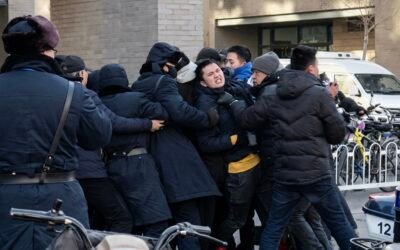
Xi Chen and Xu Jing analyze thousands of judicial decisions and add fieldwork data to explain why campaigns against “xie jiao” remain a CCP priority but do not work.
by Massimo Introvigne

The article “State Coercive Power and the War on Cults in China” by Xi Chen of the Chinese University of Hong Kong and Xu Jing of Beijing’s Tsinghua University, published in “Communist and Post-Communist Studies” 58(1), 2025, is one of the most substantial academic contributions produced within PRC institutions on the subject of “xie jiao.”
The authors use the English term “cults,” although they put the term in quotation marks. A better translation of “xie jiao” is “organizations spreading heterodox teachings,” and the term predates modern debates on “cults.” Xi and Xu explain that in the Chinese Communist Party (CCP) “hierarchy of political threats,” “xie jiao” “have been ranked considerably higher than most other groups, including civil society organizations and rights-defense (weiquan) lawyers.”
The authors’ institutional position naturally limits the perspectives they can adopt. They do not criticize the policy on “xie jiao” from a religious liberty standpoint, which would be impossible for Chinese scholars. Even so, they introduce a concept that is rarely used in Mainland scholarship: “preference for religious liberty” as a measurable attitude among sectors of the Chinese population. The fact that they were able to include this variable is noteworthy in itself.
The article uses a mixed-methods approach. The authors analyzed 5,852 judicial decisions involving 8,785 defendants, all related to “xie jiao,” drawn from the China Judgment Online Database (presumably, when it still posted cases related to “xie jiao” and its access was not yet restricted). This confirms that members of “xie jiao” are sentenced by the thousands in China. They also note that only around forty percent of the decisions were posted online, which means that the real number of defendants is significantly higher. With colleagues James T. Richardson and Rosita Šorytė, I conducted a similar study in 2019, also based on the (then still available) China Judgments Online database. Our focus was limited to cases involving members of The Church of Almighty God, and we examined around two hundred defendants. Xi and Xu’s scope is much broader, covering all “xie jiao,” and their dataset is correspondingly larger. They supplemented the quantitative analysis with fieldwork in a medium-sized city in Hunan, which allows them to connect statistical patterns with concrete administrative practices.
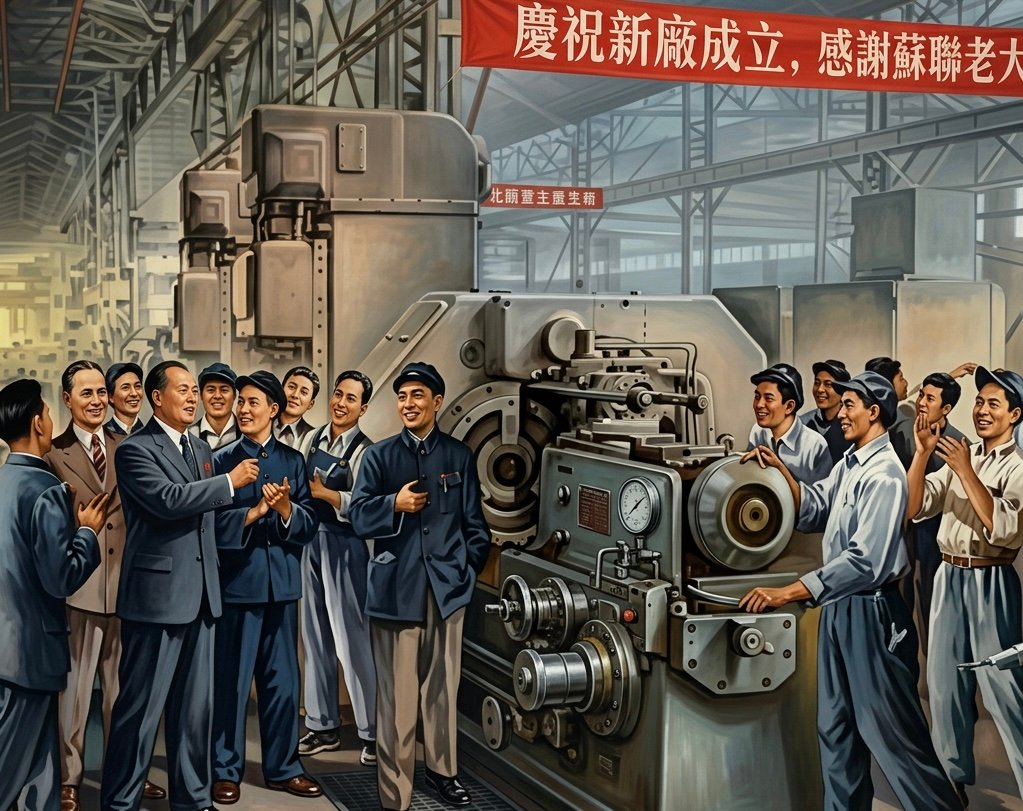
The authors adopt a Marxist analytical framework, which leads them to emphasize economic factors. They argue that the decline of state-owned enterprises (SOEs) and the weakening of work units created a vacuum in grassroots governance. According to their findings, regions with significant layoffs in SOEs experienced more judicial cases involving “xie jiao.” They use an instrumental variable approach based on early Soviet-assisted industrial projects (which were discontinued after the fall of the Soviet Union) to show that areas with larger reductions in SOE employment recorded more prosecutions for banned religious activities. They identify concentrations of cases in Heilongjiang, Jilin, Liaoning, Shandong, Henan, Sichuan, and Yunnan. These regions experienced substantial restructuring of state-owned enterprises, and the authors argue that the weakening of work units reduced the state’s ability to penetrate and control society at the grassroots level.

The study also notes that both Li Hongzhi, the founder of Falun Gong, and Zhao Weishan, the main administrative leader of The Church of Almighty God, were former SOE workers. This detail is rarely mentioned in PRC scholarship and is used by the authors to support their argument that economic restructuring created conditions in which “xie jiao” could grow. They also report that laid-off SOE workers tend to regard religious liberty as more important than the average Chinese citizen does. This is a rare acknowledgment in PRC scholarship that a demand for religious liberty exists and can be measured in Chinese society. However, the authors do not explore the implications of this finding beyond its relevance to their economic model.
The model uses quantitative data to support the thesis that identifies the decline of SOEs as a main cause of the success and resilience of the “xie jiao” from the 1990s on, based on both a control and a class analysis. First, the authors argue that the CCP was able to exert daily control over SOE workers that it could not extend to those who worked in non-state-owned enterprises, were self-employed, or were unemployed. Second, a new class including many former SOE workers who lost their jobs was more critical of the regime and more interested in alternatives to official ideology, including the “xie jiao.”
Xi and Xu argue that the coercive power of the state depends on the strength of grassroots institutions. Neighborhood committees, work units, and local administrative structures historically allowed the CCP to penetrate society and maintain control. When these institutions weakened during SOE restructuring, the state’s ability to monitor and suppress banned religious movements diminished. Their fieldwork in Hunan illustrates how a factory with reduced administrative capacity struggled to enforce surveillance and control, creating conditions in which “xie jiao” activities could flourish. They describe how local administrators lacked the personnel and resources needed to monitor residents effectively, and how this situation created opportunities for banned religious movements such as Falun Gong and The Church of Almighty God to operate and resist repression.
The authors also note that recent policies aim to rebuild grassroots power through grid management systems and tools such as the “dibao” scheme. These measures are presented as efforts to restore the infrastructure needed to enforce campaigns against “xie jiao.” The grid management system divides urban and rural areas into small units, each monitored by designated personnel, including specialists in combating “xie jiao.” The “dibao” scheme provides financial assistance to unemployed or low-income residents, and the authors argue that it also serves as a tool for social control. These policies pursue broader control aims beyond religion. Still, they are described as part of the effort to strengthen the state’s presence at the grassroots level and to ensure that campaigns against banned religious movements can be implemented effectively.
The article also discusses the role of judicial institutions in the campaign against “xie jiao.” The authors argue that courts play a central role in enforcing the state’s policy on banned religious movements. They note that judicial decisions often include detailed descriptions of the activities of “xie jiao” members, and that these descriptions provide valuable information about the strategies used by banned religious movements to recruit members and disseminate teachings. They also note that judicial decisions often reference the role of grassroots institutions in monitoring and reporting the activities of “xie jiao” members. This suggests that courts rely on information provided by local administrators and that the effectiveness of judicial enforcement depends on the strength of grassroots institutions.
Xi and Xu’s article is important and, given the constraints under which Chinese researchers work, surprisingly candid. They do not criticize the policy on “xie jiao,” yet they provide a detailed analysis of the factors that influence the effectiveness of campaigns against banned religious movements.
I do not believe that SOE restructuring is the only reason why “xie jiao” gained members. The Marxist approach undervalues spiritual factors and the aspiration of many Chinese citizens to find meaningful answers to the great questions of life, answers they perceive the Communist Party as unable to provide. The fall of the Soviet Union was a factor in the success of the “xie jiao” not only because Soviet-sponsored SOE were closed but also because it persuaded many Chinese that Communist states are not necessarily eternal.
Even so, Xi and Xu’s work offers valuable insights. It shows why the question of “xie jiao” is so central for the CCP and provides an economic analysis that is not the only element to consider but is a factor that contributes to understanding the phenomenon. Their research demonstrates that campaigns against banned religious movements depend on the strength of grassroots institutions and that economic reforms can weaken these institutions in ways that reduce the effectiveness of state repression.
This article is one of the most substantial contributions produced within PRC institutions on the subject of “xie jiao.” It provides a detailed analysis of the factors that influence the effectiveness of campaigns against banned religious movements and offers insights that are rarely found in Mainland scholarship. It is an important article and deserves attention from scholars and observers interested in the relationship between state power and banned religious movements in China.

Massimo Introvigne (born June 14, 1955 in Rome) is an Italian sociologist of religions. He is the founder and managing director of the Center for Studies on New Religions (CESNUR), an international network of scholars who study new religious movements. Introvigne is the author of some 70 books and more than 100 articles in the field of sociology of religion. He was the main author of the Enciclopedia delle religioni in Italia (Encyclopedia of Religions in Italy). He is a member of the editorial board for the Interdisciplinary Journal of Research on Religion and of the executive board of University of Pennsylvania Press’ Nova Religio. From January 5 to December 31, 2011, he has served as the “Representative on combating racism, xenophobia and discrimination, with a special focus on discrimination against Christians and members of other religions” of the Organization for Security and Co-operation in Europe (OSCE). From 2012 to 2015 he served as chairperson of the Observatory of Religious Liberty, instituted by the Italian Ministry of Foreign Affairs in order to monitor problems of religious liberty on a worldwide scale.