Anticipated by simpler versions in “Bitter Winter,” ten research papers will be published in the September issue of “The Journal of CESNUR”
by James T. Richardson
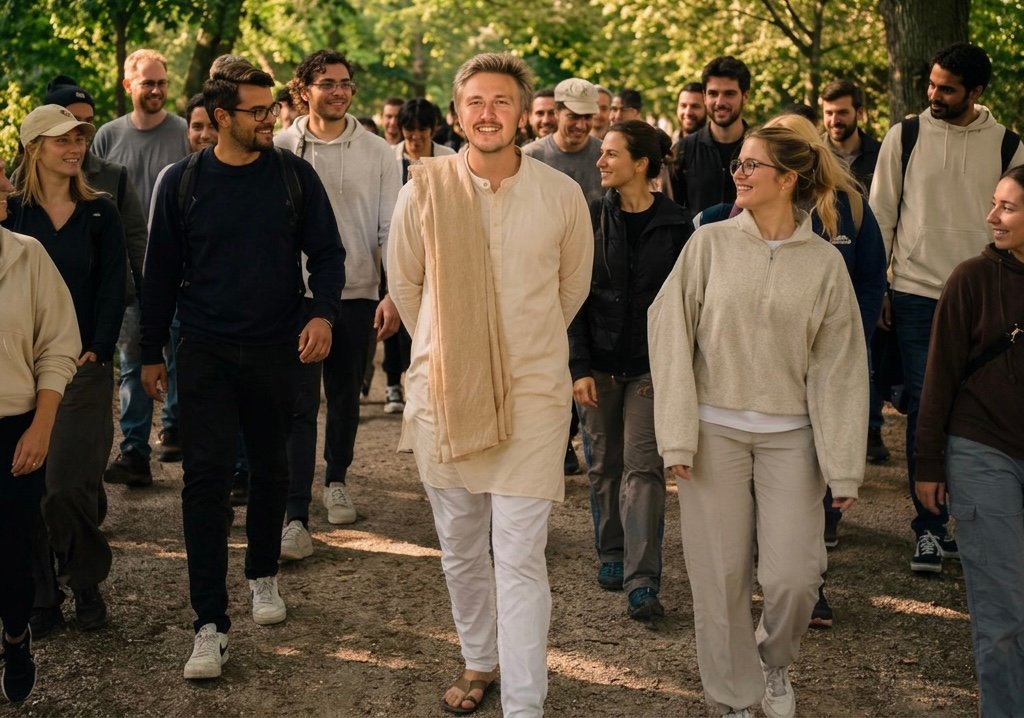
The formidable collection of papers about to be published, focused on the decade-long international persecution saga of Konstantin Rudnev, should give pause to political and judicial authorities in Russia, Montenegro, and Argentina who have pursued this charismatic leader and his followers so vigorously. Together, the papers represent an indictment of authorities in all three countries who have allowed themselves to be used by those who would attack newer expressions of religiosity that have developed in our contemporary, tumultuous world. The collection is also a warning to those in positions of influence and power in other societies to take great care not to be swept along by institutional forces intent on limiting activities of and participation in newer forms of spirituality and religiosity.
The special collection of papers focused on the tribulations of Rudnev also clearly demonstrates the injustices that can arise when the general public and authorities, including legal authorities and judges, accept the pernicious “myth of the omniscient leader” and its necessary companion, “the myth of the passive follower.” In combination, those myths completely reject any concept of human agency, and many people in today’s world are actively seeking alternative beliefs, lifestyles, and a community in which to experiment with a way of living that fits their needs. I have reviewed elsewhere several studies clearly demonstrating that participants in new religious movements exercise agency and use the groups to change themselves, a clear refutation of the “brainwashing” ideas that undergird the myths of the omniscient leader and the passive follower.
The collection also reveals how easy it is for those opposed to experimentation in the religious and spiritual realm to manipulate mass media, political leaders, and others (such as parents) who are puzzled and upset that anyone, including especially their children, would want to reject the dominant culture and experiment with other lifestyles and belief systems. Thus, those opposed to newer forms of spirituality have found a ready audience and a “business plan” that works well to spread and implement their attack on any competition for the hearts and minds of those seeking alternative ways of living and believing.
The situation in Argentina has ominous implications for Konstantin Rudnev, whose very life is now at stake. However, the circumstances and the way that the political and judicial situation has spiraled out of control there clearly demonstrate the precariousness of religious freedom and the right of individuals to experiment with different beliefs and lifestyles.
This tragic situation has attracted the attention of many NGOs around the world that promote and defend religious freedom, as well as that of several others. Letters have been written to political and legal authorities in Argentina, and various columns and articles have appeared, documenting the development of this very disturbing situation first in Russia, then in Montenegro, and now in Argentina. Examples of this outpouring of concern and the support for Rudnev, and for religious freedom, include the following:
1. Professor Cole Durham, well-known LDS scholar, advocate for religious freedom, and head of the G20 Interfaith Forum, sent a letter of concern to the Argentine President, the Ministry of Justice, and the Ministry of Security.
2. Italian scholar and attorney Massimo Introvigne has published a letter signed by 12 heads of international NGOs supportive of religious freedom, followed by others. The letter requesting humane treatment and justice for Konstantin Rudnev was also sent to the Argentine President, and to the Ministries of Justice and of Security.
3. The case has been brought to the attention of the United Nations Human Rights Council and Working Group on Arbitrary Detention, and the World Conference on Religious Dialogue and Cooperation in Skopje, North Macedonia, as well as other groups and organizations.
4. Complaints have been lodged against the prosecutors in the case for falsification of evidence and procedural irregularities.
5. Various other articles and columns have been published concerning the situation in Argentina.
The special issue, offering much detail and history of the events surrounding Rudnev, will soon be available, and we now turn to the individual articles.
This collection of impressive scholarly productions opens first with Massimo Introvigne, noted NRM scholar and legal authority, who is well-informed about this and many other conflicts over nontraditional religions and spiritualities around the world. Introvigne uses interviews with Rudnev’s brother and wife, along with considerable documentation he has gathered, to describe Rudnev’s early life and how his school of thought developed during his younger years. The picture that emerges from this in-depth attention to his younger years is one of a spiritual seeker trying to find a workable philosophy of life. That image differs greatly from the one constructed by Russian authorities, often influenced by the Russian Orthodox Church, the anti-cult movement, and the mass media in Russia. Those entities were all willing to promote a social construction of Rudnev as an “evil cult leader,” especially as his ideas spread and he gained many followers in Russia and in several other countries. The amount of negative publicity associated with Rudnev’s trial in Russia is a classic illustration of the manufacture of a “moral panic.” The ensuing panic led to Rudnev being incarcerated for eleven years in Russia and then harassed for years after release, with eventual reincarceration in Argentina.

Introvigne’s opening is followed by French scholar Patricia Duval’s excellent analysis of the political and legal processes in Russia, where Rudnev’s “Ashram Shambhala” (as his movement became known) was persecuted within the Russian legal system, leading to its ban and Rudnev’s eleven-year imprisonment. Duval offers details using court files, police reports, and media materials that demonstrate the political nature of the prosecution, which was actively supported by the Russian Orthodox Church (ROC). The eventual conviction of Rudnev was not based on factual evidence but relied on uncorroborated testimony and the use of discredited concepts such as “brainwashing.” No independent expertise was brought in to counter the narrative developed by the ROC and Russian authorities, thus resulting in an unjust but predictable outcome. This was another example of the “telephone justice” administered in Russia when religious minorities are involved.
Alessandro Amicarelli’s contribution reports in detail how the events described by Introvigne were transfused into Montenegrin public life and law enforcement processes after Rudnev fled Russia and sought asylum there. A series of unrelated events and very biased and misleading reports from Russia were melded together by authorities and the mass media during the two years Rudnev resided there. Russian accusations were treated as factual along with fabricated (by the media) charges of Rudnev being a leader of a “sex cult.” This social construction was used to harass Rudnev and threaten him with incarceration again. No criminal proceedings were ever brought against him in Montenegro. Still, his case illustrates how reports of allegedly illegal behavior, coupled with media naivety and willingness to be used for nefarious purposes, can subvert the asylum process and lead to completely erroneous public perceptions. Amicarelli’ s report also demonstrates risks faced by dissidents in nations unable or unwilling to withstand pressures from external influence from powerful nations such as Russia.
Argentine legal anthropologist María Vardé’s contribution describes the way that a simple hospitalization in a town in Argentina eventually led to charges of human trafficking against Rudnev. She uses various judicial records and media coverage, along with interviews of key players, to document how media reports of that hospital stay eventually were transmuted into accounts of a transnational trafficking organization that also involved narcotics and slave labor. Russian and Montenegrin very dubious reports were used to build a case that led to the arrest and new incarceration of Rudnev in Argentina. Anti-cult narratives and prefabricated reports promulgated by mass media were accepted by Argentine authorities, including within the justice system. These circumstances made it impossible to mount an effective defense, thus facilitating a major miscarriage of justice and the imprisonment of a very ill Konstantin Rudnev.
There have been similar cases involving new religious movements in Argentina. An earlier example of a miscarriage of justice involved The Family International/Children of God. In that case, the judicial system removed a quite biased judge, and the movement was fully exonerated, but only after two years of turmoil and many consequences, such as some mothers being separated from their children and spending months incarcerated.

Hungarian scholar Márk Nemes and Polish scholar Karolina Maria Kotkowska present separate articles, both of which offer an analysis of Rudnev’s complex teachings, which are rooted in his prior experiences with various schools of thought in contemporary esotericism, New Age, and shamanistic practices. His ideas are best understood as, according to Nemes, a “complex system of religious bricolage oriented toward self-improvement and the elevation of consciousness.” And, as both writers note, the essential role played by Tantric practices has become a lightning rod for many critics seeking to limit the impact of Rudnev’s teachings. Nemes’ and Kotkowska’s works suggest that the lack of an adequate background hinders many who seek to understand Rudnev’s approach and the elements that make up his eclectic perspective. Some who should know better have deliberately mischaracterized what Rudnev believes and practices for ulterior motives of control and even suppression. And those efforts have led directly to the legal harassment and the incarcerations that Rudnev has endured.
Well-known Canadian sociologist Susan J. Palmer analyzes the experiences of five advanced students of Konstantin Rudnev whom she interviewed recently via Zoom. She also was able to secure written answers to questions directed to Rudnev himself, a remarkable feat (and a demonstration of Palmer’s tenacity that has made her a leading researcher in her field). Information she gathered offers an understanding of the attraction of the movement headed by Rudnev and the consequences of its demise when the community was raided in 2010, with Rudnev’s subsequent imprisonment. She offers information on the background and experiences of those interviewed and reasons why they were attracted to and became followers of Rudnev. They clearly were seeking more meaning in their lives and found that meaning with the charismatic Rudnev. Palmer then describes what has happened to those five followers since Rudnev’s incarceration, revealing that they are still followers of his teachings even if they have not had contact with or guidance from him since those early days with the first community in Siberia.

Belgium human rights and religious freedom activist and scholar Willy Fautré offers an in-depth discussion of the actions of the Russian Orthodox Church and particularly to role played by ROC functionary Alexander Dvorkin in the harassment visited upon Konstantin Rudnev. Those efforts eventually led to his long incarceration in Russia, as well as major repercussions internationally. Fautré details the growth of ties between the ROC and the Russia governmental apparatus, which played a crucial role in promoting the concept of “spiritual security” that came to dominate governmental policy toward all potential competitors of the ROC. This confluence of interests contributed to the dramatic changes of law related to minority faiths in Russia, which Fautré details. The misuse of the legal and judicial apparatus of government is documented, including full acceptance of the discredited concept of “brainwashing” in proceedings involving Rudnev as well as other minority faiths. The efforts to define Rudnev in totally negative terms have, as Fautré notes, been disseminated elsewhere to major effects in Montenegro and now Argentina as well.
Former Lithuanian diplomat and humanitarian advocate Rosita Šorytė details the social construction of the image of Konstantin Rudnev in the general public and in official proceedings in Russia, and how this contributed to his treatment throughout the persecution saga there. She offers a systematic analysis of the ways that Rudnev and his movement were criticized and attacked. She gives details about the media treatments of his eclectic philosophical and religious ideas, and how the interpretations of that image and various fabricated claims contributed to how he and his movement were dealt with by officialdom and the mass media in Russia. Šorytė notes that “the Russian media’s role is not to question but to amplify,” by which she means that the mass media in Russia are but a mouthpiece for the political and religious (ROC) establishments. However, she also points out that even more objective media outlets in Russia voiced the party line on Rudnev, republishing without critique officially sanctioned false or exaggerated reports. She laments how pervasive negative images of movements such as Rudnev’s can become, and the consequences that derive from such an unfettered acceptance of such tropes.
Marco Respinti, Director-in-Charge of Bitter Winter, offers an analysis of journalistic practices concerning so-called “cults” with a special focus on how information on Rudnev was conveyed around the world. He dissects vivid examples of shoddy and unethical “yellow journalism” printed as truth in the Rudnev case, offering details about how individuals and groups dispensed wrong and misleading information, as well as how such slander was circulated internationally. He is quite critical of practices that had journalists treating questionable information received as accurate and factual when it clearly was not. He details the very serious consequences of what happened in Rudnev’s situation, whose imprisonment for years in Russia and now in Argentina has resulted in the rapid deterioration of his health. Respinti uses the Rudnev case to indict the journalists and groups involved in this tragic episode and implies that the entire profession of journalism should take note, learn from what has happened, and develop practices to counter such tendencies.
It is hoped that this impressive collection can be circulated widely, especially to institutional leaders in Argentina where Konstantin Rudnev’s life is in serious jeopardy. But this tragic saga also needs to be understood in many other societies where efforts might be made to limit spiritual experimentation by those seeking an alternative set of beliefs and a more meaningful lifestyle than is currently available to them. If that can occur, then the efforts made by all who have made this convincing collection possible will not have been wasted.

James T. Richardson is professor emeritus of sociology and judicial studies at University of Nevada, Reno. He received his Ph.D. from Washington State University in 1968 and his J.D. from the Old College, Nevada School of Law in 1986. He taught at the University of Nevada, Reno for 48 years before retiring in 2016. He directed the master’s and doctoral Judicial Studies program for trial judges and also was a faculty member in the Sociology Department and in the Social Psychology Doctoral Program. The author or editor of 15 books and hundreds of articles and chapters in the fields of sociology of religion, new religious movements, religion and the law, he has also held several visiting post at universities in England, Australia, and elsewhere.