The judicial proceedings reveal systemic violations of due process, reliance on uncorroborated testimony, and the use of discredited notions such as “brainwashing.”
by Patricia Duval
Article 2 in a series of 10. Read article 1.
Introduction
The story of the spiritual group commonly known as “Ashram Shambhala” and its leader, Konstantin Rudnev, in the Russian Federation is, unfortunately, representative of the fate that befalls minorities persecuted by the Russian authorities until they disappear entirely, in the name of the “spiritual security” of Russian citizens and the fight against extremism.
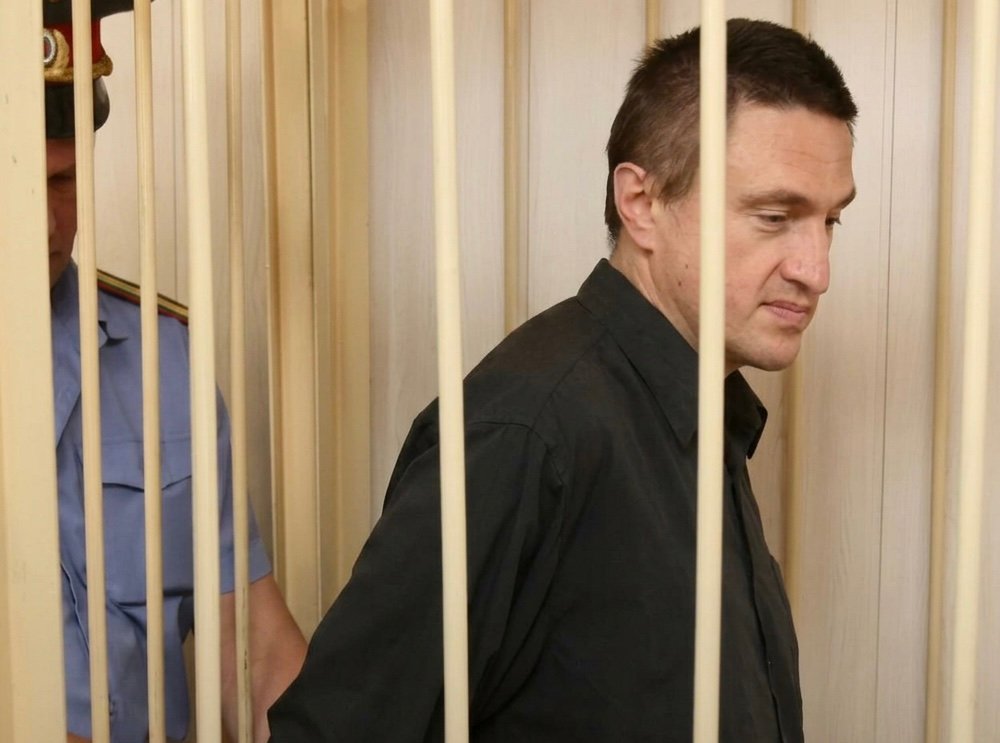
Rudnev served an eleven-year sentence in Russian prisons before finally going into exile in a country far from the persecution he had endured.
Unfortunately, this persecution followed him, and the same scenario was repeated at the instigation of the Argentine authorities as part of their campaign against “cults,” with the authorities blindly and opportunistically relying on the fabricated accusations made by Putin’s regime.
The Russian background: the fight against “cults” to protect “spiritual security”
In October 1990, a Law on Freedom of Religion was adopted under the regime of Mikhail Gorbachev, one of the last and most decisive liberalizing legislative reforms in the old Soviet system. For the first time in Russian history, practicing religion was declared “the unalienable right of Russian citizens.” This right also applied to all those residing in Russia, irrespective of their citizenship. The law maintained a strict separation between Church and State, ensured ideological neutrality of the State, and guaranteed equal rights for all faiths, regardless of their origins or size.
As an immediate consequence of the Law, Russia’s religious landscape began to change significantly. There was a resurgence of the Russian Orthodox Church and other “traditional” religions—Muslim, Catholic, Jewish, and Buddhist. This also brought missionary activities from abroad, as well as proselytizing by religions new to Russia.
This evolution gave rise to a strong anti-cult movement focused on the Moscow Patriarchate of the Russian Orthodox Church, which began promoting the idea that Russia’s “spiritual security” and traditional values were somehow at risk.
In this atmosphere, the government of Boris Yeltsin passed a new religion law in September 1997 that was further amended in 2004, distinguishing between traditional and nontraditional religions in Russia.
The 1997 Federal Law No. 125-FZ on Freedom of Conscience and Religious Associations, as well as the ideological stance and policy adopted by Russian authorities, thereafter, were inspired by the desire to ensure the “spiritual security” of Russia. This new concept expresses the purported role of the Russian Orthodox Church in safeguarding national values and security.
It imposed serious restrictions on the registration of religious organizations and on the activities of religious groups other than “traditional” religions.
Its preamble clearly indicated that “the Federal Assembly of the Russian Federation, recognizing the special role of Orthodoxy in the history of Russia, in the formation and development of its spirituality and culture, respecting Christianity, Islam, Buddhism, Judaism, and other religions that are an integral part of the historical heritage of the peoples of Russia, adopts this Federal law.”
All religious communities registered under the 1990 law were required to re-register. These traditional religions were granted systematic re-registration as “religious organizations.”
As for other religious organizations, many have been denied renewal of their registration and, as a result, have challenged this decision in national courts and before the European Court of Human Rights. The Salvation Army, Jehovah’s Witnesses, and the Church of Scientology, among others, have filed such lawsuits and have prevailed before the European Court.
Those denied re-registration as “religious organizations” could continue to operate as informal “religious groups.” As a result, they were deprived of several rights as a result of the loss of their legal personality.
This was precisely the case for the two spiritual yoga associations that Konstantin Rudnev founded and led. After the 1997 law took effect, both the “Siberian Association of Yogis” and the “Olyrna” association—incorporated in 1992 and 1994 as religious associations because their teachings addressed the path to God and spiritual development, and their practices included religious chants, prayers, and various forms of meditation and spiritual exercises—were denied re-registration. Like many other religious groups at the time, they effectively ceased to exist in their previous legal form.
Nevertheless, these groups continued their activities informally and without official registration. The media and the anti-cult movement within the Russian Orthodox Church dubbed these informal activities “Ashram Shambhala” (the name some students had given to Rudnev’s center in Siberia). This name was used to refer to all of Konstantin Rudnev’s activities, his yoga groups, and the people who lived with him.
Specific provisions of the 1997 Law addressed informal groups. Because the provisions regarding dissolution could not be applied to them, Section 14.2 of the law set forth grounds for prohibiting their activities, citing various grievances, such as threats to public safety and order, acts aimed at carrying out extremist activities, the destruction of families, violations of personal rights, or incitement of citizens to refuse to fulfill their civic duties.
It was precisely under this Article that the activities of the religious group “Ashram Shambhala” were banned in the Russian Federation by a court on April 11, 2014, at the request of the prosecutor, who claimed that the group represented “a pseudo-Tantric neo-pagan totalitarian sect with a destructive cult, whose activities are associated with violence and incitement of citizens to refuse to fulfill civil duties.”

The start of legal proceedings in Russia
Shortly after the creation of Rudnev’s yoga associations in the 1990s, the Russian Orthodox Church (ROC) launched a campaign of persecution against them. At that time, the clergy established a nationwide “anti-cult” department, and a center began operating locally in Novosibirsk, where these associations were active.
The “Information and Consultation Center on Sectarianism in the Name of the Holy Right-Believer Prince Alexander Nevsky” was established in Novosibirsk in 1993–1994 and has been led by Archpriest Alexander Novopashin since then.
It was an Orthodox Church community center that collaborated with government institutions—particularly the judiciary—in the fight against the so-called “cults” or “extremist” groups by disseminating accusatory information, collaborating with journalists, and appearing as “expert” witnesses in Russian courts.
Archpriest Novopashin engaged in collecting information about all religious groups and “cults.” Data collection was carried out through church channels—via parishioners—and possibly in cooperation with the police or the FSB. This included information about Konstantin Rudnev’s group, based in Novosibirsk.
After the information was collected, it was passed on to journalists.
First signs of persecution
The first time Konstantin Rudnev’s group learned that the FSB was interested in it was in 1998, when FSB officers came to the home of one of the female students. They suddenly appeared and began questioning her. She refused to cooperate or provide any information. It was then that it became clear that Konstantin Rudnev and his group had become the target of an “operational development” (in which the police or special services secretly investigate and gather material against a specific person to prepare a future criminal case).
Most likely, the “operational development” began even earlier—possibly in the mid-1990s, when the group started holding large seminars and meetings in large halls. The FSB traditionally supervised any organizations that could influence people. Even amateur song clubs came under FSB scrutiny: under the guise of monitoring singers, they checked whether anyone was engaged in unlawful activities. Thus, the security services monitored all organizations, regardless of their profile.
In 1999, the first open persecutions began: newspaper articles and television programs appeared. At first, these were Novosibirsk news, and later the materials reached the central channels. Novopashin provided journalists with information for their articles. Among these details were facts that only FSB officers could have known.
Subsequently, this wave reached Moscow, and Alexander Dvorkin took it up at the national level. Through journalists, Dvorkin also actively contributed to inflating the scandal.
A large-scale campaign against “cults” began on television, targeting groups such as Konstantin Rudnev’s. Dvorkin openly classified “Ashram Shambala” as a totalitarian occult-tantric cult and included it in his materials, lectures, and publications. His public attacks intensified in the 2000s.

Judiciary developments in 2008–2010
All this led to active operational development in 2008. The order came either from Novosibirsk or from Moscow. The matter then reached the Center “E,” which launched a full-scale investigation and began interrogations.
Center “E” in Novosibirsk was the Center for Countering Extremism of the Main Directorate of the Ministry of Internal Affairs of Russia for the Novosibirsk Region. It was a specialized police unit responsible for identifying, preventing, and suppressing extremist activities. It was part of the Ministry of Internal Affairs’ structure and could conduct inspections and operational measures, participate in investigations, and transfer materials to investigative authorities.
Law enforcement began building a criminal case and sought witnesses. Having found nothing, they charged Rudnev with rape and planted drugs in his belongings. The first serious attack took place in 2008. By 2010, the case had largely been fabricated, and Konstantin Rudnev was taken into custody.
Specific incidents
In 2008, a raid took place. Konstantin Rudnev was taken to the police station, questioned, and then released that same evening. The same was true for everyone else who was present with him. He then returned home; on the surface, everything seemed calm, but the media campaign continued. Following this incident, a report was broadcast on NTV, accompanied by a video, and received widespread coverage on national television networks.
As early as 1999, a call for witnesses had been issued against the group, but it had come to nothing. Some parents, searching for their (adult) children, had denounced the group. In 2004, a similar situation occurred: parents were again searching for their children, who had cut off all contact with them. The police went to Rudnev’s ashram to investigate, but no one was found there, and the case was closed without further action.
Two similar raids also failed. The police merely checked who lived at that address. These raids sparked renewed interest among journalists and the media in discrediting the group and gathering additional evidence. Each incident drew fresh attention to the group.
Reasons for the state’s interest
The state already maintained close ties with the Church, and Putin was actively cooperating with the Russian Orthodox Church. At that time, Konstantin Rudnev’s public statements were already widely known: he spoke out against Putin and criticized Church leaders. Rudnev emphasized that instead of devoting itself to the spiritual development of the faithful, the Orthodox Church was engaged in selling candles, manipulating people, and doing no developmental work, either in churches or in monasteries. According to him, a formalistic cult prevailed there, in which everything was repeated mechanically, and services were conducted in Old Church Slavonic, a language most people did not understand.
While gathering evidence in collaboration with the FSB, Novopashin prepared and submitted a dossier to Putin. The dossier primarily emphasized that Rudnev had spoken out against the government and, personally, against Putin; that he had criticized Putin; that he had claimed Putin would lead the country into a serious crisis; and that he had cast doubt on Putin’s ability to lead. This provoked strong displeasure in Putin. He then gave the go-ahead for the full development and criminal prosecution of Konstantin Rudnev. In 2008, Center E received the “green light” to take all necessary actions. Consequently, in 2010, Konstantin Rudnev was taken into custody.
The trial and criminal conviction
The trial lasted a year and a half. Rudnev spent nine months in pretrial detention before the court proceedings began. The trial itself then lasted another year and a half.
What emerged from the trial was that no one listened to Rudnev’s lawyers. His defense attorneys dismantled all the prosecutors’ arguments, but no one paid any attention. Their arguments were completely ignored and set aside in subsequent court decisions.
As a result, the following verdict was handed down:
Violation of Article 239.1 of the Russian Criminal Code for creating a religious association infringing upon the liberties and rights of individuals.
This accusation was based on the testimony of parents whose adult children had left the family home and severed all contact with them.
The people who actually left their families were never questioned—that is, the alleged victims. Those who were questioned said they left their families on their own initiative, not because of Rudnev. Some had arguments with their families; others wanted to live independently.
Despite all the evidence, Rudnev was held responsible for all of this, even though the complaints came from parents who barely knew him—or didn’t even know who he was. The police turned these parents against Rudnev, telling them their children had left because of him. Without knowing or understanding anything, the parents began writing statements in the hope that, if Rudnev were found guilty, their children would return.
Rudnev was found guilty “of establishing a religious organization whose activities involve violence against citizens and incitement of citizens to refuse to fulfill their civic duties, as well as of leading such an organization.” He was sentenced to restricted liberty for 2 (two) years but was released from serving the sentence imposed due to the expiration of the statute of limitations.
Violation of Article 228.1 of the Criminal Code relating to the illegal sale or dispatch of narcotic drugs.
This charge involved 5 grams of heroin that an investigator claimed to have found when Konstantin was arrested at his home. The investigator had seized Konstantin’s clothes and “found” the bag in his pocket.
The bag was not sealed after it was seized, which means anyone could have slipped anything into it, and it may have been planted there. Due to this gross procedural flaw, the case should have been dismissed immediately.
Under Russian law, possession and distribution of drugs are separate crimes with significantly different punishments. Possession is covered by Article 228 of the Russian Criminal Code and is applied by courts when drugs are considered for personal use rather than for sale.
Initially, the charge was drug possession for personal use. However, the Russian judiciary could not prove personal use because no drugs were found in Konstantin’s hair, blood, or under his nails.
The charge was later reclassified as “preparation for distribution.” This led to a harsher sentence under Article 228.1 of the Criminal Code: eight and a half years’ imprisonment.
In his appeal against the conviction, his attorney explained: “During the court hearing, Rudnev’s guilt in the preparation and sale of narcotic substances was not proven. There is no evidence in the criminal case regarding the source of purchase of the narcotic substances; no scales or devices for dividing the narcotic substance into small doses were found during the search; all individuals present in the cottage on September 30, 2010, including Rudnev, were sober according to the medical examination reports. No signs of drug use or other intoxication were found. A drug-sniffing dog found nothing in the house during the search.”
However, Rudnev was sentenced to 8 and a half years in prison for preparing to illegally distribute narcotics, based on Article 228.1, which prohibits the sale and dispatch of narcotic drugs, in conjunction with Article 30 on the preparation for a crime and attempted crimes.
Violation of Articles 131 on rape and 132 on violent actions of a sexual character.
The same was true of the rape charge: there was no evidence, apart from one unsubstantiated oral account of events that had allegedly occurred two years earlier. The rape was not proven in any way, yet Rudnev was sentenced to three and a half years in prison.
In his appeal pleadings, his lawyer argued that: “The defense has repeatedly presented evidence that the charges are fabricated under Articles 131–132 of the Criminal Code of the Russian Federation. However, the court disregarded all arguments presented by the defense and the defendant. K.D. Rudnev did not admit guilt of rape or acts of a sexual nature, explaining that he does not remember A.M.V. [the alleged victim] and did not have a sexual relationship with her. K.D. Rudnev’s testimony that he did not engage in sexual relations with V. is corroborated by the testimony of several witnesses questioned during the court hearing. Furthermore, no evidence was presented during the court hearing to support the victim V.’s testimony regarding her residence at the cottage where Rudnev resided. There is no evidence whatsoever that, during the period from June 2007, as well as from December 25, 2007, through April 2008, V. did not merely attend gatherings at the cottages but actually resided there and engaged in an intimate relationship with Rudnev.”
However, in the absence of any evidence—or rather, contrary to all existing evidence—the Novosibirsk District Court handed down its guilty verdict on 7 February 2013, following exclusively the line prepared by the Russian intelligence services for the prosecution.
For violations of Articles 131 and 132, Rudnev was sentenced to imprisonment for a term of 3 (three) years and 6 (six) months for each offense, for rape and acts of a sexual nature.
Then, pursuant to Article 69.3 of the Criminal Code, he was sentenced to a final prison term of 11 (eleven) years, to be served in a strict-regime penal colony, after a partial aggregation of the sentences imposed (eight and a half years and two terms of three and a half years each) for all of the offenses. The term of imprisonment, including detention and pretrial detention, was calculated starting September 30, 2010.
Later, at the appellate level, the Criminal Division of the Novosibirsk Regional Court likewise refused to hear the defense. The appellate judges supported only the prosecution’s position and upheld the conviction on 27 May 2013.
Then, on August 28, 2013, a judge of the Novosibirsk Regional Court, after reviewing the court decisions and examining the arguments in the Cassation appeal filed by Konstantin Rudnev’s attorney, found no grounds to refer the appeal for consideration at a hearing before the Court of Cassation.
Rudnev’s lawyer then filed a complaint with the Supreme Court of the Russian Federation challenging that refusal. However, on May 29, 2014, the Supreme Court also refused to consider the appeal against the verdict.
As a last resort, he filed a supervisory complaint with the Supreme Court. It was finally rejected by a ruling dated April 16, 2015.
This case perfectly illustrates how the judicial system works in the Russian Federation. It is a David versus Goliath battle: the defendant’s attorney pitted against the police, prosecutors, and judges, who stand united. Once charges are filed, it is very difficult, if not nearly impossible, to have the case dismissed or to secure an acquittal. In practice, and under State pressure, judges often rely on evidence from prosecutors, investigators, police, and false witnesses.
This is what happened to Konstantin Rudnev in the Russian Federation, leading him to spend eleven years in Russian prisons, from which he was released on 26 September 2021. He then decided to move abroad.
After his conviction, Rudnev was transferred to a correctional colony in Norilsk, where conditions were extremely harsh. This region is known for long periods of polar night, and winter temperatures can drop to –60°C. The prison regime was very strict, with severe restrictions on inmate communication.
Then, in 2014, he was placed in solitary confinement to prevent him from exerting any influence over other inmates. As a result, he spent the next seven years in solitary confinement. The authorities feared that he could influence other prisoners even through ordinary communication.
But the Russian authorities did not stop at breaking him personally; they also took steps to eradicate the religious movement he had founded.

The ban and international case law
Once Rudnev’s criminal conviction became final, the Novosibirsk District Court ordered, on December 18, 2013, the destruction of the religious group’s books, which had been seized as evidence of the crime of “establishing a religious association that infringed upon the freedoms and rights of individuals,” under Article 239.1 of the Russian Criminal Code.
Based on the same Article and conviction, the Prosecutor went a step further, requesting that the activities of the informal group “Ashram Shambhala” be banned. However, although he had been convicted under Article 239.1, Rudnev was exempted from serving his sentence on that ground because the statute of limitations had expired.
Rudnev’s attorney argued in his appeals that the conviction should be overturned for precisely this reason. Still, none of the higher courts ruled in his favor, even though he was raising an indisputable point of law.
The reason for this “reinterpretation” of the law must surely lie in the subsequent decisions regarding the destruction of books and the ban on the religious group’s activities.
The government wanted to prosecute and eliminate “Ashram Shambhala,” even if it meant disregarding applicable law and prosecuting for crimes whose statute of limitations had expired.
On April 11, 2014, the Novosibirsk Regional Court, sitting as a single-judge panel, heard the civil case in open court regarding the prosecutor’s motion for a ban. The Prosecutor of the Novosibirsk Region had applied to the court, allegedly to “protect the rights, freedoms, and legitimate interests of an indefinite circle of persons.”
In support of his motion, he cited the arguments the prosecutor advanced in the criminal proceedings. He relied on Article 61 of the Code of Civil Procedure to ask the Court to adopt the criminal court’s findings in full and issue the banning order.
Article 61.4 sets forth the grounds for exemption from the burden of proof as follows: “The court sentence in a criminal case that has entered into legal force is binding on the court when considering the civil-law consequences of the actions of the person with respect to whom the court sentence is passed, including questions of whether these actions have actually taken place and whether the person in question has committed them.”
Consequently, the Court did not have to present any evidence and relied on the conviction, which was itself unsubstantiated.
Before the judge of the Regional Court, the prosecutor reproduced, word for word, the entire argument presented by the prosecution during the criminal proceedings to prove a violation of Article 239.1 of the Penal Code, and the court relied on it when imposing the ban.
He first indicated that the religious group “Ashram Shambala,” created by Konstantin Rudnev, represented “a pseudo-Tantric neo-pagan totalitarian destructive cult, whose activities are associated with violence and incitement of citizens to refuse to fulfill civil duties.”
The Prosecutor further claimed that based on his “religious teaching, containing extracts from Buddhism, Hinduism, shamanism, mystical Eastern teachings, as well as the Indian teaching of yoga, K.D. Rudnev laid out the denial of generally accepted values of morality and ethics.”
Following this unacceptable assessment of religious beliefs by a government official and the violation of the state’s duty of neutrality in religious matters, as provided for in international treaties binding on the Russian Federation, the prosecutor put forward a far-fetched and highly questionable theory to explain Rudnev’s allegedly harmful influence on his followers.
He explained that “To create a religious group, involve an indefinite circle of people in it, and promote the religious teaching of the religious group ‘Ashram Shambala,’ K.D. Rudnev and participants of the religious group conducted paid classes and seminars under the cover of teaching yoga,” through which they recruited followers to place them under Konstantin Rudnev’s control, making them dependent and unable to leave the group, using “methods specifically developed to exert aggressive external influence on the psyche.”
The “methods specifically developed to exert aggressive external influence on the psyche” refer to no less than the discredited and unscientific notion of “brainwashing” or “mind control,” which has been rejected by courts internationally.
In 1981, the Italian Constitutional Court ruled that the concept of “plagio” (the Italian term) was too vague to allow a clear definition of the corresponding offense; it therefore ordered its removal from the Italian Penal Code.
The Constitutional Court found that, given the current state of scientific knowledge, it was impossible to determine whether, and at what point, persuasion through communication could turn into a form of psychological suggestion and result in the deprivation of the free will of the individuals concerned.
The Court further found: “As for the evaluation of the results, it will be purely symptomatic and will be deemed positive or negative depending on whether the activity conducted on the passive subject leads the subject to adopt behaviors that deviate from ethically, socially, and legally acceptable norms.”
The question of whether the target person is psychologically subjugated must then be decided arbitrarily by the judges and depends on the degree of social acceptability of the relationship and the influence at issue.
Consequently, the Italian Court concluded that there was “an absolute arbitrariness in its practical application” and ruled that article 603 of the Penal Code was unconstitutional.
This “absolute arbitrariness” is precisely what was applied to Rudnev, accused of denying “generally accepted values of morality and ethics.”
The European Court of Human Rights has reached the same conclusion and has already ruled against the Russian Federation on this basis.
In the case “Jehovah’s Witnesses of Moscow v. Russia,” the European Court held in 2010 that “there is no generally accepted and scientific definition of what constitutes ‘mind control.’” It rejected the Russian authorities’ argument that their proselytizing “infringed the rights and freedoms of its members or third parties.”
The Court accordingly ruled that the dissolution of the Jehovah’s Witnesses’ association constituted a violation by Russia of their right to freedom of religion under Article 9 of the European Convention on Human Rights.
This is without mentioning the entire body of case law in the United States, in a legal battle that ended in the 1990s with U.S. courts rejecting the theory of mind control as applied to religious matters, because it was neither scientific nor reliable.
It follows that this vague and arbitrary concept, which has been discredited worldwide, should not be used to send dissidents to penal colonies or to decide whether to ban an entire religious group within the territory of the Russian Federation.
The Human Rights Committee has provided detailed guidance on the application of Article 18 of the International Covenant on Civil and Political Rights, which protects the right to freedom of religion or belief: “Article 18 is not limited in its application to traditional religions or to religions and beliefs with institutional characteristics or practices analogous to those of traditional religions. The Committee therefore views with concern any tendency to discriminate against any religion or belief for any reason, including the fact that they are newly established or represent religious minorities that may be the subject of hostility on the part of a predominant religious community” (General Comment no. 22, 1993).
Under the Covenant to which the Russian Federation is a party, States have a duty of neutrality in religious matters and cannot assess religious practices in light of “generally accepted values of morality and ethics.”
Nor can they eliminate religious minorities, as these groups face hostility from the Russian Orthodox Church, which seeks to maintain its monopoly over the souls of Russian citizens.

Patricia Duval is an attorney and a member of the Paris Bar. She has a Master in Public Law from La Sorbonne University, and specializes in international human rights law. She has defended the rights of minorities of religion or belief in domestic and international fora, and before international institutions such as the European Court of Human Rights, the Council of Europe, the Organization for Security and Co-operation in Europe, the European Union, and the United Nations. She has also published numerous scholarly articles on freedom of religion or belief.