Religious organizations played a less-than-commendable role in the 1994 tragedy. Muslims were somewhat different.
by Massimo Introvigne
Article 1 of 2
There is a large body of literature about the not always commendable role of the majority Catholic Church, which in 1994 included more than 60% of Rwanda’s population, during that year’s genocide against the Tutsi. But what about other religious organizations?
Two vignettes pointing in opposite directions frame perceptions of religious minorities and their role during the genocide against the Tutsi. The first gave its title to American journalist Philip Gourevitch’s popular book about the tragedy, “We Wish to Inform You that Tomorrow We Will Be Killed with Our Families” (New York: Farrar, Straus, and Giroux, 1998). Seven Adventist pastors wrote these words in a letter sent to their leader, Pastor Elizaphan Ntakirutimana (1924–2007), president of the Seventh-day Adventist Church in Kinuye, on April 15, 1994. He replied: “Your problem has already found a solution. You must die.”
When he was arrested by the FBI in Laredo, Texas, in 1996, Ntakirutimana claimed he was innocent. However, witnesses testified that he not only ignored requests for help but also personally transported killers responsible for the massacre of some 3,000 Tutsi at the Adventist complex in Mugonero, Southern Province. He had the dubious honor of being the first member of the clergy sentenced by the International Criminal Tribunal for Rwanda for aiding and abetting genocide.
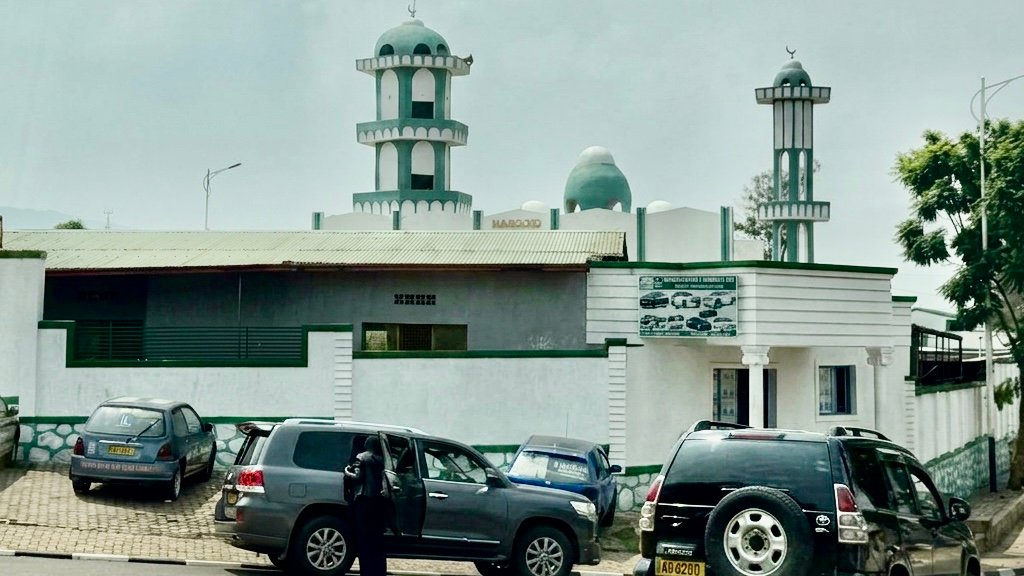
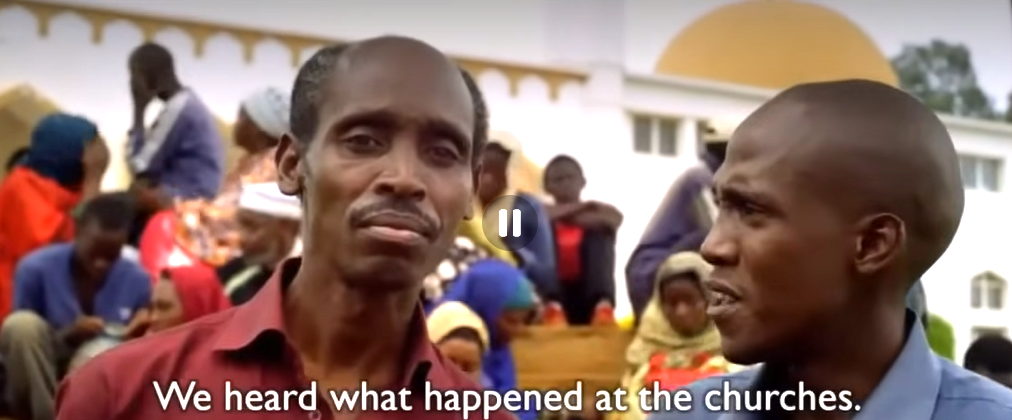
The second vignette comes from the 2011 film “Kinyarwanda,” which never achieved the fame of “Hotel Rwanda,” Hollywood’s blockbuster on the genocide against the Tutsi, but gained a devoted following. It depicts the imams of Kigali’s Grand Mosque and Nyanza’s madarasa (the Swahili term for madrasa), who opened their doors to Tutsi and dissident Hutu and effectively protected them from the genocide.
The proportions of clergy and leaders from non-Catholic minorities who were sentenced as genocidaires mirror the country’s religious population percentages. One can conclude that other religions followed the Catholic Church’s path and failed to persuade most of their members, including some clergy, to prioritize their faiths’ charitable precepts over ethno-social and political hatred. However, reactions differed among Christian denominations and other religions. Two notable exceptions stood out: Muslims and Jehovah’s Witnesses (I will discuss the latter in a separate study).
In 2002, the “Chicago Tribune” published an article claiming that after the genocide against the Tutsi, “about 14 percent of Rwandans consider themselves Muslim, up from about 7 percent before the genocide.” “The Washington Post” picked up the story. Emily Wax (now Wax-Thibodeaux) reported that “because of the role that some Catholic and Protestant leaders played in the genocide [against the Tutsi],” which she contrasted with the honorable behavior of the imams, many Christians converted to Islam and “Muslims now make up 14%” of the Rwandan population”. The first articles inspired many others; by 2004, The New York Times was reporting the proportion at 15%.
Fake news is unavoidable after an event of the genocide’s magnitude. However, the claim that there were more than one million Muslims in Rwanda (14% of the 2002 population) was grossly overstated. It was not Muslim propaganda, though, as Rwanda’s Mufti corrected the figure from 14% to 2%.
Muslims were not 7 percent of the population before the genocide against the Tutsi either. Minority figures from the 1991 census, which indicated 1.2% for Muslims, might have been understated, but only slightly so.
Unlike neighboring countries, precolonial Rwanda successfully kept Arab slave traders out of its borders. The first Muslims to enter the country were probably merchants from Zanzibar, but a significant Islamic presence came only with German colonization. The Germans brought Muslim soldiers from Tanganyika, and the free circulation within German East Africa enabled some traders to enter Rwanda and settle there. They were called “Swahili,” a term based on the language they spoke, not intended as a compliment.
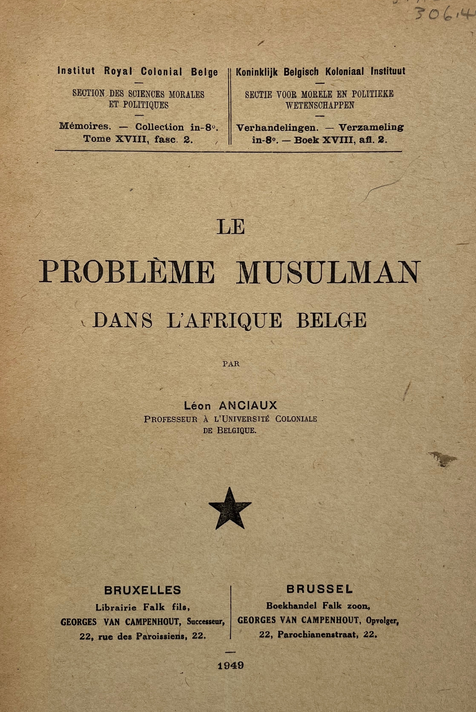
Both the Germans and the Belgians after them regarded Islam as potentially dangerous, having faced Muslim revolts in other colonial territories. Although the Rwandan Islamic community was small, colonial authorities took measures to prevent its growth through proselytization. The title of the book published in 1949 by Léon Anciaux (1893–1972), a Belgian specialist on the issue, was already indicative: “Le problème musulman dans l’Afrique belge,” “The Muslim Problem in Belgian Africa.” Muslims were a “problem” for Anciaux because of their “abhorrent” moral practices, which he said included homosexuality in addition to polygamy. Worse still, they were continuously plotting anti-colonial rebellions. Not surprisingly, Belgian anti-Islamic policy was fully supported by missionaries, both Catholic and Protestant.
This policy marginalized the small Muslim community, which made up less than 1% of the Rwandan population. It also made the community insular, cohesive, and fiercely anti-colonialist. As independence approached and political parties began to form, Muslims sided with leaders more vehemently opposed to European rule; i.e., the Tutsi-led UNAR party. When the leaders of the Association des Musulmans au Rwanda (Association of Muslims in Rwanda, A.M.U.R.), founded in 1964, realized that PARMEHUTU and other Hutu-led parties were there to stay, they tried to switch allegiances. Still, not all Muslims agreed with the move, and the association split.
Another significant development occurred in 1982, when the Ansar Allah Muslim Community in Africa was founded in Kigali (not to be confused with the extremist Ansar Allah or Houthi organization that emerged later in Yemen). It was a devotional and missionary movement that gained considerable importance and expanded to other countries.

Massimo Introvigne (born June 14, 1955 in Rome) is an Italian sociologist of religions. He is the founder and managing director of the Center for Studies on New Religions (CESNUR), an international network of scholars who study new religious movements. Introvigne is the author of some 70 books and more than 100 articles in the field of sociology of religion. He was the main author of the Enciclopedia delle religioni in Italia (Encyclopedia of Religions in Italy). He is a member of the editorial board for the Interdisciplinary Journal of Research on Religion and of the executive board of University of Pennsylvania Press’ Nova Religio. From January 5 to December 31, 2011, he has served as the “Representative on combating racism, xenophobia and discrimination, with a special focus on discrimination against Christians and members of other religions” of the Organization for Security and Co-operation in Europe (OSCE). From 2012 to 2015 he served as chairperson of the Observatory of Religious Liberty, instituted by the Italian Ministry of Foreign Affairs in order to monitor problems of religious liberty on a worldwide scale.