His early life shows a genuine spiritual search shaped by Soviet repression and yoga practice, far removed from the later “cult leader” stereotype.
by Massimo Introvigne
Article 1 in a series of 10.

Introduction
In the courtroom in Novosibirsk, where he was tried and sentenced in 2013, and in the prosecutors’ press releases circulated in Argentina after his arrest there in 2025, Konstantin Rudnev appears as a familiar figure in contemporary moral panic. He is described as a manipulator who invented a pseudo-spiritual movement to deceive followers, enrich himself, and satisfy his desires. This portrait has been repeated so often that it has acquired the solidity of a public myth.
Yet when one examines Rudnev’s early life, a different story emerges. It is a story that does not resemble the caricature of a con man but the trajectory of a young spiritual seeker who, from adolescence onward, pursued a sincere and idiosyncratic search. The contrast between these two narratives is essential for understanding how the image of Rudnev was constructed and why it diverges so radically from the biographical evidence.
Rudnev: the early years
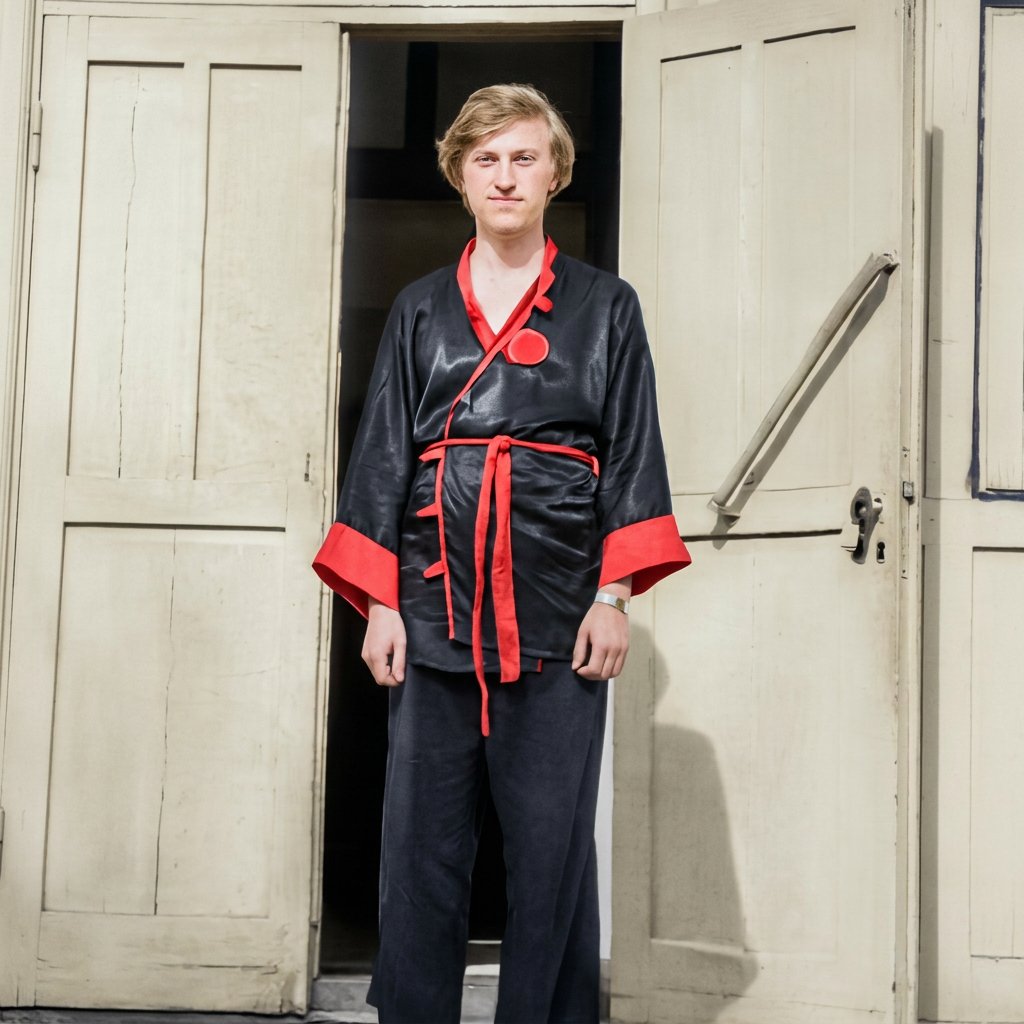
Konstantin Rudnev was born in Novosibirsk on August 4, 1967, into a family that embodied the contradictions of late Soviet life. Communist ideals nominally shaped the household, yet it lacked the ideological fervor that characterized other families of the period. The central figure in his upbringing was not his parents but his grandmother, a Muscovite who had survived Stalinist repression and was exiled to Siberia after the Second World War. Her presence introduced a dimension into the family that Soviet ideology could not erase. She was a deeply religious woman whose faith had endured persecution, displacement, and the loss of her home. For Konstantin and his brother, she represented a world that existed beyond the narrow horizon of official doctrine. Her apartment became the true center of family life, a place where the boys encountered a form of wisdom that did not depend on slogans or political loyalty.

This early exposure to a spiritual sensibility outside the Soviet norm shaped Rudnev’s inner world. Yet his childhood was also marked by social difficulties. His brother recalls that Konstantin struggled to communicate with peers and was often bullied. These experiences produced in him a sense of imperfection and a desire for transformation. He began to believe that suffering was a sign that something in him needed to change. This conviction did not lead him toward cynicism but toward introspection. He became determined to understand why people behave as they do and how one might rise above the cruelty that children can inflict on one another.
The Soviet Union of the 1970s and early 1980s offered few resources for such a quest. Information outside the ideological framework was scarce. Yet two magazines, “Fizkultura i Sport” and “Nauka i Religiya,” occasionally published articles on yoga and Eastern philosophy. When Konstantin was about fifteen, his brother showed him one of these articles. It was a moment that altered the course of his life. The two boys began practicing yoga at home, without teachers or formal guidance. They trained their bodies and read whatever spiritual literature they could find. Konstantin absorbed these materials with unusual intensity. He did not simply imitate what he read. He processed it, reflected on it, and drew his own conclusions. His brother describes this period as the beginning of an independent spiritual synthesis.
In 1987, the brothers met a man whom they regarded as highly advanced in esoteric knowledge. The encounter produced what Konstantin later called an opening of consciousness. He felt that he had glimpsed truths that others could not see. This experience did not lead him to withdraw from the world. It led him to believe that he had a responsibility to share what he had understood. He became convinced that he possessed knowledge that could help others overcome suffering and confusion.
The years of Perestroika created new possibilities. Religious groups that had been suppressed or marginalized began to operate more openly. The brothers visited Adventists and Baptists. They did not join these communities, yet Konstantin was impressed by the devotion he observed. He saw that people could commit themselves fully to ideas that gave their lives meaning. This observation would later influence his own teaching. He believed that spiritual development required dedication and loyalty to a path.
A traumatic encounter with the army
After finishing school, Konstantin entered compulsory military service. The Soviet army of that era was notorious for hazing. “Dedovshchina” was a system of violence that shaped the lives of countless young men. It was not an occasional abuse but a daily reality. Older soldiers beat younger ones, humiliated them, and subjected them to psychological torment. In some cases, recruits were raped. Suicides were not rare. Families often tried to prevent their sons from serving, and those who succeeded were considered fortunate.
Konstantin witnessed an incident in which a young recruit was beaten and raped before attempting suicide by slitting his wrists. This event had a profound impact on him. He concluded that remaining in the army would destroy him. Many young men of his generation reached similar conclusions. One of the few ways to escape service was to feign mental illness. Konstantin chose this path. He presented symptoms that led to psychiatric hospitalization and discharge. Prosecutors later used this episode to suggest underlying pathology. His family insists that it was a rational act of self-preservation. The psychiatric record reflects the brutality of the Soviet military system rather than any inherent instability.

Becoming a yoga teacher
When he left the army and the hospital in 1987, Konstantin returned to yoga with renewed determination. He began teaching small groups. At first, the practice was limited to hatha yoga, yet he soon realized that physical exercises were only an entry point. He felt a strong inner impulse to teach. He believed that he had knowledge that could help people understand themselves and transform their lives. His brother describes him as a young man who had already developed a coherent worldview and who was capable of debating mature scholars on spiritual matters.
Konstantin’s system was eclectic. He read Carlos Castaneda and incorporated elements of shamanism. He experimented with practices taught by Valery Averyanov, including “astral karate.” He believed that all religions shared a common essence and that spiritual truth could be expressed in many forms. His approach was not academic but experiential. He encouraged students to observe their thoughts, emotions, and reactions. He taught that suffering arises from incorrect thinking and that spiritual development begins with the transformation of thought.
This teaching emerged gradually. It did not appear fully formed in 1989. It developed through conversations with students, through attempts to explain why people suffer, and through the practical work of examining thoughts. He insisted that human beings live under the influence of patterns of thought that they did not choose. Society, family, school, and culture instill in the mind evaluations and reactions that become automatic. These patterns generate suffering. They form what he called the false personality. The true self, in his view, is the observer, the attention that can witness thoughts, emotions, and bodily states.
He explained this in simple terms. If I can observe the body, then I am not the body. If I can observe emotions, then I am not emotions. If I can observe thoughts, then I am not thoughts. The question then becomes: who is the one who observes? He answered that this is attention. Where attention is directed, there the person “is” in that moment. Where attention is not, for that person, it does not exist. This was not presented as a metaphysical doctrine but as something that could be verified in practice.
He insisted that, for most people, the first obstacle on any spiritual path is incorrect thinking. When one sits down to meditate, the mind is immediately filled with habitual thoughts: resentments, fears, fantasies, grievances. The person forgets any abstract teaching about consciousness and is captured by these thoughts. For this reason, he believed that the first stage of inner work must be the transformation of thinking.
He used everyday examples. Someone calls me a fool. I feel offended. I suffer. The suffering does not come from the word itself. It comes from the evaluation that being called a fool is something terrible. This evaluation was installed in childhood. It is a pattern. If I examine it and change it, the offense disappears. I discovered that the thought was producing the suffering. This discovery is not theoretical. It is experiential. It shows that thoughts can be changed and that the one who changes them is not identical with them.
He explained that this work with thinking is also the most realistic starting point because it concerns what already occupies the person’s attention. Offense, jealousy, fear, and envy demand a response. By bringing awareness into this process, the person begins to govern himself. He sees that he can replace one thought with another. He sees that he can change his reactions. He sees that his mind is composed of parts that can be observed and transformed.
As the person works with thoughts, the spiritual part becomes stronger. It acquires the capacity to direct attention, to change focus, to hold a position instead of being swept away. Through hundreds of such small transformations, the spiritual part grows. It becomes capable of more sustained attention. It becomes capable of observing without immediate reaction.
He accepted that more advanced stages exist. He referred to the classical sequence of concentration, meditation, and higher states, as in Patanjali’s yoga. Yet he insisted that these stages cannot be reached by someone who has not first worked through the basic repertoire of incorrect thoughts. If a person is constantly offended, jealous, fearful, and resentful, any attempt to “be here and now” will be overwhelmed by these reactions.
He used the image of an egg to describe a person’s structure. The shell is the false personality, composed of roles, masks, and habitual thoughts. The center is the true self. Each incorrect thought is connected to a part of the personality. By working through these thoughts, the person gradually breaks the shell. He separates himself from the masks. He says, “This is not me.” If he can change it, then it is not his essence. The essence, in his view, is unchanging because it is a part of the divine.
A conversation with Gurdjieff
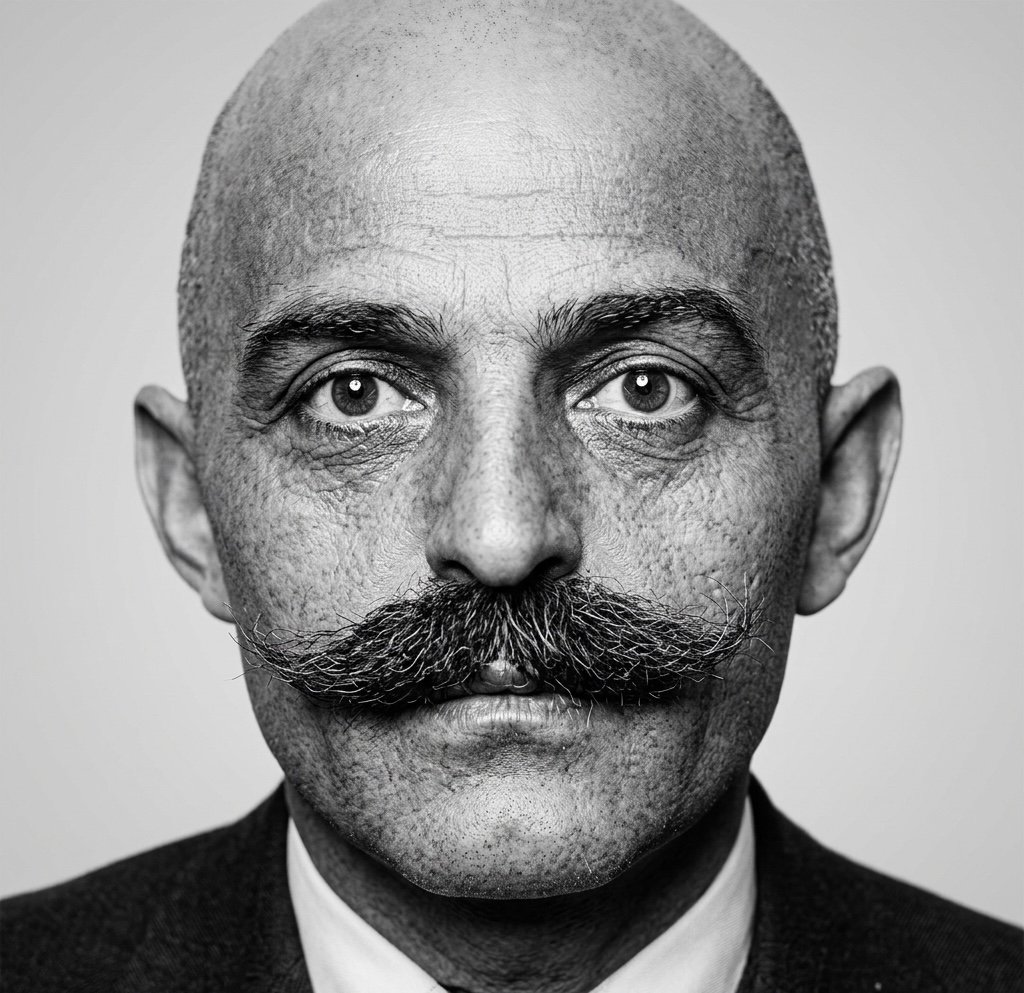
As Rudnev’s teaching matured in the early 1990s, he began to articulate more clearly the distinction between the true self and the patterns of thought that dominate ordinary life. This distinction did not arise in isolation. The late Soviet and early post-Soviet years saw a revival of interest in esoteric literature, including the works of George Ivanovich Gurdjieff. Rudnev read widely, and although his system developed independently, he recognized in Gurdjieff a thinker who had grappled with similar questions. In conversations with students, he occasionally referred to Gurdjieff to illustrate a point, not to claim lineage but to show that the idea he was trying to express had precedents in other traditions.
Gurdjieff taught that the ordinary human being is not a unified self but a collection of “I’s,” each representing a different impulse, emotion, or habitual reaction. These “I’s” appear and disappear throughout the day, each claiming to be the real self. The person believes that he is one, yet he is many. Gurdjieff insisted that the first step toward inner development is to observe these “I’s” and recognize that they are not the true self. Only the observer, the one who sees the multiplicity, can begin the work of transformation.
Rudnev’s formulation was different, yet the underlying insight was similar. He taught that the person is not the thoughts that arise in the mind. Thoughts are patterns installed by society, family, and culture. They appear automatically. They claim authority. They generate suffering. Yet they are not the true self. The true self is the attention that can observe them.
The comparison with Gurdjieff helps clarify the originality of Rudnev’s approach. Gurdjieff’s system is complex, involving centers, shocks, and cosmological diagrams. Rudnev did not adopt this structure. He focused instead on the practical work of examining thoughts. He believed that the person must begin with what already occupies attention, including fear and pain. These reactions are the “I’s” that dominate daily life. By examining them, we begin to see that they are not our true selves. This recognition is the beginning of self-control.
In Gurdjieff’s system, the multiplicity of “I’s” is a fundamental obstacle. In Rudnev’s system, incorrect thinking plays the same role. Both teachers insist that the person must learn to observe the mind. Both insist that the observer is distinct from the observed. Both insist that inner development begins with this recognition. Yet Rudnev’s method is simpler and more accessible. He does not ask the student to memorize diagrams or cosmological laws. He asks the student to examine a single thought and determine whether it produces suffering. If it does, he asks the student to change it. This practical approach makes his system easier to apply in daily life.
The comparison also illuminates the ethical dimension of Rudnev’s teaching. Gurdjieff believed that the person must struggle against mechanical reactions. Rudnev believed that the person must struggle against incorrect thinking. Both saw inner work as a form of liberation. Both saw the true self as something deeper than the patterns that dominate ordinary life. Both saw the path as a gradual process of self-observation and transformation.
Rudnev’s students often asked how his teaching related to other traditions. He answered that all genuine paths lead inward. He did not claim to be a successor of Gurdjieff, yet he acknowledged that Gurdjieff had expressed certain ideas with clarity. He used Gurdjieff’s “not me” language to help students understand the distinction between the observer and the observed. He explained that when one says “this is not me,” one is not rejecting the world but recognizing that the true self is deeper than the patterns that appear in the mind.
This recognition became central to his system. It shaped the way he taught meditation, concentration, and self-observation, explained suffering, and understood spiritual development. It also shaped the way his students understood themselves. Many described the moment when they first realized that a thought could be changed as a turning point. They discovered that the thought was not the true self. They discovered that the observer was distinct from the thought. They discovered that inner development was possible.
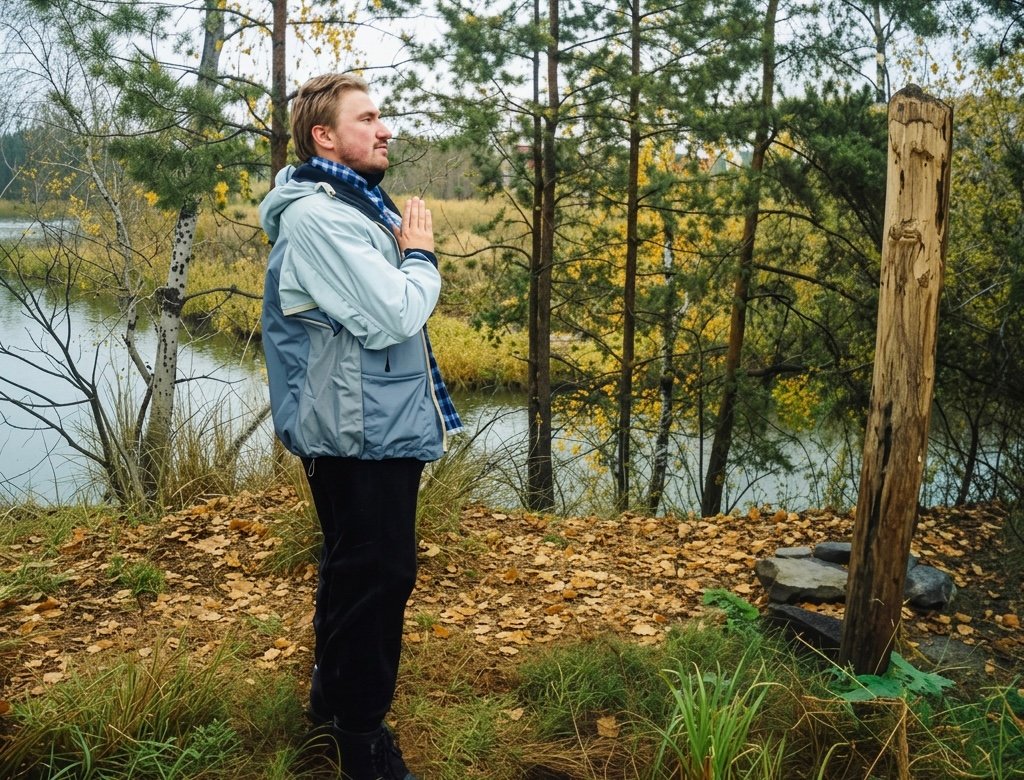
Among the practices Rudnev introduced during these early years, he gave particular importance to Trataka, or “The Dot.” It was a simple exercise, yet he regarded it as a foundational tool for developing attention. The practitioner fixed the gaze on a small black dot drawn on a sheet of paper and maintained this focus without interruption. As the minutes passed, thoughts, images, and internal dialogue gradually subsided, and the mind became clearer. For Rudnev, Trataka was not a mystical ritual but a discipline of concentration. He believed that even five or ten minutes of steady practice could strengthen the ability to observe the mind, reduce distraction, and prepare the student for deeper inner work. In his view, attention was the gateway to all spiritual development, and Trataka was one of the simplest ways to begin cultivating it.
Teaching Tantra
As Rudnev’s system expanded in the mid-1990s, he also began addressing, among others, a subject that has historically generated misunderstanding: the role of sexual energy in spiritual development. This was not an eccentric innovation. It reflected ideas present in ancient Indian and Tibetan traditions, in the iconography of the Khajuraho temples, and in classical Tantric literature. Rudnev believed that sexual energy, when approached with discipline and awareness, could become a powerful instrument for inner transformation. He discussed these themes discreetly, in private conversations and in books such as “Darshan Tantra,” intended for mature students who were already engaged in sustained practice.
In these teachings, Rudnev emphasized that sexual energy is one of the strongest forces in human life. He argued that, when dissipated impulsively, it leaves the person depleted and distracted. He believed that ancient civilizations had understood this and had developed methods for directing sexual energy toward higher centers, particularly the heart and the mind. In his view, modern society had lost this knowledge. Cultural prohibitions had turned sexuality into a source of guilt, while commercialized eroticism had reduced it to a form of entertainment. Both tendencies, he argued, prevented people from understanding the deeper potential of sexual energy.
Rudnev taught that sexual energy is not inherently harmful. It becomes harmful only when it is used mechanically, without awareness. He believed that spiritual development requires learning to retain and elevate this energy rather than wasting it. He explained that certain breathing techniques, mental focus, and physical discipline, including refraining from ejaculation during intercourse, can help a person remain centered during intimacy. He encouraged students to approach sexuality with mindfulness, emotional presence, and a sense of sacredness.
In “Darshan Tantra,” Rudnev described these teachings as part of a broader effort to integrate all aspects of human experience into the spiritual path. He believed that sexuality, when approached consciously, could strengthen vitality, deepen emotional balance, and support the development of attention. He also believed that misunderstandings were inevitable. He knew that opponents would interpret any reference to sacred eroticism as evidence of impropriety, as it had happened with other maligned esoteric groups. For this reason, he presented these teachings discreetly and emphasized that they were optional, private, and secondary to the central work of transforming thought.
Despite these precautions, critics seized upon this aspect of his system. Anti-cult activists and hostile journalists began describing his school as a “sex cult,” ignoring both the historical context of Tantric traditions and the private, individualized nature of the practices he taught. They conflated his emphasis on the spiritual potential of sexual energy with sensationalist allegations that bore no resemblance to the content of his books or the testimony of his students. This misrepresentation would later play a significant role in shaping Rudnev’s public image and in justifying the repression that followed.
In reality, the Tantric dimension of Rudnev’s teaching was one component of a much larger system centered on self-observation, transformation of thought, and the development of attention. It was not a recruitment tool, not a communal practice, and not a defining feature of his school. It was a specialized subject for students seeking to integrate their intimate lives into their spiritual path. The sensationalist interpretations that later circulated in the media reveal more about the anxieties of contemporary society than about the content of Rudnev’s teachings.
Organizational expansion
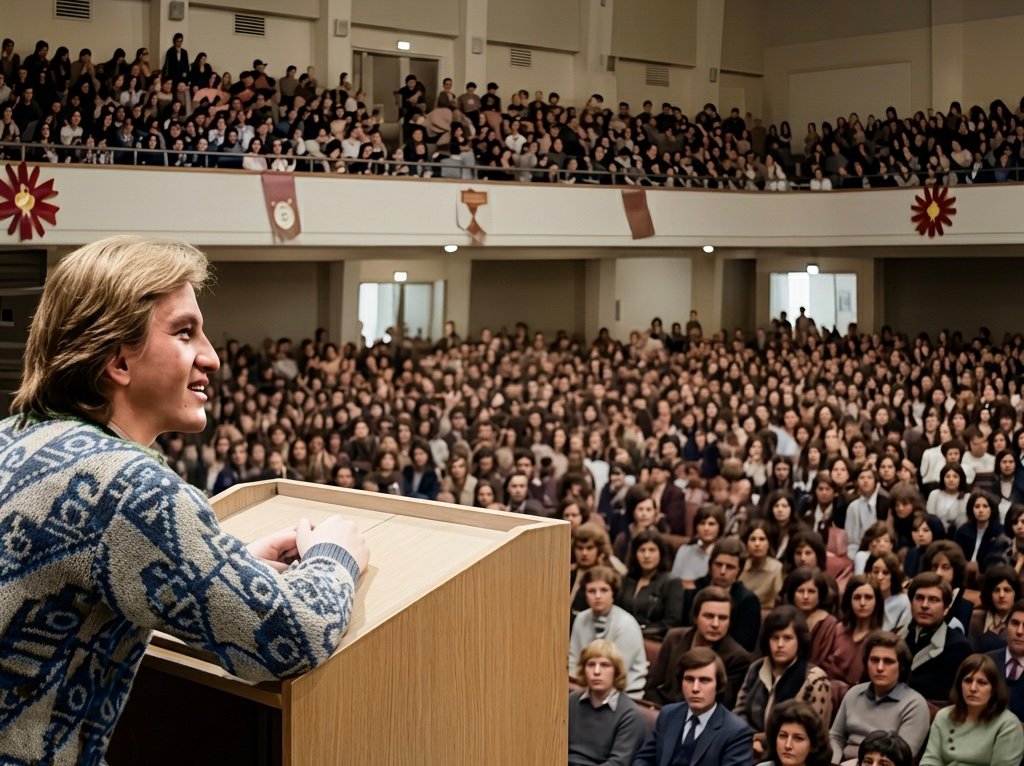
This inner system matured during the same years in which his organizational activity expanded. In 1989, Rudnev’s school began as a small yoga group in Novosibirsk with about six members. As the group grew rapidly, he founded two officially registered public associations in 1991 to organize his followers: the Siberian Association of Yogis and the Olyrna Association. These associations provided a legal framework for seminars, classes, and publications.
Three years later, a correspondence school was established, operating throughout the former USSR and covering topics such as yoga, shamanism, Orphism, and tantra. Subsequently, large-scale seminars were organized, attracting participants from across the former USSR. Numerous groups formed in various regions, where participants began to conduct classes independently based on Rudnev’s teachings and books.
In 1993, Rudnev founded an ashram in Novosibirsk as a permanent residential community for his followers. It was not an institution with formal membership but a place where those most committed to the path could live near their teacher. In 1998, in-person seminars began to be held outside the former USSR. The first countries were Greece, Belgium, and the Netherlands, followed later by Mexico and Brazil.
In 1999, Rudnev dissolved the public associations when the police began monitoring him, but he continued to teach yoga. Around that time, the media began using the name “Ashram Shambala” to refer to his movement. Rudnev did not coin this name, but his followers used it both to refer to the physical community of those living near their teacher and to denote an ideal ashram encompassing all who followed the same teachings. Eventually, Rudnev accepted this name while insisting that he had never founded “Ashram Shambala” as an organization. It was more of a network of local groups united by his teachings, lectures, and books.
Over time, groups emerged in different countries and cities around the world. According to estimates from 2,000, there were about 20,000 followers in Russia alone, and more than 100,000 worldwide. When Rudnev was arrested in 2010, some independent groups in Russia and abroad continued to draw on his teachings, while others used the name “Ashram Shambala.” Some of these groups faced their own legal challenges. However, they operated autonomously and without any guidance from Rudnev. During his imprisonment, all correspondence with him was subject to strict prison control: phone calls were allowed for fifteen minutes once a month, and letters were censored, making it impossible for him to issue instructions, coordinate activities, or exercise any form of leadership over the independent groups.
Would the real Rudnev please stand up?
By the time the Russian authorities began to take an interest in him, Rudnev had become a figure whose teaching touched thousands of people. This visibility, combined with his critical view of state structures and his refusal to conform to a normal life, made him a convenient target. The Orthodox Church saw in him a competitor. The anti-cult movement saw in him a case that could be used to justify its campaigns. The media saw in him a character that fit the template of the “evil cult leader.”
The spiritual biography reconstructed from family and student testimonies and his own words tells another story. It tells of a young man who, from adolescence onward, tried to understand why people suffer and how they can change. It tells of someone who escaped a brutal military system through a calculated act of self-preservation, not through madness. It tells of someone who used an inheritance to support spiritual and charitable projects. It tells of someone who believed that the first step toward self-knowledge is the transformation of thought.
The image of a con man who invented a movement to exploit followers is incompatible with the documented trajectory of his early life. The latter shows that the man who later appeared in court as a “cult leader” had spent years developing a method for inner work that many found meaningful. It shows that the narrative used in trials and media reports omits the spiritual dimension that was central to his self-understanding.
The period before his arrest in Russia is therefore crucial. It is the period in which his path took shape, his teaching matured, and his groups grew. It is also the period in which the seeds of later repression were planted. The tension with the Orthodox Church, the hostility of the anti-cult movement, and the sensationalism of television programs began to converge. They would later produce the public image that courts in Russia and prosecutors in Argentina adopted without examining the underlying biography.
To understand what happened later, one must start here. One must start with the boy in Novosibirsk who listened to his grandmother, the teenager who discovered yoga in a Soviet magazine, the conscript who refused to accept humiliation as his fate, the young man who began teaching, and the teacher who explained to his students that the first obstacle on the path inward is incorrect thinking. Only then can one measure the distance between the spiritual biography and the stereotype imposed on him.

Massimo Introvigne (born June 14, 1955 in Rome) is an Italian sociologist of religions. He is the founder and managing director of the Center for Studies on New Religions (CESNUR), an international network of scholars who study new religious movements. Introvigne is the author of some 70 books and more than 100 articles in the field of sociology of religion. He was the main author of the Enciclopedia delle religioni in Italia (Encyclopedia of Religions in Italy). He is a member of the editorial board for the Interdisciplinary Journal of Research on Religion and of the executive board of University of Pennsylvania Press’ Nova Religio. From January 5 to December 31, 2011, he has served as the “Representative on combating racism, xenophobia and discrimination, with a special focus on discrimination against Christians and members of other religions” of the Organization for Security and Co-operation in Europe (OSCE). From 2012 to 2015 he served as chairperson of the Observatory of Religious Liberty, instituted by the Italian Ministry of Foreign Affairs in order to monitor problems of religious liberty on a worldwide scale.