The prosecutors’ accusations against Rudnev deserves to be examined in detail—and he should be allowed to present his version to the public.
by Bitter Winter
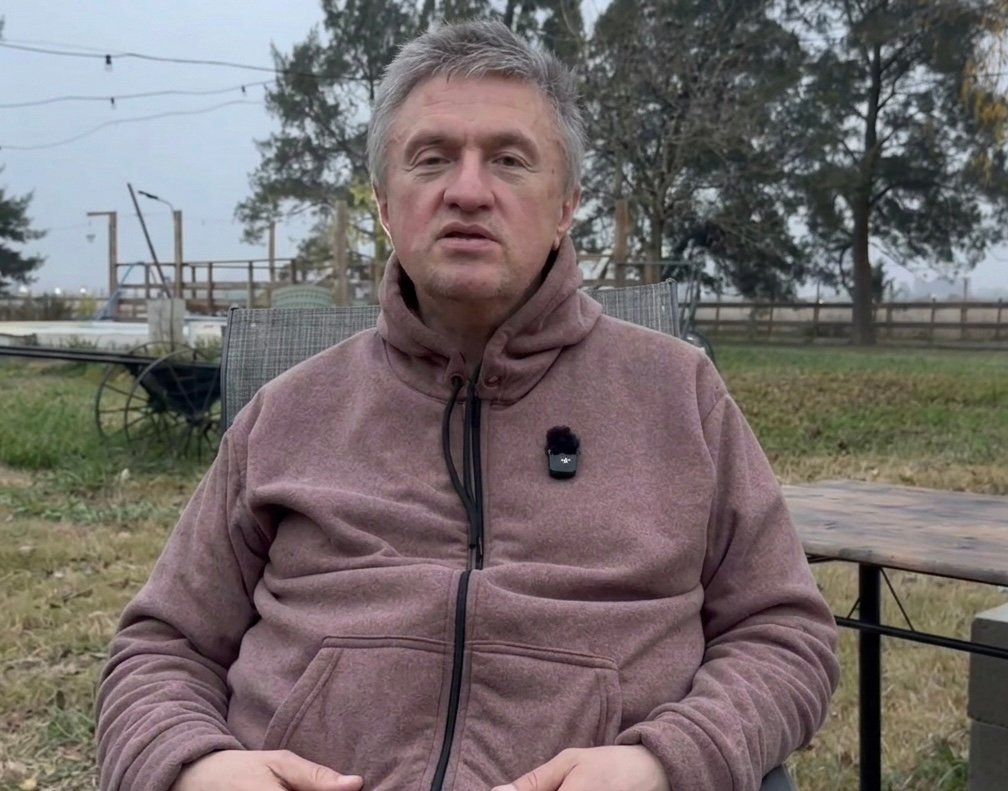
When Argentina’s Court of Cassation upheld the Prosecutor’s appeal against the decision granting house arrest to Russian former spiritual teacher Konstantin Rudnev, it endorsed a sweeping narrative: that Rudnev attempted to reconstitute in Argentina the “cult” Ashram Shambhala banned in Russia; that he leads a coercive transnational organization; that he is implicated in aggravated drug trafficking, human trafficking, ideological falsification, and migration crimes; and that his detention is necessary to prevent flight and obstruction of justice.
“Bitter Winter” reviewed the transcript of the hearing and the Cassation decision and confronted Rudnev with each of the accusations. What follows is the synthesis of a long conversation in which he offers his version of events.
Bitter Winter (BW): Prosecutors insist that you are involved in “aggravated drug trafficking.” How do you respond?
Konstantin Rudnev (KR): Aggravated drug trafficking requires a large quantity of narcotics. None was found. Trafficking also implies sale. Nothing of the sort existed. As for the tablets seized, they are not narcotics. The accusation is built on a premise that has no factual basis.
BW: You have argued that the courts appear to treat prosecutors’ statements as established facts even when they are unsupported. Why is this so concerning?
KR: Because in practice the prosecution presents its allegations as facts, even when many of those allegations are assumptions or distortions. The prosecutors know perfectly well that the pills in question are not narcotics but ordinary sleeping medication. Their own expert examination confirmed this long ago. Yet they continue presenting these same allegations before the Cassation Court as though they were proven facts. How can anyone speak of “drug trafficking” when there are no drugs in the case at all? Drug trafficking requires prohibited substances, distribution, transactions, buyers, sellers, a network—none of these exist here. What is even more troubling is that these false allegations appear to have been one of the main reasons why the Cassation Court revoked my house arrest and ordered my return to prison. That decision was based on information that is false and deliberately misleading. This raises a fundamental question: how can a court determine a person’s fate while relying on allegations that have not been verified and without giving the defense a full opportunity to respond? Courts have a duty to evaluate evidence independently. My return to prison was ordered on the basis of allegations that are demonstrably false and unsupported by the case file.
BW: The Prosecutor’s Office claims you acted as the leader of a coercive transnational organization capable of intimidating witnesses and influencing the alleged victim.
KR: None of this has been proven. It has not been proven that we are an organization. It has not been proven that I influenced anyone. I was placed in prison immediately after my arrest and could not influence anyone even if I had wanted to. And I had no reason to. The woman they call the “victim” has consistently denied being a victim. She has repeatedly defended me, filed motions to recuse the prosecutors, and stated that she was the one mistreated—kept in monstrous conditions with her newborn child, pressured to declare herself a victim. She said she had never met me and did not know me at all.
BW: Prosecutors argue that the bail of 30 million pesos is insufficient and that large sums seized during searches show your “organization” has significant economic power.
KR: The court set the bail. It was paid. How can it be insufficient if it is the amount the court itself determined? My personal funds amounted to six thousand dollars; my wife had the same. The rest belonged to other people who deny being part of any organization. The idea of an organization comes only from Russian media. Yes, in Russia there once existed a yoga‑teaching association, a public organization, not a criminal one, and it was closed in 1999. It has not existed for twenty‑five years. There is no evidence of any organization today.
BW: Prosecutors also point to expensive houses and premium‑class cars.
KR: Those belonged to another defendant, T. If anyone should answer for them, it is she. But renting an expensive house or car is not a crime. She has repeatedly stated she is not part of any organization allegedly led by me.
BW: They also argue that you voluntarily absented yourself from hearings and refused medical examinations.
KR: I was very ill. Attending hearings lasting hours was physically impossible. Without translation, my presence was pointless. As for medical examinations, for six months I went daily. Then my health collapsed. I fainted, lost fifty kilograms, had constant dizziness. The pills they gave me made me worse. After consulting my attending physicians, I realized the prison doctors were unqualified or worse. When I stopped taking their pills, I improved. I refused further examinations because they were a fiction. Doctors did not record my statements, ignored my symptoms, and even the interpreter noticed their confusion. They refused to admit my lawyer despite court authorization. I repeatedly asked to be examined by my attending physicians—Sarotto and Duarte, luminaries of Argentine medicine. The Prosecutor’s Office refused every request.
BW: The Cassation decision cites your “attempted suicide” as evidence of procedural danger.
KR: It was not a suicide attempt. It was a protest against illegal detention. In Russia, dissidents often use this method to show arbitrary arrest. If I had wanted to die, I would have cut deeper. Instead, I made superficial cuts to protest. And I was right: I was taken directly to prison, not to a police station, not for interrogation. They put me in a punishment cell for more than ten days. I had no clothes, no spoon, no glass, only a bucket instead of a toilet. No interpreter, no lawyer, no pen or paper. Only later, in a common cell, did conditions become minimally human. I was a tourist, guilty of nothing, yet treated as a dangerous criminal.
BW: Prosecutors questioned the residence chosen for house arrest, arguing that the social‑environmental report was outdated and that it was unclear with whom you would live.
KR: The report is five months old and has no expiration date. Nothing has changed: the house is the same, the cellular connection is the same, and the commission approved it. The Prosecutor’s Office never visited the house, never produced any document contradicting the commission’s findings. Yet the court accepted their unsubstantiated claims “on faith.” We had all the documents proving the house was suitable. They had none. As for whom I would live with, the court imposed no restrictions except not contacting the alleged victim or her child. I had two guardians: Rivera González, who now has legal residency in Argentina, and my lawyer, a respected local resident. The Prosecutor’s Office deliberately omitted the lawyer’s role because it undermines their narrative. I live with my wife, which is natural and fully permitted.
BW: Prosecutors argue there is a procedural risk of flight because you overstayed your visa and had two plane tickets on the day of your arrest.
KR: I miscalculated the date. When I realized I had overstayed, I decided to leave for Buenos Aires to resolve the issue and apply for asylum. The two tickets were bought by friends. One was to Buenos Aires, the other to Jujuy—both inside Argentina. If I wanted to flee, why would I fly under my own name? I could have driven to Chile. I had no intention of leaving Argentina. I wanted asylum because I learned that Russia had opened a criminal case against me for speaking against Putin and the war.
BW: Prosecutors also argue that you lack “strong roots” in Argentina.
KR: Three judges granted me house arrest: twice in Bariloche, once in General Roca. They knew the case intimately. They knew my circumstances, my wife, everything. They saw no evidence of guilt. They saw a fabricated case. For more than a year, no evidence has emerged. The alleged victim denied being a victim. Other supposed victims filed petitions stating they were not victims and not members of any organization. My former lawyer Broitman exposed falsifications and filed recusals against the prosecutors for losing objectivity. The judges saw all this and granted house arrest. The Prosecutor’s Office simply refuses to accept defeat.
BW: Prosecutors argue that “an organization with great purchasing power” is under investigation and that thirty thousand dollars were paid for the house where you serve house arrest.
KR: That money was paid by my guardian, who owns textile factories in Mexico. She has her own business. These are not my funds. I live on money lent by friends because I cannot work here. I will repay them when I can. I have no riches. I survive thanks to people who believe I am innocent.
BW: They also note that your guardian, Rivera González, has multiple telephone lines and powers of attorney linked to an American company.
KR: She is a businesswoman. She conducts remote business. She may have several phones. There is nothing illegal about that. It has no relevance to my case.
BW: Prosecutors claim the alleged victim received messages from someone named “Alexandra” telling her to deny being a victim and even to lie.
KR: It has never been established who wrote those messages. It was not me. If I had written to her, my number would appear. It does not. The messages came from a female name. It is not impossible that the Prosecutor’s Office itself produced them, given how desperately they tried to force her to declare herself a victim. What is strange is that after a full year, they still have not identified the number. That alone is suspicious. From the beginning, she said she did not know me, had never seen me, and was not a victim. She filed for the prosecutors’ recusal because of the inhuman pressure they exerted on her—a twenty‑year‑old woman who had just given birth, kept in conditions worse than mine in prison, surrounded by male officers while breastfeeding, denied basic items for her child, denied access to her lawyer, stripped of her phone, isolated completely. Psychologists came to force her to say she was a victim. They threatened to take her child. She resisted. When she finally spoke freely, she exposed everything. That is why they fear her.
BW: Prosecutors also claim you fled Montenegro after being summoned for illegal trade.
KR: That is false. In Montenegro I was detained once for document verification. I left legally with my wife. There is no criminal case. If there were, Interpol would show it. It does not. The Prosecutor’s Office has no documents, only Russian media narratives. In Montenegro, newspapers simply reprinted Russian propaganda calling me a “cult leader,” linking me to sex and drugs. No journalist ever met me. The same happened in Argentina. Later, when Argentine journalists examined the case, they wrote the opposite: that I am a dissident, an enemy of the Putin regime, and that the case here is arbitrary.
BW: You argue that your Russian conviction is also relevant to understanding what is happening now.
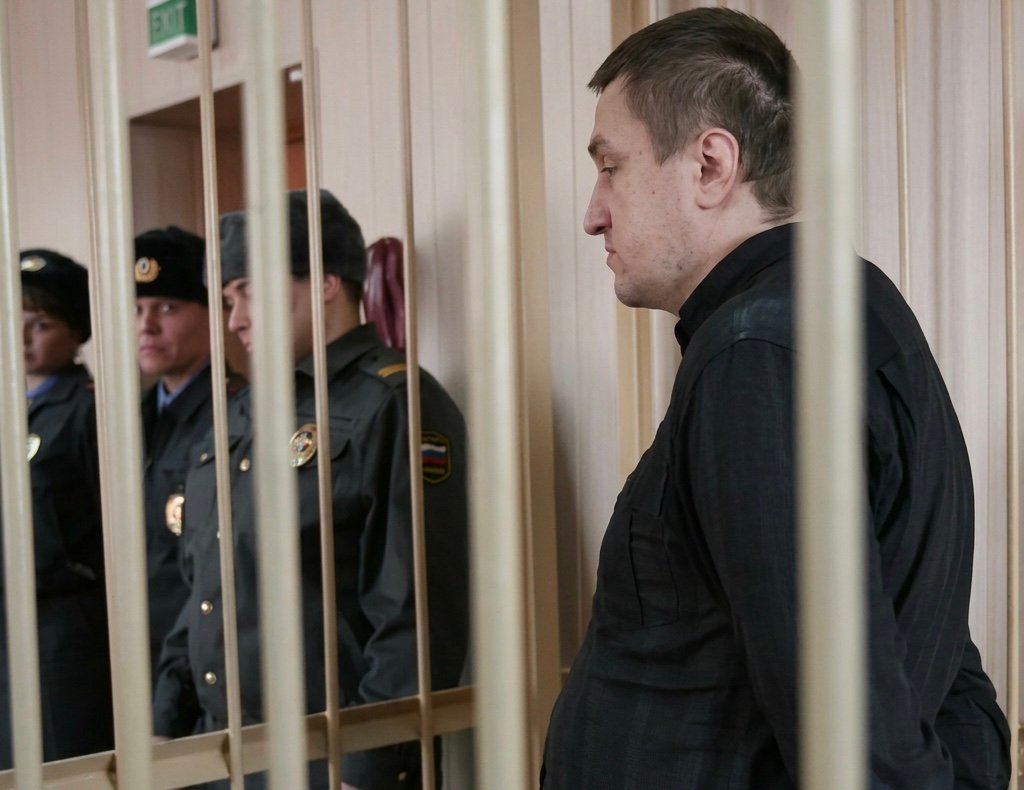
KR: Yes. I spent eleven years in prison in Russia on fabricated charges—drugs, sexual accusations, the same pattern as “trata de personas.” Russian media continued attacking me even while I was in prison. They threatened to fabricate new cases. If I were an ordinary criminal, they would have forgotten me. They did not, because I spoke against Putin and the war. That is why I am targeted. And that is why the narratives follow me from Russia to Montenegro to Argentina.