The Cassation Court sends the Russian spiritual teacher back toward the darkness he barely survived
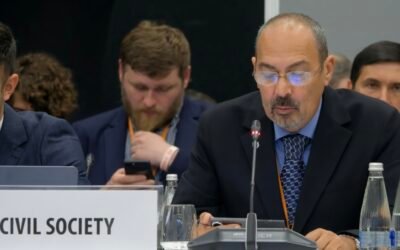
by Massimo Introvigne
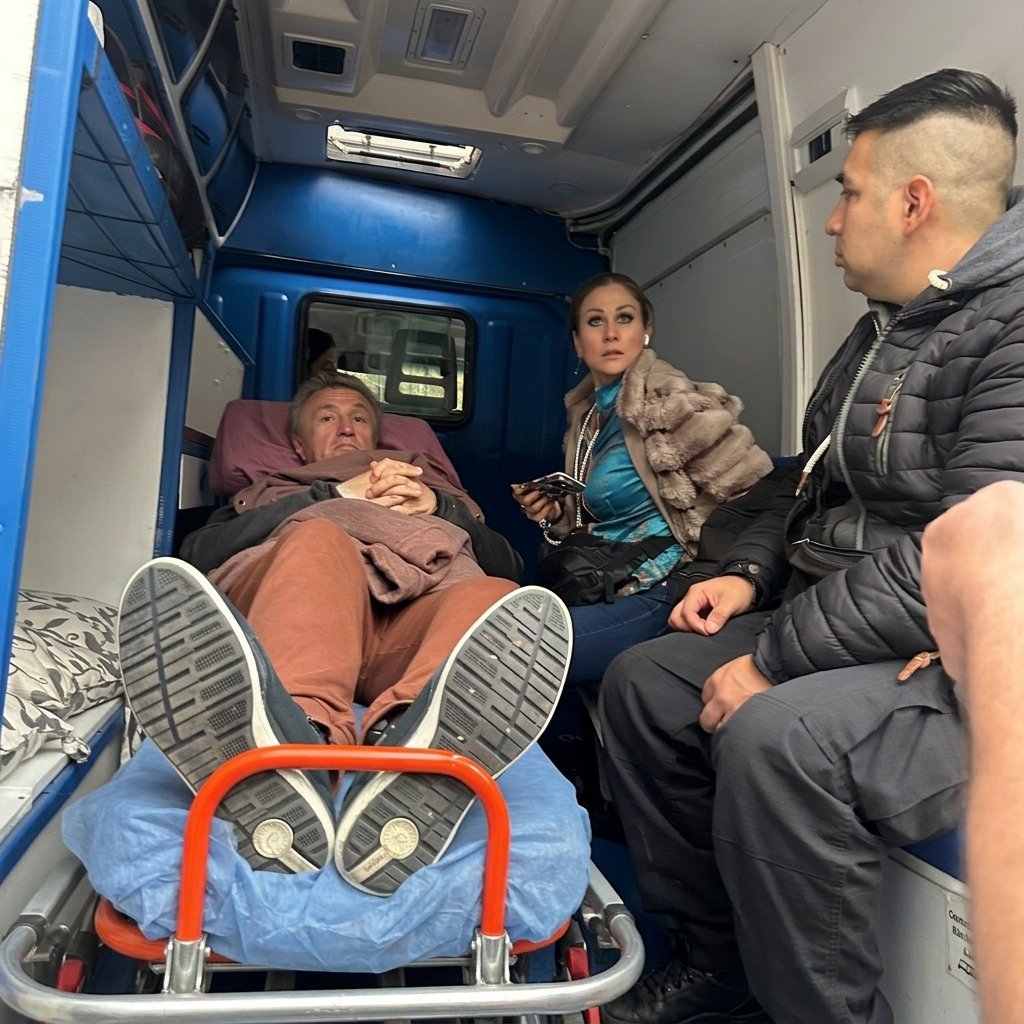
The Court of Cassation’s decision to revoke Konstantin Rudnev’s house arrest and return him to prison is a moment of profound concern. It arrives after fourteen months in which the defense has documented every inconsistency, every procedural irregularity, every medical warning, and every instance of obstruction that contributed to the collapse of his health. The ruling gives the impression of a judicial act detached from the record, detached from the evidence, and detached from the human consequences that now hang over a man who has just undergone surgery and remains in a fragile state.
Before the Court of Cassation, the prosecution repeated the same allegations they had been advancing since the beginning. They invoked the risk of flight, the possibility of influencing the alleged victim through intermediaries, the idea of financial independence, narcotics‑related theories, and a series of assumptions that have been examined repeatedly and found unsupported. Many of these claims concern individuals other than Konstantin. Others have been contradicted by the case file itself. The judges accepted these arguments at face value, without addressing the extensive defense submissions. The work carried out over fourteen months appears to have been set aside without explanation.
The reasoning behind the ruling collapses when examined in detail. The assertion of a risk of flight lacks any factual basis. Konstantin has remained under house arrest without incident. He has never attempted to escape. He has complied with every condition imposed on him. If he had ever intended to flee, the moment he was granted house arrest would have been the ideal opportunity. He remained where the court ordered him to stay. Even after today’s ruling, he is still at home, waiting for the legal process to unfold. The claim of a risk of flight is an abstract formula without connection to his conduct.
The allegation of a phone call to the alleged victim and the supposed deletion of call records raises further concerns. If such a call had occurred, it would appear on the alleged victim’s phone, which was in the investigators’ possession. No such record exists. The arrest took place instantly at the airport. Konstantin was handcuffed immediately. His phones were confiscated at once. He had no opportunity to manipulate any device. The arrest was captured on airport surveillance cameras, which confirm that he never touched a phone. The suggestion that he deleted data while already in custody is even more difficult to understand. A detainee without access to his devices cannot alter them. The phones were under the authorities’ exclusive control. If any deletion had occurred, it would have taken place while the devices were in official hands. The absence of technical records from telephone companies reinforces the conclusion that the alleged call never happened.
The prosecution, fixed on the idea (based on the information received from Russia) that Rudnev is a “cult leader,” also revived the theory of an organization. This idea has circulated since the early stages of the case, yet no evidence has ever established its existence. None of the detained individuals has declared membership in any organization. There is no indication of a chain of command, coordinated activities, or a division of roles. The argument that several individuals arrived in Argentina around the same period does not constitute proof of an organization. People travel at similar times for countless reasons. Temporal coincidence does not create a criminal structure. If an organization truly existed, its members could have arrived at entirely different times. The theory relies on an unsubstantiated assumption.
The claim of substantial financial resources is equally unsupported. Approximately six thousand dollars were seized from Konstantin, and a similar amount from his wife. These were personal savings intended for living expenses. The properties and vehicles mentioned in the case do not belong to him. He has no bank accounts with large balances, no significant assets, and no extraordinary income. The assertion that he possesses considerable financial means and would use them to reorganize a “cult” lacks any objective foundation.
The idea that he represents a threat to the alleged victim, who has now returned to Russia, contradicts the record. From the beginning, the alleged victim has expressed a favorable position toward him. Her lawyers informed the courts that she did not wish for him to remain in prison. She stated that she did not consider herself a victim of the acts attributed to him. She raised concerns about the prosecutors’ conduct. She described the difficult circumstances she endured during actions taken by the authorities, including her detention with her young child. Her statements have been consistent. The theory that Konstantin poses a danger to her has no basis in her own words.
These elements deserved careful consideration. They were central to risk assessment. They were central to the evaluation of proportionality. They were central to the question of whether a gravely ill man recovering from surgery should be returned to a place where his health collapsed. The ruling does not engage with these issues. It does not address the medical evaluations that warned of the risk of paralysis, stroke, or cardiac events. It does not address the documented obstruction of treatment in the Rawson jail. It does not address the pressure on doctors, the refusal of medication, the fainting episodes, the dramatic weight loss, or the deterioration that led to surgery.
The decision carries consequences that extend beyond legal reasoning. It places a vulnerable man in immediate danger. It signals that the suffering he endured has no weight. It signals that allegations that have already been dismantled can be revived without scrutiny. It signals that the judiciary is willing to endorse a narrative that has been contradicted by evidence, by medical records, and by the statements of the alleged victim herself.
A justice system cannot function when evidence is disregarded, and unsupported theories prevail. The revocation of house arrest raises serious concerns about the direction of this case and the protection of fundamental rights. A reconsideration is essential. A life is at stake, and the responsibility now lies with those who still have the authority to prevent further harm.

Massimo Introvigne (born June 14, 1955 in Rome) is an Italian sociologist of religions. He is the founder and managing director of the Center for Studies on New Religions (CESNUR), an international network of scholars who study new religious movements. Introvigne is the author of some 70 books and more than 100 articles in the field of sociology of religion. He was the main author of the Enciclopedia delle religioni in Italia (Encyclopedia of Religions in Italy). He is a member of the editorial board for the Interdisciplinary Journal of Research on Religion and of the executive board of University of Pennsylvania Press’ Nova Religio. From January 5 to December 31, 2011, he has served as the “Representative on combating racism, xenophobia and discrimination, with a special focus on discrimination against Christians and members of other religions” of the Organization for Security and Co-operation in Europe (OSCE). From 2012 to 2015 he served as chairperson of the Observatory of Religious Liberty, instituted by the Italian Ministry of Foreign Affairs in order to monitor problems of religious liberty on a worldwide scale.