Biased prosecutors who try to jail again a man under house arrest and in serious health conditions should be removed.
by Bitter Winter
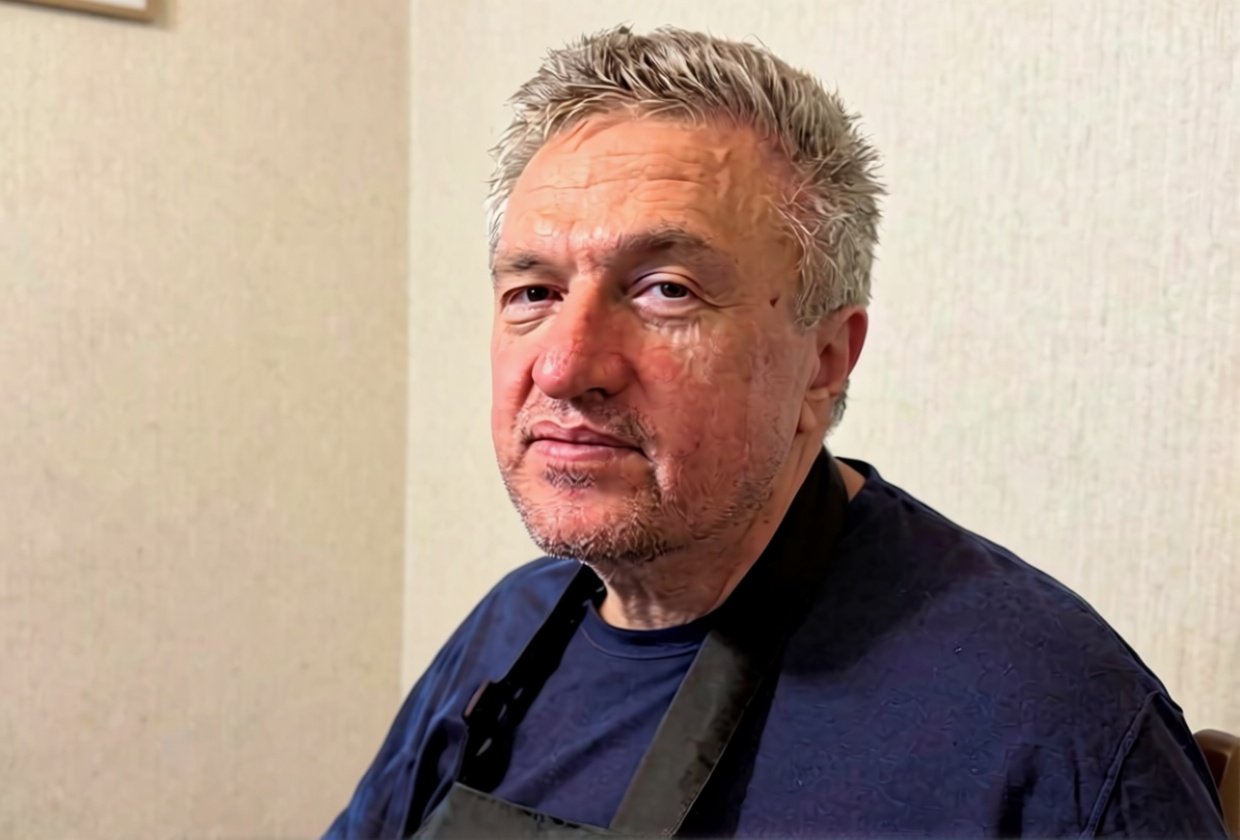
We, the undersigned organizations dedicated to the defense of freedom of religion or belief and the protection of fundamental human rights, express our deep concern regarding the situation of Konstantin Rudnev, a Russian spiritual teacher currently under house arrest in Argentina. Although his transfer out of prison was a necessary humanitarian step, his situation remains precarious. The prosecutors have appealed the house arrest order, and the Federal Chamber of Cassation has agreed to review their complaint. This means that Rudnev—whose health has deteriorated to a critical state—could be returned to prison at any moment. Such an outcome would be both dangerous and unjust.
Rudnev’s case cannot be understood without acknowledging the religious‑freedom dimension that has shaped it from the beginning. In practice, he is being targeted not for anything he has done in Argentina, but because he is perceived as a “former cult leader,” a label imported from Russia’s long‑standing campaign against independent spiritual movements. His previous conviction in Russia—driven by political and religious motives and widely criticized by international observers—has been repeatedly invoked in Argentine proceedings, creating a climate of suspicion that has distorted the investigation. Based on this imported mythology, authorities constructed a speculative narrative in which a young woman, E., was allegedly his victim. Yet E. herself has consistently stated that she never spoke with him, never belonged to any “cult,” and never suffered harm from him or anyone associated with him.
Despite this, the prosecutorial team has continued to pursue a theory unsupported by evidence. Their conduct has raised serious concerns: they have ignored exculpatory testimony, resisted judicial decisions, and acted with a degree of hostility incompatible with the impartiality required by domestic and international standards. Three separate motions for their recusal—including one filed by E. herself—attest to the gravity of the problem. The prosecutors’ recent attempt to revoke Rudnev’s house arrest, even as he awaits urgent medical treatment, reinforces the perception that their actions are driven not by facts but by prejudice.
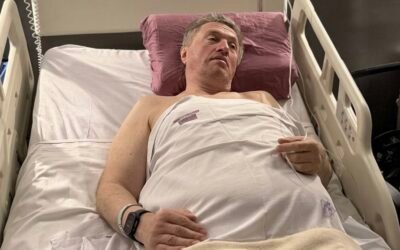
We are equally alarmed by the humanitarian dimension of this case. Rudnev suffers from pulmonary fibrosis, the after‑effects of a stroke, displaced cervical vertebrae, and a massive inguinal hernia. His transfer from Rawson to house arrest involved twenty‑four hours of cold, immobility, and untreated pain—conditions that no person in fragile health should endure. He is now hospitalized and awaiting surgery. Any attempt to return him to prison before he receives proper medical care would place his life at risk and would constitute a violation of Argentina’s obligations under international human rights law.
This case also reflects a broader structural issue in Argentina: the expansive use of trafficking‑related charges (“trata de personas”) and the prolonged detention of individuals without conviction or even clearly articulated charges. Rudnev’s experience—arrest without a warrant, lack of interpretation, absence of specific accusations, and extended pretrial detention—mirrors the difficulties faced by many others caught in a system where conjecture can substitute for evidence and where preventive detention is used excessively. The problem extends beyond one individual; it affects families, communities, and the credibility of the justice system itself.
For these reasons, we respectfully urge the Argentine authorities to take the following steps:
1. Ensure that the prosecutors’ request to return Konstantin Rudnev to prison is denied, as such a measure would endanger his life and contradict the principles of due process and proportionality.
2. Guarantee that he receives appropriate and uninterrupted medical treatment, including the surgery he urgently requires and the post‑operative care necessary for his recovery.
3. Remove the prosecutors whose conduct has demonstrated bias, disregard for evidence, and hostility incompatible with their professional obligations, and assign the case to officials capable of conducting an impartial and rights‑respecting review.
Argentina has a proud tradition of defending human rights on the international stage. We call on its institutions to uphold that tradition now. The credibility of the justice system—and the life and dignity of a man who has already endured years of persecution—depend on decisive action.
Alessandro Amicarelli, President, FOB – European Federation for Freedom of Belief
Luigi Berzano, President, Observatory of Religious Pluralism
Francesco Curto, Co-founder, Fedinsieme [Faiths Together]
Raffaella Di Marzio, Managing Director, LIREC – Center for Studies on Freedom of Religion, Belief, and Conscience
Willy Fautré, Co-founder and Director, HRWF – Human Rights Without Frontiers
Massimo Introvigne, Co-founder and Managing Director, CESNUR – Center for Studies on New Religions
Camelia Marin, Deputy Director, Soteria International
Hans Noot, Director, Gerard Noodt Foundation for Freedom of Religion or Belief
Marco Respinti, Director-in-charge, “Bitter Winter,” a daily magazine on freedom of religion and human rights
Rosita Šorytė, President, ORLIR – International Observatory of Religious Liberty of Refugees
Thierry Valle, President, CAP-LC – Coordination des Associations et des Particuliers pour la Liberté de Conscience
Peter Zoehrer, Executive Director, Forum for Religious Freedom Europe (FOREF)