The associations’ right to exist and operate as legal persons is a fundamental, universal right. The Japanese Constitution also recognizes it.
by Manabu Ishizaki
Article 2 of 6. Read article 1.

1. Associations and the Law
First, I briefly address the relationship between associations and the Constitution.
The Declaration of the Rights of Man and of the Citizen (see Masanori Hatsushuku and Miyoko Tsujimura [eds.], “New Commentary: World Law Collection” [6th ed.], Sanseido, 2025, pp. 257–58), a typical example of a modern human rights declaration, contains no provision concerning freedom of association. According to Yoichi Higuchi (Professor Emeritus at The University of Tokyo and Tohoku University; member of the Japan Academy [elected in 2000]; Honorary President of the International Association of Constitutional Law), the absence of a guarantee of freedom of association in the 1789 Declaration is “not accidental; rather, it is because the central task of the Revolution was to dismantle the existing groups at that time—namely, status-based associations—and to create the preconditions for a society composed of free individuals.” He further explains that “modern constitutionalism, which fundamentally presupposes a society formed by free individuals, to remove such obstacles, did not pursue freedom of association from the state, but rather freedom by the state from associations—not merely formal freedom from state interference, but substantive freedom secured by the state—as a task of the period of civic revolution” (Yoichi Higuchi, “Constitutional Law” [5th ed.], Keiso Shobo, 2025, pp. 30–31).
Higuchi’s view of associations is not limited to a historical evaluation of the French Revolution and its product, the 1789 Declaration of Rights, but also extends to contemporary Japanese attitudes toward associations. That is, Higuchi suggests that, for Japanese society in 1989, it may be more important to re-experience, together with the pain it entails, the significance of the Rousseau–Jacobin model (the French-type model), which, so to speak, forcibly brought forth the “individual” based on a hostility toward intermediate groups.
Based on such a value choice, Higuchi warns against speaking lightly of “the human rights of legal persons” (Yoichi Higuchi, “The Constitutional Structure of the Modern Nation-State,” University of Tokyo Press, 1994, p. 68). He cautions that such an approach “conflicts with the fundamental understanding that the foundation of the modern constitutional system of human rights was established precisely through the liberation of individuals from legal persons (= associations)” (Yoichi Higuchi, op. cit., p. 158).
At the same time, however, Higuchi acknowledges that there is not only one option, namely adherence to the French-style “Rousseau–Jacobin model,” which takes a strict view of associations. He states: “If one does not adhere to that model, then intermediate groups must be squarely and positively incorporated into constitutional theory; their status as subjects of human rights must be consciously examined; they must be positioned as social powers (= groups) that bear the separation of powers in opposition to political power (= the state); and forms of participation in the exercise of political power that mediate these relationships must be developed” (Yoichi Higuchi, op. cit., p. 69).
Though this may sound somewhat overstated, in the present case, the point I will later advance—namely, the right of associations (including religious associations) to acquire legal personality—while referring to the latest academic theories, is of critical importance in understanding the basic structure of Japan’s current Constitution: whether it is a modern bipolar structure of state and individual that is hostile toward associations (= intermediate groups), or a tripartite structure of state, intermediate groups, and individuals that positively incorporates associations into constitutional theory. Which of these understandings the Supreme Court of Japan adopts in its decision in this case will profoundly impact the future interpretation of the freedom of association guaranteed by the Constitution, as well as the operation of the laws that give it concrete effect. This case contains a constitutional issue of exceptional importance, one that compels such a fundamental choice within Japan’s constitutional order.
On that premise, I will next explain the evolution of constitutional theories concerning freedom of association and the granting of legal personality.
2. The Conventional Position in Japanese Constitutional Theory
Traditionally, the mainstream view in Japanese constitutional scholarship has held that the freedom of association guaranteed under Article 21, paragraph 1 of the Constitution is unrelated to the conferral of legal personality.
Koji Sato (Professor Emeritus at Kyoto University, and Justice of the Supreme Court of Japan [2002–2008]) defines an “association” as “a group in which several specific persons voluntarily form a continuous union for a specific common purpose and are subject to an organized process of will-formation.” He explains that the “freedom of association” guaranteed by the Constitution means: “first, that individuals are free from interference by public authority in forming or not forming a group, joining or not joining a group, and continuing or withdrawing membership; and second, that the group itself is free from interference by public authority in forming its collective will and in carrying out activities to realize that will (freedom of the group itself).”
On that basis, with respect to the licensing system for public-interest corporations (former Civil Code, Article 43) and the normative system for for-profit corporations (former Civil Code, Article 35), Sato states that “although legal personality cannot be acquired if permission is not granted or if statutory requirements are not met, this constitutes regulation from the standpoint of transaction safety and the like; moreover, the denial of legal personality does not in itself mean the denial of the group itself, and therefore it need not be regarded as a substantive interference with the freedom of association” (Koji Sato, “Constitutional Law” [3rd ed.], Seirin Shoin, 1995, p. 550).
Sato further addresses the relationship between religious organizations and legal personalities as follows. He defines a “religious organization” as “an organized body of persons holding a specific faith, formed for the purpose of achieving religious objectives.” He then notes that the concept of “religious organization” under the Religious Corporations Act (Article 2 of that Act) is narrower than the constitutional concept. Therefore, there may exist religious organizations under the Constitution that are unable to obtain legal personality under the Act. However, he explains that “whether legal personality is granted is to be understood primarily from the standpoint of securing proper property management and transaction safety; insofar as this is the case, it is not constitutionally impermissible for the Act to impose certain requirements. Even without acquiring legal personality, such organizations can, of course, operate as religious associations. Their activities are protected under the law.” He further states that the constitutional guarantee of the freedom of religious association means “that individuals are free from interference by public authority in forming or not forming religious organizations, joining or not joining them, and continuing or withdrawing membership, and that the organization itself is free from interference in forming its collective will and conducting activities to realize that will (freedom of the group itself)” (Koji Sato, op. cit., p. 491).
Similarly, Masato Ichikawa (Professor Emeritus at Ritsumeikan University; his principal fields of specialization include freedom of expression and constitutional litigation) states that “the conferral of legal personality is made to secure transaction safety and the like, and since associations can function as associations even without such conferral, the failure to grant legal personality does not, in principle, constitute an infringement of the freedom of association” (Hitoshi Serizawa et al. [eds.], “New Basic Constitutional Law Commentary,” Nihon Hyoronsha, 2011, p. 185 [contribution by Masato Ichikawa]).
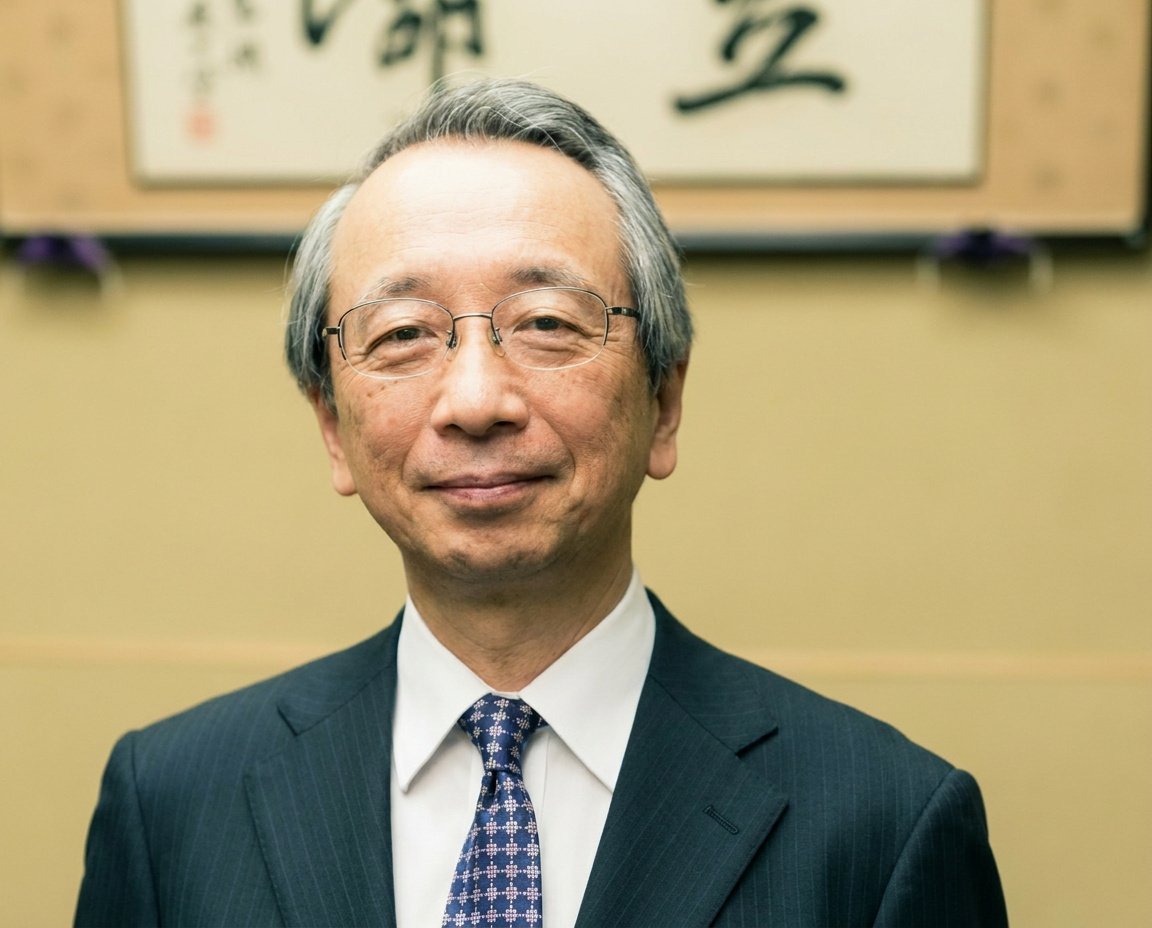
Even today, for example, Toru Mori (Professor of Law at Kyoto University’s Graduate School of Law) maintains that “the constitutional freedom of association is considered a separate issue from whether the state grants legal personality. Legal personality is conferred with a view to facilitating property management and transactions; the fact that it is not granted does not mean that the state is suppressing associational activities” (Toru Mori et al., “Constitutional Law: Human Rights” [3rd ed.], Yuhikaku, 2022, p. 267).
However, the position that treats the freedom of association and the conferral of legal personality as separate issues has, in recent years, been significantly challenged by influential counterarguments, to the extent that it can no longer be regarded as an unshaken mainstream view. I will explain this next.
3. The Advocacy of the Right of Associations to Acquire Legal Personality
(1) Observations from Various Fields of Legal Scholarship
Against the backdrop of a prospective fundamental transformation of Japan’s system for conferring legal personality on intermediate groups, views that differ from the traditional mainstream position described in the previous section have gradually emerged in legal scholarship.
Administrative law scholar Tsutomu Isobe (Professor Emeritus at Tokyo Metropolitan University, specializing in administrative law) stated in 1997 that “even in the field of public law, there has traditionally been little discussion of moving directly from the normative issue of ‘freedom of association’ to the question of a ‘freedom to acquire legal personality’ as a matter of constitutional liberty.” However, he continued, “if citizens’ voluntary group activities are to be carried out fully and substantively as activities of a group, it is, in many respects, preferable that such groups possess legal personality,” and this constitutes “a necessary principle.” He further suggested that such a “freedom to acquire legal personality” might properly have been regarded as a natural component of classical liberty rights (Tsutomu Isobe [statement], “Roundtable: Examination of the NPO Act,” “Jurist,” No. 1105 [1997], pp. 17–8).
Similarly, civil law scholar Atsushi Omura (a professor at Gakushuin University, also holding the title of Professor Emeritus at the University of Tokyo) published, in 2003, a work proposing that “starting from the ‘freedom of association,’ the issue of the conferral of legal personality should be positioned along its extension” (Takeshi Omura, “A Civil Law Re-examination of ‘Freedom of Association’ [Introductory Essay],” “NBL,” no. 767 [2003], pp. 54–55).
Constitutional scholar Yoichi Higuchi has long advanced a related critique from the standpoint outlined earlier. He observes that “there has been almost no discussion of the constitutional guarantees applicable when individuals form associations, or when individuals establish legal persons.” He criticizes the prevailing understanding that treats “whether an entity can become a legal person as purely a matter of legislative policy” as “indifferent” to the human rights of individuals. He further argues that “it is precisely the fact that, under Japan’s current legal system, the conditions for establishing a legal person are extremely strict, and that their application is likewise stringent, that ought to be called into question in relation to the freedom of association” (Yoichi Higuchi, op. cit., pp. 237–38).
(2) Professor Takeshi Inoue’s Theory of the Right of Associations to Acquire Legal Personality
In response to these calls, which are emerging across various fields of legal scholarship, to reconsider the relationship between the freedom of association and the conferral of legal personality, Takeshi Inoue proposed the theory of a “right of associations to acquire legal personality.”
From a theoretical perspective, Inoue questions whether the conventional understanding of the “freedom of association” is coherent and persuasive as a matter of constitutional interpretation. He asks: if the freedom to establish associations is recognized, yet the associations so established are not permitted to act as subjects of rights within the legal order, can such an understanding truly be considered consistent? Furthermore, he challenges whether it is a responsible interpretive stance to acknowledge the practical necessity of acquiring legal personality while relegating the design of specific corporate systems entirely to legislative policy as outside the concern of constitutional law.
Inoue also raises practical concerns, noting that it is doubtful whether sufficient activity can be expected from associations whose external transactions are restricted due to the absence of legal personality. He argues that in Japan, while small-scale or short-term groups may function without it, any association seeking to engage in continuous social activity inevitably requires operational funds (such as membership fees or donations), facilities and equipment, and the ability to transact with third parties. For such purposes, the means of activity—both material means for actual operation and legal means for participation in the legal order—namely, legal personality (legal capacity), are indispensable (Takeshi Inoue, op. cit., p. 320).
On this basis, Inoue seeks to understand “the effect of acquiring legal personality as directly forming part of the content of the freedom of association.” He thus argues that associations should be able to claim, vis-à-vis the state, the acquisition of legal personality—what he terms the “right of associations to acquire legal personality.” In other words, as a matter of constitutional interpretation, “the effects guaranteed by the freedom of association are to be understood as including the right to acquire legal personality” (Takeshi Inoue, op. cit., pp. 323–24).
As to the content of this right, Inoue acknowledges that, in practice, for associations to acquire legal personality, it is necessary to establish concrete legal systems that prescribe requirements and procedures, and that some form of state involvement in the conferral process is unavoidable. For this reason, he considers it difficult to characterize this right as a “freedom” in the literal sense. Instead, he defines it as “the ability of associations to demand from the state the acquisition of legal personality” (Takeshi Inoue, op. cit. pp. 323–24). At present, however, he does not elaborate further on its precise content.
In any event, Inoue’s theory of the right of associations to acquire legal personality—grounded in early 20th-century French theories of legal personality, including those of Léon Michoud, as well as the development of legal systems, case law, and contemporary French public law theory—constitutes a highly sophisticated and groundbreaking academic contribution. Its impact on constitutional scholarship will be outlined next.

(3) The Impact of the Theory of the Right of Associations to Acquire Legal Personality
The proposal by Takeshi Inoue for a “right of associations to acquire legal personality” has had a significant impact on constitutional scholarship, and its influence is expected to grow further.
Satoshi Yokodaido (Professor of Constitutional Law, Keio University Law School) observes that Inoue’s claim—namely, that “the right to acquire legal personality should also be understood as included within the scope of the freedom of association”—is becoming increasingly influential (Satoshi Yokodaido, op. cit., p. 154; see also Idem, “Freedom of Political Activity of ‘Corporations’ Reconsidered,” “Japanese Journal of Electoral Studies,” vol. 34-1 [2018], pp. 118–31). In addition, Makoto Oishi (Professor Emeritus of Kyoto University and constitutional scholar), in a recently published leading textbook, states about the conferral of legal personality on associations and groups that, from the standpoint of the freedom of association guaranteed by Article 21 of the Constitution, “to ensure the proper management and operation of groups, enabling them to possess independent legal personality accords with the purpose of guaranteeing the freedom of association,” and that this issue ought to be actively debated within constitutional and public law scholarship; he explicitly refers to Inoue and others in this context (Makoto Oishi, “Outline of Constitutional Law: Fundamental Rights,” Yuhikaku, 2021, p. 42).
Similarly, Hajime Tajika (Professor, Faculty of Law, Kindai University) notes that “there are views asserting that the means necessary for associations to carry out their activities—namely, both the material means for actual operation and the legal means for operating within the legal order, that is, legal personality—should also be constitutionally guaranteed” (Hajime Tajika, “Freedom of Association,” in Makoto Oishi and Kenji Ishikawa [eds.], “Perspectives on Constitutional Law,” Yuhikaku, 2008, p. 141). Although not expressly stated, this is understood to refer to Inoue’s theory.
Furthermore, as noted in Section II-2, even Koji Sato, who had previously taken a cautious stance toward including a right to acquire legal personality within the freedom of association, has, in a more recent foundational text, stated that while “the guarantee of the ‘freedom of association’ under Article 21, paragraph 1 extends regardless of whether an association possesses legal personality, it is also true that possessing legal personality entails various legal advantages. Accordingly, the manner in which legal personality is conferred is not unrelated to the guarantee of the ‘freedom of association’” (Koji Sato, “Constitutional Theory of Japan” [2nd ed.], Seibundo, 2020, p. 328). This shift, in which consideration is given to the relationship between the freedom of association and legal personality, is particularly noteworthy.

Manabu Ishizaki (photo omitted for privacy reasons) is a Japanese constitutional scholar and professor in the Department of Law, Faculty of Law, Ryukoku University. Born in 1968 in Kanagawa Prefecture, he graduated from the Department of Law at the Faculty of Law, Meiji University, in 1992. He completed the doctoral program at the Graduate School of Law, Ritsumeikan University, in 1997. He became an assistant at the Faculty of Law, Asia University in 1998, a full-time lecturer in 1999, and an associate professor in 2002. He became a professor at the Ryukoku University Law School in 2010 and at the Faculty of Law, Ryukoku University, in 2017. Professor Ishizaki specializes in constitutional law, with research focusing on modern human rights theory, Article 9 of the Japanese Constitution, and the rights of persons with a psychiatric disability. His major publications include “The Transition of Human Rights” and “Real Constitutional Law” (co-edited).