Two prisoners, two communities in anguish, and one prosecutorial will that refuses to bend.
by Massimo Introvigne
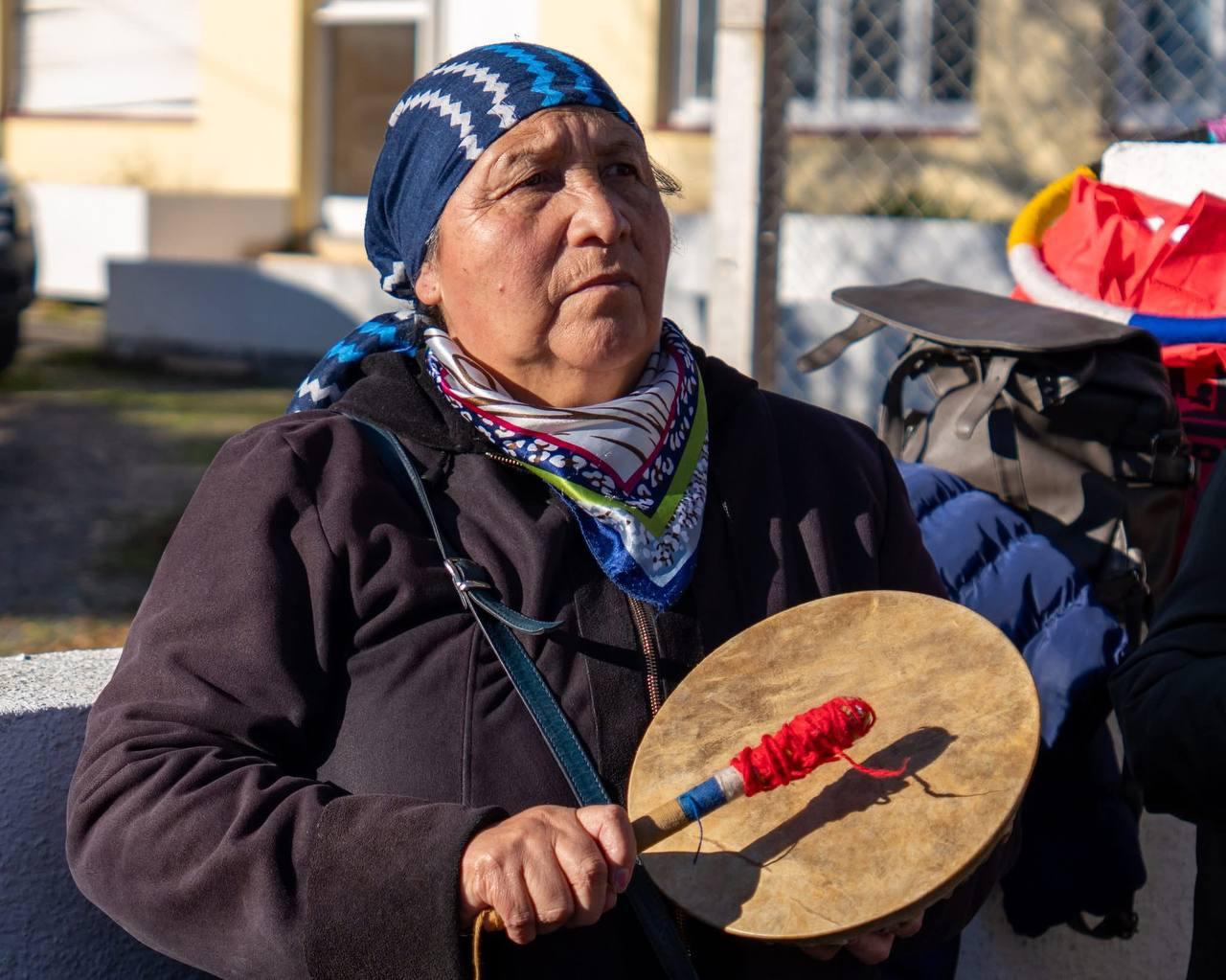
On June 19, the supporters of Mapuche leader Facundo Jones Huala released a new account of their visit to Rawson Prison, Argentina, and the picture they describe is one of a man whose body is collapsing under the weight of a hunger strike that has now reached fifty-three days, with four days of complete abstention from liquids. They speak of confusion, dizziness, extreme fatigue, stabbing pains, and deep dehydration. They speak of a prisoner who has spent a year in preventive detention without a formal accusation, in a case marked by irregularities and an absence of concrete evidence. They speak of a judicial order for his transfer to Esquel, issued on June 5, that has not been implemented. They speak of a health ward in a state of abandonment and of medical oversight that appears more symbolic than real. And they speak of a man whose life is visibly fading.
Their petition is addressed to prosecutors, judges, and penitentiary authorities. It asks for an independent medical evaluation, the presence of human rights observers, compliance with the transfer order, and a resolution of a procedural limbo that has lasted 12 months. It ends with a list of officials whom they hold responsible for any further deterioration in Jones Huala’s condition, including Prosecutor Fernando Arrigo and his colleagues. It ends with a warning that the pressure exerted on the judicial system by security authorities represents a threat to democratic guarantees.
Readers of “Bitter Winter” know of our interest in the case of Russian spiritual teacher and dissident Konstantin Rudnev, whose fate is also tied to the decisions of Prosecutor Arrigo. We do not take a position on the innocence or guilt of Jones Huala, nor do we enter into the political or territorial disputes surrounding the Mapuche cause. What concerns us is the pattern that emerges when two prisoners with no connection to each other, from different cultures and different worlds, describe the same prosecutorial behavior and the same disregard for human fragility.
Rudnev’s supporters have long denounced the way his medical condition has been handled. They have described a man whose health has deteriorated to the point of requiring hospitalization and surgery, yet who remains under the threat of being returned to prison. They have described prosecutorial appeals filed in rapid succession to block humanitarian measures, to reverse judicial decisions, and to maintain the harshest possible conditions. They have described a prosecutorial attitude that appears driven by hostility rather than legal necessity.
The new testimony from the Mapuche visitors adds another layer to this picture. It portrays a team of prosecutors, under Arrigo’s coordination, who have allowed a hunger strike to advance to the edge of irreversibility, while procedural steps remain stalled. It portrays a prison system that has not implemented a judicial order for transfer. It portrays a chain of decisions that places institutional rigidity above the preservation of life.
When two separate cases reveal the same traits, the same indifference to suffering, and the same insistence on punitive control, the question becomes larger than the fate of either prisoner. It becomes a question about the exercise of state power, the psychological disposition of those who hold that power, and whether a prosecutor who repeatedly disregards medical warnings, judicial instructions, and humanitarian considerations should continue to determine the liberty and survival of vulnerable individuals.
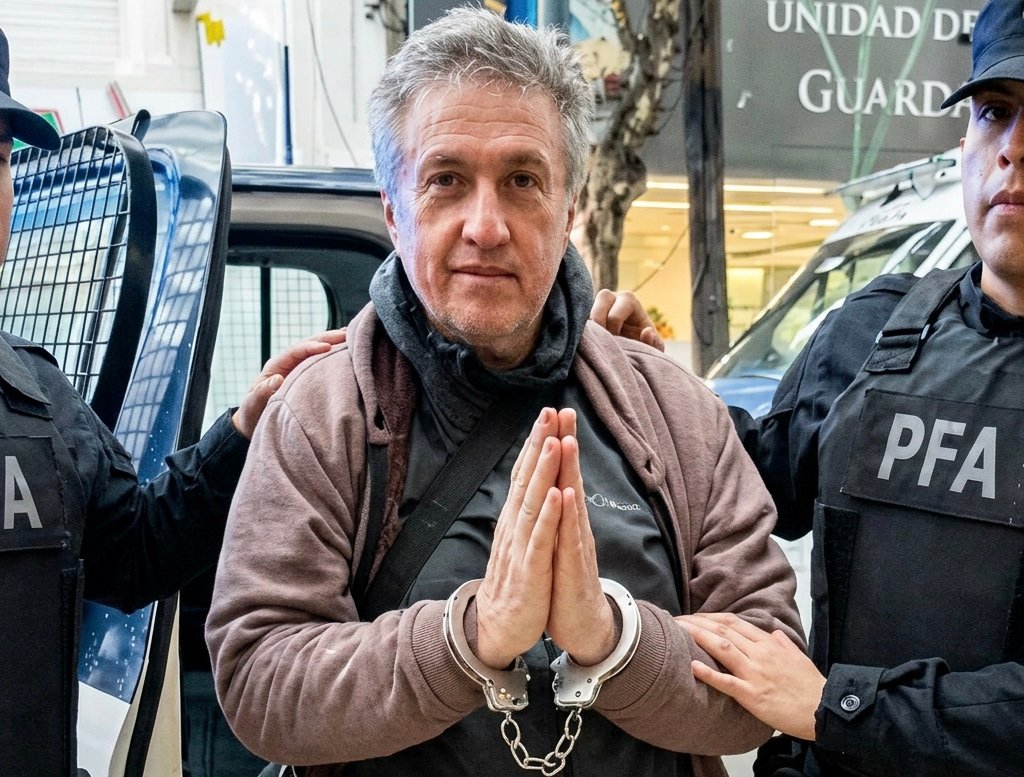
The supporters of Jones Huala describe a man who can barely stand, who struggles to breathe, who feels cold even in a heated room, who forgets words, and who drifts in and out of clarity. The supporters of Rudnev describe a man whose medical condition has been ignored, whose legal rights have been suspended in practice, and whose life has been placed at risk by decisions that appear motivated by something other than justice.
These testimonies converge on a single point: the conduct of Prosecutor Arrigo and his team raises profound concerns about the objectivity of the judicial process. A prosecutor who treats human bodies as obstacles, medical fragility as an inconvenience, and judicial orders as suggestions casts a long shadow over the credibility of the institutions he represents.
The suffering of Jones Huala and the suffering of Rudnev are not identical. Their histories, their beliefs, and their communities are different. Yet both now stand as mirrors reflecting the same prosecutorial posture. And both remind us that the measure of a justice system lies in how it treats those who are weakest, sickest, and most alone.
These cases demand public attention. They demand scrutiny. They demand that those entrusted with power be held accountable when their actions place human life at risk. The future of two prisoners and the integrity of the judicial system depend on it.

Massimo Introvigne (born June 14, 1955 in Rome) is an Italian sociologist of religions. He is the founder and managing director of the Center for Studies on New Religions (CESNUR), an international network of scholars who study new religious movements. Introvigne is the author of some 70 books and more than 100 articles in the field of sociology of religion. He was the main author of the Enciclopedia delle religioni in Italia (Encyclopedia of Religions in Italy). He is a member of the editorial board for the Interdisciplinary Journal of Research on Religion and of the executive board of University of Pennsylvania Press’ Nova Religio. From January 5 to December 31, 2011, he has served as the “Representative on combating racism, xenophobia and discrimination, with a special focus on discrimination against Christians and members of other religions” of the Organization for Security and Co-operation in Europe (OSCE). From 2012 to 2015 he served as chairperson of the Observatory of Religious Liberty, instituted by the Italian Ministry of Foreign Affairs in order to monitor problems of religious liberty on a worldwide scale.