In Taichung, scholars and disciples examined a tax persecution that has outlived a Supreme Court acquittal and the governments that started it.
by Márk Nemes
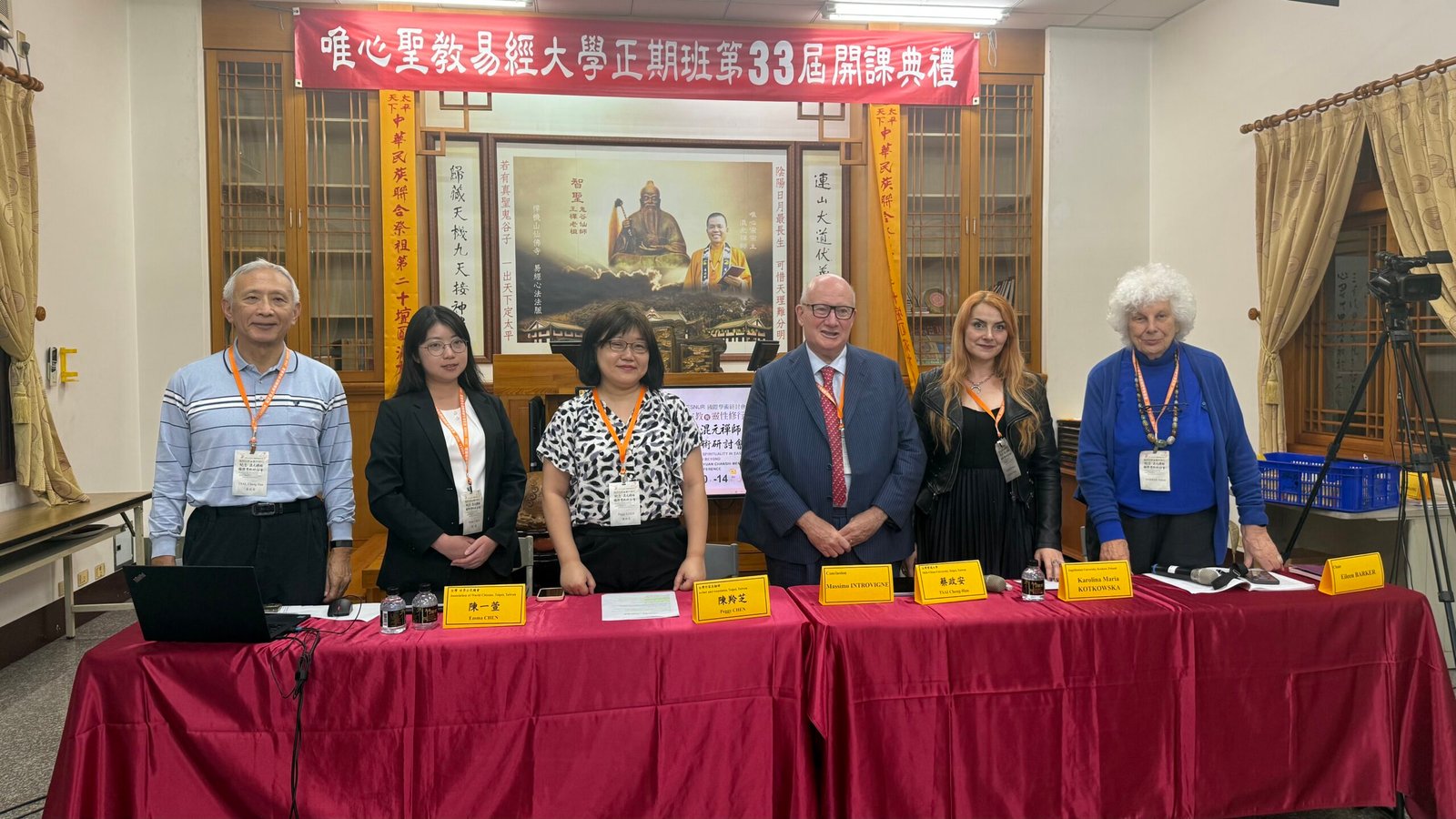
The CESNUR 2026 international conference, held in Nantou and Taichung, Taiwan, from October 10 to 12, devoted its Session 2 to “New Perspectives on the Tai Ji Men Case.” Eileen Barker, professor emerita of sociology at the London School of Economics, introduced the session. She observed that the Tai Ji Men case is unique, different from all the other cases discussed at the conference, and for this very reason deserving of attention.
Tsai Cheng-Han, a professor at Shih Chien University in Taipei, opened the presentations with a question: how can a constitutional democracy keep enforcing an administrative human rights violation that defies the acquittal pronounced by its own highest court? Taiwan’s Supreme Court cleared all defendants of all charges in July 2007, finding that the red envelopes offered by disciples to their master were gifts exempt from taxation. The Control Yuan censured the prosecution, and the tax audits in 2002 and 2009, and a 2011 inter-ministerial survey gathered 7,401 declarations confirming the gift nature of the payments. Even so, the National Taxation Bureau, after reducing five of the six disputed bills to zero in 2019, kept the 1992 bills alive, and in August 2020 land Tai Ji Men regards as sacred was unsuccessfully auctioned off, then nationalized.
To explain this paradox, Tsai applied the framework of “Institutional Fabrication of Justice,” together with System Dynamics modeling. Traditional scholarship on “miscarriages of justice” treats legal failures as accidental, episodic errors that get corrected once discovered. Institutional fabrication describes a different process: state agencies manufacture false allegations, pass them from one institution to another, give them procedural form, and defend them against all counter-evidence because of bureaucratic incentives.

Tsai traced four stages in the case. The first was the 1996 construction of a predetermined narrative by Prosecutor Hou Kuan-jen, whose indictment described the same gifts as both untaxed “cram school tuition” and proceeds of fraud. Then tax authorities uncritically adopted those figures, abandoning their duty to investigate and reversing the burden of proof; administrative courts followed suit, lending the narrative an appearance of legality; and finally, resistance to the overwhelming evidence that emerged later. Three reinforcing feedback loops, he argued, keep the injustice alive. They involve embedding the original narrative in administrative memory, using earlier decisions to justify later enforcement, and combining enforcement bonuses with the cost of admitting error. These loops neutralize the correction mechanisms that should have worked. Tsai also identified a blind spot in Taiwan’s transitional justice laws, which cover only abuses committed before 1992. He proposed four reforms: revocation ex officio of the illegal 1992 disposition by the Executive Yuan and the Ministry of Finance under Article 117 of the Administrative Procedure Act; abolition of tax enforcement bonuses; extension of transitional justice statutes to post-1992 abuses; and independent fact-finding by administrative courts in line with the effective remedy standard of the International Covenant on Civil and Political Rights.

Emma Chen, a dentist and Tai Ji Men dizi (disciple), spoke from the perspective of a practitioner, having landed in Taiwan from Los Angeles that very morning. She described Tai Ji Men as an ancient menpai (similar to a school) of qigong, martial arts, and self-cultivation, whose disciples range from newborns to people aged 103, and the master–disciple bond as a relationship combining the rigor of a teacher with the care of a parent. Her family offered examples. Now 91 and 88, her grandparents remain healthy and independent and still clean the academy every week, while an aunt has had no cancer recurrence for more than twenty years after surgery and chemotherapy, supported by qigong practice. More than 30 relatives across four generations have joined the menpai. Chen added that her Shifu’s (Grand Master) teachings have made her a more attentive dentist, especially with frightened children.
Turning to the case, she recalled the 1996 crackdown, the detention of Shifu, his late wife, Shimu, and two disciples, and the more than 400 sensationalist media reports, including the bizarre claim that Tai Ji Men was “raising goblins,” which cost disciples their jobs and exposed children to bullying at school. The 2007 acquittal, and the state compensation later paid to those wrongfully detained, did not stop the National Taxation Bureau, and the 2020 confiscation followed. Like Tsai, she noted that the 2017 Act on Promoting Transitional Justice covers only violations before 1992 and that a five-year time limit on retrials closed the door to effective relief, citing German law, under which administrative acts violating fundamental rights can be void from the outset. In a year that is both the 60th anniversary of the Tai Ji Men Qigong Academy and the 30th of the case, she said, disciples have turned their suffering into advocacy for tax reform and human rights, and into the Movement of an Era of Conscience, which contributed to the United Nations’ proclamation of April 5 as the International Day of Conscience. She closed by inviting the audience to spend 60 seconds each day in silent prayer and reflection.
Davide S. Amore, who spoke via video, is a high school lecturer in literature and history, a historian of religions, and a medievalist philologist who sometimes serves as imam at his local mosque. He offered an Islamic ethical reading of the case, although without proposing to apply Islamic law to a Taiwanese dispute. Modern states must classify, he observed, yet a donation may be at once a financial transaction and an act of spiritual commitment, and land may be both property and sacred space. Problems begin once administrative categories stop describing reality and start redefining it. Amore drew on the Qur’anic concepts of “ʿadl” (justice), “amānah” (authority as a trust), and “ẓulm,” a word covering oppression, wrongdoing, and the denial of what is due to others, which may occur through misclassification and disproportionate intervention without any open violence.
Citing Qur’an 2:256 on the absence of compulsion in religion and Qur’an 22:40 on the protection of monasteries, churches, synagogues, and mosques, Amore argued that religious freedom extends to the material conditions of spiritual life, including buildings and land. With al-Māwardī, al-Ghazālī, and Ibn Khaldūn, he maintained that political authority exists for a purpose that places moral limits on its exercise. Unfamiliar communities deserve greater caution from the state, since what is unconventional need not be commercial or fraudulent. He concluded that the state must regulate spiritual communities without first misunderstanding them and, once that misunderstanding has produced material consequences, must correct its errors and restore what was unjustly taken.

Peggy Chen, a Sorbonne graduate in French literature and Tai Ji Men dizi, compared Tai Ji Men with the Knights Templar, while acknowledging the deep differences between a medieval Catholic military order and a modern Taiwanese self-cultivation community. Her question concerned the afterlife of injustice. Arrested on the orders of Philip IV of France in 1307, the Templars were accused of heresy and idolatry, often confessed under torture, and saw their order suppressed in 1312 by Pope Clement V, while Grand Master Jacques de Molay was burned at the stake in 1314. The deaths of King Philip and Pope Clement V within months fed the legend of the “Templar curse,” and the rediscovered Chinon Parchment later showed that Clement had absolved the order’s leaders of heresy in 1308. No real institutional repair ever followed.
For Chen, the Templar affair is an inherited memory of injustice, preserved by others after the victims disappeared. In contrast, Tai Ji Men is a living memory, carried by a community that still exists, seeks redress through legal and non-violent means, and has turned its experience into advocacy for conscience, tax reform, and religious freedom. Unrepaired wrongs, she argued, can enter collective memory and quietly erode public trust and institutional legitimacy. Because Tai Ji Men, unlike the Templars, is active and flourishing, repair is still possible in the present, and correcting such errors is part of a state’s defense of its own moral credibility.
Karolina Maria Kotkowska, Assistant Professor in the Center for Comparative Studies of Civilizations at the Jagiellonian University in Kraków, Poland, approached the case as a philosopher and scholar of esotericism and new religious movements. She relied on the category of “epistemic injustice,” which Miranda Fricker systematized in her 2007 book “Epistemic Injustice: Power and the Ethics of Knowing” and defined as a wrong done to someone in their capacity as a knower. Fricker named religion as one dimension through which prejudice may “track” a person across social life, without developing the point, and later literature has focused mostly on the major monotheistic religions. New spiritual movements, Kotkowska noted, still await analysis as a distinct object in this field.
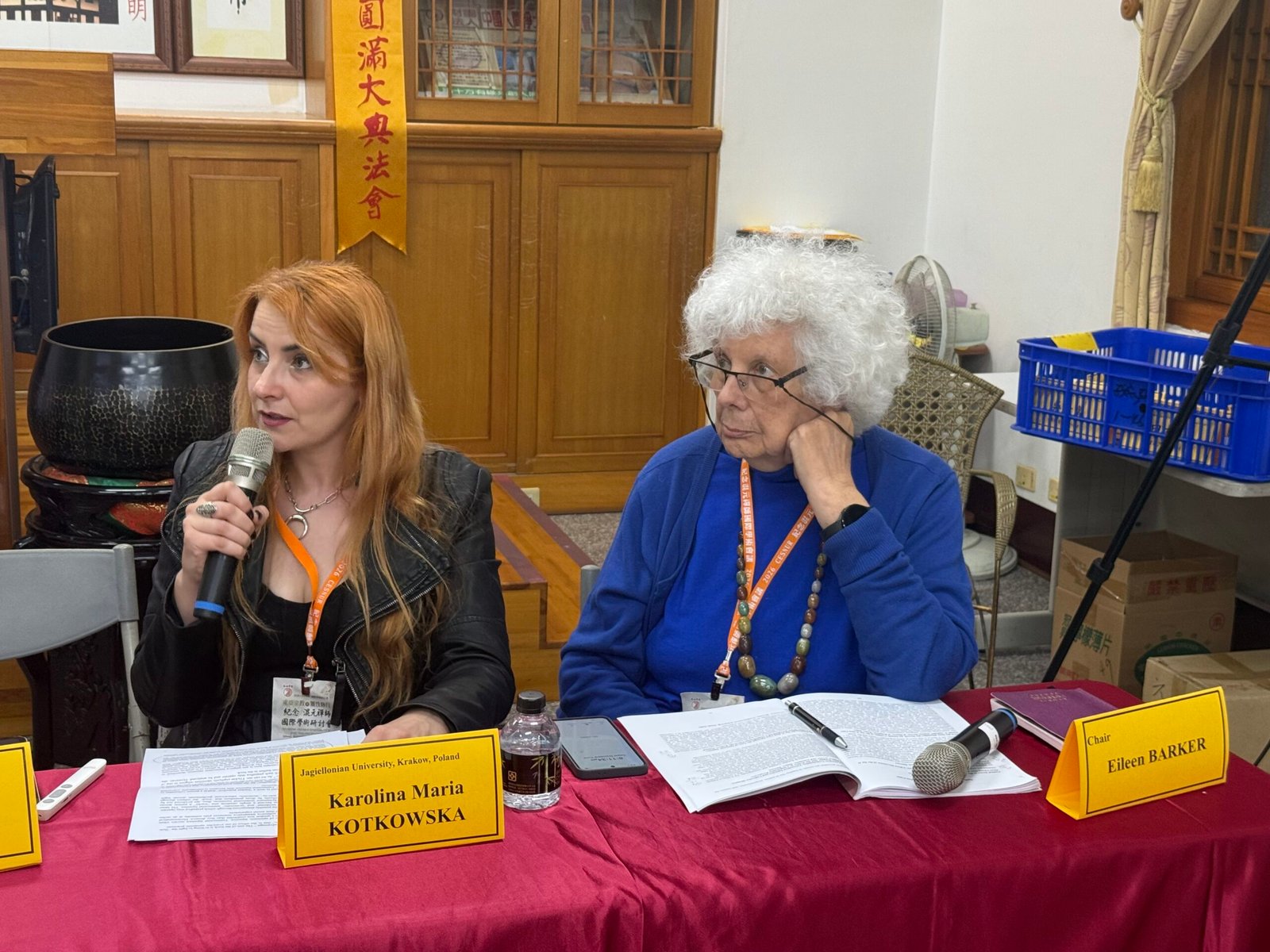
Of Fricker’s two forms, testimonial injustice occurs once prejudice leads a hearer to grant a speaker less credibility than deserved, and in its “pre-emptive” variant it silences people in advance, since their testimony is never solicited. Setting aside intentional harm, which falls outside the category, Kotkowska applied this lens to the media campaign of 1996–1997, during which more than 400 articles and over 70 television programs repeated the prosecutor’s portrayal of Tai Ji Men as a “cult” practicing “brainwashing” and, as mentioned earlier, “raising goblins.” Such labels shape the economy of credibility, and the question becomes whether membership in Tai Ji Men affected how disciples’ words were received, a burden made heavier by three decades of controversy. The so-called “victims’ association,” whose lists included deceased persons, people who never consented, and others who later admitted their claims were false, involved deliberate manipulation, yet it exposed an asymmetry in which some testimonies are readily believed, and others immediately doubted.
Hermeneutical injustice, the second form, arises from gaps in collective interpretive resources. Here Kotkowska located the dispute over the red envelopes, which disciples understand as a “gift of respect” within a lifelong master–disciple bond. At the same time, the National Taxation Bureau treated them as tuition paid to a “cram school.” Drawing on María Vardé’s notion of a “categorical misfit,” she observed that one interpretation became institutionally effective while the other was pushed to the margins. A widespread lack of knowledge about religions in the plural, she suggested, leaves the public unable to understand groups like Tai Ji Men beyond the categories imposed on them. Her framework asks two questions of the case: who is believed, and who gets to define what an experience means.
Massimo Introvigne, an Italian sociologist of religions and managing director of CESNUR, concluded the session by bringing the discussion back to Taichung. In 1921, Taiwanese intellectuals founded the Taiwanese Cultural Association in Taipei, presided over by Lin Hsien-tang of the Lin family of Wufeng in the Taichung area, and animated by the physician Chiang Wei-shui. Under Japanese colonial rule, its members chose a peaceful path, with lectures, reading rooms, summer schools, newspapers, a traveling film troupe, and fourteen years of petitions for an elected parliament. Colonial surveillance, arrests, and trials did not deter them. Historians trace Taichung’s nickname as Taiwan’s “Cultural City” to that movement.
Introvigne saw a family resemblance with Tai Ji Men. Its dizi have answered thirty years of persecution with peaceful demonstrations, conferences, petitions, and patient explanation, turning a personal injustice into a campaign for taxpayers’ rights that concerns all Taiwanese. They have also carried Taiwanese culture to more than 120 countries at their own expense, as ambassadors no government appointed. The paradox, he said, is that the same Taiwan they represented abroad still treats them at home with the weapons of an old case built on prosecutorial abuse and media sensationalism, and that a state celebrating the Cultural Association in its museums has yet to correct an injustice against a group walking the same peaceful path. Elections measure a democracy, Introvigne concluded, and so does its ability to repair its own mistakes. The memory of the association that made Taichung the “Cultural City,” he said, demands that the Tai Ji Men case be solved fairly and without further delay.

Márk Nemes is a historian and a graduate in the academic study of religions. He received his doctorate in philosophy at the University of Szeged’s PhD program in 2025 and works as a researcher at the Hungarian Academy of Arts’ Research Institute of Art Theory and Methodology. As an awardee of the Hungarian National Eötvös Scholarship, he served as a visiting researcher at CESNUR from 2023 to 2024. For the past 10 years, he has focused on researching new, alternative, and emergent forms of religiosity in Hungary, Iceland, the US and most recently, in Italy. Since 2025, he serves as the Deputy Director of CESNUR