A story of two bells and how their sound becomes a call to peace.
by Márk Nemes*
*A paper presented at the webinar “Peace, Justice, and the Tai Ji Men Case,” co-organized by CESNUR and Human Rights Without Frontiers on September 20, 2026, on the eve of the United Nations International Day of Peace.
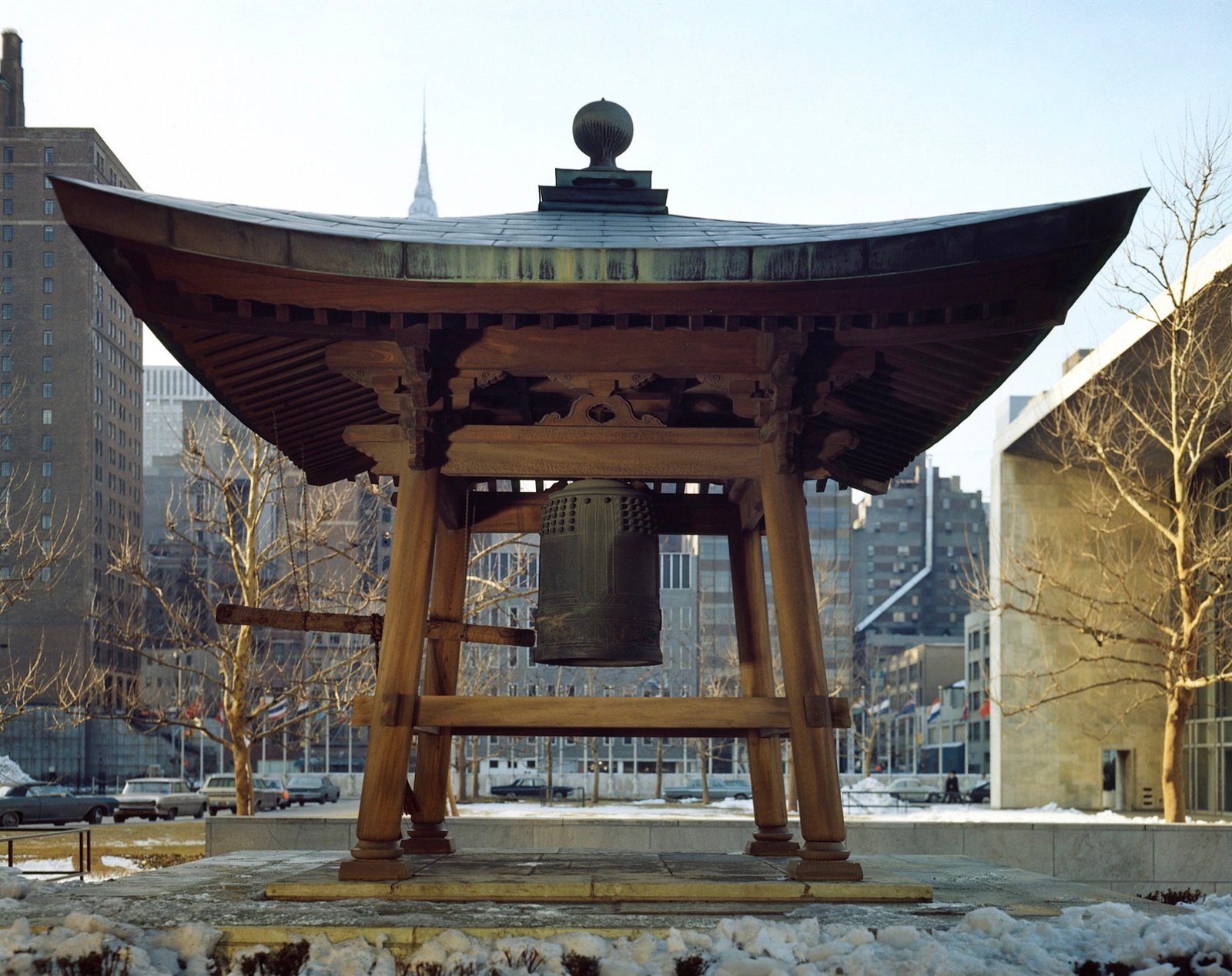
Tai Ji Men’s global peace activity, particularly its events with the Bell of World Peace and Love, has parallels to other international peace efforts. Almost immediately after the end of the Second World War, a “resonant” peace initiative paved the path for the Bell of World Peace and Love’s success today. This initiative creates a parallel and links Tai Ji Men to today’s UN International Day of Peace in both shape and form, as well as in goals and in a sense of “resonance.”
The 1981 UN General Assembly Resolution establishing the International Day of Peace states its goals concisely: “…it would be possible to contribute to strengthening […] ideals of peace and alleviating the tensions and causes of conflict, both within and among nations and peoples.” In prior seminars, I outlined the importance and message of the Bell of World Peace and Love. This Bell carries an esoteric message for those attuned to receive such communications. For others, the Bell presents an equally valuable face. It has aesthetic, artistic, and cultural significance. Even for those who pay less attention to its material or artistic aspects, the Bell imparts a humanistic message of shared global existence, mutual respect, and an optimistic future. Dr. Hong, Tao-Tze, and his dizi (disciples)—all committed to cultivating these messages today—initiated the bell-ringing ceremony in 2000 to generate positive energy and connect people who shared this vision of a peaceful future. His and the dizi’s commitment to this goal is a compelling story of perseverance, aligned thinking, and altruistic dedication, even in the face of state opposition, unjust persecution, and punishment. Their initiative also parallels and shares roots with other similar projects.
Decades before the UN International Day of Peace was conceived (1981), on June 8, 1954, the UN received a symbolic gift from the World Federation of United Nations Associations’ Japanese chapter representative, Chiyoji Nakagawa. The gift was a grand “tsurigane” (hanging bell), originally cast in 1952 from coins donated by the 65 nations attending the 1951 XIII General Conference of the United Nations Association (UNA) in Paris, France, and enriched by nine gold coins donated by Pope Pius XII. The Bell was meant to serve as a symbol for all who “strive for peace from around the world, across borders, regardless of differences in religion.” Representative Nakagawa, when inaugurating the Bell, spoke of the need for peace, shared values, and mutual respect. He also noted the raging wars in the Middle East and Vietnam, and the evident tension between the Eastern and Western Blocs at the time.
On the Bell, a common humanistic message was engraved in eight kanji characters, reading: “Long live absolute world peace” (Sekai zettai heiwa banzai, 世界絶対平和萬歳). Additionally, a laurel-leaf mold was cast onto the bell, marking the spot where it must be struck with a wooden hammer. The entire structure was placed in a “Hanamido” (floral sanctum) in New York, where it is rung on the vernal equinox in March, on the opening day of the UN General Assembly in September, and on September 21, the International Day of Peace.
This Bell is far smaller than the one cast by Tai Ji Men, weighing 116 kg, or 256 lb. By comparison, the Bell of World Peace and Love weighs 240 kg, or about 530 lb. Nevertheless, the significance of these material symbols should not be measured in units of weight, but rather by the “resonant” effects they create. The Japanese Peace Bell is rung three times a year, with some exceptions—for example, it was also rung on the 25th anniversary of the Chornobyl accident on April 26, 2011. Its goal is to symbolize the unity of purpose among all who work for peace, and to send a simple message, as articulated by Secretary-General Boutros Boutros-Ghali in 1994: “Peace requires work—long, hard, difficult work.” Like the Japanese Peace Bell, the Bell of World Peace and Love symbolizes this work. However, its ringing also creates something more: a spiritual energy that “resonates” further.
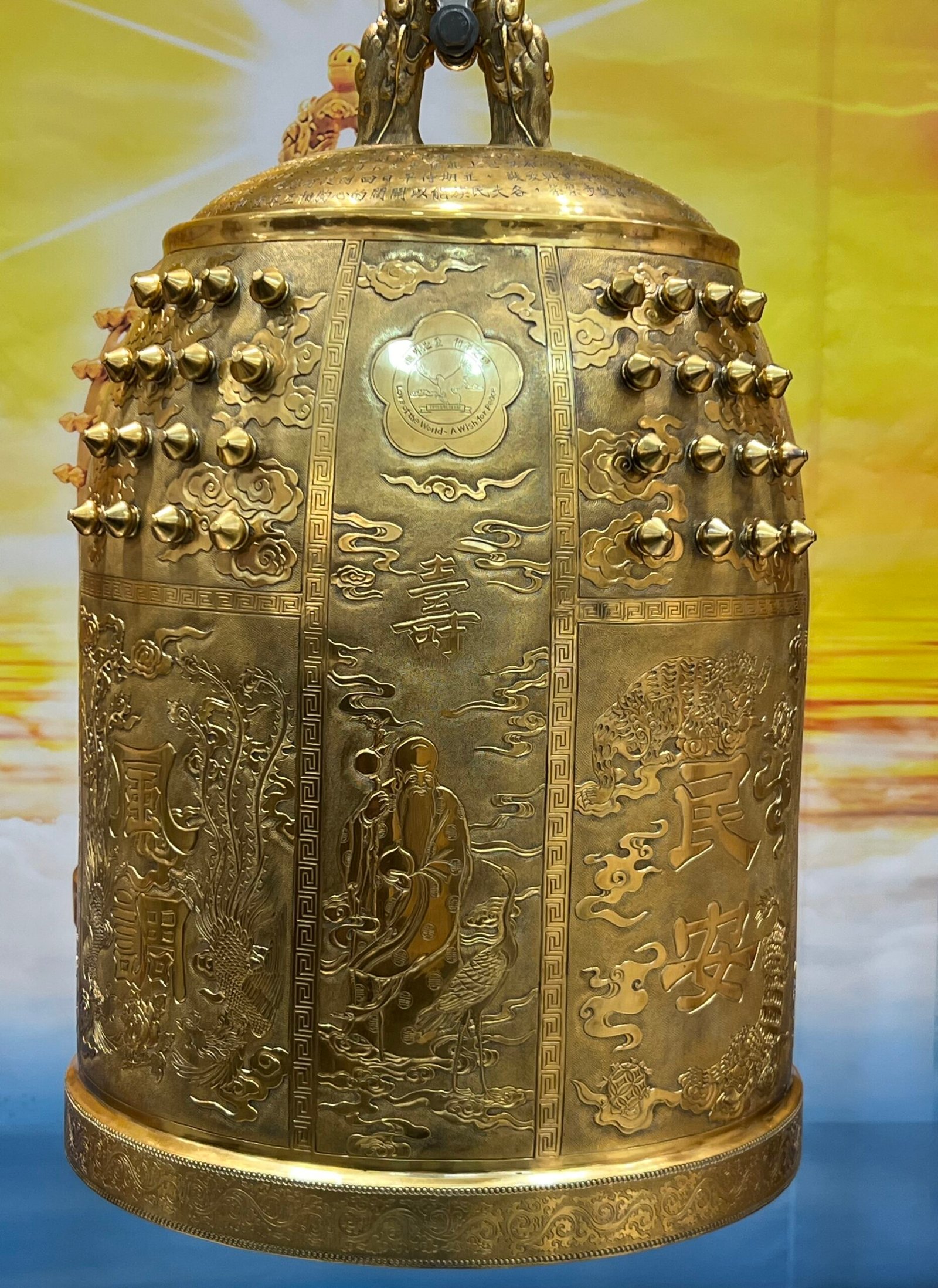
I chose this subject for today’s seminar in part because of this “resonant” effect. I had the privilege of witnessing Tai Ji Men’s 60th anniversary in Taipei earlier this year and hearing the Bell of World Peace and Love with my own ears. Reading about Tai Ji Men’s peace activity is fascinating in itself. Watching their performances in recordings is also compelling. But witnessing it all in person, and feeling the weight of dozens—if not hundreds—of hours of dedicated, focused practice by the dizi culminating in events featuring the ringing of the Bell of World Peace and Love, elevates the experience and its “resonant effects” even further. The messages imparted there still resonate with me.
As such, on September 20, only a few hours away in my time zone from the UN International Day of Peace, I believe the two bells I have outlined—the Bell of World Peace and Love and the Japanese Peace Bell—share a common vision that remains highly relevant today. The Japanese Peace Bell was a symbolic effort born in an era of tension and strife. Today, as wars and conflicts once again tear at the Earth, recalling past peace initiatives and strengthening new ones is more important than ever. Tai Ji Men’s peace activity, embodied in the Bell of World Peace and Love and in the vibrant performances of hundreds of dizi, is needed now more than ever. Their universal message of good conscience, peacefulness, and inner reflection is something every society can readily embrace and learn from. Moreover, they carry the message that peace requires work—work that can, at times, be very difficult, but it is this very difficulty that Tai Ji Men meets with perseverance and dedication.

Márk Nemes is a historian and a graduate in the academic study of religions. He received his doctorate in philosophy at the University of Szeged’s PhD program in 2025 and works as a researcher at the Hungarian Academy of Arts’ Research Institute of Art Theory and Methodology. As an awardee of the Hungarian National Eötvös Scholarship, he served as a visiting researcher at CESNUR from 2023 to 2024. For the past 10 years, he has focused on researching new, alternative, and emergent forms of religiosity in Hungary, Iceland, the US and most recently, in Italy. Since 2025, he serves as the Deputy Director of CESNUR