How decades of fiscal persecution test Taiwan’s commitment to the rule of law.
by Willy Fautré*
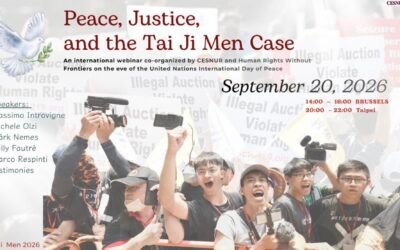
*Introduction to the webinar “Peace, Justice and the Tai Ji Men Case,” co-organized by CESNUR and Human Rights Without Frontiers on September 20, 2026.

Justice and social peace are closely connected in any democratic society.
Justice is not simply about prosecuting and punishing people who break the law. It is also about ensuring that individuals and civil society institutions are treated fairly, that rights are protected, and that institutions apply the law equally. This has not been the case with Tai Ji Men, which has experienced endemic denial of justice by the tax administration for decades. When courts do not fully implement decisions, the integrity of the justice system can be questioned, and social distrust can take root. Social peace can also be at risk.
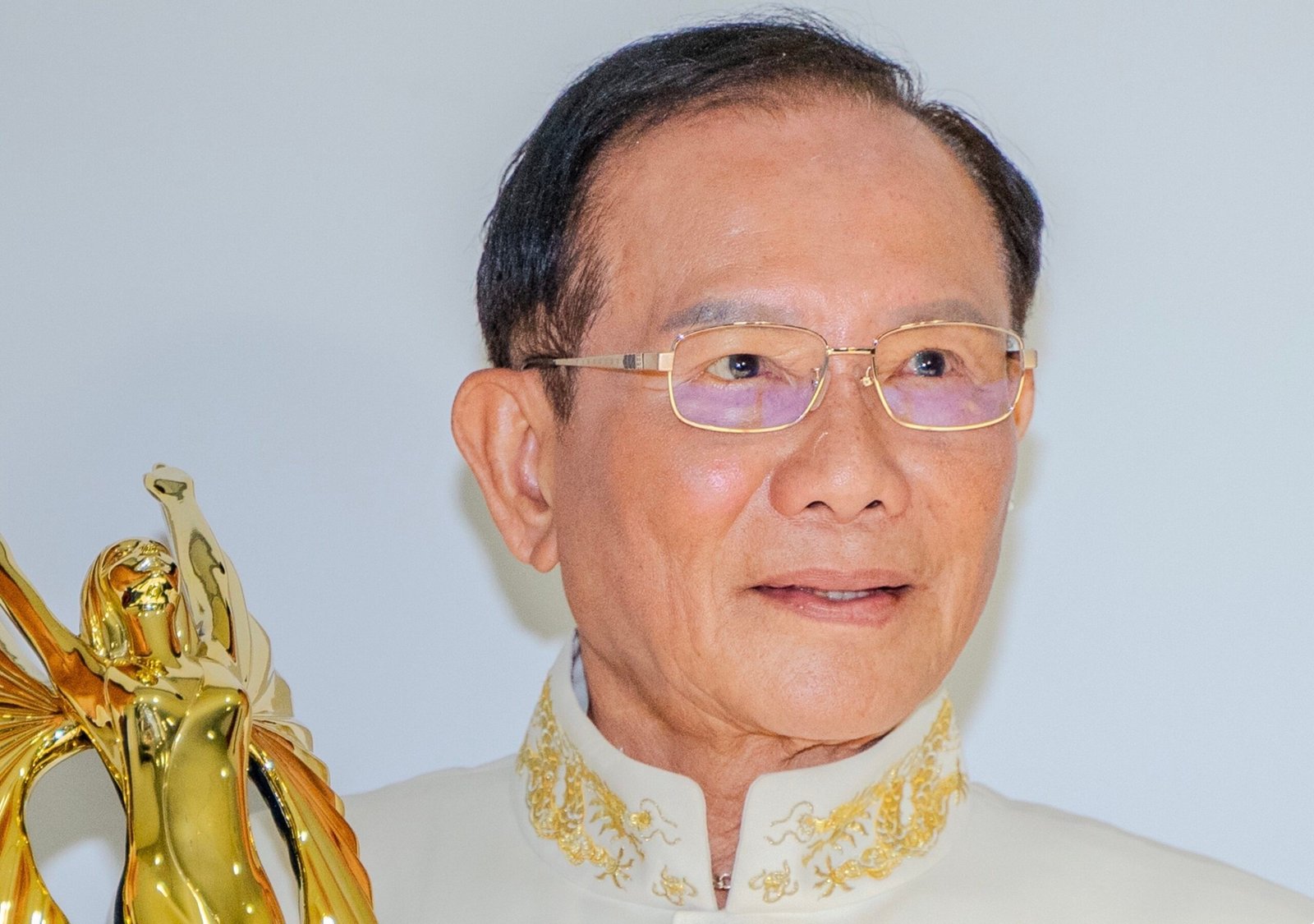
Social peace depends on citizens believing that legitimate institutions can resolve disagreements rather than violence, discrimination, or political retaliation. In a democracy such as Taiwan, the relationship between justice and social peace is therefore particularly important, because democracy depends not only on elections, but also on equality, the rule of law, and public trust. The experience of Tai Ji Men and it Shifu (Grand Master), Dr. Hong Tao-Tze, falsely and intentionally accused of tax evasion for a decade, has done little to inspire public trust in Taiwan’s justice system.
Moreover, given Taiwan’s geopolitical environment, the state has little choice but to be a beacon of genuine democracy, for the sake of both its domestic security and its future. Social peace at home is therefore of utmost importance for this reason as well.
Justice is meant to function as a mechanism for managing conflicts and disagreements, but it does not eliminate these disagreements. That is why it should provide peaceful procedures through which competing claims can be heard and addressed honestly.
The danger arises when injustice persists or becomes normalized. If discrimination, unequal treatment, corruption, or abuses of power are repeatedly ignored, citizens may begin to lose confidence that democratic institutions can deliver meaningful justice.
Tai Ji Men dizi (disciples) have endured long periods of doubt and despair about their justice system since the police crackdown in 1996. For more than ten years, the very existence of Tai Ji Men, a peaceful and law-abiding spiritual and social movement, was at stake.
For many years, Tai Ji Men was also the victim of an orchestrated media campaign—even a representative of the justice system called for Tai Ji Men to be banned. Unscrupulous journalists then privileged sensationalism over truth and justice, damaging its reputation for decades.
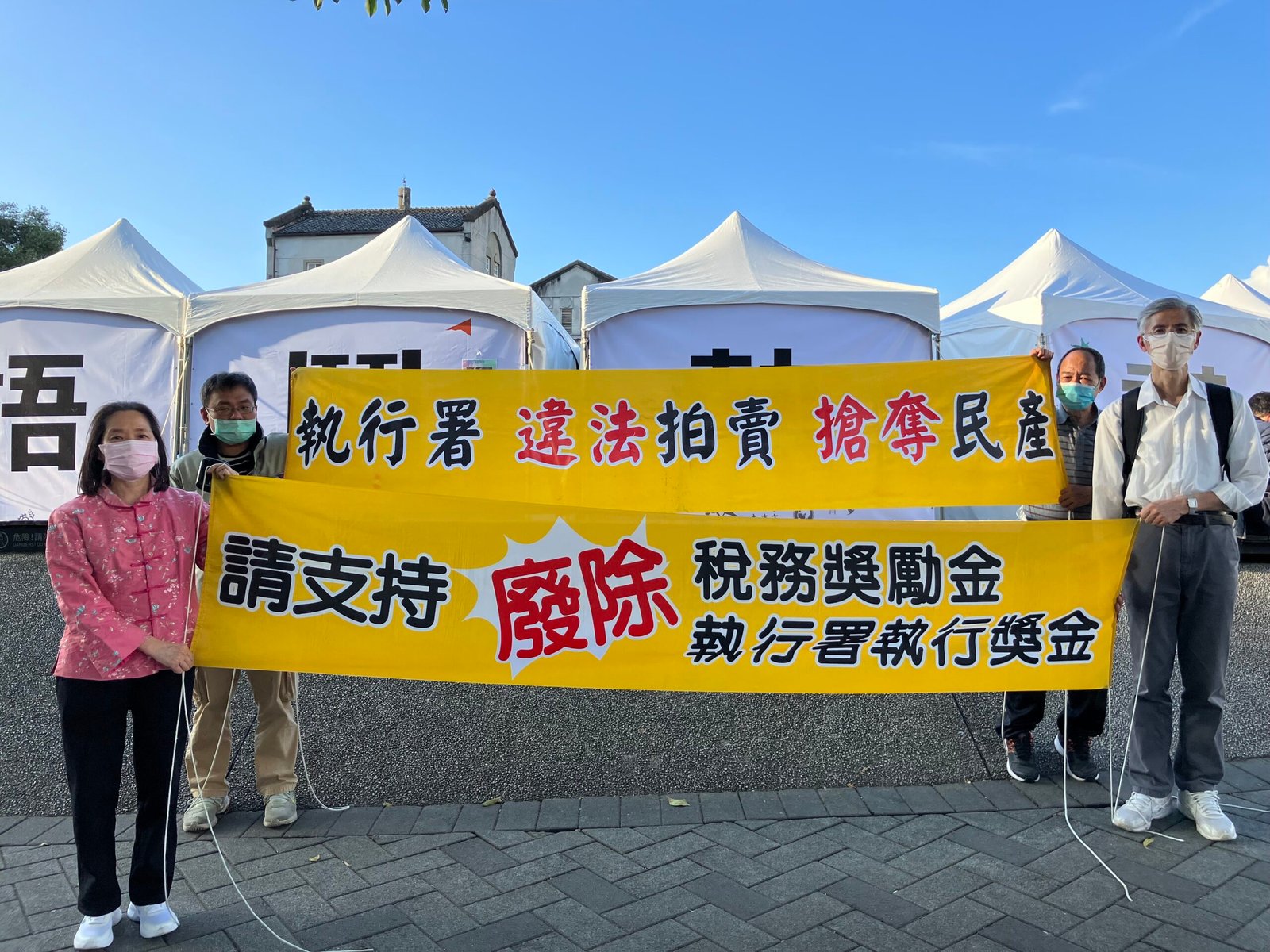
Injustice can weaken the legitimacy of judicial and political institutions, because people may conclude that laws exist in theory but are not applied equally in practice. Over time, this can deepen political polarization and lead citizens to see opposing groups not as legitimate political competitors but as enemies. And enmity, whether political or social, is a threat to peace.
Ultimately, justice and social peace reinforce one another. A peaceful society requires more than the absence of violence or open conflict; it requires citizens to have reasonable confidence that their rights matter and that grievances can be addressed through legitimate institutions.
Allowing injustice to prevail can undermine that confidence and gradually weaken democratic solidarity. For Taiwan, protecting equality, due process, accountability, and human rights is therefore not only a matter of individual justice. It is also part of maintaining the social trust and institutional legitimacy on which its democratic society depends.

Willy Fautré, former chargé de mission at the Cabinet of the Belgian Ministry of Education and at the Belgian Parliament. He is the director of Human Rights Without Frontiers, an NGO based in Brussels that he founded in 1988. His organization defends human rights in general but also the rights of persons belonging to historical religions, non-traditional and new religious movements. It is apolitical and independent from any religion.
He has carried out fact-finding missions on human rights and religious freedom in more than 25 countries He is a lecturer in universities in the field of religious freedom and human rights. He has published many articles in university journals about relations between state and religions. He organizes conferences at the European Parliament, including on freedom of religion or belief in China. For years, he has developed religious freedom advocacy in European institutions, at the OSCE and at the UN.