Examining the manipulation of religious identity by state and private actors and the transformative role of conscience in legal, social, and tax reform.
by Yang Ming-Sheng*
*A paper presented at the Fourth World Conference for Religious Dialogue and Cooperation, Skopje, North Macedonia, June 24, 2026.
If the essence of religion is to guide human beings toward goodness, why have so many wars throughout history been fought in its name? This question invites us to consider whether religion itself is the source of conflict or more often a tool appropriated and manipulated by political power. To explore this issue, I would like to share three personal experiences that illuminate how religious identity can be instrumentalized and how conscience-based reform can become a force for peace and justice.
My first experience comes from the Balkans. In 2016, I joined the Tai Ji Men Cultural Goodwill Group on a visit to Croatia, Slovenia, Bosnia and Herzegovina, and Montenegro. We held ninety-five events, met government officials, and interacted with local communities. Everywhere, we encountered a sincere longing for peace. This raised a fundamental question: if people desire peace, why did this region become the “powder keg of Europe”? Scholars generally agree that the conflicts were not caused simply by religious differences. As historian Mark Mazower argues in “The Balkans: A Short History,” the twentieth-century wars were driven by political elites attempting to construct homogeneous nation-states after the collapse of imperial structures. Because religious and ethnic identities overlapped so strongly, religion became a convenient cultural symbol used to mobilize group hatred. It functioned as an amplifier of identity politics rather than an inherent source of violence.
My second experience concerns the dual legacy of religious conscience and reform. In 2017, I attended a forum marking the 500th anniversary of Martin Luther’s Reformation. I was deeply moved by Luther’s courage in defending his religious conscience against the abuses of the Catholic Church, particularly the sale of indulgences. His insistence on conscience over authority initiated reforms that reshaped Europe’s religious, political, cultural, and economic landscape. Luther’s spirit of prioritizing conscience over authority continues to inspire reformers to this day.
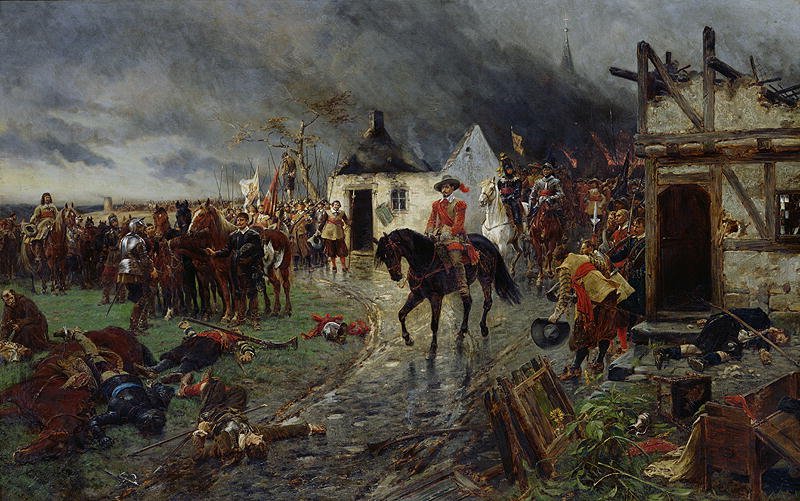
Yet history also reveals a tragic dimension. The same conscience-driven Reformation movement ignited religious wars that devastated Europe. As Peter H. Wilson demonstrates in “The Thirty Years War: Europe’s Tragedy,” the conflict that claimed eight million lives was fundamentally a struggle over political power between the Holy Roman Empire and regional rulers, rather than a purely religious war. This duality shows how conscience can inspire reform, but also how political interests can transform religious movements into instruments of conflict.
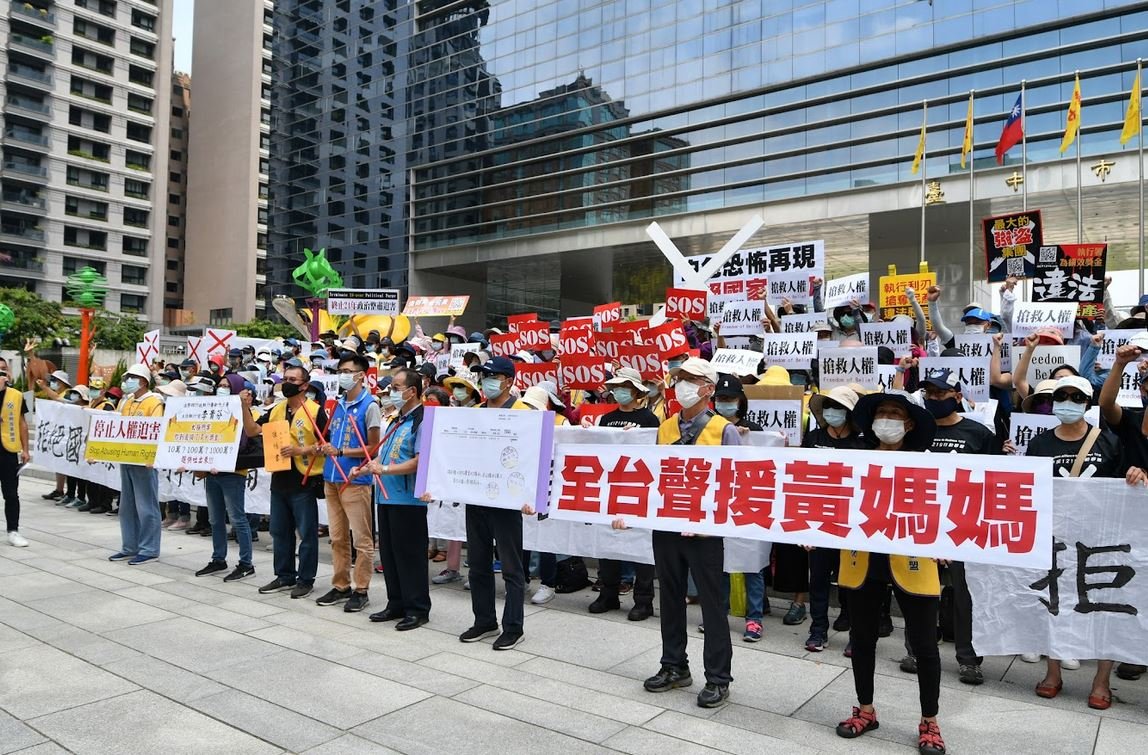
My third experience concerns the Tai Ji Men case in Taiwan, which broke out in 1996, which I had lived through as a dizi (disciple) since 1993. From the perspective of comparative law and religious freedom, this case exemplifies an institutional religious conflict in which state power exerts long-term pressure on a spiritual community through administrative mechanisms.
There are three dimensions to this case. First, administrative violence in a particular political climate. After Taiwan’s first direct presidential election in 1996, several religious and spiritual groups accused of not having supported the candidate who won were subjected to sweeping investigations under the name of a “religious crackdown,” raising serious questions about the boundaries of state authority.
Second, the failure of the remedy system. In the tax component of the Tai Ji Men case, the criminal court’s findings were not applied in tax proceedings, revealing a troubling disconnect between administrative and judicial powers.
Third, the high cost of the relief procedures available to taxpayers. The unreasonable cost of seeking relief meant that many citizens facing unjust tax bills chose to settle rather than fight, allowing systemic problems—such as bonus-driven tax assessments and endless improper bills—to remain hidden.
Tai Ji Men, however, chose a different path. Rather than responding with hatred or political confrontation, they undertook a lengthy process of legal analysis and public education based on the injustice they suffered. They recognized that the case involved not only freedom of religion or belief but also taxpayer rights and procedural justice. Through academic conferences, international engagement, and civic advocacy, they helped catalyze several important reforms in Taiwan, including five key developments: (1) the explicit incorporation of the presumption of innocence into law; (2) the reform of exit-ban measures for tax arrears; (3) the enactment of the Taxpayer Rights Protection Act; (4) the professionalization of tax adjudication procedures; and (5) improvements to the administrative remedy system. Although these reforms had multiple sources, the Tai Ji Men case undeniably served as a catalyst.
Throughout this thirty-year struggle, Tai Ji Men invited participation from across the political spectrum yet consistently resisted political co-optation. Their commitment remained focused on principle, not partisanship. At the same time, my Shifu (Grand Master), Dr. Hong Tao-Tze, embraced a broader mission. Since publishing “A World of One Heart, A Well-Spring of Happiness” in 1999, he has led the Tai Ji Men Cultural Goodwill Group to 123 countries across the five continents, promoting the movement of “An Era of Conscience.” This long-term effort, devoted to “using love as motivation and cultural exchange to unite the world’s hearts,” contributed to the United Nations’ establishment of the International Day of Conscience (April 5) in 2019 and the International Day of Hope (July 12) in 2025. Throughout this journey, Tai Ji Men has never accepted financial support from any government or private organization, preserving its independence and enabling it to unite global forces for good.
From the Balkan conflicts to the Reformation to the Tai Ji Men case, a common pattern emerges. Religious teachings aim to uplift the human heart, and their communities naturally develop a strong sense of identity and cohesion. Yet when these teachings are distorted by power and self-interest, they can be weaponized to mobilize populations toward conflict. The deeper root of religious wars lies not in doctrine but in the human heart. As depicted in the film “Children from Heaven,” when people succumb to greed, anger, ignorance, arrogance, and doubt, conflict inevitably follows. There are different forms of conflict, including war.
Only when individuals learn to listen to their inner conscience and use it as a compass for action can humanity hope to avoid wars justified by various pretexts. This is the path toward a sustainable and peaceful future.

Yang Ming-Sheng has worked in the semiconductor industry for more than three decades and holds over 130 international patents. He currently serves as president of a consulting firm that assists small and medium-sized enterprises with patent strategy and intellectual property management. He has also been a Tai Ji Men dizi since November 1993.