Environmental engineering may seem remote from freedom of belief. In fact, it helps describe polluted systems in different fields.
by Lu Ming-Chun *
*A paper presented at the European Academy of Religion’s Ninth Annual Conference, LUISS University of Rome, July 2, 2026.
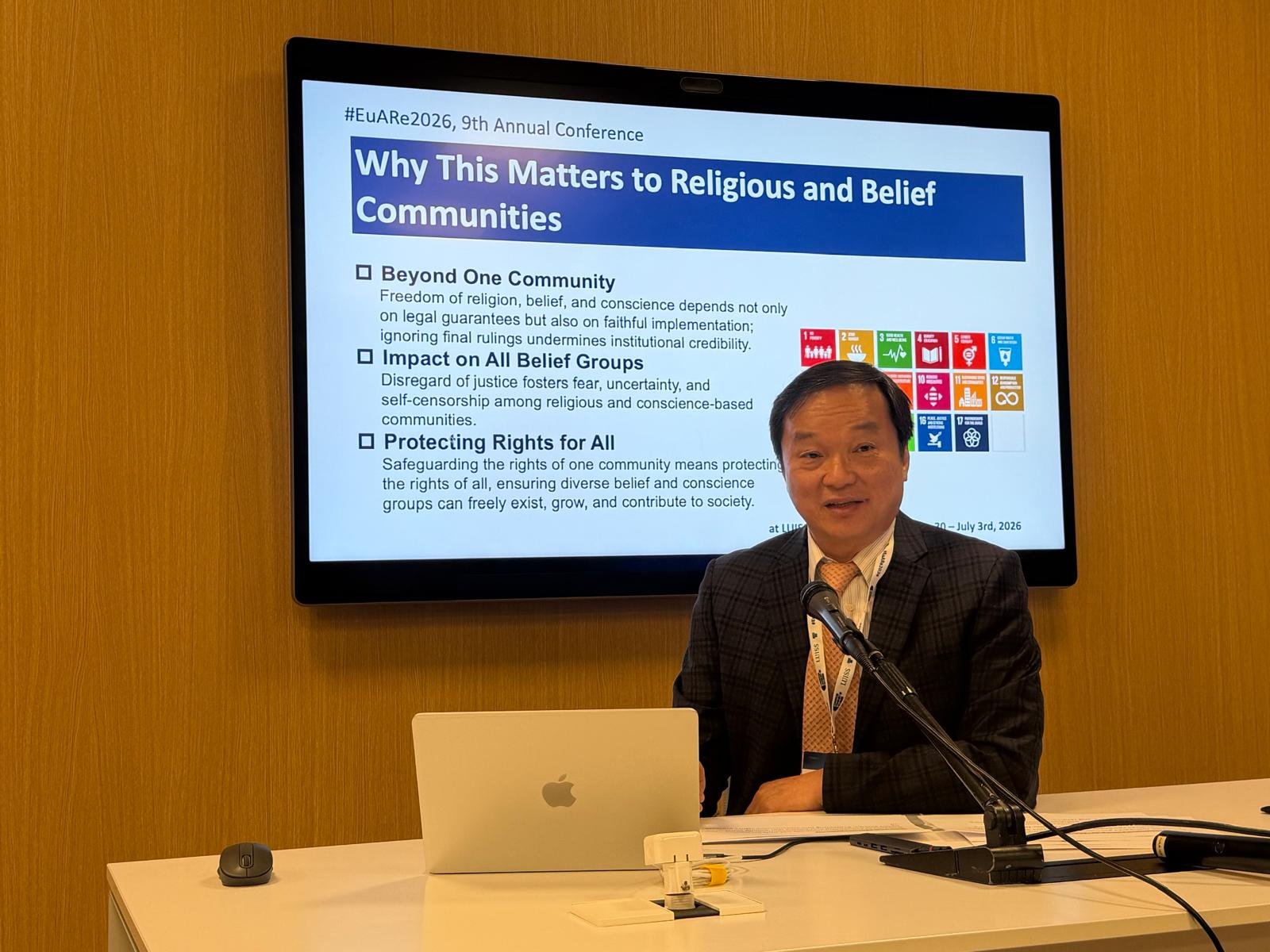
Sustainable development is often associated with environmental protection, resource management, and climate change mitigation. However, the United Nations’ 2030 Agenda for Sustainable Development emphasizes that sustainability also requires justice, trust, institutional integrity, and respect for human dignity. Without these foundations, even outstanding achievements in environmental protection cannot ensure long-term resilience and stability in society.
This presentation adopts an interdisciplinary perspective to examine the Tai Ji Men case in Taiwan, linking environmental sustainability to issues of freedom of belief and conscience, as well as governance. Unresolved institutional injustice has consequences that extend far beyond a single community. From the perspective of environmental engineering, the matter I teach at National Chung Hsing University, I argue that such injustice can serve as a persistent source of pollution, gradually eroding public trust and weakening democratic resilience. Through the lens of the Tai Ji Men case, this paper explores the interconnections among conscience, institutional responsibility, and sustainable development.
Some may wonder why an environmental engineer participates in an international dialogue on religion, belief, and conscience. The answer lies in the very nature of sustainability. Environmental engineering focuses on identifying pollution, understanding system failures, and establishing mechanisms for restoration. Years of research and practice have taught me that polluted systems do not recover on their own. Restoration requires recognition of problems, accountability for mistakes, and effective corrective measures. The same principle applies to social and institutional systems. When injustice persists without accountability, dysfunction spreads and deepens. Conscience, justice, and institutional integrity are therefore not separate from sustainability; they are as essential to a resilient society as clean air and clean water are to a healthy environment.
Environmental sustainability is usually understood as the capacity of ecosystems to regenerate and remain balanced. Yet sustainability should not be confined to ecological concerns. A society may succeed in promoting renewable energy, reducing emissions, and protecting the environment, but if its institutions undermine justice and human dignity, its sustainability remains fundamentally compromised. This presentation introduces the concept of moral sustainability—the long-term capacity of a society to uphold justice, responsibility, human dignity, and public trust. Just as environmental degradation threatens ecological resilience, institutional injustice undermines social resilience. A truly sustainable society must integrate both environmental governance and ethical governance.
To understand the Tai Ji Men case, one must first grasp the nature of Tai Ji Men itself. Tai Ji Men is a spiritual and cultural community centered on self-cultivation, promoting peace, conscience, self-reflection, and respect for life. Its disciples come from diverse religious, cultural, and professional backgrounds, united by shared values of personal growth and social responsibility. Through education, cultural exchange, and peace initiatives, Tai Ji Men encourages individuals to act with conscience and contribute to society. It can be seen as a “conscience community,” demonstrating how moral cultivation and civic engagement together provide the ethical foundation for sustainable development.
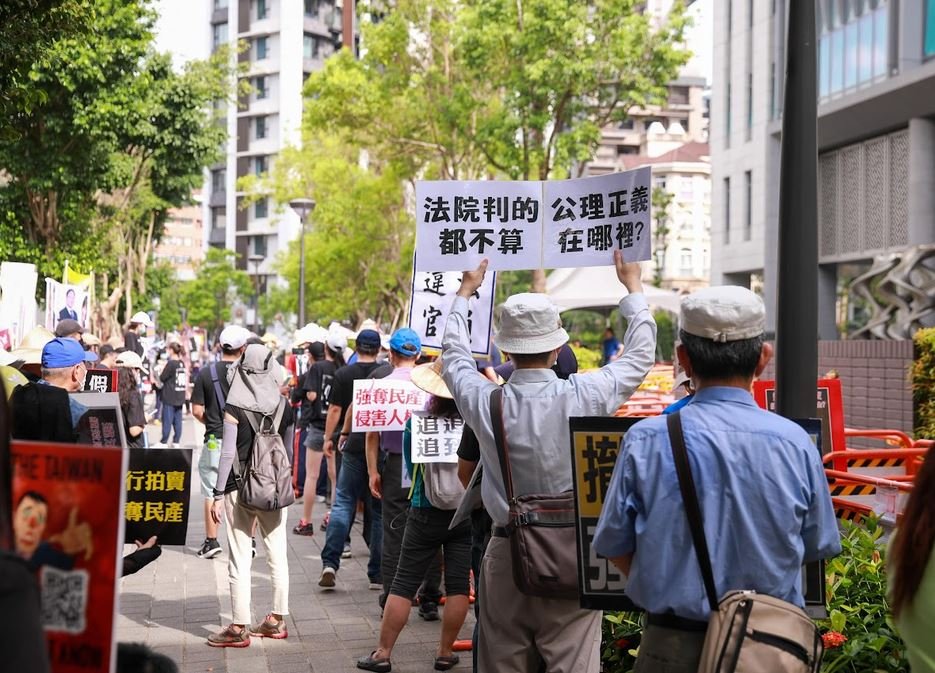
Despite its dedication to peace and conscience education, Tai Ji Men has endured more than thirty years of judicial and tax disputes. As earlier papers in this session have already outlined, the case began in the 1990s with criminal charges and tax claims against Tai Ji Men and its leader. After over a decade of judicial review, the Supreme Court of Taiwan ruled on July 13, 2007, that Tai Ji Men was innocent of all charges: no fraud, no tax evasion, and no violation of tax law. The Court confirmed that disciples’ offerings to their master were tax-exempt gifts and that the purchase of practice uniforms was non-commercial. Nevertheless, tax disputes derived from the criminal case continued. One of the most controversial outcomes was the seizure, unsuccessful auction, and nationalization of land originally intended for cultural and spiritual purposes, based on an erroneous tax bill.
From a sustainability perspective, this prolonged dispute illustrates how unresolved administrative errors can continue to harm society even after judicial clarity is achieved. Such institutional failure raises critical questions about governance quality, accountability, and the protection of fundamental freedoms.
Environmental science offers a useful framework for understanding institutional breakdown. Persistent pollutants remain in ecosystems long after their sources disappear, accumulating and causing harm unless actively remediated. Institutional failures can behave similarly. Injustices embedded in administrative practices may persist even after legal errors are acknowledged. The Tai Ji Men case reveals how certain institutional behaviors evolve into “moral pollution.” This is not merely an administrative mistake but a systemic failure to restore justice once wrongdoing is exposed. Just as environmental pollution requires active remediation, moral pollution demands transparency, accountability, institutional reform, and the collective practice of conscience.
The significance of the Tai Ji Men case extends beyond one community. Freedom of religion, belief, and conscience depends not only on legal guarantees but also on their faithful implementation. When final judicial rulings are disregarded, or peaceful communities are denied effective remedies, institutional credibility is undermined. Such circumstances foster fear, uncertainty, and self-censorship among religious and conscience-based groups. Protecting the rights of one community is, in fact, protecting the rights of all. The Tai Ji Men case raises the broader question of how to create an environment where diverse belief and conscience communities can freely exist, grow, and contribute to society.
Experience in environmental governance shows that many sustainability challenges—climate change, biodiversity loss, pollution—transcend borders and require international cooperation. The same principle applies to justice, conscience, and institutional responsibility. Although the Tai Ji Men case occurred in Taiwan, its implications for institutional integrity and human rights are globally relevant. The UN Sustainable Development Goals, particularly Goal 16 (Peace, Justice, and Strong Institutions) and Goal 17 (Partnerships for the Goals), emphasize the importance of institutional integrity and international collaboration. Sustainable development must rest on justice and public trust. Religious and conscience communities contribute by elevating ethical awareness, civic responsibility, and respect for human dignity.
Throughout history, religious and conscience communities have often safeguarded justice and ethical values in times of institutional failure. Attention to the Tai Ji Men case should not be seen as criticism of Taiwan or any society, but as a call for institutional repair and restoration of justice. Interfaith cooperation, civic participation, and international dialogue can enhance awareness, promote accountability, and encourage peaceful solutions. When diverse groups unite to defend conscience and human dignity, they strengthen the moral foundation and resilience of democratic societies.
Global sustainability discussions often focus on technology, renewable energy, and environmental protection. Yet sustainability ultimately rests on deeper ethical foundations. Conscience is the moral compass guiding both individual behavior and institutional decision-making. When conscience is respected and protected, public trust grows, institutions gain legitimacy, and social harmony becomes attainable. Since 2014, the Shifu (Grand Master) of Tai Ji Men, Dr. Hong Tao-Tze, has promoted the Movement of An Era of Conscience, which has received responses from people in 200 countries. This advocacy inspired the United Nations to establish April 5 as the International Day of Conscience and July 12 as the International Day of Hope.
Conscience is an innate moral root nourished by love. It awakens our goodness, guides us to act rightly, and gives us courage to defend justice and pursue peace. From individuals and families to schools, communities, nations, and the world, conscience is the foundation of a fresh and benevolent culture—a transformative force for both society and humanity.
The Tai Ji Men case demonstrates that freedom of conscience, freedom of belief, and institutional responsibility are deeply connected to sustainable development. Using concepts from environmental engineering—resilience, pollution, and restoration—we can understand institutional injustice as a sustainability challenge rather than merely a legal dispute. Ultimately, a sustainable society requires not only technological progress and environmental protection but also institutions capable of correcting errors, respecting conscience, and maintaining public trust. The pursuit of sustainability begins not only with protecting the planet but also with safeguarding the dignity, conscience, and freedom of every person who lives upon it.

Lu Ming-Chun is a Chair Professor in the Department of Environmental Engineering and the Innovation and Development Center of Sustainable Agriculture, National Chung Hsing University, Taichung, Taiwan. He has practiced Qigong with Tai Ji Men for more than thirty years.