The Tai Ji Men case is based on a misunderstanding of how traditional relations between masters and their disciples function.
by Halope Hsu*
*A paper presented at the European Academy of Religion’s Ninth Annual Conference, LUISS University of Rome, July 2, 2026.

This year, the Coordination des Associations et des Particuliers pour la Liberté de Conscience (CAPLC), a United Nations ECOSOC-accredited NGO, submitted a statement to the United Nations Human Rights Council highlighting a concerning global trend: the misuse of tax systems as tools to target, stigmatize, or weaken spiritual and religious minority groups. While taxation is a legitimate function of government, serious human rights concerns arise when tax laws are selectively applied to punish certain groups or used for purposes unrelated to public finance. Such concerns touch upon fundamental principles, including freedom of religion or belief, equality before the law, and protection against discrimination. These issues are not abstract. Today, I would like to share my personal experience as a Tai Ji Men dizi (disciple).
I still remember when I was in junior high school, and my mother brought me to Tai Ji Men. At that time, I was very young and knew little about qigong or spiritual cultivation. What I did know was that whenever I came here, I felt a warm and joyful atmosphere. The brothers and sisters were always smiling and caring toward one another, making everyone feel comfortable and at ease. I enjoyed being in such an environment and spending time with everyone. As I grew older and accumulated more life experiences, I gradually came to understand the spirit and cultural significance of Tai Ji Men. I gained a deeper appreciation of the values it preserves and transmits.
Tai Ji Men is an ancient menpai (similar to a “school”) of qigong, martial arts, and self-cultivation with a long historical lineage. Its cultural roots can be traced back thousands of years. Drawing upon the spiritual heritage of Taoist philosophy, it integrates traditional wisdom with a holistic approach to cultivating the body, mind, and spirit. Its core teachings emphasize the unity of heart and qi, as well as the balance of yin and yang. Through inner cultivation, disciples strive to cultivate harmony within themselves and extend that harmony to their families, society, and ultimately the world.
In Tai Ji Men, we practice qigong and self-cultivation. For us, qigong is not merely a form of physical exercise but a way to promote harmony among the body, mind, and spirit. We also learn the deeper meaning of the Chinese character “wu.” Although people often associate it with martial arts, its original meaning is “to stop conflict.” This reminds us that true strength lies not in defeating others but in fostering harmony and helping people live together peacefully.
For many years, Tai Ji Men has promoted a culture of conscience, love, and peace. It encourages people to act in accordance with their conscience and to practice universal values such as love, peace, and courage. These values may appear simple, but they are not easy to put into practice. In a world marked by conflict, division, and uncertainty, choosing to act with conscience, to treat others with love, and to resolve differences peacefully requires both courage and commitment.
Through the Bell of World Peace and Love initiative, representatives of Tai Ji Men have traveled to 123 countries across five continents, inviting political and religious leaders and people from all walks of life to commit to peace. This initiative demonstrates the positive role that faith-based and cultural organizations can play in promoting global ethics and building peace. I have now been a disciple of Tai Ji Men for thirty years. Through this master-disciple tradition, I have come to deeply appreciate the spirit embodied in the Chinese saying, “A teacher for one day is like a father for a lifetime.” Although disciples and their master are not related by blood, they are connected through a shared spiritual bond.
This master-disciple relationship is not based on legal obligations or material interests. Rather, it is built upon trust, gratitude, character education, and the transmission of life wisdom. My master has helped me discover a deeper sense of purpose and meaning in life through his example, his teachings, and even his quiet presence. Over the years, the practice of qigong and the habit of self-reflection have taught me how to face emotional wounds and negative feelings with greater courage and understanding. They have helped me know myself more honestly, recognize my shortcomings, and continue to grow into a better person. In the workplace, I have learned to build positive relationships through kindness, respect, and humility. By treating others with courtesy and goodwill, I have established meaningful connections with people around me. In daily life, I share the strength I have gained with others and have voluntarily traveled abroad at my own expense to accompany my master in promoting love and peace, helping to sustain a cycle of positive influence.

However, despite being such a constructive and respected menpai, Tai Ji Men became the target of political persecution following Taiwan’s first direct presidential election in 1996. As the previous papers in this session have already mentioned, a nationwide crackdown on religious groups created an environment in which prosecutors and tax officials collaborated to fabricate a case intended to destroy Tai Ji Men. Without evidence and without proper investigation, Tai Ji Men was subjected to more than 400 sensationalized media reports that defamed and stigmatized the movement, effectively convicting it in the court of public opinion before any trial had taken place. Tens of thousands of families were affected.
The central issue of the case was actually quite simple: Were the monetary gifts presented by disciples to their master tax-exempt expressions of gratitude, or were they taxable tuition payments for a cram school? The gifts presented to the master are consistent with traditional cultural and religious practices. They are expressions of respect, gratitude, and appreciation toward one’s master. For disciples, these gifts do not represent monetary value but rather sincere gratitude and respect for the master-disciple relationship. From a legal perspective, these offerings are voluntary gifts freely given by disciples without any expectation of compensation. Even though the amount offered may be insignificant compared with the gratitude felt in one’s heart, disciples hope to express their appreciation for their master’s guidance, support the preservation of traditional culture, and share in the responsibility of sustaining these cultural traditions.
Tai Ji Men maintains academies in Taiwan, the United States, and Canada. The monetary gifts presented by disciples to the master at these academies are not personal income or commercial profit. Instead, they are used to support disciples and promote the continuation of the menpai’s cultural and educational mission. Nevertheless, Taiwan’s National Taxation Bureau classified these gifts as tuition income from a cram school, arguing that they constituted compensation for services rendered and were therefore taxable. This interpretation became one of the central controversies in the Tai Ji Men case.
When their gifts were treated as taxable income, many disciples felt that their culture, faith, and spiritual practices had not been properly understood or respected. This dispute involves more than tax law. It also raises concerns about equality, discrimination, and how institutions understand and respect different cultural and religious traditions. In a multicultural society that values religious freedom, the application of law should pursue not only consistency but also an understanding of cultural context and substantive reality. Only in this way can equality and cultural rights be genuinely protected.
In fact, the master-disciple tradition is not unique to Taiwan. Various forms of apprenticeship and mentorship exist throughout the world, including religious traditions, spiritual communities, martial arts schools, artistic education, and the preservation of traditional crafts and skills. Through these relationships, valuable knowledge, cultural heritage, ethical values, and life wisdom are transmitted from one generation to the next. After years of judicial proceedings, Taiwan’s Supreme Court issued a final judgment in 2007 confirming that Tai Ji Men was innocent, was not a cram school, and owed no taxes. The Court determined that the gifts presented by disciples to their master were donations in nature rather than tuition payments and thus taxable income.
However, the case did not end there. As the previous papers noted, despite the criminal court’s clear findings, the tax authorities did not fully follow the judiciary’s conclusions. Instead, they continued issuing tax bills for the years 1991 through 1996 based on allegations that had already been proven incorrect. Some scholars have described this situation as a case in which an accusation that courts of law had rejected continued to be treated as valid by bureaucrats.
The Tai Ji Men case also highlights challenges related to the principle of equality. Ultimately, while the tax disputes for the other years were resolved, the tax assessment for 1992 remained unchanged due to a technicality. As a result, identical facts yielded different outcomes, raising concerns about the consistency and fairness of the law’s application.
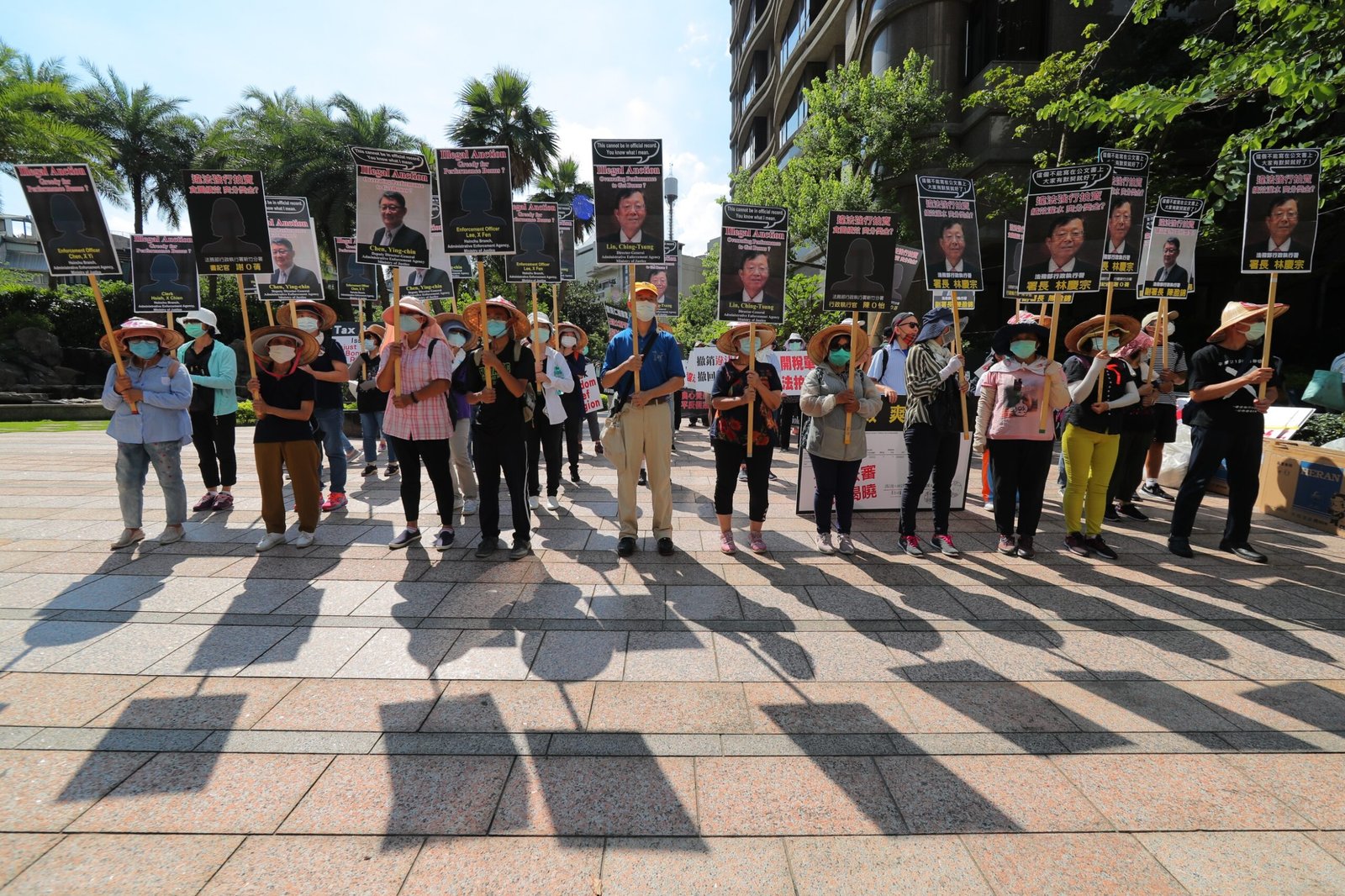
When institutions fail to correct contradictory decisions, the principles of fairness and justice may be undermined. Mistakes and misjudgments can occur in any country’s legal system. What matters most is not whether mistakes exist, but whether institutions have the ability and courage to acknowledge and correct them once discovered. Only then can the rule of law be fully realized and public trust in judicial and administrative institutions be maintained.
Today’s topic also prompts reflection on the true meaning of equality and inequality. None of us enters this world under identical circumstances. We come from different family backgrounds, grow up in different environments, and encounter different opportunities and challenges throughout life. Differences and inequalities are, therefore, part of the human condition. Yet regardless of our differences, every person deserves equal dignity and respect. This is one of the most important lessons I have learned in Tai Ji Men. My master, Dr. Hong TaoTze, has taught me that when facing difficulties or situations that seem unfair, the most important thing is not to complain about circumstances but to choose how we respond to them. We can choose gratitude instead of resentment, courage instead of fear, and hope instead of despair. We may not always be able to change our circumstances immediately, but we can change the attitude and strength with which we face them.
Throughout my journey in Tai Ji Men, my master has taught me to seek truth, distinguish right from wrong, and act according to conscience. These teachings have shaped not only my understanding of justice but also my understanding of life itself. The Tai Ji Men case reminds us that equality cannot be achieved simply through the mechanical application of rules. It also requires understanding, wisdom, and the courage to correct injustice when it occurs. I believe that lasting peace, genuine equality, and true justice must be built upon an awakened conscience. When we choose to listen rather than judge, to understand rather than divide, and to care rather than remain indifferent, we become part of the solution. I hope that through dialogue and reflection, more people will recognize the importance of conscience, equality, and human rights. Only when conscience is at the heart of our actions, and we stand together to safeguard fairness and justice, can hope continue to light our path into the future.

Halope Hsu is a marketing specialist in the medical manufacturing industry with a passion for communication, teamwork, and continuous learning. She is also a Tai Ji Men dizi (disciple).