After the repression of its second insurrection, the Nyabingi movement went underground.
by Massimo Introvigne
Article 3 of 3. Read article 1 and article 2.
After the capture by the British of Queen Muhumuza and her son’s death, other Nyabingi leaders emerged. Among them were Kaigirirwa (d. 1921), a woman, and a man known as Bicubirenga or Ndochibiri (d. 1917), “Two Fingers,” because he had a two-fingered hand. He presented himself as the messenger of a king who would come to expel the European invaders. According to Rwandese scholars (and Ryangombe cult initiates) Simon Bizimana and Jean Baptiste Nkulikiyinka, “He drew immense crowds, and the group around him grew rapidly. Evenings at his residence were spent feasting on abundant meat and alcoholic beverages, indicating that he received offerings from the population and even from some local chiefs. Occasionally, he engaged in extortion. He forbade the surrounding population from visiting missionaries. He even attacked Belgian camps to obtain rifles. His band was no match for the Belgians, even though his followers believed in his invincibility. They spread stories that fire came from his mouth and his body. He was accompanied everywhere by a sheep and a serpent, which were believed to make him immune to weapons, including bullets.”
Rwandese scholar (and genocide victim) Jean Rumiya (1950–1994) argued that Ndochibiri took advantage of the transition from German to Belgian colonialism in Rwanda, repeatedly crossing the border with British Uganda to avoid capture.
He and Kaigirirwa organized small armies of Nyabingi followers who killed Belgian and British police officers and harassed European farmers and missionaries. Ndochibiri attracted a large following by promoting the veneration of a sacred white sheep believed to embody divine powers. A combined Belgian-British operation defeated and killed him in 1917. His body was exposed to prevent claims that he had survived, as had happened with Ndungusi. They exhibited his two-fingered hand throughout the villages. His head was severed and displayed in the British Museum in London. The sacred white sheep was publicly burned. Kaigirirwa continued to fight but was killed in combat in 1921.

During the 1930s, the movement declined due to several factors: the deaths of charismatic leaders, competition from Christian revivalism, and repression by missionaries, colonial authorities, and the royal court in Rwanda. Pauwels found it still present in Rwanda in the 1950s, active more as a spiritual than a political resistance movement. Remnants of the Nyabingi cult still exist today in Rwanda and, more significantly, in certain areas of Uganda, but they represent a small vestige of what it was until the 1920s.
There is no doubt that followers of Nyabingi engaged in violent actions, including attacks that their opponents described as acts of terror. British propaganda emphasized the abagirwa’s exploitation of followers and excessive financial demands. Colonialism claimed to have “liberated” the peasants from the cult’s oppression. Marxist historians have interpreted the Nyabingi devotees as primitive rebels, in the sense proposed by Eric Hobsbawm (1917–2012), as peasants who lacked the analytical tools to understand class struggle and expressed their protest through religious myths.
The distinction between a “primary resistance” doomed to failure and a “secondary resistance” that emerged as anti-colonialist nationalism and eventually encountered Marxism was the received orthodoxy among Marxist scholars of Africa for decades. In 1965, however, the leading Soviet scholar of Africa, Apollon B. Davidson, delivered a somewhat revolutionary speech at the International Congress of African History in Dar es Salaam, rehabilitating the primary resistances as genuine forms of revolutionary struggle and insisting on the continuity of African “long-standing traditions of resistance.”
While Davidson’s views were challenged in the Soviet Union, British historian of Africa Terence Osborn Ranger (1929–2015), a main organizer of the 1965 congress and a close associate of Hobsbawm, held a similar view of the Nyabingi cult. He quoted approvingly the view that it carried “the seeds of a larger-scale political organization” and saw it as an example of movements “revolutionary in method and in purpose.” Ranger mentioned colonial views of the Nyabingi cult as a Hutu movement against the Tutsi but did not endorse them. Rather, he believed that it “sought to transcend tribal limitations” and “appealed to a wider unity.”
In Rwanda, the Nyabingi cult brought together men and women, with a preponderance of female leaders, and included Tutsi, Hutu, and even the marginalized Twa. A study of the songs of the Rwandan Patriotic Front (RPF) during the long march of Tutsi refugees returning to Rwanda noted their celebration of Muhumuza, despite her fight against the Tutsi monarchy. The rebel queen had become a national icon, celebrated by Tutsi and Hutu alike.
The cult of Nyabingi expressed a peasant protest articulated not in ethno-social terms but in a spiritual and moral language of justice. African Indigenous Spirituality and the image of the female spirit Nyabingi, often incarnated in women mediums, offered a different vocabulary for social protest. Later, protest was expressed in ethnic terms that became part of the path leading to genocide. The question remains whether, had it not been suppressed and reduced to marginality, the cult of Nyabingi might have offered an alternative channel through which anti-colonial and social protest could have developed in a different direction.
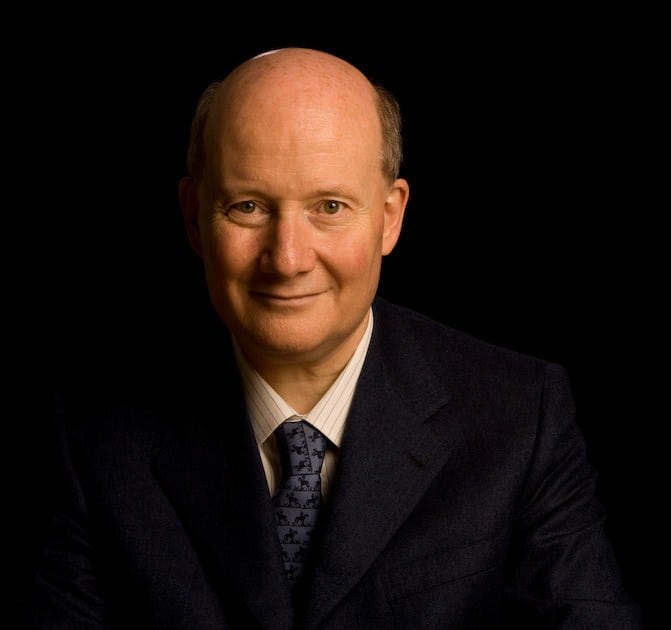
Massimo Introvigne (born June 14, 1955 in Rome) is an Italian sociologist of religions. He is the founder and managing director of the Center for Studies on New Religions (CESNUR), an international network of scholars who study new religious movements. Introvigne is the author of some 70 books and more than 100 articles in the field of sociology of religion. He was the main author of the Enciclopedia delle religioni in Italia (Encyclopedia of Religions in Italy). He is a member of the editorial board for the Interdisciplinary Journal of Research on Religion and of the executive board of University of Pennsylvania Press’ Nova Religio. From January 5 to December 31, 2011, he has served as the “Representative on combating racism, xenophobia and discrimination, with a special focus on discrimination against Christians and members of other religions” of the Organization for Security and Co-operation in Europe (OSCE). From 2012 to 2015 he served as chairperson of the Observatory of Religious Liberty, instituted by the Italian Ministry of Foreign Affairs in order to monitor problems of religious liberty on a worldwide scale.