Twice in 2026, South Korea’s President met Xi Jinping and, within days, called for action against the Unification Church and other “heretics.”
by Massimo Introvigne
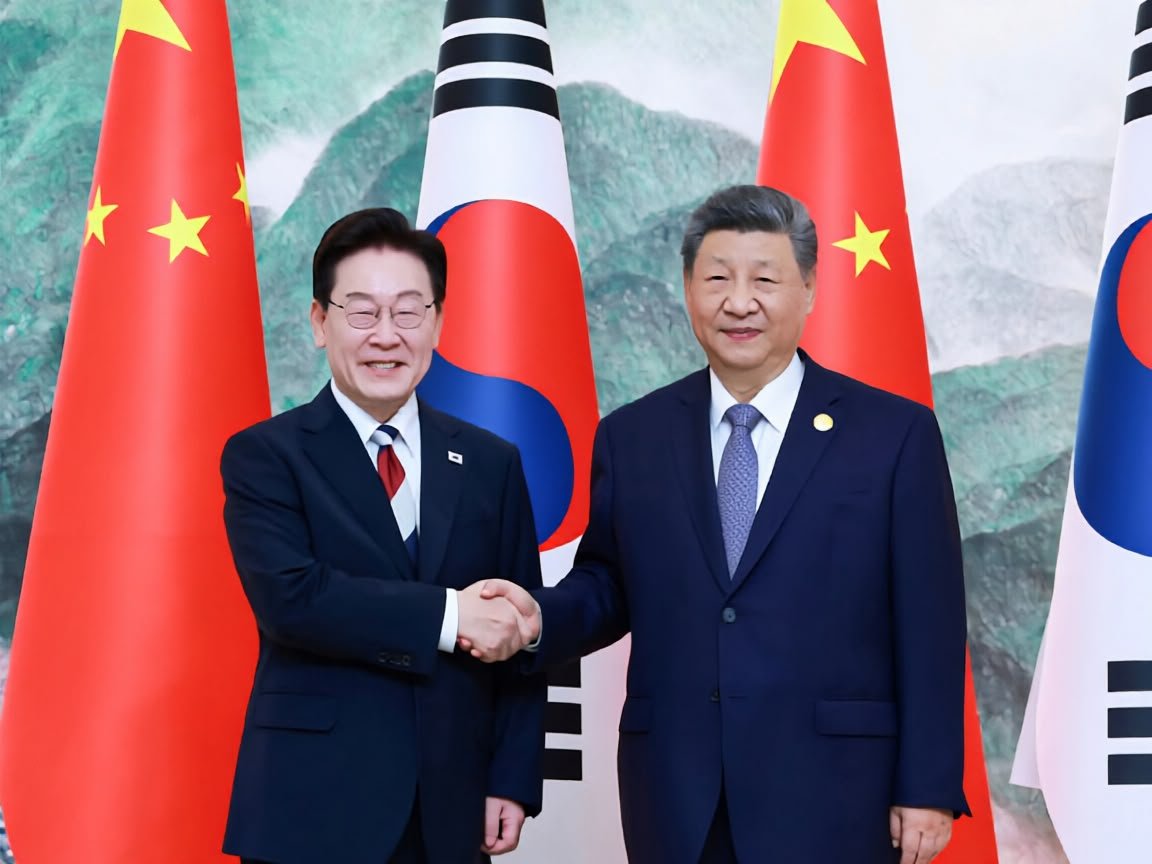
On November 18, 2026, President Lee Jae-myung of South Korea sat down with Xi Jinping at the Qilin Villa in Shenzhen, on the sidelines of the APEC summit. The meeting lasted thirty-four minutes. It was the third between the two men in a year, after Gyeongju in November 2025 and Beijing in January 2026. Lee asked China to play a “constructive role” on the Korean Peninsula. Xi spoke of supply chains and artificial intelligence. Nobody, that we know of, mentioned religion.
On November 24, six days later, Lee presided over a Cabinet meeting at the Blue House and, according to the “Chosun Daily,” turned to one of his favorite subjects. “I already spoke about this quite some time ago,” he said. “At that time I explained the dissolution procedure for pseudo-religious groups that commit criminal and illegal acts under the guise of religious activity.” He added that “all kinds of criminal acts” by such groups “are coming to light,” that “the time has come to realistically examine effective measures,” and he instructed the Ministry of Culture, Sports and Tourism to report on “what has been reviewed so far, the current situation, and future plans.” He named no group.
The “Chosun Daily” did it for him, noting that the remarks came amid a quarrel inside Lee’s own Democratic Party over whether some 43,000 members of Shincheonji had joined it to sway its leadership race, and that “some say” the real target was the Unification Church, whose leader Mother Han is currently on trial.
Readers of “Bitter Winter” may feel they have seen this film before. They have. On January 5, 2026, Lee made the first state visit to Beijing by a South Korean President in six years. Xi received him in the Great Hall of the People and, according to the official Chinese readout, urged him to “stand firmly on the right side of history and make correct strategic choices.” Lee flew home. One week later, on January 12, he received the leaders of Korea’s seven main religious bodies at the Blue House and, in the words of his spokesperson, agreed with their call to disband the Unification Church, Shincheonji, and other “illegitimate, heretical religious organizations.” Nine days after that, at his New Year press conference, he said that religious interference in politics was a “path to national ruin,” compared it to armed rebellion, and complained that the existing punishments were “far too weak.”
So the sequence is: Beijing in January, religious leaders within a week; Shenzhen in November, Cabinet within six days. Two data points make a line, and a line is not yet a proof. I am a sociologist, and I know that presidents travel a great deal and give instructions every day. A coincidence is always possible. It is also possible that Lee, who has been promising a “dissolution procedure” for “cults” since a Cabinet meeting of December 2025, simply needed something to say after an embarrassing week in which his party’s executive had split over the Shincheonji allegations and had, as the “Chosun Daily” also reports, pushed back against the member who raised them. A president who cannot prove that forty-three thousand “heretics” infiltrated his party can at least promise to dissolve them.
Still, those who have followed the story may be forgiven for seeing a pattern, and the reason is that the pattern is older than Lee. China banned the Unification Church as a “xie jiao,” a movement spreading heterodox teachings, decades ago, and has never forgiven it for the role Reverend Moon’s anti-Communist organizations played during the Cold War in Japan and Korea. When the Tokyo District Court dissolved the Church in March 2025, the China Anti-Xie Jiao Association, the Communist Party’s instrument for fighting religious movements it dislikes, published a statement hailing the “doomsday verdict” as proof that Japanese society had “awakened.” When the Japanese Supreme Court made the dissolution final in 2026, it published a second one. In August 2025, delegates of that same Association sat with Korean anti-cult pastors and a Japanese scholar at a meeting at Mokwon University in Daejeon that nobody announced in advance. In January 2025, the largest Korean deprogramming organization, led by a pastor who had been convicted for kidnapping believers, signed a cooperation agreement with the Japanese lawyers who had spent thirty-five years working for the Church’s dissolution, at the Tokyo law office of the most prominent of them. Korea, in short, is the third act of a play whose first two acts were performed in Beijing and Tokyo.
This is the argument of a book I have been writing and that is now with the publisher: “The Silent Conspiracy: How China Teamed with Japanese and Korean Anti-Cult Activists to Destroy the Unification Church.” The title is a provocation, and the book explains why it is only half of one. There is no control room, no secret treaty, no Chinese official telling Korean prosecutors what to do. There are three groups of people, Japanese Communist lawyers who have fought the Church since the 1980s, Korean Protestant heresy hunters with a long record of “conversion education” by abduction, and a Chinese state that would like Seoul and Tokyo to be governed by people less attached to Washington, who speak the same imported language of “cults,” “brainwashing,” and “victims,” who meet more often than they admit, and who have discovered that they want the same thing. A conspiracy of convenience can do without conspirators, as long as the partners recognize each other.
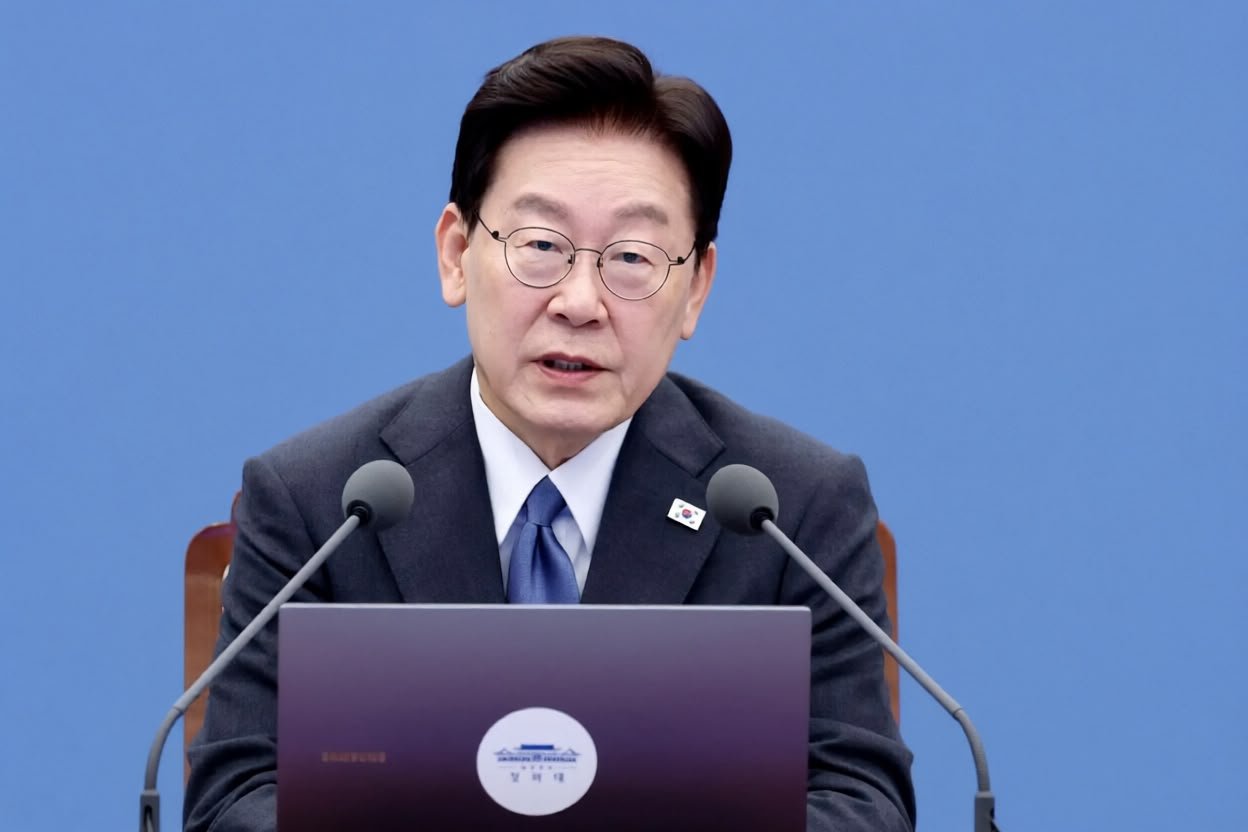
Lee fits the picture. In March 2024, as opposition leader, he asked why Korea should meddle in the Taiwan Strait and suggested saying “xie xie” to China and “xie xie” to Taiwan. In office, he has restored the relationship with Beijing that his predecessor had cooled, returned a pair of Qing dynasty stone lions as a gift the day of his state visit, and received the China Buddhist Association in Seoul in March 2026 to meet the very Buddhist leaders who had sat with him in January. A Korean government that wants friendly relations with China has every reason to dislike a church that Beijing regards as an enemy and whose members, numerous enough to matter in close races and willing to work for free, have supported conservative candidates since the 1960s. No instruction is required; noticing what pleases a new friend is enough.
The mechanism, meanwhile, is already in place. The old Article 85 of the Public Official Election Act, a residue of Korea’s authoritarian past that punishes religious leaders who “interfere” in politics and was rarely enforced before Lee, has sent the eighty-two-year-old leader of the Unification Church, Hak Ja Han, to jail, and Shincheonji’s ninety-five-year-old founder with her. A bill allowing the government to dissolve “anti-social” religious corporations, modeled on Japan’s, is being drafted. What Lee ordered on November 24 was a report on how to use it. The Ministry of Culture, Sports and Tourism, which was told last December to look into the Japanese precedent, will no doubt oblige.
Perhaps the two trips and the two announcements are unrelated, and the President simply has a habit of thinking about “cults” on airplanes. Perhaps. In Japan, the campaign against the Unification Church took three years from the Abe assassination to the dissolution, and the Chinese applause came only at the end. In Korea, the applause may come earlier, because this time they were consulted first.
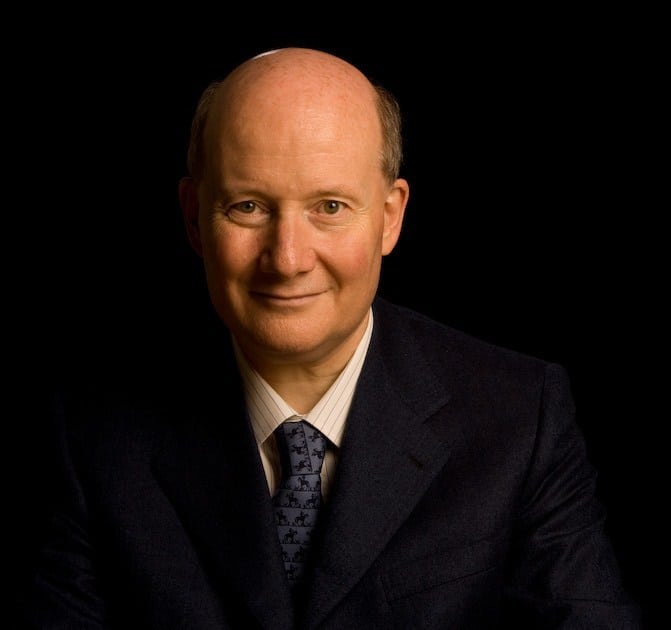
Massimo Introvigne (born June 14, 1955 in Rome) is an Italian sociologist of religions. He is the founder and managing director of the Center for Studies on New Religions (CESNUR), an international network of scholars who study new religious movements. Introvigne is the author of some 70 books and more than 100 articles in the field of sociology of religion. He was the main author of the Enciclopedia delle religioni in Italia (Encyclopedia of Religions in Italy). He is a member of the editorial board for the Interdisciplinary Journal of Research on Religion and of the executive board of University of Pennsylvania Press’ Nova Religio. From January 5 to December 31, 2011, he has served as the “Representative on combating racism, xenophobia and discrimination, with a special focus on discrimination against Christians and members of other religions” of the Organization for Security and Co-operation in Europe (OSCE). From 2012 to 2015 he served as chairperson of the Observatory of Religious Liberty, instituted by the Italian Ministry of Foreign Affairs in order to monitor problems of religious liberty on a worldwide scale.