Lawmakers unanimously approved in principle compulsory theology degrees for pastors and a ten-province rule likely to freeze out new and minority faiths.
by Massimo Introvigne

On August 13, 2026, Angola’s National Assembly voted unanimously to approve in principle a bill amending the 2019 Law on Freedom of Religion and Worship. All 165 deputies present supported it, including those of the ruling MPLA and the main opposition party, UNITA. The text then went to the parliament’s specialized committees for a detailed, article-by-article discussion, where amendments may still be introduced before a final vote in the plenary. At the time of writing, that final vote had not yet taken place.
Its declared purpose is to bring order to a religious field the government describes as chaotic, and to stop what officials and the media call the “uncontrolled proliferation of cults” (“seitas” in Portuguese, which should be translated as “cults” rather than “sects”). Behind the bureaucratic language lies a familiar package. Religious and spiritual leaders will need a university degree in theology, and ordinary ministers of worship a mid-level theological diploma. To be recognized, a religious body or spiritual institution must prove it is present in at least ten of Angola’s twenty-one provinces, with a validated place of worship in each. Worship will also be banned in residential buildings, sports facilities, cinemas, cultural centers, and schools, which happen to be the places where small and newly founded congregations usually meet. Leaders already in office will be given time to adapt, as the new requirements will not apply to them immediately.
The government presented these rules as a way to “elevate the spiritual magisterium” and protect public good faith. Secretary of State for Culture Maria da Piedade de Jesus, who defended the bill in Parliament, added that proof of theological training would contribute to social stability and protect families. The minister of culture, Filipe Zau, had launched a public consultation on the draft in April 2025, saying that the 2019 law no longer fit Angola’s “dynamic reality.” The Council of Christian Churches in Angola, which groups several historical Protestant denominations, openly claimed that it had asked the government for the revision, citing pastors who promise miraculous healings and discourage believers from seeking medical care.
Religions founded abroad are also targeted. Under the bill, they will be allowed to operate only after being recognized by the Angolan state, and their statutes must declare that their organizational, administrative, and leadership structures conform to Angolan “cultural and legal reality,” defining the nature of their ties with leaders abroad. Foreign ministers of worship will also have to regularize their immigration status. Readers familiar with Chinese regulations against “foreign domination” of religion will recognize the pattern. Speaking for the ruling MPLA, deputy José Semedo framed the debate in words familiar to anyone who has followed anti-cult campaigns elsewhere. In his view, the real issue is whether the state can remain indifferent when practices conducted under the cover of religion exploit the vulnerable, defraud believers, or disturb public order.
The result is a law written by and for established churches, aimed at protecting them by limiting competition. Large denominations with seminaries, buildings, and members spread across the country will meet the requirements without effort. A new congregation in a Luanda neighborhood, a rural African independent church, or a community whose leaders were trained through apprenticeship and spiritual experience in the African indigenous way will not. The theology degree requirement raises an obvious question nobody in the government has answered. Where will a Muslim imam, a Buddhist teacher, a leader of an African Indigenous Spirituality institution, or an elder of the Jehovah’s Witnesses obtain a “licenciatura em Teologia” that corresponds to their faith? The bill assumes that religion in Angola means Christianity, and a specific, institutional form of Christianity.
The ten-province rule is even more effective as a barrier. Angola has long been among the most restrictive countries in Southern Africa for religious registration. The current law already requires 60,000 signatures for recognition, with at least 1,000 signatories residing in each of what were then 18 provinces, and each signature and residency declaration must be notarized separately. At the theological symposium of the All Africa Conference of Churches held in Nairobi on October 5–8, 2026, Reverend Quelende Adriano, who presented the Angolan case, warned that such high membership thresholds marginalize emerging and minority communities.
Official figures show how many believers already live outside the law. According to the National Institute for Religious Affairs, Angola has 85 recognized churches, while 64 “installing committees” and more than 420 applications for recognition are pending. The bill’s own explanatory report counts 23,874 places of worship and some 40,000 pastors and ministers in the country. Islam, with mosques in most provinces, has never been recognized, and Angola remains an anomaly in the region. Mosques were demolished in 2013 on the ground that the religion lacked recognition, and Muslim communities still operate without legal status. The new threshold will make the wait of those seeking recognition permanent.
Enforcement is already planned. Once the law receives final approval, authorities will start the second phase of “Operação Resgate” (Operation Rescue), a campaign to identify and regulate religious activities throughout the country, and the National Institute for Religious Affairs will open offices in all 21 provinces. The first phase of the operation, launched in 2018, led to the closure of many unrecognized places of worship. Unregistered groups are exposed to the same fate, as several waves of church closures in the last decade have shown.
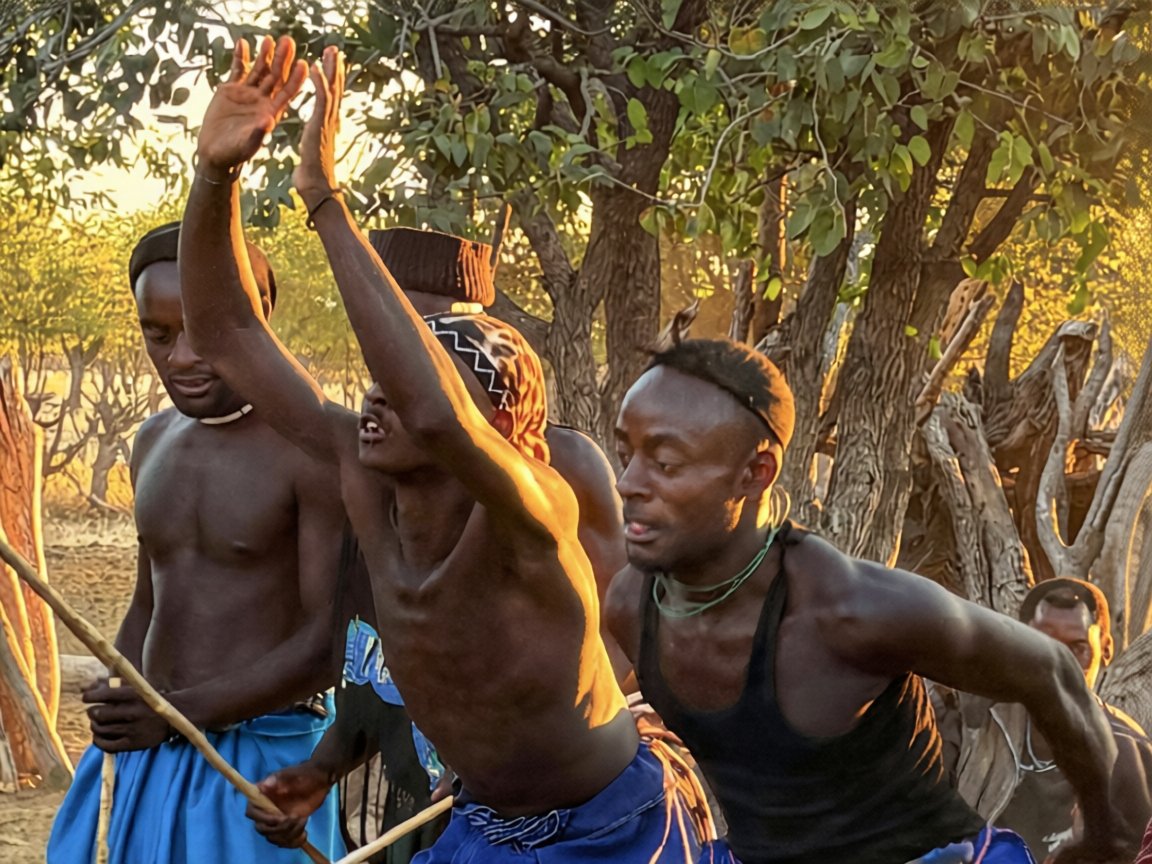
Angola is hardly alone. After the tragedy of the Shakahola forest in Kenya, where followers of a preacher starved to death, Kenyan politicians proposed new controls on churches and pastors. Similar initiatives have surfaced in other countries of the continent, often copying each other’s wording about “cults,” “fake pastors,” and “mental manipulation.”
As “Bitter Winter” has reported, this contagion does not happen by chance. Anti-cultism in Africa grew out of local conflicts between established churches and newer movements, and Shakahola reinvigorated it. It has also been fed from abroad by governments eager to export their own anti-cult models.
China is the most active of these exporters. African politicians and civil servants are routinely invited to Chinese training programs that include sessions on “religious stability” and “cult prevention,” where the Chinese Communist Party’s notion of “xie jiao” is presented as a tool of governance. Angola, one of Beijing’s closest economic partners in Africa for decades, is part of this network of exchanges. France, with its long-standing policy against “les sectes” and its government-funded anti-cult agencies, has spread its ideology through Francophone Africa, and some recent African governmental reports on “cults” openly mention contacts with French public and private anti-cult bodies. Japan, under the Kishida administration, joined the effort after the assassination of former Prime Minister Shinzo Abe, using diplomatic channels to promote anti-cultism internationally, partly to deflect criticism of its campaign against the Unification Church.
The Angolan case shows that the model travels beyond linguistic borders. French anti-cult literature was meant for French-speaking Africa. Yet, its vocabulary now appears in a Portuguese-speaking country, mixed with arguments that recall Chinese regulations on religious venues and clergy accreditation. The common thread is the idea that the state should decide who is a legitimate religious leader and which communities deserve to exist.
International standards point in the opposite direction. Under the International Covenant on Civil and Political Rights, which Angola has ratified, freedom of religion includes the right of communities to choose their own leaders and train them as they see fit. The United Nations Human Rights Committee has repeatedly held that registration procedures should not be used to restrict religious freedom, and that requirements making recognition impossible for minority groups violate it. A university diploma has never been a condition for being a priest, pastor, imam, or healer in the history of religions, and the state’s imposition of it amounts to licensing faith.
Individual pastors’ crimes can and should be prosecuted under existing criminal laws. Using them to justify sweeping restrictions on all new and small religious communities repeats the logic of anti-cult movements everywhere. It penalizes the many for the crimes of the few.
The detailed discussion in Parliament still offers Angolan lawmakers an opportunity to remove the most problematic provisions. If they fail to do so, Angola will become the latest African country where foreign anti-cult propaganda has successfully turned into domestic law.
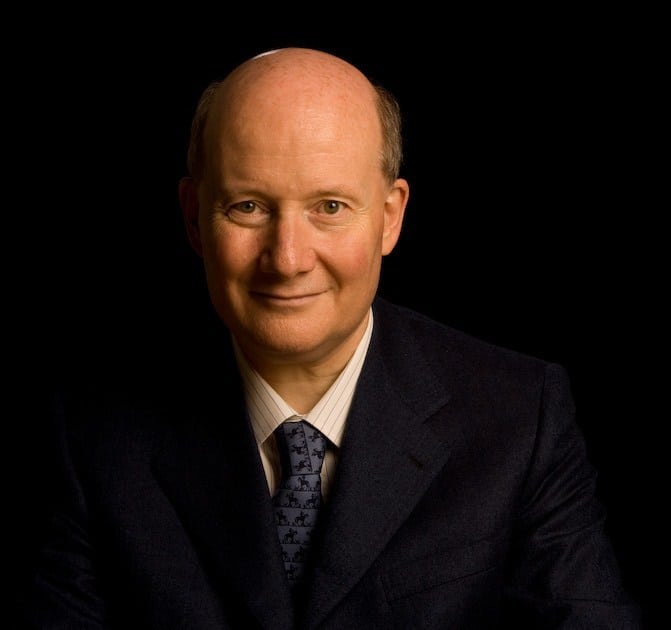
Massimo Introvigne (born June 14, 1955 in Rome) is an Italian sociologist of religions. He is the founder and managing director of the Center for Studies on New Religions (CESNUR), an international network of scholars who study new religious movements. Introvigne is the author of some 70 books and more than 100 articles in the field of sociology of religion. He was the main author of the Enciclopedia delle religioni in Italia (Encyclopedia of Religions in Italy). He is a member of the editorial board for the Interdisciplinary Journal of Research on Religion and of the executive board of University of Pennsylvania Press’ Nova Religio. From January 5 to December 31, 2011, he has served as the “Representative on combating racism, xenophobia and discrimination, with a special focus on discrimination against Christians and members of other religions” of the Organization for Security and Co-operation in Europe (OSCE). From 2012 to 2015 he served as chairperson of the Observatory of Religious Liberty, instituted by the Italian Ministry of Foreign Affairs in order to monitor problems of religious liberty on a worldwide scale.