A reflection on a dissident’s radical proposal shaped by years of incarceration.
by Alessandro Amicarelli
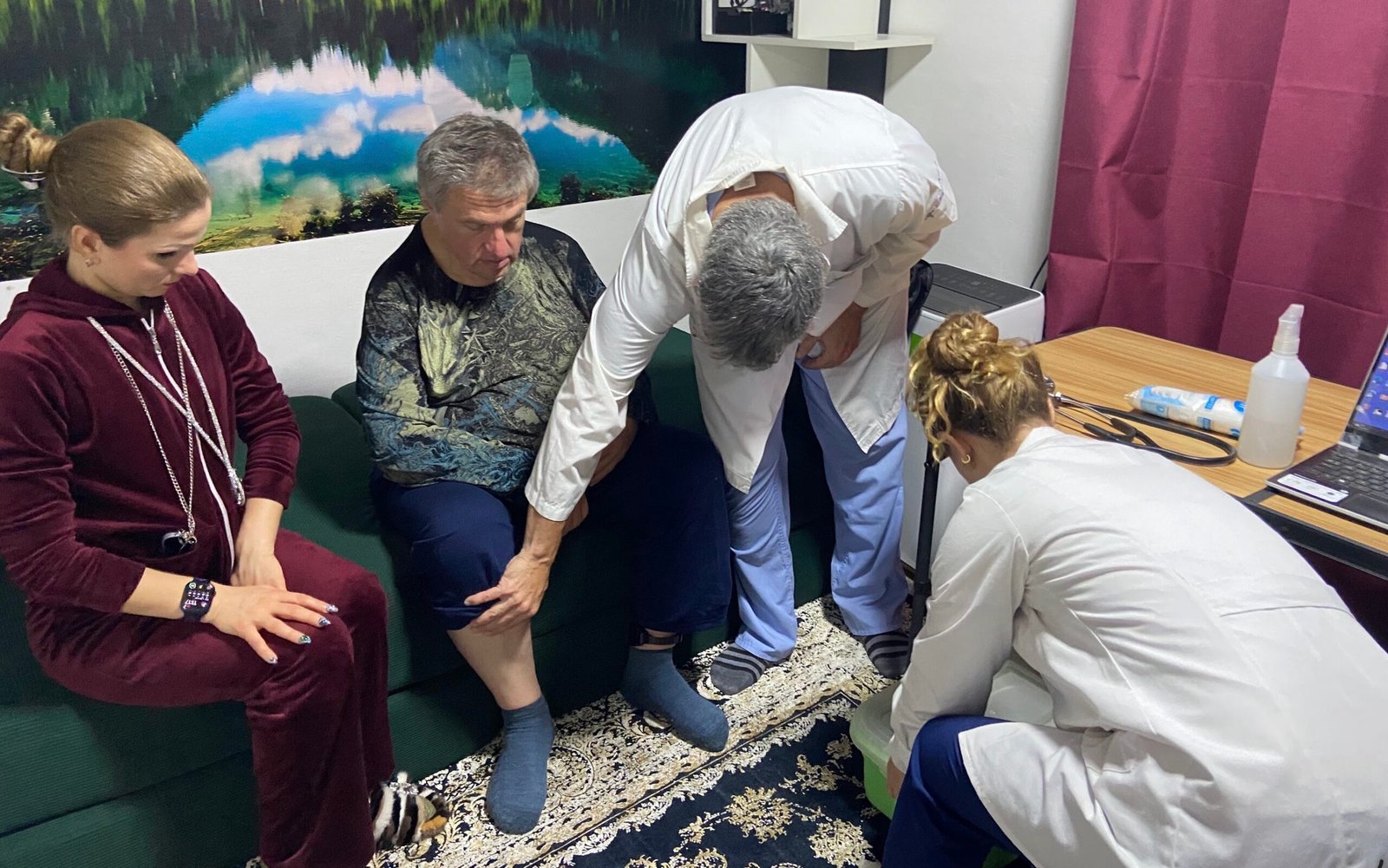
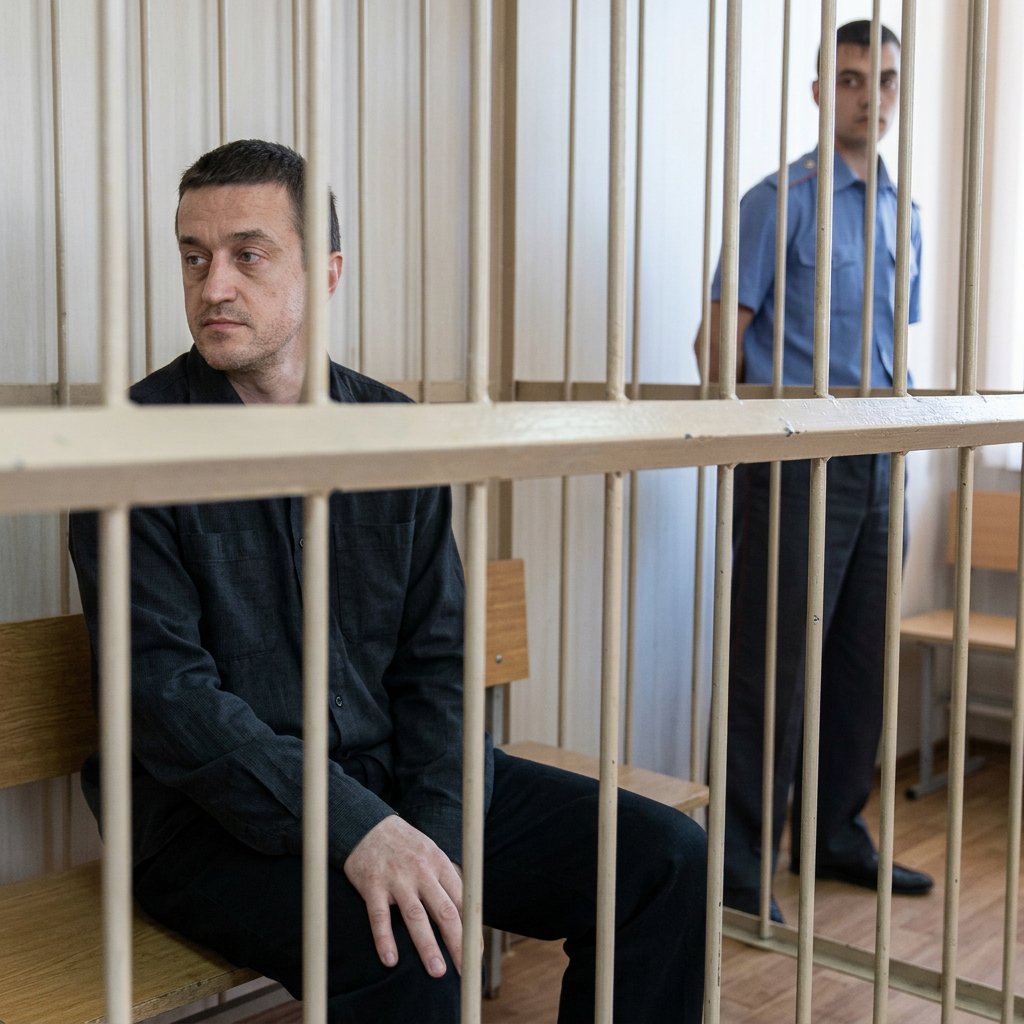
Konstantin Rudnev has spent more than a decade behind bars. Eleven of those years were served in Russia after a trial that international observers regarded as deeply compromised. He is now detained in Argentina under accusations that mirror those used against him in Russia, a continuity that raises serious concerns about the transnational circulation of unverified allegations. His long experience of incarceration has led him to develop a reflection on the nature of prisons and the future of criminal justice. He recently published a short video that deserves attention, both for its tone and for the ideas it advances.
This statement carries a special weight because it was Rudnev’s first video message after many years of silence. For him, speaking publicly again is a deeply personal step. It marks a moment in which he chooses to re‑enter the public sphere despite the risks that any expression of dissent has historically carried for him. He asked that this be acknowledged because the decision to speak was neither spontaneous nor easy. It reflects a renewed sense of responsibility toward those who follow his case and toward those who, like him, have experienced the consequences of prolonged detention.
He also wished to situate his words within the broader reality of Argentina, where concerns have long been raised about the extensive use of preventive detention. A significant number of detainees remain in custody for years before any court determines their guilt, and many are eventually released after being found innocent. The years spent in confinement cannot be restored to them or to their families. This human cost, together with the perception of a system that moves slowly and often without adequate safeguards, shaped Konstantin’s decision to speak. His appeal is directed not only to those who follow his personal situation but also to all who may be facing similar circumstances, and it reflects his desire to contribute to a wider conversation about justice, dignity, and the future of criminal law.
The video begins with a personal statement that sets the frame for everything that follows: “I was in prison in total for more than twelve years. And I spent this time there as a prisoner of conscience. Because I spoke out against Putin’s regime, against the war, against that horror which is happening in the countries. And right here, in Argentina, I also ended up in prison. And I cannot not speak the truth.” From this starting point he moves to a broader claim about the institution of the prison itself. “I want to tell the truth about prisons. The fact that prisons are a rudiment of society. Prisons must be abolished. Not a single person, being in prison, became better.”
The argument is uncompromising. Rudnev describes prisons as places that damage individuals, weaken families, and erode the social fabric. “People become worse. They, on the contrary, become more hardened criminals. They become sick people. Some break in prison and already cannot further continue a normal life.” His proposal is to replace incarceration with forms of restraint that keep individuals within their family environment. “They must be replaced by other measures of restraint, for example, by house arrest, so that a person could be at home, in the circle of his family, so that children would grow together with the father, the wife would be together with the husband, elderly parents would not lose the son.”
This vision is rooted in a belief that moral transformation happens through relationships and through the influence of community and spirituality. “Only in such a case, being in a family, a person can correct himself, because either religion or family can correct a person.” He sees prisons as institutions that sever these bonds and create long‑term harm. “Such prisons cannot help our society to change, cannot help a person to become better. Thus, the faster prisons are eliminated, the faster good and justice will triumph in the world.”
Rudnev’s text belongs to a long and complex tradition of anti‑prison thought. Philosophers, jurists, and reformers have imagined societies without prisons for centuries. Thomas More described alternative systems of social discipline in “Utopia.” Nineteenth‑century abolitionists in Europe and the United States questioned the moral legitimacy of incarceration. Twentieth‑century thinkers such as Peter Kropotkin and the early penal reform movements explored models of restorative justice that minimized confinement. Contemporary abolitionist scholarship continues to debate the possibility of replacing prisons with community‑based systems of accountability. Rudnev’s proposal is part of this lineage, even though it emerges from his personal experience rather than from academic theory.
His text continues with a reflection on the roots of crime. “If society were more humane and religious, more kind, then crime would also decrease. After all, crime comes from the fact that people are evil, and evil prospers in our society. And prospering evil leads, in the end, to crimes.” He concludes with a call to rethink priorities. “It is necessary to think about how to make the world kinder, how to make the world more loving, how to make people more religious, how to strengthen families. Then both crime and prisons will disappear. Therefore prisons are exactly the scourge of our society. They destroy people, they ruin families, they make people worse, and they must be eliminated.”
As a lawyer, I regard this text as a radical provocation that invites reflection. The complete abolition of prisons is difficult to imagine within contemporary legal systems, and the practical challenges are considerable. Yet the value of such a text lies precisely in its capacity to unsettle assumptions and to remind us that criminal justice is a human creation rather than an immutable structure.
Rudnev’s experience of incarceration has shaped a vision that seeks to place dignity, family, and moral development at the center of social life. Even if his proposal cannot be implemented in its entirety, it contributes to an important conversation about the future of punishment and the possibility of more humane alternatives.

Alessandro Amicarelli is a solicitor of the Senior Courts of England and Wales, and a barrister of Italy, specializing in International and Human Rights Law and Immigration and Refugee Law. He has lectured extensively on human rights, and taught courses inter alia at Carlo Bo University in Urbino, Italy, and Soochow University in Taipei, Taiwan (ROC). He is the current chairman and spokesperson of the European Federation for Freedom of Belief (FOB).