Despite decades of persecution, new incarnations of the banned qigong group continue to appear in China.
by Deng Huizhong
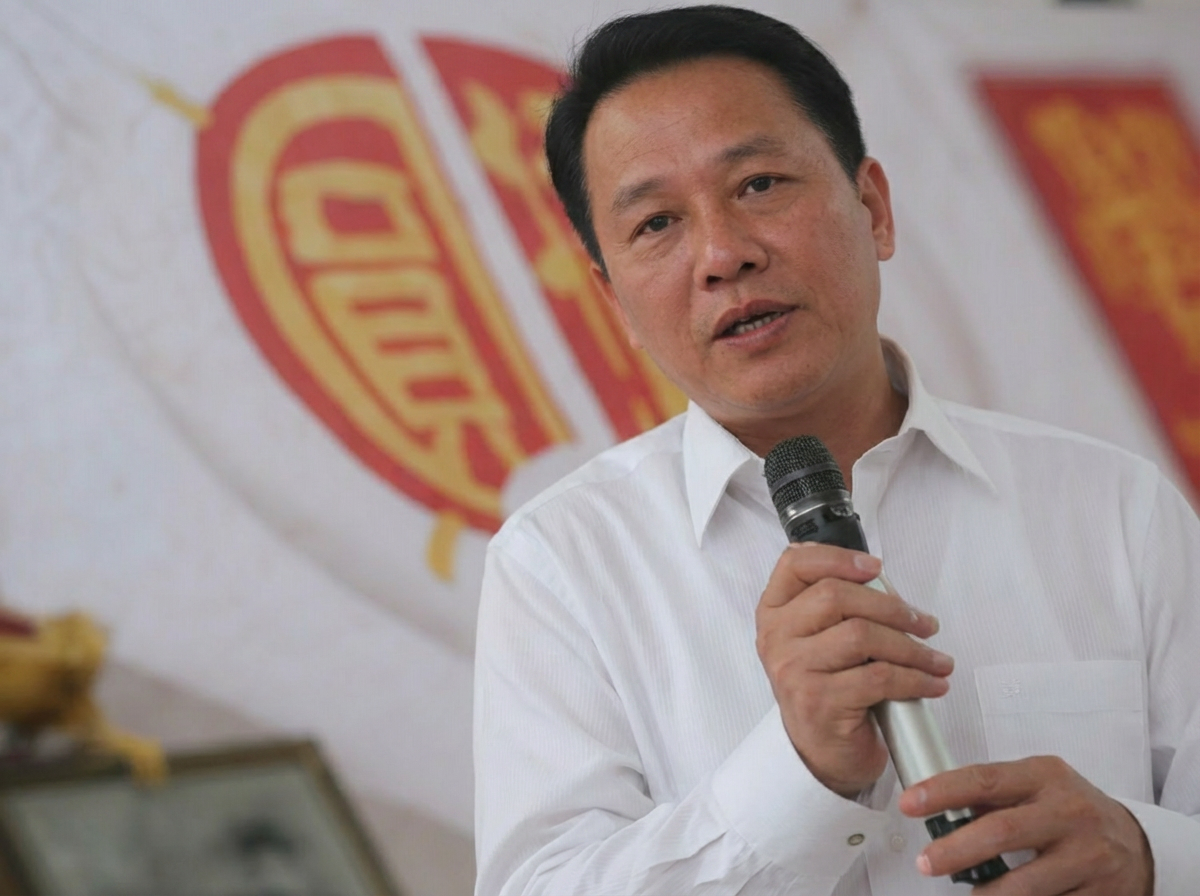
China has announced the dismantling of Kangda Tianxia, another group labeled as a “xie jiao” and linked to the long-suppressed Zhonggong movement. This confirms that, despite decades of repression, parts of Zhonggong continue to reappear in new forms. “Xie jiao” is often translated as “evil cult,” but literally means “organization spreading heterodox teachings.” The label has been used in China since the Middle Ages to designate religious organizations the state perceives as hostile and antisocial.
The case involves a wellness-oriented network based at a resort in Wuning County, Jiangxi Province. It was led by former Zhonggong member Master Yin and by Liu Zhihai, the legal representative of the company used by the group.
In the 1980s and 1990s, millions of Chinese practiced qigong, leading to the rise of a wide range of teachers, schools, and systems. Zhonggong was among them, founded in 1987 in Harbin by Zhang Hongbao. Zhonggong combined physical exercises, self-cultivation, and a loose organizational structure, eventually developing into a nationwide network with training centers, companies, and a large following. The Chinese government tolerated Zhonggong for years but later turned against it, accusing Zhang of having political ambitions, superstition, and criminal activity. By the early 2000s, Zhonggong’s institutions were dismantled, its assets seized, and its leaders imprisoned or exiled. Zhang fled to the United States in 2000 and died in 2006.
Yet, as “Bitter Winter” has highlighted, Zhonggong did not vanish. It splintered into smaller, fluid groups led by former instructors or practitioners who continued teaching variations of its methods, often blending them with other spiritual or wellness traditions. The state has repeatedly cracked down on these offshoots, but new ones keep emerging.
Master Yin was one of Zhang Hongbao’s early followers. Born in 1965 in Sichuan, he joined Zhonggong in the late 1980s. He worked in its training centers and remained active until the movement was suppressed. After Zhonggong’s collapse, he engaged in various wellness ventures, including meditation courses, memory training programs, and health centers. In 2012, he partnered with former Zhonggong associate Liu Zhihai to establish Kangda Tianxia Health Technology Co. in Beijing. Over time, the group grew to include dozens of affiliated companies and established a headquarters at the Taoyuan International Holiday Village resort in Wuning County, Jiangxi.
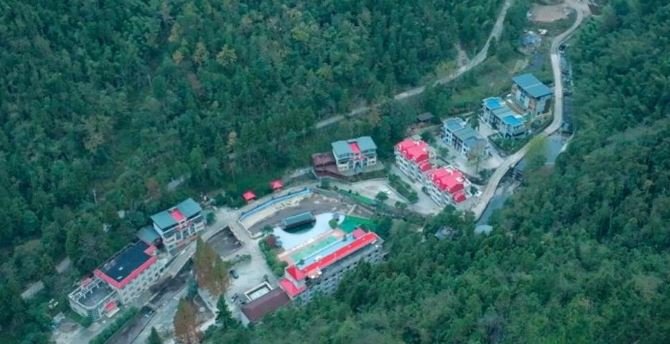
The group offered numerous courses—meditation, fasting retreats, “advanced inner cultivation,” youth camps, and wellness programs for older people. According to police accounts, Master Yin was seen as a reincarnated Buddha, the organization was clouded in secrecy, and preyed on vulnerable victims who donated heavily to the group. Such descriptions, however, reflect the standard framework used by Chinese anti-cult propaganda for decades: a charismatic leader, secret teachings, a hierarchical setup, and financial exploitation.
The crackdown started in the summer of 2023 when police in Wuning County received reports of two missing persons. Officers traced both individuals to the resort where Kangda Tianxia operated. The police reported that the two appeared “nervous” and “abnormal,” a detail often used to suggest psychological manipulation. From there, the story follows the usual pattern: a special task force was formed, investigators did surveillance, and the group was accused of “using a xie jiao to undermine law enforcement,” a vague charge often aimed at spiritual movements. Authorities assert that the group discouraged medical treatment, charged high fees, and attracted members from all over China, including professionals, retirees, and businesspeople. They also mentioned tragic cases of individuals who allegedly delayed medical care after attending wellness courses. Such stories commonly justify repression, though they are rarely independently verified.
On April 1, 2024, police launched a coordinated operation across several provinces, arresting twenty-five core members and several associates. Authorities claim to have seized or frozen millions of yuan in assets, including vehicles, property, and donations. The courts later sentenced Master Yin, Liu Zhihai, and others for “using a xie jiao to undermine the implementation of the law,” a charge frequently used against spiritual groups regardless of any actual harm. The hunt for members of Kangda Tianxia still at large continues nationwide.

The case follows a predictable script, but shows the state’s ongoing struggle with Zhonggong’s legacy. Despite the movement’s destruction over twenty years ago, its ideas, practices, and networks keep resurfacing in new forms. Some offshoots are small and short-lived; others develop into regional wellness businesses. The state’s response has not changed: surveillance, raids, arrests, and public condemnations. The Kangda Tianxia case demonstrates that Zhonggong’s influence remains strong and that former members continue to teach, adjust, and reinterpret its methods.
The Chinese government’s narrative paints Kangda Tianxia as a dangerous “cult” taking advantage of vulnerable people. However, the broader situation is more complicated. The persistence of Zhonggong-related groups, despite decades of repression, suggests that the movement tapped into deep spiritual and cultural needs that the state has never managed to erase. As long as these needs are unmet, new offshoots will keep emerging. The crackdown in Jiangxi is just the latest chapter in a story with no end in sight.

Uses a pseudonym for security reasons.