The court confirmed that adults’ and minors’ rights are not violated through removal (“shunning”).
by Massimo Introvigne
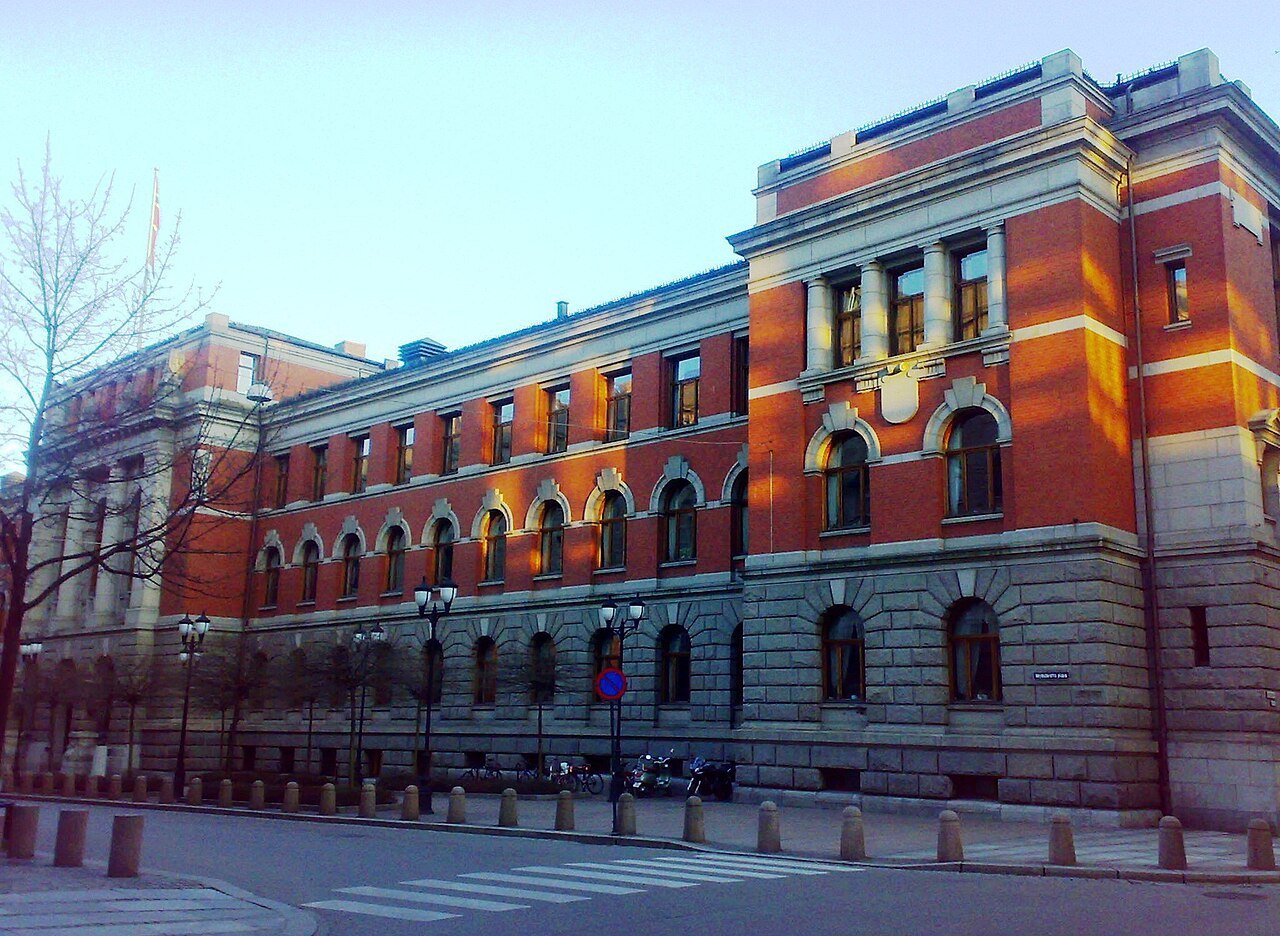
On April 29, 2026, the Supreme Court of Norway ruled in favor of Jehovah’s Witnesses in a landmark case that would likely influence proceedings concerning the religious organization in other countries. The court declared invalid all administrative measures that had deregistered the community and denied it state subsidies. This ruling is a significant win for religious freedom in Norway and elsewhere. It not only restores the legal status of a well-established religious minority but also clarifies that the State cannot interpret terms like “negative social control” or “psychological violence” to interfere in religious matters without clear proof of harm.
The case, which has now reached its conclusion before the Supreme Court, began in 2021, when the Ministry of Children and Family Affairs received a letter from Rolf Johan Furuli, a former member of the Jehovah’s Witnesses. The complaint targeted the Witnesses’ long‑standing religious practice of counseling members not to associate with former members—except cohabiting relatives—who had been expelled for serious, unrepentant sins or had publicly disassociated themselves from the organization. Furuli alleged that this practice effectively prevented members from exercising their right to change their religious beliefs, as fear of social consequences would compel them to remain in their faith. He also claimed that the same practice applied to minors, who, he argued, were baptized before they were mentally mature enough to understand what they were doing.
In fact, the Jehovah’s Witnesses teach “social distancing” based on their interpretation of the Bible, particularly of 1 Corinthians 5:13 (“Expel the wicked person from among you”) and 5:11 (“Do not even eat with such people”). This “removal” does not apply to members who become inactive without publicly announcing that they have left the Jehovah’s Witnesses.
Furuli’s allegations triggered a chain of administrative actions. The government and the State Administrator of Oslo and Viken denied Jehovah’s Witnesses the state subsidies they had peacefully received for thirty years under Section 16 of the Norwegian Constitution, which mandates that “all religious and philosophical communities must be supported on an equal footing.” Registration as a religious organization under the 2020 Religious Communities Act was also denied. The Oslo District Court confirmed these decisions on March 24, 2024. The Jehovah’s Witnesses appealed. On March 14, 2025, the Court of Appeal reversed the District Court, concluding that the lower court’s ruling was wrong, dangerous for religious liberty, and inconsistent with Norway’s obligations under the UN and European human rights conventions. Dissatisfied, the State brought the case to the Supreme Court—where it has now lost.
The Supreme Court’s reasoning is thorough and based on Norwegian law and the European Convention on Human Rights. It focuses on the main issue, whether the Witnesses’ practice of removing (“shunning”) former members—those disfellowshipped or those who resign—hinders adults from exercising their right to leave or violates children’s rights in the case of minors. The State argued that this practice equates to coercion, psychological violence, and negative social control. However, the Supreme Court found that the State failed to provide convincing evidence. As noted in the judgment, “the State has not demonstrated that Jehovah’s Witnesses’ practice of shunning former members constitutes improper pressure that violates members’, including children’s, right to free withdrawal” (decision, no. 143). The practice is also not unique to the Jehovah’s Witnesses: “It is not uncommon for there to be social consequences for those leaving a small and close religious or other community, especially if family and friends share the affiliation” (no. 133).
The Court noted that the State relied on selected excerpts from religious texts rather than specific evidence of harm. It stressed that the standard for denying subsidies under section 6 of the Norwegian Religious Communities Act must remain high, as freedom of religion is a fundamental right in a liberal democracy. It also noted that Jehovah’s Witnesses have won nearly all of the over 70 cases brought before the European Court of Human Rights. This serves as a reminder that their practices—though controversial to some—are protected by Article 9.
This judgment is important because it reinstates the principle that the State cannot penalize a religious community simply because its internal rules differ from those of the majority. The Court acknowledged that removal (“shunning”) is based on the Witnesses’ understanding of Scripture. It also noted that, for cohabiting relatives, family ties remain intact and contact continues within the household, even with disfellowshiped members, with whom relationships are allowed for “necessary family matters” (no. 126). Thus, the State’s attempt to link religious discipline to psychological violence was deemed legally unfounded.
The Supreme Court established a key general principle that there is no right “not” to be “shunned.” International and Norwegian law “does not protect a right to maintain relationships between close adult family members” (no. 119). If it were not so, the Supreme Court explains, two rights would be violated: the right of religious communities to self-organize as they deem fit according to their theology, and the right of those who remain in the organization to decide with whom they wish to associate. In fact, “the remaining members have, under Articles 8 and 9 ECHR, the right to arrange their private lives according to their religious convictions, including the right to decide for themselves whom they want to socialize with. An indirect state requirement to maintain contact with former members—to avoid deregistration and loss of state support—would, in reality, place pressure on individual members to include such persons in their social community. This conflicts with their understanding of the Bible and affects both their freedom of religion under Article 9 and their right to private life under Article 8 [of the European Convention on Human Rights]” (no. 115).
The Supreme Court admits that, through these policies, the organization exercises a certain “social control” over its members. However, “social control” is not necessarily “negative” or unlawful, and all “religious rules of conduct… may entail a certain degree of social control” (no. 89).
About minors, the State’s argument relied on two claims: that they may be baptized at a very young age without fully understanding their commitments, and that in case of disfellowshipping, they are “shunned” just like the adults, with dramatic consequences for their psychological well-being.
On the first claim, the Supreme Court noted that “It is only through baptism that one becomes one of the Jehovah’s Witnesses and gains membership status. Jehovah’s Witnesses practice both adult baptism and baptism of minors, but not infant baptism. Baptized minors are usually aged 15–18. Although there are examples of the baptism of younger children, a child between 11 and 15 may alternatively become a so-called unbaptized publisher. Before baptism, Bible study and study of central texts are required. Further, the person must have sufficient maturity to make an independent decision to be baptized. The congregation’s elders will, before baptism, conduct a conversation with the person concerned to ensure that the candidate is sufficiently mature and understands the obligations that follow from becoming a Jehovah’s Witness. If the candidate is a minor, the parents are usually present during the conversation” (no. 36). The Supreme Court concluded that there is “no indication that minors’ decision to be baptized is not based on informed and independent choices” (no. 93).
On the second claim, the Supreme Court regarded the grim depiction by the State of the consequences of being disfellowshipped for minors (a rare occurrence, it noted) as grossly exaggerated. In fact, the decision noted, “exclusion does not break family bonds. A minor will also normally live in the parental home. The family’s ordinary everyday activities can continue, but a central part of the family’s spiritual—that is, religious—life and interaction will, after an exclusion, no longer be available to the excluded minor. At the same time, the doctrine instructs members to safeguard the minor’s family life, including emotionally” (no. 97). And since “the Jehovah’s Witnesses do not operate their own schools,” disfellowshipped minors will keep their “networks outside the congregation” (no. 100). They are not, the Supreme Court concluded, in a situation of psychological violence or coercion as the State had argued.

The dissenting opinions, while differing on some evidentiary aspects, agreed on a key point: the practice of shunning does not imply psychological violence or negative social control against children. This agreement on the central issue strengthens the Court’s conclusion. Even justices who would have upheld certain administrative measures did not support the State’s view that the Witnesses’ practices are harmful to minors.
For those observing religious liberty, this decision is a positive reaffirmation of principles that have begun to weaken in parts of Europe. Norwegian authorities had ventured into risky territory by trying to regulate internal religious discipline through administrative measures. The Supreme Court has now set that right. It reminds public authorities that freedom of religion entails the right of religious communities to set their own membership rules, and that the State should step in only when there is clear, demonstrable harm.
The ruling carries a message that goes beyond Norway. Minority religions are often targeted with vague terms like “cults,” “negative social control,” or “psychological abuse,” not only in non-democratic countries. Courts, however, must demand evidence rather than stereotypes. The Norwegian Supreme Court’s judgment does just that. It affirms legal clarity, supports pluralism, and holds that the State cannot apply majority-based standards to minority faiths while pretending to protect rights.
For Jehovah’s Witnesses in Norway, this decision restores their legal recognition and their right to equal treatment under the Constitution. For all religious minorities, it serves as a strong reminder that the judiciary protects freedom of conscience. For those dedicated to defending religious liberty worldwide, it is a victory worth celebrating.

Massimo Introvigne (born June 14, 1955 in Rome) is an Italian sociologist of religions. He is the founder and managing director of the Center for Studies on New Religions (CESNUR), an international network of scholars who study new religious movements. Introvigne is the author of some 70 books and more than 100 articles in the field of sociology of religion. He was the main author of the Enciclopedia delle religioni in Italia (Encyclopedia of Religions in Italy). He is a member of the editorial board for the Interdisciplinary Journal of Research on Religion and of the executive board of University of Pennsylvania Press’ Nova Religio. From January 5 to December 31, 2011, he has served as the “Representative on combating racism, xenophobia and discrimination, with a special focus on discrimination against Christians and members of other religions” of the Organization for Security and Co-operation in Europe (OSCE). From 2012 to 2015 he served as chairperson of the Observatory of Religious Liberty, instituted by the Italian Ministry of Foreign Affairs in order to monitor problems of religious liberty on a worldwide scale.