A judge who attended an anti-Unification-Church seminar and echoed its claims remains on the panel, raising grave concerns about judicial credibility.
by Patricia Duval
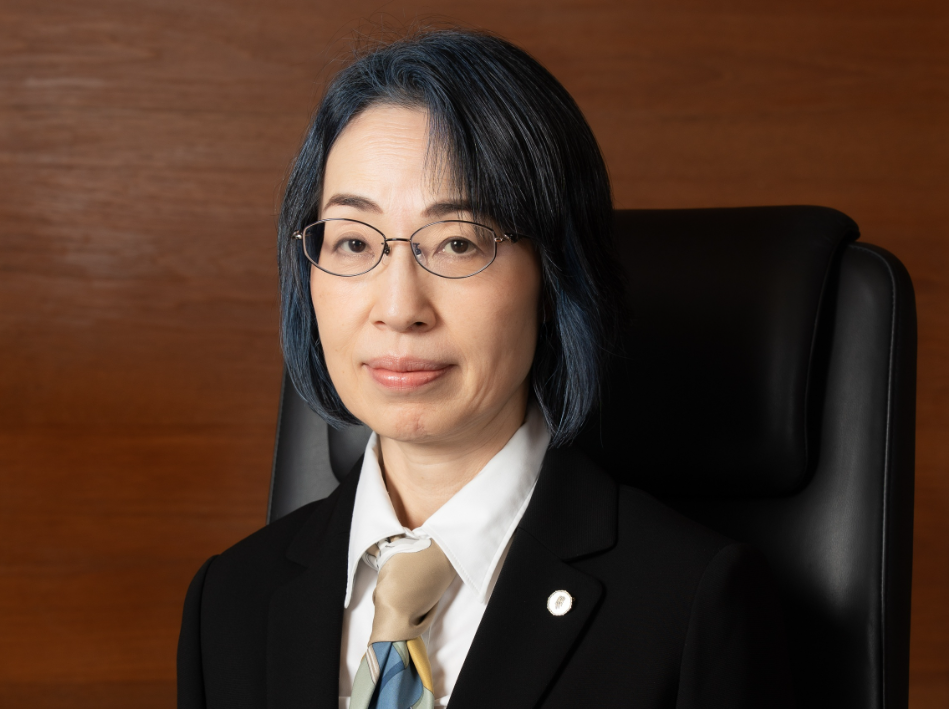
Japan’s Supreme Court has just flatly rejected a motion filed by the Unification Church to recuse one of the Justices hearing its appeal against the Tokyo High Court’s decision of March 4 confirming the dissolution order issued by the District Court.
The motion to recuse was based on a glaring lack of impartiality on her part. The Supreme Court dismissed it in a twoline ruling, providing no explanation.
The message is unmistakable. Everyone in Japan knows that the Church is guilty, so move along—there is no question of bias here.
The fact that the judge actively participated in a seminar where the alleged immense harm caused by the Church’s proselytizing was discussed, along with possible solutions to outlaw it—they could not care less.
The fact that this “harm” was presented by a lawyer from the “National Network of Lawyers Against Spiritual Sales,” a group that has vowed to bring about the destruction of the Church, and that this lawyer is known for opposing the release by courts of adult Church members confined by their parents and pressured to recant their faith (deprogramming), calling it an exercise of “legitimate authority,” justified by “reasonableness”? No problem.
Whether the judge expressed her belief that the Church is really just a business and that faith serves only to rake in donations? And expressed her view that its conversion activities were extremely malicious? Non-issues.
That she endorsed the theory of mental manipulation and compared the Church to a “multilevel marketing” scheme where victims become perpetrators and may even bring in children and family members, thereby “directly harming others”? So what?
The fact that the same judge must now rule on whether the presumption of innocence and the right to freedom of religion or belief were respected in the High Court decision? Still not a problem.
The constant media witch hunt against the Church in Japan has normalized its stigmatization and cemented the idea that it must be dissolved, period.
The Supreme Court’s upcoming decision on the appeal against the High Court’s verdict now seems a foregone conclusion.
Fortunately, we have not reached the point where roughly 400,000 believers would feel compelled to flee Japan, as happens so often to members of persecuted religious minorities throughout the world. Or not yet—but Japan is projecting a very poor image of its democracy.

Patricia Duval is an attorney and a member of the Paris Bar. She has a Master in Public Law from La Sorbonne University, and specializes in international human rights law. She has defended the rights of minorities of religion or belief in domestic and international fora, and before international institutions such as the European Court of Human Rights, the Council of Europe, the Organization for Security and Co-operation in Europe, the European Union, and the United Nations. She has also published numerous scholarly articles on freedom of religion or belief.