A newly submitted NGO statement warns that expansive readings of trafficking legislation may place spiritual communities at risk.
by Massimo Introvigne
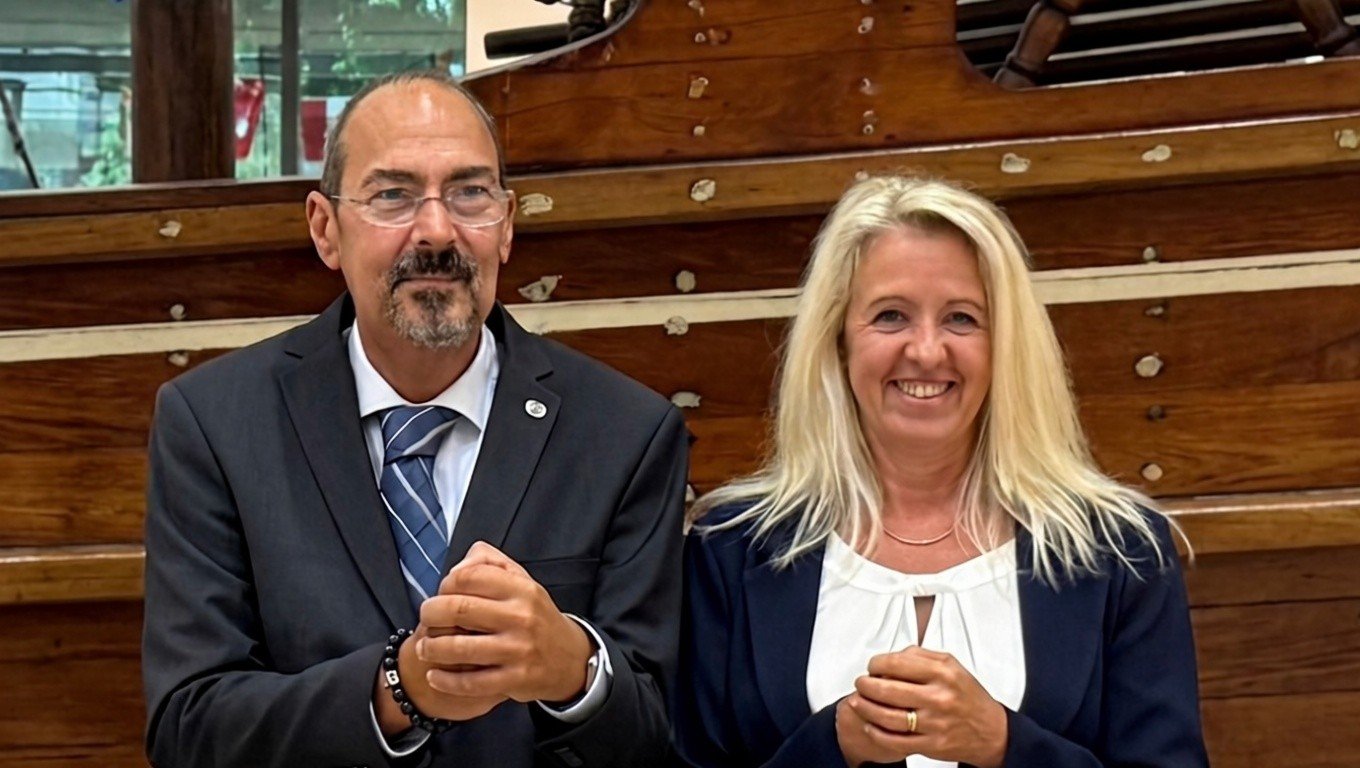
A joint written statement filed on 10 August 2026 by two NGOs in consultative status with the UN ECOSOC (Economic and Social Council), Citoyens en action pour la démocratie et le développement (CADD) and the Coordination des Associations et des Particuliers pour la Liberté de Conscience (CAPLC), has been submitted to the United Nations Human Rights Council in Geneva.
The document expresses concern about the way forcedlabor legislation is being applied in the United States. It reports that recent judicial outcomes show an expansion of the Trafficking Victims Protection Act (TVPA) into areas involving religious or spiritual communities. The NGOs argue that the trend calls for legislative refinement.
The statement focuses on the federal case known as OneTaste, or “United States v. Cherwitz.” It notes that the government relied on theories of psychological manipulation and spiritual pressure to establish serious harm. It also records that “No physical restraint was alleged. Participants were acknowledged to be free to leave.” The prosecution presented fears of exclusion from the community and spiritual consequences as sufficient to constitute forced labor. According to CAPLC and CADD, this approach risks transforming ordinary religious discipline, communal belonging, and voluntary service into elements treated as coercive.

The NGOs observe that theories of “brainwashing,” long rejected by courts and academic experts, have reappeared in litigation and in federal training materials. They warn that these theories have historically been used to stigmatize minority religions and to justify interventions unsupported by evidence. They also recall that the Human Rights Council has affirmed that measures intended to combat exploitation must not encroach upon legitimate religious activity.
The statement notes that “Spiritual life often involves strong communal ties, moral obligations, and forms of discipline that believers freely accept.” These elements cannot be equated with coercion unless accompanied by conduct that clearly falls within the scope of forced labor.
The document reports that Congress is considering reauthorization of the TVPA and proposes two amendments. The first concerns the definition of serious harm, which should include a limiting principle ensuring that religious teaching, spiritual counseling, and voluntary communal practices are not treated as forced labor unless undertaken with the specific purpose of extracting labor in violation of the statute. The second concerns federal training materials, which should be subject to reliability standards excluding methodologies rejected by courts or scientific bodies unless a particularized finding of reliability is made.
Download the full text of the statement in PDF.
The NGOs affirm that these amendments would preserve the TVPA’s essential mission by ensuring that genuine trafficking involving force, fraud, physical restraint, document servitude, and exploitation continues to be prosecuted. They also state that the amendments would prevent the statute from drifting into areas Congress did not intend to reach and would protect religious communities from theories that treat belief as evidence of coercion.
The statement concludes that “Clarifying the scope of the TVPA would reinforce that commitment and ensure that measures designed to combat exploitation do not inadvertently undermine the rights of religious and spiritual communities.”

Massimo Introvigne (born June 14, 1955 in Rome) is an Italian sociologist of religions. He is the founder and managing director of the Center for Studies on New Religions (CESNUR), an international network of scholars who study new religious movements. Introvigne is the author of some 70 books and more than 100 articles in the field of sociology of religion. He was the main author of the Enciclopedia delle religioni in Italia (Encyclopedia of Religions in Italy). He is a member of the editorial board for the Interdisciplinary Journal of Research on Religion and of the executive board of University of Pennsylvania Press’ Nova Religio. From January 5 to December 31, 2011, he has served as the “Representative on combating racism, xenophobia and discrimination, with a special focus on discrimination against Christians and members of other religions” of the Organization for Security and Co-operation in Europe (OSCE). From 2012 to 2015 he served as chairperson of the Observatory of Religious Liberty, instituted by the Italian Ministry of Foreign Affairs in order to monitor problems of religious liberty on a worldwide scale.