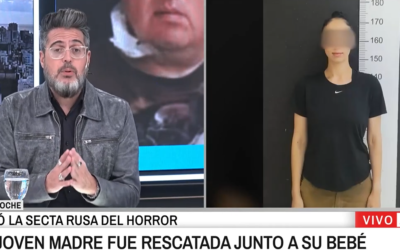
As the media suggests that Russia may seek his extradition, Argentinian courts should be reminded that dissidents cannot expect a fair trial by Russian courts.
by Massimo Introvigne and Rosita Šorytė
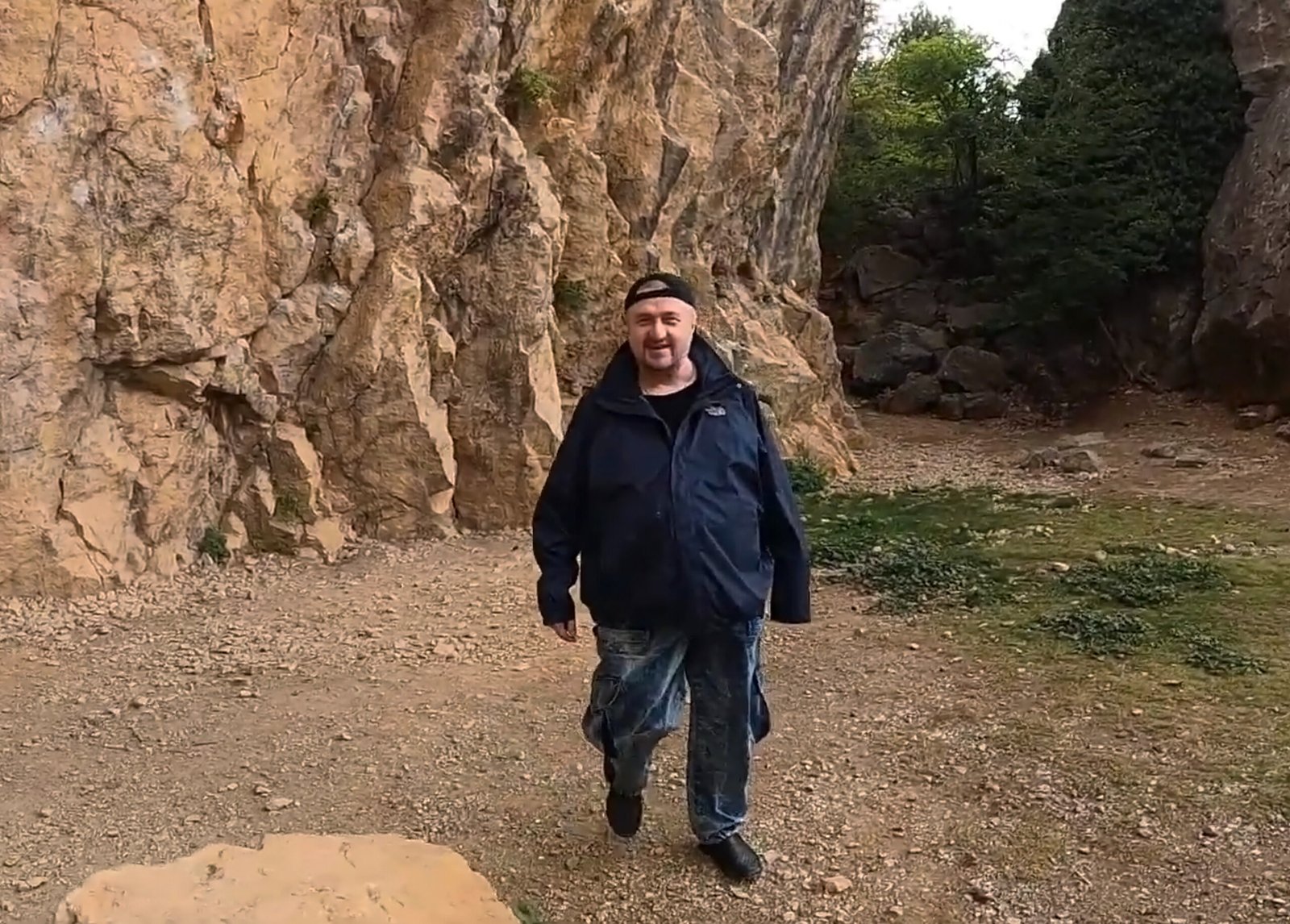
I. The Experts
[The CVs of the experts are omitted]
Both experts have extensive experience in analyzing state repression of minority religions, anti-cult campaigns, and the misuse of legal systems to suppress dissenting spiritual movements. Their combined expertise is directly relevant to the case of Konstantin Rudnev.
II. Freedom of Speech, Freedom of the Press, and Religious Repression in the Russian Federation
The Russian Federation currently operates under conditions of severe restrictions on freedom of speech, freedom of the press, and freedom of religion. Independent journalism has been systematically dismantled through state ownership, regulatory pressure, intimidation, and criminal prosecution. Major television networks are controlled either directly by the state or by oligarchs aligned with the Kremlin.
Investigative journalists face harassment, forced exile, or imprisonment. The security services exert direct influence over editorial lines, and the “extremism” legislation is routinely used to silence dissenting voices.
As is well-known, some independent journalists have been imprisoned or assassinated (such as Anna Politkovskaya in 2006), and media critical of the regime have been suppressed as “undesirable” or “extremist.” In no way can Russian media be considered “independent.” They repeat the regime’s propaganda and attack the dissidents with fabricated charges, often connected with morality and the sexual sphere, following the directives of the authorities and the intelligence services.
III. Symbiosis Between the Russian Orthodox Church and the Putin Regime; Persecution of New Religious Movements
The Russian Orthodox Church enjoys a privileged and mutually reinforcing relationship with the Putin regime. The Church provides ideological legitimacy to the state, promoting narratives of “spiritual security,” “traditional values,” and “civilizational identity,” and is now justifying the aggression against Ukraine as a holy war, while the state protects the Church’s dominant position, supports it and its leaders financially in different indirect ways, and suppresses competitors. This partnership has produced a climate in which minority religions and new religious movements are systematically stigmatized and prosecuted.
Groups outside the Russian Orthodox Church are frequently labeled “sects” or “cults,” a designation that carries strong negative connotations and is used to justify surveillance, raids, and criminal prosecutions.
The anti-extremism framework, originally designed to combat terrorism, has been repurposed to target peaceful religious minorities. Courts routinely rely on pseudo-expert analyses, anonymous witnesses, and media-driven narratives rather than verifiable evidence.
The persecution of Jehovah’s Witnesses is the clearest example. Russian authorities fabricated cases against them using false information, pseudo-experts, and orchestrated media campaigns. These abuses have been formally recognized by the European Court of Human Rights in Taganrog LRO and Others v. Russia (2022), which condemned Russia for manufacturing accusations and conducting unfair trials, and by the United Nations Human Rights Committee in Vilitkevich et al. v. Russian Federation (CCPR/C/145/D/3192/2018, adopted 13 March 2026), which found that Russia violated multiple ICCPR rights through arbitrary arrests, unlawful searches, and prosecutions grounded in misinformation, media manipulation, discriminatory narratives.
The same pattern appears in the cases of Sergey Torop (Vissarion) and other spiritual teachers prosecuted as “cult leaders.” Their arrests were preceded by hostile media campaigns, raids involving excessive force, and reliance on pseudo-expert testimony. Individuals who criticize the Russian Orthodox Church or the Putin regime cannot expect a fair trial. Even after leaving Russia, they remain targets of transnational repression, including defamatory media campaigns and pressure on foreign authorities.
IV. The Prosecution of Konstantin Rudnev: Media Construction, Fabricated Evidence, and an Unfair Trial
The prosecution of Konstantin Rudnev was the culmination of a decade-long media and law-enforcement campaign designed to construct him as a “cult leader” regardless of evidence. A review of both scholarly literature and Russian media shows that, even if Russian Orthodox theologians criticized his esoteric worldview, the two main “crimes” for which he became the subject of a campaign of slander that led to prosecution and detention were his criticism of the Putin regime and his criticism of the Russian Orthodox Church. These are unforgivable sins in Russia, for which dissidents are arrested, sentenced under fabricated pretexts to long years of detention, and persecuted even when they have served their sentences, including abroad.
Rudnev had been under surveillance as a dissident since 1999, and repeated searches, including a major operation in 2008, produced no incriminating material. When years of investigation failed to uncover evidence of criminal activity, authorities shifted from investigation to accusation-building. Complaints from parents whose adult children had left home to join Rudnev’s community were used as pretexts, even though the children themselves testified that their decisions were voluntary. Their testimony was disregarded.
The raid that led to Rudnev’s arrest in 2010 was conducted with a counterterrorism-style force. Dozens of masked OMON officers stormed the residence at dawn, pointing automatic weapons at the occupants. This type of theatrical raid is characteristic of anti-dissident operations in Russia and primarily serves to reinforce a narrative of danger. During the raid, narcotics were allegedly discovered, yet subsequent medical tests of Rudnev’s blood, urine, and hair revealed no trace of drug use. No drug paraphernalia—no scales, no packaging materials—was found in the house. The search protocol was defective, lacking signatures and proper chain-of-custody procedures, and Rudnev was denied the opportunity to sign or comment on it.
The sexual charges against him rested almost entirely on the testimony of a single woman whose statements were inconsistent and contradicted by initial expert evaluations. The definition of “helpless state” required by Russian law was not met, yet, after a first expert report did not support their charges, the investigators instructed a second set of experts to reach a predetermined conclusion. The timing of the accusation, faxed before a formal statement had been taken, suggests coordination rather than spontaneity.
Media narratives overwhelmingly shaped witness testimony at trial. Ninety percent of witnesses admitted that their knowledge of Rudnev came from television programs and unofficial websites rather than personal experience. The court nevertheless accepted this testimony and rejected exculpatory evidence.
The prosecution retroactively reinterpreted legal yoga associations as the embryonic stages of a criminal “cult,” despite the absence of evidence of hierarchy, financing, or criminal activity. Rudnev’s book The Way of a Fool was mischaracterized as extremist despite forensic findings to the contrary. The court consistently favored prosecution motions, ignored procedural violations, relied on anonymous witnesses and experts from the anti-cult movement, and dismissed defense evidence without analysis. Our examination of the documents leads us to conclude that the trial that led to the February 7, 2013, verdict of the Court of Novosibirsk, sentencing Rudnev to 11 years in jail, was not a genuine search for truth but a confirmation of a narrative constructed long before the proceedings began to punish a well-known and outspoken critic of both the regime and the Russian Orthodox Church.
V. Continued Defamation in Russia and Its Replication in Montenegro
While Rudnev was in prison, Russian media continued to publish defamatory material portraying him as the leader of a dangerous “cult.” These publications were not investigative journalism but repetitions of the state-constructed narrative used to justify his conviction. We have examined dozens of articles that appear to have been copied from one another, presumably based on original press releases and directives from the authorities.
Rudnev was also accused for the activities, real or imaginary, of independent groups that continued to use his books and teachings in Russia and abroad during his 11 years of incarceration. He had no knowledge and certainly no control of these activities. During his imprisonment, all correspondence with him was subject to strict prison control: phone calls were allowed for 15 minutes once a month, and letters were censored, making it impossible for him to issue instructions, coordinate activities, or exercise any form of leadership over the independent groups.
When Rudnev relocated to Montenegro after his release, Montenegrin media reproduced the Russian allegations verbatim, without verification. This replication of Russian disinformation shaped public perception and contributed to official harassment and social hostility in Montenegro.
VI. Export of Russian Disinformation to Argentina and Its Role in Arbitrary Detention
When Rudnev later moved from Montenegro to Argentina, the same pattern repeated. Argentine media reproduced Russian and Montenegrin allegations without independent investigation, presenting him as the leader of an “evil cult.” This unverified information influenced local authorities and shaped the context in which Rudnev was detained. We remain under the impression that his arrest, detention, and media slander in Argentina were largely based on the reputation constructed by Russian media and security services.
This impression is reinforced by the fact that his detention conditions were particularly severe. He was placed immediately in a maximum-security prison despite the absence of violent charges, denied access to an interpreter, subjected to improper medical treatment that caused fainting and nighttime suffocation, and long refused house arrest. The only concrete allegation in Argentina concerned immigration law, a minor administrative matter, yet he was treated as a dangerous criminal. This could only have been the by-product of his image of “leader of an evil cult” fabricated in Russia to prevent and repress his activities as a dissident. His detention was the direct consequence of reputational harm exported from Russia.
VII. Risk of Return to the Russian Federation
If returned to Russia, Rudnev, as other dissidents, would face immediate imprisonment, inhumane and life-threatening prison conditions, denial of medical care, and the risk of torture or ill-treatment. The deaths of political prisoners such as Alexei Navalny illustrate the extreme dangers faced by individuals perceived as opponents of the regime.
Religious minorities and spiritual teachers labeled as “cult leaders” or “cult members” face additional risks, including violence from other inmates encouraged by prison authorities, as documented in cases of Jehovah’s Witnesses. Given the documented history of persecution, Rudnev’s return to Russia would violate the principle of non-refoulement under international human rights law.
VII. Conclusion
The case of Konstantin Rudnev exemplifies the Russian state’s use of media manipulation, pseudo-expertise, and judicial bias to suppress dissenting voices. His transnational persecution has continued beyond Russia’s borders, shaping foreign authorities’ actions and media campaign parroting what had been published in Russia. Any assessment of the Rudnev case should take the Russian treatment of dissidents and how cases and media campaigns are fabricated against them into account. Returning Rudnev to Russia would expose him to grave risks to life and health and would contravene fundamental principles of international human rights law.
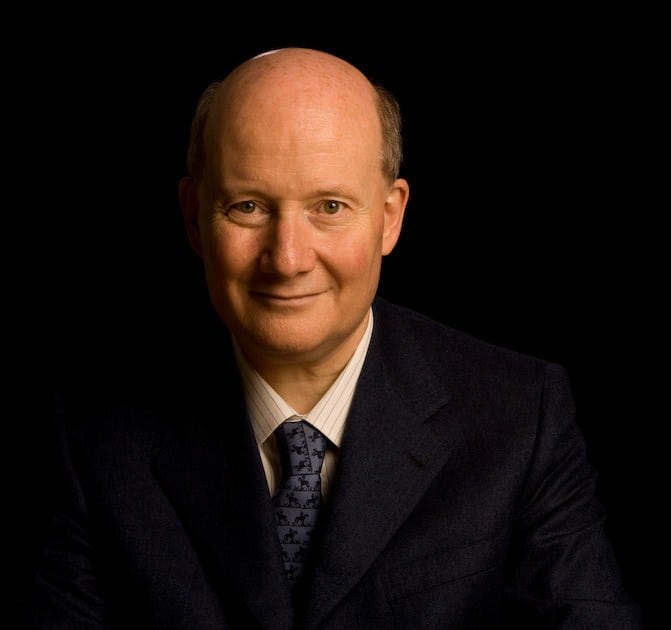
Massimo Introvigne (born June 14, 1955 in Rome) is an Italian sociologist of religions. He is the founder and managing director of the Center for Studies on New Religions (CESNUR), an international network of scholars who study new religious movements. Introvigne is the author of some 70 books and more than 100 articles in the field of sociology of religion. He was the main author of the Enciclopedia delle religioni in Italia (Encyclopedia of Religions in Italy). He is a member of the editorial board for the Interdisciplinary Journal of Research on Religion and of the executive board of University of Pennsylvania Press’ Nova Religio. From January 5 to December 31, 2011, he has served as the “Representative on combating racism, xenophobia and discrimination, with a special focus on discrimination against Christians and members of other religions” of the Organization for Security and Co-operation in Europe (OSCE). From 2012 to 2015 he served as chairperson of the Observatory of Religious Liberty, instituted by the Italian Ministry of Foreign Affairs in order to monitor problems of religious liberty on a worldwide scale.