The documented treatment of members of the Family Federation for World Peace and Unification in Japan falls squarely within the established precedents.
by Javier Ruiz and Cristian González
In a first article published in these pages, we set out the case that the decades-long campaign against members of the Family Federation for World Peace and Unification in Japan (FFWPU)—encompassing forced “deprogramming,” coordinated legal harassment, and state acquiescence—raises serious questions under Article 7 of the Rome Statute. We drew upon publicly available evidence: United Nations reports, documented victim testimonies, and the published record of Japanese proceedings.
In this second article, we turn to a different but equally essential question: what does the existing jurisprudence of international criminal courts and tribunals tell us about the legal characterization of such conduct? The answer, as we shall demonstrate, is that the precedents are not only favorable but highly relevant. Over three decades, from Nuremberg’s foundational principles through the ad hoc tribunals for Yugoslavia and Rwanda to the permanent International Criminal Court, the international community has constructed a detailed body of law that speaks directly to the situation in Japan.
I. Crimes against humanity do not require armed conflict
Perhaps the most fundamental misconception about international criminal law is that it applies only in wartime. This is demonstrably false, and the jurisprudence is unequivocal on the point.
The Rome Statute contains no requirement that Crimes Against Humanity be connected to an armed conflict. This was a deliberate departure from the ICTY Statute, which in Article 5 required a nexus to armed conflict. The drafters of the Rome Statute, drawing on decades of legal development, recognized that some of the gravest atrocities in history have been committed in peacetime by governments against their own civilian populations—or by private actors with state tolerance.
The “Situation in Kenya” represents the clearest illustration. In 2010, the ICC Office of the Prosecutor, for the first time in the Court’s history, exercised its “motu proprio” powers under Article 15 to open an investigation into the 2007–2008 post-election violence—events that occurred entirely outside the context of armed conflict. The Pre-Trial Chamber, in its Decision of 31 March 2010, confirmed that “crimes against humanity” under Article 7 require only that prohibited acts be committed as part of a “widespread or systematic attack directed against any civilian population,” with no nexus to armed conflict whatsoever. The Chamber further clarified that the term “attack” is not limited to military operations but encompasses “a course of conduct involving the multiple commission of acts” against civilians.
The relevance to Japan is direct. The campaign against members of the FFWPU—involving thousands of documented cases of abduction, confinement, and coerced renunciation of faith—has occurred entirely in peacetime, in a mature democracy. The Kenya precedent confirms that this context is no barrier to the Rome Statute’s application.
Key precedents: crimes against humanity beyond armed conflict
| Situation in KenyaICC Pre-Trial Chamber, 2010 | First use of “motu proprio” powers; confirmed that crimes against humanity require no nexus to armed conflict. Established that post-election violence by organized groups against civilians satisfies Article 7’s threshold. |
| GbagboICC Pre-Trial Chamber, 2014 | Confirmed that an “attack” under Article 7 includes “any mistreatment of the civilian population” and need not involve armed hostilities. |
| KatangaICC Trial Chamber, 2014 | Established that an attack may involve “any form of violence directed at civilians, whether physical or otherwise,” including non-violent acts forming part of a broader pattern. |
II. Persecution: From Tadić to the present
The crime of persecution—the intentional and severe deprivation of fundamental rights on discriminatory grounds—has been the subject of extensive judicial interpretation, beginning with the ICTY’s foundational jurisprudence in the 1990s.
“Prosecutor v. Tadić” (ICTY, 1997). The “Tadić” Trial Judgment was the first international criminal conviction since Nuremberg and established several principles that remain authoritative. At paragraphs 694–704, the Trial Chamber held that persecution encompasses a wide spectrum of acts: from murder and physical violence at one extreme to discriminatory policies and the curtailment of fundamental rights at the other. Critically, the Chamber held that the destruction or serious damage to places of worship, and the denial of the right to practice one’s religion, constitute acts of persecution when committed with discriminatory intent. The parallel to Japan’s treatment of FFWPU members—where the state is actively pursuing the dissolution of the religious organization itself—is striking.

“Prosecutor v. Kordić & Čerkez” (ICTY, 2001 and 2004). The “Kordić” Trial and Appeals Judgments further refined the law of persecution. The Appeals Chamber, at paragraph 106 of its 2004 judgment, confirmed that “serious bodily and mental harm’ constitutes persecution, encompassing physical violence, cruel treatment, and constant humiliation or degradation.” Significantly, the Chamber held that the gravity of an act of persecution is assessed not by the nature of the act itself but by its impact on the victim’s fundamental rights. This principle has direct application to the practice of “deprogramming”: the prolonged confinement and psychological coercion suffered by victims may not involve battlefield violence, but the impact on the victims’ fundamental rights to liberty, bodily integrity, and freedom of conscience is severe.
“Prosecutor v. Blé Goudé” (ICC, 2014). The Blé Goudé Confirmation of Charges provides important ICC-specific guidance. At paragraphs 122–123, the Pre-Trial Chamber confirmed that targeting may be based on membership in an identifiable collectivity, “which may be defined by objective criteria or the perpetrator’s perception.” This broad definition of the targeted group is significant in the Japanese context: FFWPU members are targeted not for any objectively harmful conduct, but for their perceived religious affiliation—precisely the type of discriminatory targeting that the Rome Statute was designed to prohibit.
“Prosecutor v. Simić” (ICTY, 2003 and 2006). The “Simić” Trial Judgment and Appeals Judgment further clarified that attacks on property, including the seizure of assets, can constitute persecution when discriminatory and sufficiently grave. This principle extends to the legal and financial assault on the FFWPU in Japan, where the instrumentalization of tort litigation and the pursuit of institutional dissolution threaten the Church’s property, assets, and institutional existence.
The crime of imprisonment or severe deprivation of physical liberty under Article 7(1)(e) has been interpreted by the ICC in several key judgments, each of which illuminates the situation in Japan.
III. Imprisonment and deprivation of liberty: The threshold established
“Prosecutor v. Katanga” (ICC, 2014). The “Katanga” Trial Judgment ( 2014) established that the crime of severe deprivation of physical liberty requires that the deprivation be of such gravity as to breach fundamental rules of international law. The Trial Chamber assessed factors including the conditions of detention, its duration, and whether the detention lacked any legal basis. Each of these factors is present in the documented cases of deprogramming in Japan: victims were detained without legal authority, in conditions of physical coercion, for periods ranging from weeks to over ten months.
“Prosecutor v. Bemba” (ICC, 2016). The “Bemba” Trial Judgment (2016) clarified that severe deprivation of liberty includes situations where individuals are detained without legal basis or due process, including arbitrary arrests and systematic detention of civilians. The Confirmation of Charges Decision in the same case (para. 83) further established that the deprivation need not involve formal imprisonment in a state facility—private detention carried out as part of a broader attack qualifies. This is directly relevant to deprogramming, which is carried out by private individuals in private locations, yet—on the publicly available evidence—with the acquiescence of Japanese state authorities.
“Prosecutor v. Ongwen” (ICC, 2021). The “Ongwen” Trial Judgment (2021) represents the ICC’s most recent comprehensive treatment of deprivation of liberty as a crime against humanity. The Trial Chamber confirmed that the offense encompasses not only physical confinement but also severe restrictions on movement, provided the perpetrator is aware of the broader attack. Ongwen was convicted of 61 counts of crimes against humanity and war crimes—the most extensive conviction in the ICC’s history—and sentenced to 25 years’ imprisonment. The judgment underscores the Court’s willingness to hold individuals accountable for the systematic deprivation of liberty, even when non-state actors carry out such acts within an organizational framework.

IV. Enforced disappearance: The “double impact” doctrine
The crime of enforced disappearance under Article 7(1)(i) of the Rome Statute occupies a unique position in international criminal law. It is a continuous crime—one that persists for as long as the victim’s fate remains unknown—and it is characterized by what tribunals have termed a “double impact”: the deprivation of the victim’s liberty, and the deliberate infliction of suffering on those who seek them.
“Velásquez Rodríguez v. Honduras” (Inter-American Court of Human Rights, 1988). Although not a criminal prosecution, this landmark judgment established principles that have profoundly influenced international criminal law. The Inter-American Court held, at paragraph 147, that a state has a legal duty to take reasonable steps to prevent human rights violations, to investigate violations committed within its jurisdiction, to identify and punish those responsible, and to ensure adequate compensation for victims. Critically, the Court established that state acquiescence—the failure to act in the face of known patterns of disappearance—itself engages state responsibility. The ICC Pre-Trial Chamber subsequently adopted this principle in “Kenyatta” (Confirmation of Charges Decision, ICC-2012), which noted the relevance of organizational involvement in enabling such violations. The parallel to Japan’s documented failure to investigate deprogramming—despite multiple complaints and despite the UN Human Rights Committee’s express concern—is unmistakable.
The “double impact” of enforced disappearance in international law
The International Convention for the Protection of All Persons from Enforced Disappearance (2006, Article 2) codifies the “double impact” of enforced disappearance: the deprivation of the victim’s liberty combined with the refusal to acknowledge the deprivation or provide information on the victim’s fate or whereabouts. The ICC’s Elements of Crimes for Article 7(1)(i) mirror this dual requirement. The core of the offense lies not only in the deprivation of liberty but in the profound uncertainty inflicted on the victim’s family and community—the deliberate denial of information that prevents access to judicial remedies or oversight. In documented deprogramming cases in Japan, Church communities were reportedly compelled to hire private investigators to locate missing members whose whereabouts had been deliberately concealed—a pattern that mirrors this recognized dual element.
V. State acquiescence: When inaction becomes complicity
A recurring theme in international criminal jurisprudence is the responsibility of the state when it fails to act in the face of known patterns of abuse—or, worse, when it actively facilitates them.
The Kupreskić principle
In “Prosecutor v. Kupreskić et al.” (ICTY, 14 January 2000), the Trial Chamber addressed persecution in the context of the destruction of religious and cultural property. The judgment, drawing on the precedent of the International Military Tribunal at Nuremberg, affirmed that “the destruction of institutions dedicated to religion” constitutes a clear case of persecution as a crime against humanity when perpetrated with discriminatory intent. The Japanese government’s pursuit of the dissolution of the FFWPU under the Religious Corporation Act—an institution dedicated to religion—raises analogous concerns, particularly when viewed in the context of the broader pattern of discriminatory conduct documented by international observers.

The nexus requirement
The “Katanga” Trial Judgment (ICC, March 2014) established that individual acts must be connected to the broader attack to fall under crimes against humanity—the so-called “nexus” requirement. This principle is relevant not only to the deprogrammers themselves but to those who facilitated their activities: the lawyers who provided legal cover, the pastors who organized the operations, and the state officials whose systematic inaction—characterizing abductions as “family matters”—enabled the campaign to continue for decades.
The principle of command or superior responsibility, as articulated in the “Bemba” Trial, further extends potential liability to those in positions of authority who knew or should have known that subordinates were committing crimes and failed to take necessary and reasonable measures to prevent or punish such conduct, despite formal complaints and international expressions of concern. This question is specifically raised regarding officials within the Japanese justice system.
VI. No immunity for state officials: Article 27 and the Nuremberg Legacy
One of the most significant innovations of the Rome Statute is Article 27, which abolishes immunity for state officials. The provision states unequivocally that the Statute “shall apply equally to all persons without any distinction based on official capacity” and that “immunities or special procedural rules which may attach to the official capacity of a person, whether under national or international law, shall not bar the Court from exercising its jurisdiction.”
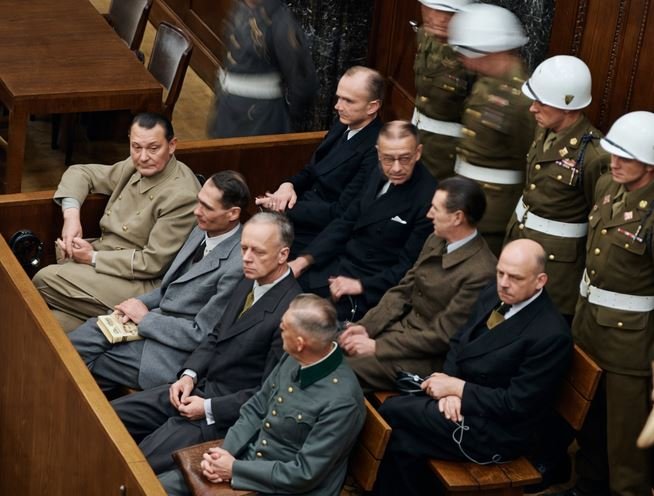
This principle has deep roots. At Nuremberg, the International Military Tribunal held that “the principle of international law, which under certain circumstances, protects the representatives of a state, cannot be applied to acts which are condemned as criminal by international law.” The ICTY reaffirmed this in multiple cases, including the prosecution of former Yugoslav President Slobodan Milošević. The ICC itself has applied Article 27 in the Al Bashir arrest warrant (ICC-02/05-01/09), confirming that even a sitting Head of State enjoys no immunity before the Court.
The relevance to the situation in Japan is evident. If the documented pattern of state acquiescence in deprogramming—and the more recent active pursuit of the FFWPU’s dissolution—constitutes participation in or facilitation of crimes against humanity, then the official capacity of those responsible offers no shield. Government ministers, senior officials, and members of parliament are subject to the same standards of accountability as any other individual under the Rome Statute.
VII. Complementarity: The precedent of state unwillingness
The ICC’s complementarity regime, enshrined in Article 17 of the Rome Statute, was designed to ensure that the Court intervenes only when national systems fail. But the jurisprudence makes clear that “failure” encompasses not merely incapacity but also unwillingness—including situations in which the state itself is implicated in criminality.
“Situation in Kenya”
Kenya’s failure to establish a special tribunal to investigate post-election violence was a decisive factor in the Pre-Trial Chamber’s decision to authorize the Prosecutor’s investigation. The Chamber noted that the absence of genuine national proceedings—combined with evidence of political obstruction—satisfied the admissibility threshold under Article 17. Japan’s situation presents an even more compelling case: not only has no substantive criminal investigation been opened against deprogrammers or those who facilitated them, but the state has moved affirmatively against the victim community, pursuing its dissolution.
“Situation in Libya”
The ICC’s proceedings regarding Libya further illustrate the complementarity principle. In the Gaddafi admissibility proceedings, the Appeals Chamber confirmed that the burden falls on the state asserting complementarity to demonstrate that it is genuinely investigating the same conduct. Where no genuine investigation exists—as is the case with deprogramming in Japan—the admissibility threshold is met in practice.

Conclusion
The body of international criminal jurisprudence assembled over three decades delivers a clear and consistent message. Crimes against humanity are not confined to war zones. Persecution on religious grounds—ranging from physical violence to institutional destruction—is a crime within the ICC’s jurisdiction. The unlawful detention of individuals for coerced belief change constitutes a severe deprivation of liberty. The concealment of victims from their communities constitutes enforced disappearance. And the failure of a state to investigate, prosecute, or prevent these acts—particularly when that same state is pursuing the dissolution of the victim community—engages both state responsibility and the individual criminal responsibility of those officials who enabled or facilitated the conduct.
Each of the precedents examined in this article—from “Tadić” to “Kenya,” from “Velásquez Rodríguez” to “Ongwen”—addresses a different facet of the situation documented in Japan. Taken together, they establish that the legal framework exists, the thresholds are defined, and the precedents are set. The only remaining question is one of will: whether the international community and the Office of the Prosecutor of the ICC will apply to Japan the same standards of accountability that have been applied to the former Yugoslavia, Côte d’Ivoire, Kenya, and Uganda.
The victims of decades of forced deprogramming in Japan deserve no less.

Javier Ruiz is an ICC-qualified Counsel and international criminal law practitioner. He developed substantial experience in matters before international courts and tribunals.