The violation of devotees’ human rights may meet the threshold for crimes against humanity under the Rome Statute.
by Javier Ruiz and Cristian González

Under the most basic human rights standards, the principle is axiomatic: no person shall be deprived of liberty without due process. It is a principle so fundamental that its violation in peacetime, when carried out on a systematic basis and with the acquiescence of state organs, engages the most serious category of international criminal liability known to law. It is with considerable gravity, therefore, that we draw the reader’s attention to a situation in Japan that has, for too long, escaped the scrutiny it warrants.
As practitioners of international criminal law based in The Hague, we have examined a substantial body of publicly available materials—reports by Human Rights Without Frontiers, articles published by “Bitter Winter,” documented victim testimonies, the published observations of the United Nations Human Rights Committee, and the public record of Japanese legal proceedings—alongside the relevant jurisprudence of the International Criminal Court and the International Criminal Tribunal for the former Yugoslavia. The picture that emerges is deeply troubling.
The credible evidence points to a coordinated, decades-long campaign against members of the Family Federation for World Peace and Unification in Japan—a campaign involving the abduction and forced confinement of believers in what is euphemistically termed “deprogramming,” the systematic instrumentalisation of legal proceedings by the National Network of Lawyers Against Spiritual Sales, and a pattern of state acquiescence that, in recent years, appears to have hardened into active institutional hostility. In our considered professional opinion, this course of conduct raises serious questions under Article 7 of the Rome Statute concerning at least three categories of crimes against humanity: imprisonment or severe deprivation of physical liberty, persecution, and enforced disappearance.
The practice of deprogramming: abduction in all but name
The term “deprogramming” lends a clinical veneer to what is, in substance, the forcible abduction and detention of individuals for the purpose of compelling them to renounce their religious beliefs. According to a 2024 report submitted to UN Special Rapporteurs, as well as earlier documentation by Human Rights Without Frontiers in its 2011 report “Japan: Abduction and Deprivation of Freedom for the Purpose of Religious De-Conversion,” the practice has claimed more than 4,300 victims since its inception in the 1980s. It has been carried out according to published instruction manuals—including “The True Face of the Unification Church—The reality of the brainwashing and countermeasures” (1990) and similar publications by identified pastors—and facilitated by legal professionals who have provided the apparatus of legitimacy.
The documented modus operandi is disturbingly consistent. Family members, acting on the instruction of deprogrammers and certain Protestant Christian pastors, would lure or physically abduct a Church member—often their own adult child—and confine them in apartments or facilities with barred windows, locked doors, and blocked views of the outside. The confinement could last weeks, months, or, in at least one case, publicly documented by “Bitter Winter” and other sources, over a decade. During this period, victims were subjected to sustained psychological pressure, and in many cases, physical violence, to compel them to abandon their faith.
The case of Dr. Hirohisa Koide, a physician, is particularly instructive. Publicly reported accounts describe how Dr. Koide was forcibly abducted on 13 June 1992, confined to a room with metal bars preventing the windows from opening, and held for over ten months while being subjected to pressure to change his beliefs. A habeas corpus petition was filed with the Tokyo High Court and granted, but the notification was ignored, and his family ordered his transfer to another location. He was eventually released only after lying about having renounced his faith. These are not the marks of a voluntary intervention or a therapeutic encounter. They are the hallmarks of unlawful imprisonment, with some elements that may even be considered torture under international law.
Article 7 of the Rome Statute: The Applicable Legal Framework
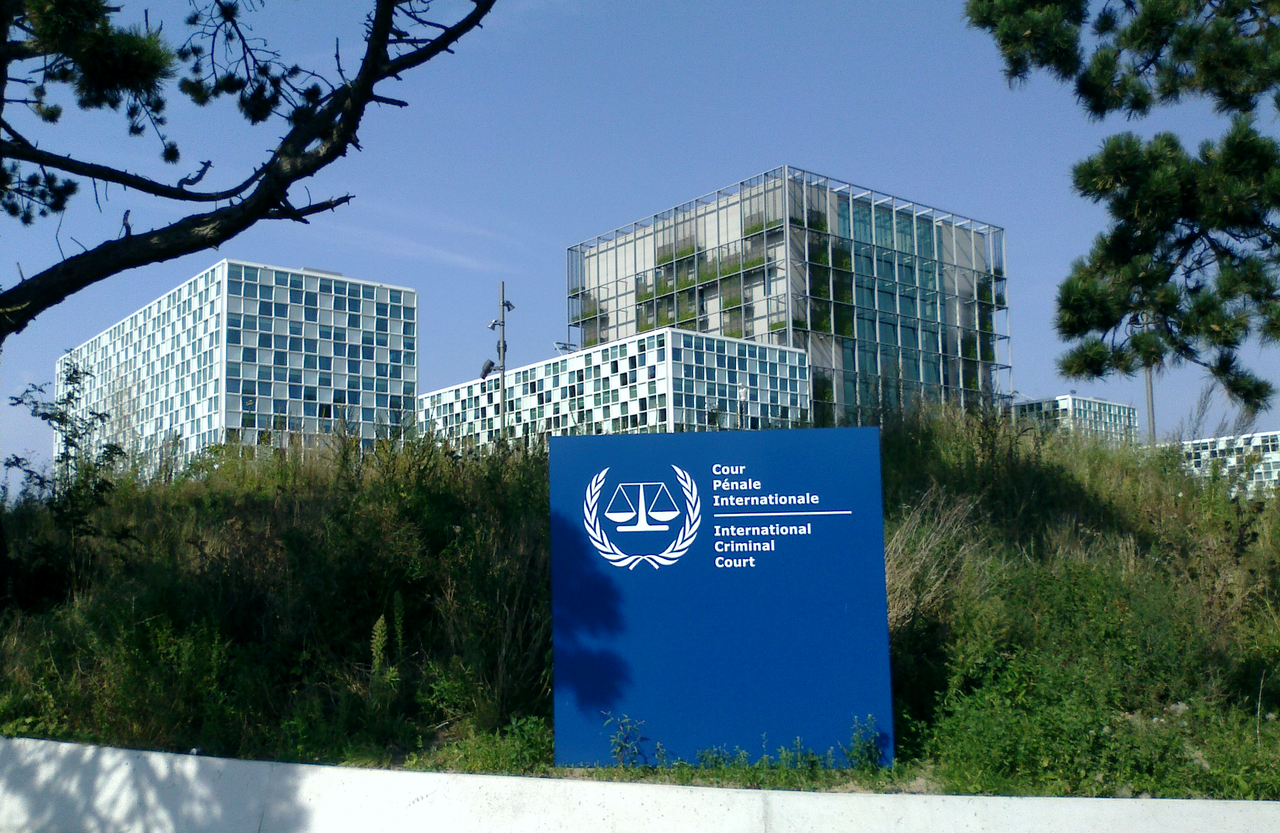
Japan acceded to the Rome Statute on 17 July 2007, bringing its territory and nationals within the jurisdiction of the International Criminal Court. The Rome Statute does not require that Crimes Against Humanity be committed in the context of armed conflict. The ICC Pre-Trial Chamber confirmed in its 2014 “Gbagbo” decision that an “attack” within the meaning of Article 7 may encompass “any mistreatment of the civilian population,” provided it forms part of a systematic or widespread effort. The “Katanga” Trial Chamber further established that the term encompasses both violent and non-violent acts forming part of a broader pattern of mistreatment.
The question is whether the campaign against FFWPU members meets the alternative thresholds of “widespread” or “systematic”—under the Rome Statute, only one need be established. On the publicly available evidence, both are satisfied.
Widespread: The documented number of victims—over 4,300 cases of deprogramming according to reports submitted to UN Special Rapporteurs—spanning several decades and affecting individuals across Japan, satisfies the quantitative threshold established in the “Bemba” and “Situation in Kenya” jurisprudence. In the latter, the ICC Pre-Trial Chamber clarified that the number of victims, the extent of damage, and the geographical scope are all relevant factors. This is not a matter of isolated incidents; it is a pattern of conduct affecting a significant portion of a civilian population defined by religious affiliation.
Systematic: The organized and methodical character of the campaign is equally clear from the public record. Deprogramming was carried out according to published instruction manuals. It was coordinated between identifiable pastors, families, and lawyers. The National Network of Lawyers Against Spiritual Sales could have played a defined institutional role. The ICC’s jurisprudence in “Katanga” identifies a systematic attack based on the “organized and methodical execution of crimes, including the use of consistent tactics.” The “Gbagbo” Pre-Trial Chamber found systematic attacks evidenced by “patterns of crimes” involving “non-accidental repetition of similar criminal conduct on a regular basis.” The publicly documented pattern of deprogramming in Japan fits squarely within these definitions.
The Role of the Japanese State: From Acquiescence to Active Hostility
What elevates this situation from a grave domestic matter to one of potential international criminal significance is the documented role of the Japanese state. The United Nations Human Rights Committee, in its 2014 Concluding Observations on Japan (CCPR/C/JPN/CO/6), expressly noted concern about “reports of abductions and forced confinement of converts to new religious movements by their families for deprogramming,” and affirmed that Japan should “take adequate measures to guarantee the right of everyone not to be subjected to coercion that would impair his or her freedom to have or adopt a religion or belief.”
Yet the publicly available record shows that Japanese police, despite receiving multiple reports, consistently declined to intervene in deprogramming cases, characterizing them as “family matters.” No proper criminal investigation was opened by the prosecution services, notwithstanding formal complaints filed by victims over decades. Human Rights Without Frontiers documented this pattern extensively in its 2011 report, noting the systematic failure of Japanese authorities to protect victims of forced de-conversion.
More recently, the evidence in the public domain suggests that the Japanese government has moved beyond mere acquiescence. Following the assassination of former Prime Minister Shinzo Abe in July 2022, the Ministry of Education, Culture, Sports, Science and Technology initiated proceedings seeking the dissolution of the FFWPU under the Religious Corporation Act. Government guidelines issued on 27 December 2022 concerning “child abuse related to religious beliefs” and a January 2024 “Support for Victims of the Unification Church” plan have been publicly criticized as disproportionately—if not exclusively—targeting one religious community. Reports published by “Bitter Winter” have further documented instances of discrimination against Church members in schools and workplaces following the post-2022 political climate.
Under the Rome Statute, the irrelevance of official capacity is settled law. Article 27 provides unequivocally that official position shall in no circumstances exempt a person from criminal responsibility. The principle, established at Nuremberg and reaffirmed in the Statute, applies without distinction to Heads of State, Ministers, and elected representatives.
Three crimes against humanity: the case on the public record
First, imprisonment or severe deprivation of physical liberty (Article 7(1)(e)). The practice of deprogramming—as documented in publicly available reports and victim testimonies—involves abduction, confinement in locked rooms, physical violence, and psychological coercion to compel religious renunciation. This constitutes, on its face, a severe deprivation of physical liberty in violation of fundamental rules of international law. The ICC’s jurisprudence in “Katanga” (Trial Judgment, para. 1155) and “Ongwen” (Trial Judgment, para. 2778) confirms that this offense encompasses not only physical confinement but also severe restrictions on movement, provided the perpetrator is aware of the broader attack.
Second, persecution (Article 7(1)(h)). The targeting of individuals based on their membership in a religious community, through a combination of physical violence, deprivation of freedom, attacks on property, social exclusion, and discriminatory state action, constitutes persecution as defined by the Rome Statute. The ICTY Trial Chamber in “Tadić” (paras. 694, 704) established that persecution may range from physical violence to discriminatory policies, provided they result in a severe deprivation of fundamental rights. The publicly documented evidence—deprogramming, workplace discrimination, school bullying of members’ children, vandalism of Church property, and the pursuit of institutional dissolution—demonstrates precisely such a range of conduct, unified by discriminatory intent against an identifiable religious group.
Third, enforced disappearance (Article 7(1)(i)). In specific documented cases of deprogramming, victims were abducted and held in concealed locations, with the Church and fellow members unable to ascertain their whereabouts. Human Rights Without Frontiers reported that in some cases, the Church community was compelled to hire private investigators to locate missing members. The “double impact” recognized in international law—the deprivation of the victim’s liberty combined with the deliberate denial of information to those seeking it—is evident in the documented record. The International Convention for the Protection of All Persons from Enforced Disappearance (2006, Article 2) codifies this dual element, and the ICC’s own Elements of Crimes for Article 7(1)(i) require both the deprivation of freedom and the refusal to acknowledge it or provide information on the victim’s fate.
The National Network of Lawyers Against Spiritual Sales: Beyond advocacy
A distinct feature of this situation, apparent from the public record, is the role of the National Network of Lawyers Against Spiritual Sales (NNLSS). Their involvement, as documented in reports by “Bitter Winter” and other observers, transcends conventional legal advocacy. The publicly available evidence indicates that NNLSS lawyers did not merely represent complainants in good faith; rather, they participated in what appears to be a coordinated strategy to dismantle the Church through a combination of deprogramming facilitation, the instrumentalization of tort litigation, and the pursuit of dissolution proceedings.
Published reports describe how NNLSS lawyers provided legal justifications for the practice of deprogramming, promoted the revocation of powers of attorney previously granted by Church members to their co-religionists, and channeled deprogrammed individuals—persons whose will had been overborne through unlawful confinement—into civil proceedings against the Church seeking the return of donations that had been voluntarily made. An NNLSS-affiliated lawyer has been publicly reported to have stated that it is “an unwritten rule in Japan that if you are a cult, you lose.” If accurate, such a statement reveals not a commitment to the rule of law but the operation of a parallel system of justice in which the designation of a group as a “cult” predetermines the outcome of legal proceedings.
It is further noteworthy that the “Sankei Shimbun” reported in February 2025 that witnesses who submitted statements in the dissolution case against the Unification Church have retracted their testimony, raising serious questions about the evidentiary foundations of the litigation used to justify the dissolution proceedings.

Complementarity: Why the ICC’s jurisdiction is properly engaged
The ICC operates on the principle of complementarity: it acts only where national authorities are unwilling or unable genuinely to investigate or prosecute (Article 17(1)(a), Rome Statute). In this instance, the complementarity analysis favors admissibility. Japan’s authorities have not merely failed to prosecute the perpetrators of deprogramming; they have, on the publicly available evidence, facilitated the broader campaign. No proper criminal investigation has been opened against any deprogrammer, and perpetrators are yet to face accountability. No NNLSS lawyer has been held to account for facilitating unlawful confinement. Indeed, the state has moved in the opposite direction—pursuing the dissolution of the victim community itself.
It is precisely this configuration—where the state is not merely inactive but appears complicit—that the Rome Statute was designed to address. The founders of the ICC understood that the most dangerous situations arise not when states lack the capacity to prosecute, but when they lack the will—or worse, when they are themselves implicated in the pattern of conduct.
Conclusion
The rule of law demands accountability—not merely for crimes committed in distant theatres of conflict, but for systematic violations committed in prosperous democracies that pride themselves on constitutional governance. The publicly available evidence points to a sustained, organized, and state-facilitated campaign against a religious minority in Japan that may well cross the threshold of Crimes Against Humanity as defined by the Rome Statute.
The victims—numbering in the thousands—have waited decades for justice that their own national legal system has refused to provide. The United Nations has expressed concern. International observers have documented the abuses. And the situation persists.
The International Criminal Court exists for precisely this purpose: to serve as a court of last resort when national systems fail. Whether the Office of the Prosecutor will determine that the situation in Japan warrants investigation remains to be seen. But based on publicly available and credible evidence, the case for formal scrutiny is compelling. And the obligation to pursue accountability—wherever it leads, and however uncomfortable the conclusions—is not merely a legal duty. It is a moral imperative.

Javier Ruiz is an ICC-qualified Counsel and international criminal law practitioner. He developed substantial experience in matters before international courts and tribunals.