After a late-night debate in the House of Commons, a minister promised a meeting on extending domestic abuse legislation to churches. The guest list tells the story.
by Massimo Introvigne

Shortly after ten on the night of November 16, 2026, with the day’s business over, Labour MP Sam Carling rose in the House of Commons for an adjournment debate: half an hour, no vote, a minister obliged to reply. The title was “High-control Religious Groups: Support for Victims.” More colleagues than usual had stayed to listen, as Carling himself remarked. He is 24, was raised as a Jehovah’s Witness, left the organization, and had already used a similar debate in March to attack its practice of shunning former members. This time the targets were three: the Witnesses, the Church of Scientology, and the Universal Church of the Kingdom of God. He flatly called the last two “cults.”
“Cults” and “high-control groups,” he explained, are organizations that go beyond “the acceptable boundaries of a mainstream religion.” He did not say who draws those boundaries. His request, by contrast, was precise. In Britain, the offense of controlling or coercive behavior applies only within families and romantic relationships. Religious leaders, Carling argued, behave in the same way and are not covered. He asked for a meeting to discuss either removing that limit from the Serious Crime Act 2015 or creating a new offense. As models, he listed the French anti-cult law of 2001, reinforced in 2024, with its notion of “psychological subjection,” similar statutes in Belgium and Luxembourg, bills pending in the Italian Senate (he did not add that they are unlikely ever to reach the floor), a Dutch draft bill, and a parliamentary report in the Australian state of Victoria.
The interventions of other members showed where this road leads. Tessa Munt, a Liberal Democrat, wanted coercive control to cover spiritual enlightenment groups, multi-level marketing, large group awareness training, and personal growth organizations as well. Jim Shannon, of the Democratic Unionist Party, asked that coercion be distinguished from ordinary religious teaching and pastoral care. Carling agreed that the distinction was important and promised to come back to it. The criterion never arrived, apart from the assurance that many religious organizations do excellent work.
Justice minister Alex Davies-Jones replied that the government will always defend freedom of faith and belief, which however must never become a shield for coercion, exploitation, or abuse. She adopted the vocabulary of the evening, speaking of “high-control groups” and “mandated shunning” as if they were established categories. She promised no legislation. She did promise that Satvir Kaur, the minister responsible for safeguarding, will meet Carling and an organization called the Family Survival Trust to discuss what more can be done in this area of law.
On November 22, “The Guardian” gave the floor to Rachael Reign, a former member of the Universal Church who runs a group of ex-members and whose story Carling had told in the House. “Chances are, there’s one on your local high street,” she wrote of “cults,” before asking for stronger laws and a national call for evidence.
I do agree that domestic abuse is a plague. Women are killed by partners and former partners after years of humiliation and fear, and any government that tries to protect them deserves applause. Whether “coercive control” is the best legal tool for the job is debated among criminologists and lawyers, and I leave that discussion to them. My quarrel is with something else: the attempt to hijack a law written for battered women by a lobby that has spent fifty years looking for a weapon against religions it dislikes.
The lobby has a name and a history. The Family Survival Trust, which Carling told the House has been campaigning for this reform, is the present label of FAIR, founded in 1976, in the years when kidnapping adult converts to “deprogram” them was fashionable in anti-cult circles. It is the British member of FECRIS, the European federation of anti-cult associations. Its stock-in-trade has always been “brainwashing,” the idea that “cults” capture their members through irresistible psychological techniques. Scholars of new religious movements and courts of law discarded that theory decades ago. The product was then relabeled, more than once. “Brainwashing” became “mind control,” then “undue influence,” and now “coercive control.” “Cults” became “high-control groups.” The bottle keeps changing. The wine is the same vinegar.
It has turned to vinegar because the science was never there. Coercive control was studied and defined inside the couple and the household: two people, one home, shared money, daily physical proximity, and often a history of violence that makes every threat credible. Nobody has ever produced evidence that the same dynamic exists between the leaders of an organization with thousands or millions of members and all their followers, people who largely joined or stayed as adults, often live in their own houses, hold jobs, and leave in large numbers every year. In 2010, deciding a case the Jehovah’s Witnesses of Moscow had brought against Russia, the European Court of Human Rights observed that there is no generally accepted and scientific definition of “mind control.” There is none of “high-control group” either.

Carling told the House that curbing these groups favors freedom of religion, since their members, being trapped, have no free choice. This is the founding sophism of the anti-cult movement. Declare that believers are not really free, and every restriction of their religion can be sold as liberation.
Reign, for her part, assured the readers of “The Guardian” that beliefs are irrelevant and what matters is how power is exercised. Then look at the exercises of power denounced in the Commons: tithes, prayers of deliverance from demons, the avoidance of those who have left, an education more religious than secular. Each of them is a belief put into practice. As a Catholic, I belong to a church that has collected Peter’s Pence since the Middle Ages, appoints exorcists in its dioceses, teaches a sexual morality most MPs find outdated, runs its own schools, and, in its cloistered orders, regulates when monks and nuns eat, sleep, and speak. By the standards of November 16, a Carmelite convent is the highest-control group in Britain. Orthodox Jews, conservative Muslims, the Amish, and most conservative Evangelicals would qualify too. “High-control” turns out to mean “a religion I do not like,” and under the proposed reform a police officer and a prosecutor would decide which believers believe freely and which have been “subjected.”
On shunning, the favorite charge against the Jehovah’s Witnesses, which the minister said she finds very worrying, courts have already answered. In Belgium, a first-instance criminal conviction was overturned on appeal in 2022, and on December 19, 2023, the Court of Cassation closed the case in favor of the Witnesses: everybody has the right to decide with whom to keep social contacts, and criminal courts have little business interfering with that choice. Several other jurisdictions came to the same conclusion.
The gravest accusation of the evening concerned Scientology. Citing an undercover report by “The Times,” Carling said that teenagers are taken out of school to work full time for the church, and that he could not see how this was anything other than modern slavery. The church answers that they are religious volunteers. Britain has a Modern Slavery Act, rules on child employment and compulsory education, and, as the minister reminded the House, a national referral mechanism for victims. Carling complained that the police closed nearly all the complaints filed by former Scientologists without investigating. Perhaps it is just that officers who see real slavery every week did not find it there. Specific allegations should be investigated, of course—under existing laws. The same goes for the Universal Church, which Carling himself said the Fundraising Regulator had found in breach of its code. Irrespective of the specific case’s merits, this indicates that regulators do regulate.
A fourth name was thrown into the debate by Connor Naismith, the Labour MP for Crewe and Nantwich: the Ahmadi Religion of Peace and Light (AROPL), a religious minority of Shia origin persecuted in several Muslim-majority countries. Its headquarters at Webb House, in his constituency, were raided on April 29, 2026, by some five hundred police officers investigating allegations that concern one woman. Naismith described the allegations as a matter of public record, lamented the burden on the local police and children’s services, and asked that local communities should not be left to pay the price. He had not one word for those who have paid the highest price so far. As “Bitter Winter” documented, after the raid, Webb House was besieged for weeks by rioters, some of them waving “remigration” flags, who in June tried to set it on fire. The people who live there are Naismith’s constituents too. Nobody has been convicted of anything, and the presumption of innocence does not lapse because the accused belong to a new religion.

Carling’s reply was even more revealing. New powers and offenses, he said, are needed to deal with cases like this before they become catastrophic. A raid by five hundred officers hardly suggests that the police are short of powers. And a law designed to strike before anything has happened can only punish what people are and believe.
Reign’s article gives the game away. She concedes that existing laws can deal with rape, assault, and fraud, and objects that ex-members should not have to wait for another crime before the state steps in. Quite so, they should. In a liberal state, criminal law intervenes once a crime has been committed. What comes before the crime, in a religion, is called belief, preaching, and community life, and the state has no mandate to police it.
The British government knows all this, because it has said so twice this year. In February, as Reign herself recalls with indignation, the Home Office stated that it did not intend to extend the offense beyond personally connected people, having been asked specifically about “cults,” extremist groups, and gangs. On August 18, answering a petition by former Scientologists, a letter written on behalf of the minister responsible for faith repeated that the offense was designed for those who are “personally connected,” as defined by the Domestic Abuse Act 2021, and that widening it would create uncertainty in identifying, investigating, and prosecuting the crime. There was, the letter concluded, “no intention to expand the offence beyond its current scope.”
Having heard “no” at the front door twice, the lobby came back through the side door of a late-night debate, and this time it got its meeting. Look at the guest list: an MP who has made a parliamentary cause of fighting the religion he left, and the anti-cult organization that campaigns for the reform. No scholar of religion has been invited. No representative of the communities concerned will be in the room. It is like convening a meeting on the future of wolves and inviting only the hunters. Sociologists have known for decades that militant ex-members are a small minority of those who leave a religion. Their stories deserve a hearing. They cannot be the only ones heard.
Carling’s own list of foreign models shows that this is no British peculiarity. France criminalized “psychological subjection” in 2024. In my own country, Italy, the bills he mentioned would bring back under new names the crime of “plagio,” which the Constitutional Court struck down in 1981 because nobody could tell where persuasion ends and subjugation begins. It is precisely because of the Constitutional Court’s 1981 decision that these proposals would probably not prosper. In the Netherlands, as “Bitter Winter” reported on November 18, a bill on psychological violence presented as a measure against femicide comes with an official memorandum extending the new crime of coercive control to “closed groups,” after Parliament voted a motion asking that shunning in “cults” (“sektes” in Dutch) be punished. The script travels from one country to the next. Only the accents of the actors change.
British ministers would do well to reread their own letter of August before sitting down with the anti-cultists. It was right. Women in danger at home need a law that police and courts can apply with precision. They gain nothing if it is turned into a hunting license against unpopular faiths.
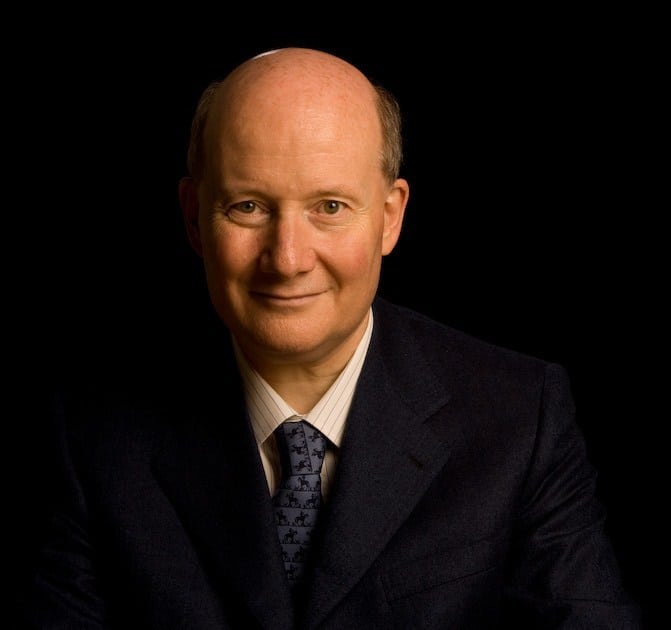
Massimo Introvigne (born June 14, 1955 in Rome) is an Italian sociologist of religions. He is the founder and managing director of the Center for Studies on New Religions (CESNUR), an international network of scholars who study new religious movements. Introvigne is the author of some 70 books and more than 100 articles in the field of sociology of religion. He was the main author of the Enciclopedia delle religioni in Italia (Encyclopedia of Religions in Italy). He is a member of the editorial board for the Interdisciplinary Journal of Research on Religion and of the executive board of University of Pennsylvania Press’ Nova Religio. From January 5 to December 31, 2011, he has served as the “Representative on combating racism, xenophobia and discrimination, with a special focus on discrimination against Christians and members of other religions” of the Organization for Security and Co-operation in Europe (OSCE). From 2012 to 2015 he served as chairperson of the Observatory of Religious Liberty, instituted by the Italian Ministry of Foreign Affairs in order to monitor problems of religious liberty on a worldwide scale.