An email address leak confirmed a cavalier approach to handling documents and data, resulting in biased and unsubstantiated conclusions.
by Bernard Doherty
Article 1 of 3.
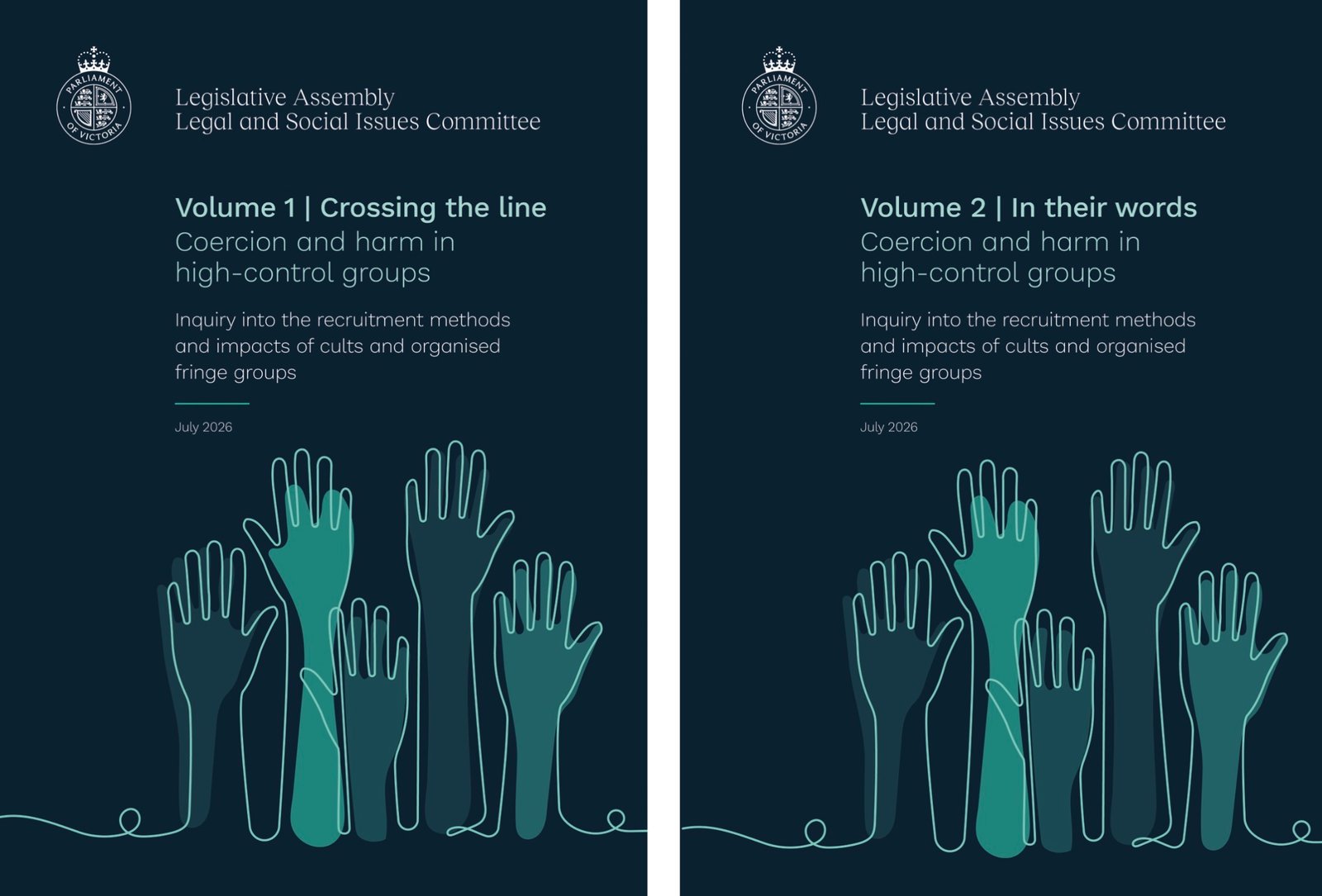
The surprise early tabling of the Victorian Inquiry report of their “Inquiry into the recruitment methods and impacts of cults and organized fringe groups” on Wednesday, July 29, 2026, was met with very little fanfare.
While politicians sought photo opportunities with victim survivors and a handful of articles appeared in Victorian newspapers and online news sources in subsequent days, the release itself was overshadowed by an egregious data breach which saw the entire distribution list made public for all stakeholders to see.
At 12:51 pm, hundreds of email addresses, comprising all the individuals who had made submissions—including confidential submissions—were laid bare in email carbon copy.
This was followed at 1:32 pm by a follow-up email acknowledging the error and asking people to “delete the email from your inbox and any related folders (including Sent Items if applicable), and refrain from forwarding or sharing its contents.”
To those of us who have followed the Victorian Inquiry, the disclosure of some of these names came as no surprise. On the list was a who’s who of international and local anti-cult activists and vocal former members of a variety of groups, who over recent years have done the rounds of the Australian media denouncing the evils of various “cults.”
This data breach, which has now been investigated by the Office of the Clerk and referred to the Office of the Victorian Information Commissioner (OVIC), however, is only the beginning of the embarrassing aspects of this inquiry that will come to light in the months ahead.
Scholars of religion now have before them a vast body of data to examine and critique, and I encourage them to do so.
If nothing else, the Victorian Inquiry has been a salutary lesson in how not to conduct public inquiry into “cults.”
From the outset, the Victorian Inquiry had a clear aim, set out in the Guidance Note.
It produced a list of behaviors it considered concerning—drawn primarily from standard anti-cult sources, like Steven Hassan’s “Combatting Cult Mind Control” (1988); Michael Langone’s “Cults: What Parents Should Know” (1988); and Margaret Thaler Singer’s “Cults in Our Midst: The Hidden Menace in our Everyday Lives” (1995) (co-authored with Janja Lalich).
From this list, it proceeded to conduct a targeted information gathering campaign by compiling public submissions – many of which were received from outside of Victoria and in a significant number of cases outside Australia.
Some of these submissions contain genuinely harrowing claims and make for distressing reading. It would be remiss not to acknowledge that some people have experienced some deplorable behavior in a variety of religious settings.
Some of these claims border on criminal, and are worthy of further police investigation, though we should remember that it is not the role of parliament to investigate or prosecute criminal offenses, or determine guilt or innocence.
Moreover, some material, which was not publicly disclosed (or was censored in public submissions), clearly related to criminal matters which I hope (with the consent of the victims) have been forwarded to Victorian Police for proper investigation.
As someone who has taken an active interest in such matters, I am well aware that there is substance behind some of the claims of abuse in several of the groups examined by the inquiry and such criminal behaviors, when proven, should be met with the full force of the law.
Regardless of these often-painful disclosures, this does not take away from the problems surrounding the way the inquiry approached its task.
The Committee secretariat then commissioned a methodologically unsound survey, to which 317 people responded (the population of Victoria is just over 7 million), which, unsurprising, contained overwhelmingly negative findings.
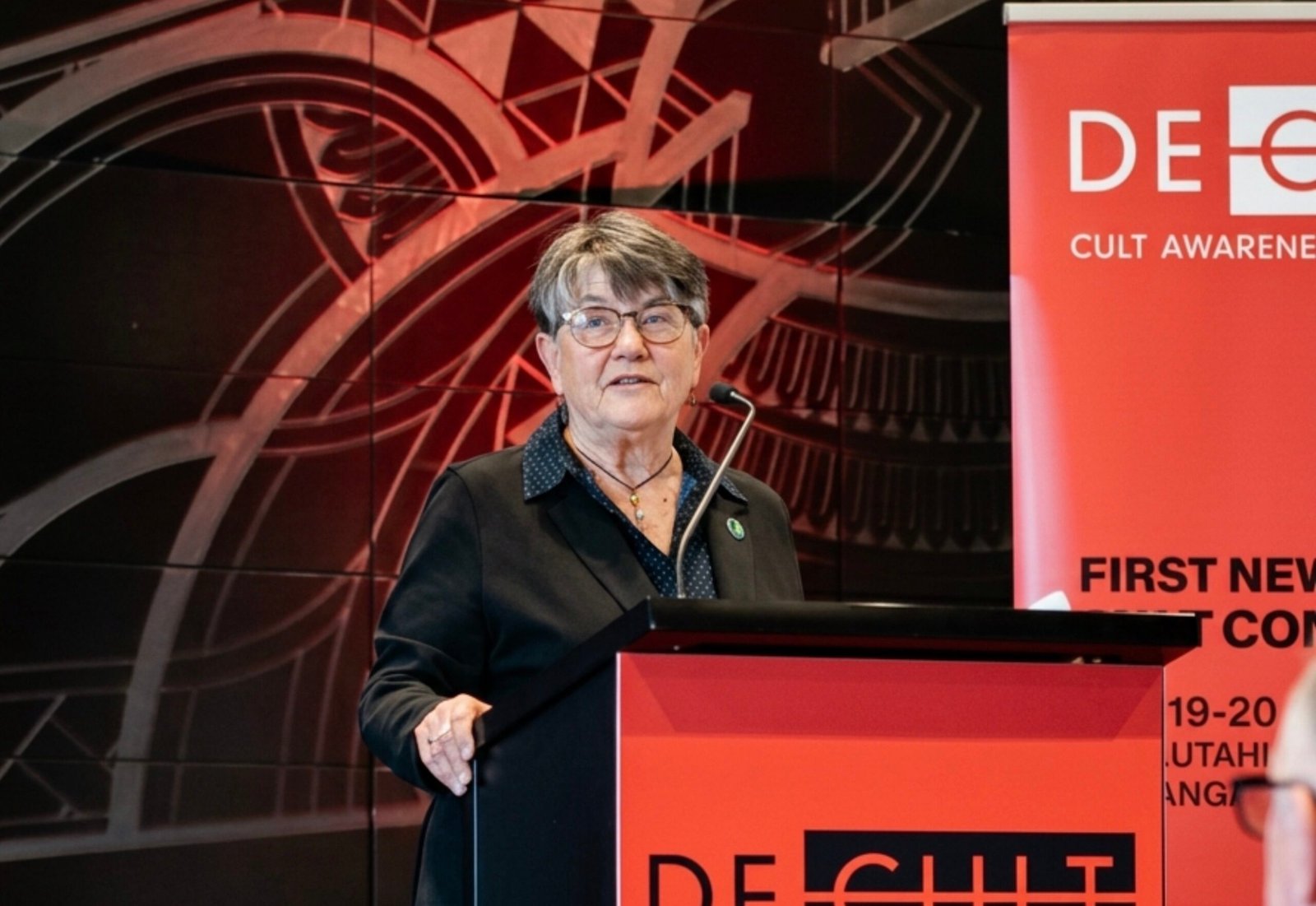
Finally, the Committee conducted public hearings comprised almost entirely of aggrieved former members of a variety of religious groups, anti-cult journalists, and other concerned individuals – including anti-cult stalwart Janja Lalich.
Most of those who appeared were former members of a small number of Christian groups, including conservative evangelical and Pentecostal churches. However, by the final days of public hearings even a former Carmelite nun, Mary Hughes, appeared—in case the wide purview of “cultic behavior” which had been operationalized was not already abundantly clear.
Early on in the inquiry, I suggested to a journalist at the Catholic Weekly that things were headed toward a “pre-empted conclusion.” I subsequently published a lengthier article on the inquiry where I made further tentative predictions about what might happen. Indeed, Bitter Winter has run a series of cautionary pieces about problems which scholars identified around the inquiry.
Sadly, my more dire prognostications appear to have been largely correct.
The tabled report, in two volumes totaling nearly 600 pages, contains 98 findings and 39 recommendations. What is envisioned in these findings and recommendations is a vast program which would institutionalize anti-cult ideology within the apparatus of the Victorian State. That might appear as hyperbole, but the program put forward in the report is maximalist and interested readers can consult the findings and recommendations here.
Among other things, the report calls for the establishment of a “lived experience advisory body” to “co‑design, inform and evaluate legislative, policy and service reforms addressing the impacts of coercive high‑control groups.” It also calls for various measures which would see anti-cult groups informing professional education around “group-based coercion” and “coercive high-control groups.”
This is a deeply disturbing recommendation, not least when one examines the dubious foundations of both these concepts.
While the report shied away from language of “cults” and acknowledged the manifold problems around this, its new classification of “coercive high-control groups” is nothing but the old “cult stereotype” by another name—all this category entails is a taxonomy and pseudo-typology of negative behaviors which have been stitched together from a wide body of different allegations put forward in the evidence.
Put simply, the “coercive high-control group” is a Frankenstein’s monster of “bad religion,” that is, the kinds of religion which those who conducted the Victorian Inquiry disapprove. It is as vague and unhelpful as the poorly conceptualized “cult” definitions with which the Victorian Inquiry began.
Similarly, while the report tacitly acknowledges that extending pre-existing coercive control statutes in Victorian Law used for prosecuting intimate partner violence to groups would be inadvisable, it has still recommended that the Victorian Law Reform Commission be charged with designing a new criminal offense of “group-based coercion.”
As I have maintained consistently, “group-based coercion”—or “group-based coercive control”—is just a new name for “cultic brainwashing.”
Mercifully here, the Committee recognized that it was not the competent body to design legislation. Also, to the Committee’s credit, it has recognized in its findings how difficult this task will be.
Already, key stakeholder groups like the Australian Christian Lobby and Freedom for Faith have raised concerns about the “group-based coercion” recommendation and its potential impacts on religious liberty.
Whether the findings and recommendations will be taken up by the currently beleaguered Labor government of Ben Carroll is difficult to say.
Carroll only became premier the day before the inquiry report was tabled, after the long-anticipated resignation of the increasingly unpopular Jacinta Allen. In political terms, supporting the more extreme recommendations could prove disastrous with the electorate—particularly among Victorians who fear how these recommendations might impact on their religious liberty, or those who see how easily such legislation could extend beyond its intended purpose and end up essentially criminalizing all manner of social and community organizations.
With six months to respond, a prudent government would quietly bury the report and delay any response until after November’s state election, and after the dust settles around the procedural issues highlighted by the data breach.
But governments do not always act with caution, and a rushed reply could have disastrous consequences, both politically and socially.
I have previously suggested in Bitter Winter that religious groups should be worried about the Victorian Inquiry. The evidence is now there for them to judge for themselves.
For my part, I believe most of the recommendations being proposed are a recipe for government overreach and over-policing, and if implemented will almost certainly lead to unintended negative consequences.
The Committee has thrown everything they could into these findings and recommendations; it is now up to the Victorian Government to respond.
We can only hope that it is more careful than the Committee itself.

Bernard Doherty is an associate professor in the School of Theology and a research fellow in the Centre for Religion, Ethics and Society (CRES) at Charles Sturt University, Australia, based at St Mark’s National Theological Centre in Canberra. He is also an Honorary Fellow of INFORM at King’s College, United Kingdom. He has published extensively on new religions in Australia.