A new federal policy on spiritual language in the armed forces raises concerns about freedom of conscience and religion’s future place in Canadian public life.
by Massimo Introvigne
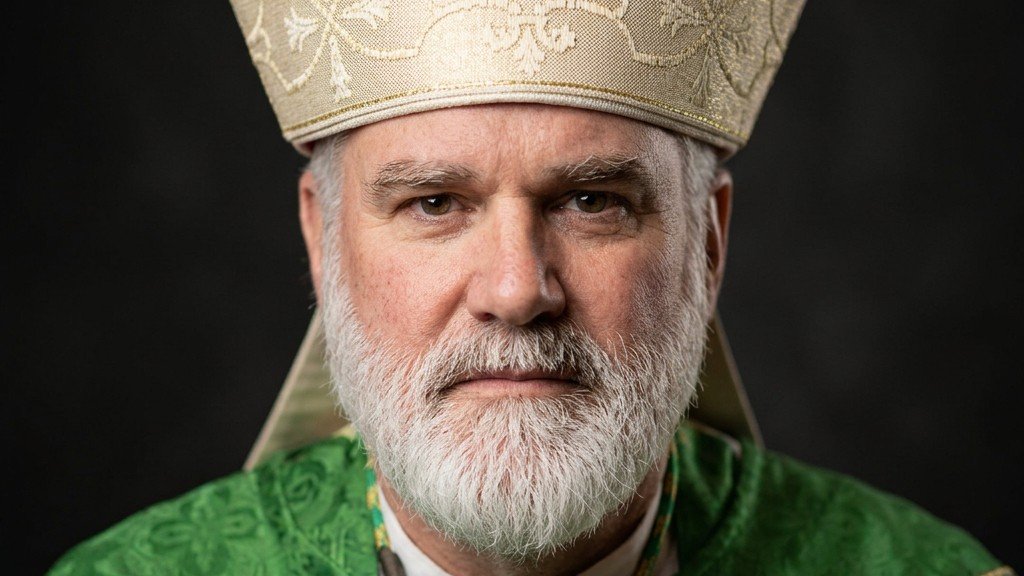
Recent federal instructions governing spiritual reflections within the Canadian Armed Forces have sparked significant debate. The Catholic Bishop of the Military Ordinariate of Canada, Scott McCaig, has emerged as one of the most articulate voices expressing concern. The Vatican website published an interview with him on September 4.
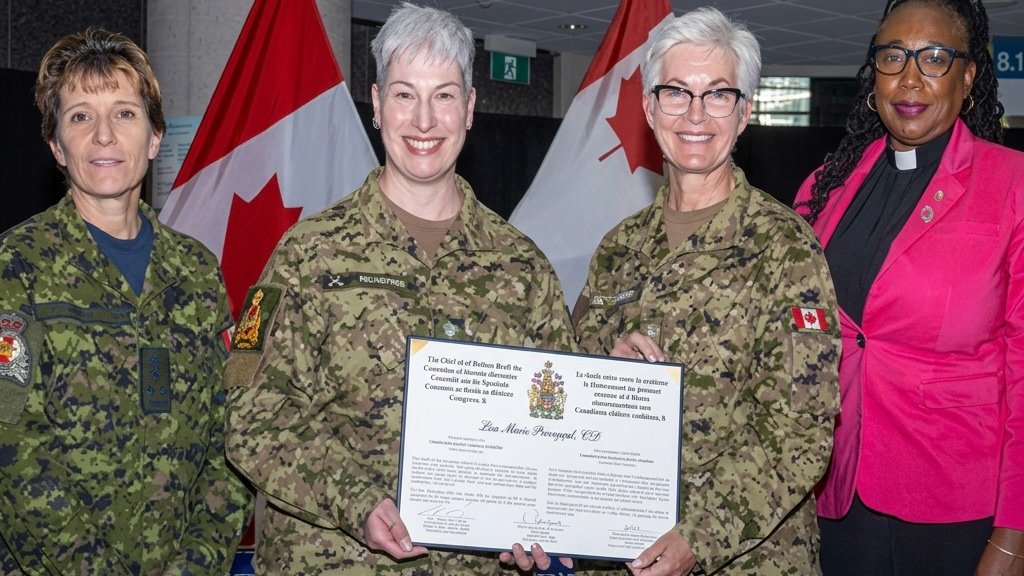
The new policy forbids any reference to God in settings connected to official military activity, applying not only to chaplains but to volunteers, contractors, students, and all personnel under the Department of National Defence. The stated justification is to promote respect for conscience and diverse spiritual traditions, although the measure affects those whose understanding of spirituality is inseparable from faith in God.
Bishop McCaig argues that the issue extends beyond chaplaincy protocols. He sees the policy as part of a broader struggle over what secularity means in contemporary democracies. Different countries are confronting this question, and Canada is now facing its own version of the debate. The instructions claim to respond to the moral and spiritual needs of military personnel, yet they impose a rule that forbids spiritual references in reflections offered by chaplains and others. For many believers, this requirement is impossible to meet without violating conscience, since their sense of purpose and spiritual well-being is tied to their relationship with God.
Members of the Interfaith Committee for Canadian Military Chaplaincy, which includes representatives of multiple religious traditions, share the bishop’s concerns. The committee intends to engage the government patiently and constructively, seeking a solution that respects freedom of conscience for all military personnel. They aim to ensure that those who serve the country receive support that is genuinely inclusive and attentive to their needs.
This controversy did not arise in isolation. The 2015 Supreme Court decision known as “Saguenay” affirmed that the state must neither favor nor hinder belief or non-belief. The meaning of that principle is now being contested. Some interpret it as a demand for freedom “from” religion in public settings, while others see it as protecting religious and non-religious expression alike. Courts in Quebec and at the federal level are now grappling with these competing interpretations.
Bishop McCaig situates the present moment within a wider historical shift. From his perspective, the social order once shaped by Christian categories has disappeared. Western societies now operate within a secular framework, and the place of religion in public life is being reconsidered. This new context presents challenges, yet the bishop also sees reasons for hope. He notes a renewed interest in faith among many serving in the military, suggesting that promises of fulfillment without God have not been borne out in lived experience.
He also believes that dialogue remains possible. Many officials, he says, are willing to listen and to revisit policies that raise concerns about conscience and freedom. He hopes future discussions between the Interfaith Committee and the government will lead to an approach that genuinely serves military personnel, offering inclusive, life-giving support rather than dogmatically promoting secularism.

Massimo Introvigne (born June 14, 1955 in Rome) is an Italian sociologist of religions. He is the founder and managing director of the Center for Studies on New Religions (CESNUR), an international network of scholars who study new religious movements. Introvigne is the author of some 70 books and more than 100 articles in the field of sociology of religion. He was the main author of the Enciclopedia delle religioni in Italia (Encyclopedia of Religions in Italy). He is a member of the editorial board for the Interdisciplinary Journal of Research on Religion and of the executive board of University of Pennsylvania Press’ Nova Religio. From January 5 to December 31, 2011, he has served as the “Representative on combating racism, xenophobia and discrimination, with a special focus on discrimination against Christians and members of other religions” of the Organization for Security and Co-operation in Europe (OSCE). From 2012 to 2015 he served as chairperson of the Observatory of Religious Liberty, instituted by the Italian Ministry of Foreign Affairs in order to monitor problems of religious liberty on a worldwide scale.