The self-immolation is viewed very differently by Tibetans than by Western observers, who often miss the context.
by Lopsang Gurung
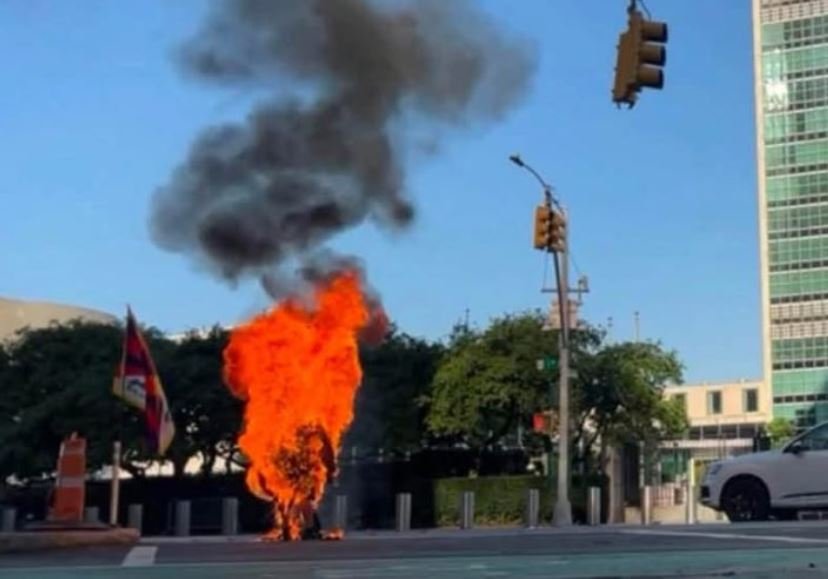
The self-immolation that occurred outside the United Nations in New York on July 3, 2026, marked a grave and symbolic moment in the long history of Tibetan protest. The man who set himself ablaze was Rangzen Lobga, a Tibetan living in exile who chose the act deliberately, framing it as a nonviolent sacrifice for Tibet’s national cause. His final message, released shortly before his death, affirmed that his protest was timed to coincide with the enforcement of China’s new Law for Promoting Ethnic Unity and Progress, which came into force on 1 July 2026. The following day, he carried out his act of self-immolation, explaining that it was motivated not by personal hardship but by what he described as the systematic destruction of Tibetan identity.
While many Westerners regard Rangzen Lobga’s act as suicide and, while sympathetic to the protest, condemn the activist’s decision to set himself on fire as extreme, with some insisting that taking one’s own life is never justified, Tibetans view what happened differently, and insist on context.
In his testament, Rangzen Lobga declared: “The communist government of China has been continuing to carry out measures to implement various policies designed to bring about the destruction of Tibet and its people.” He praised Tibetans inside Tibet for their resilience, saying: “I have absolutely nothing adverse to say regarding the Tibetan people in Tibet, to speak the truth wholeheartedly. The public-spirited sincerity with which they are carrying out the promotion or revival of our spoken language and written script, as well as our religion and culture, is truly admirable. For this reason, I wish to express my thanks to them.” He also addressed Tibetans in exile, urging them to work harder for the national cause and to honor the democratic system granted by His Holiness the Dalai Lama. He reminded them of the Dalai Lama’s admonition that “you are all spokespersons for the people of Tibet,” insisting that Tibetans abroad must not become complacent.
His message stressed unity across all Tibetan provinces, rejecting provincial divisions and calling for collective action: “For this reason we are all one as Tibetans. We need to work for the Tibetan national cause. We need to work for the cause of the Tibetan people as such.” He argued that the loss of independence was the root cause of all suffering: “Everything we lack, whatever it may be, is all because we do not have independence.” His final appeal was politically uncompromising: “Victory to Independence for Tibet! Victory to Tibet! Victory to Independence for Tibet!”
The Tibetan Parliament in Exile, the most authoritative voice of the Tibetan diaspora, responded swiftly and solemnly to the incident. In its official statement, dated July 3 and published on July 7, it framed the self-immolation as an act of extraordinary courage, asserting that “the fact that the late Rangzen Lobga gave up his precious life for Tibet and for the cause of Tibet is a great deed of valour that will forever remain indelible in the history of Tibet.” The Parliament situated his sacrifice within the broader pattern of Tibetan self-immolations since 2009, noting that “a total of well over 150 Tibetans in Tibet and in exile have carried out self-immolations in an unending series of protest actions,” which it described as both the longest and largest nonviolent protest movement of its kind in world history.
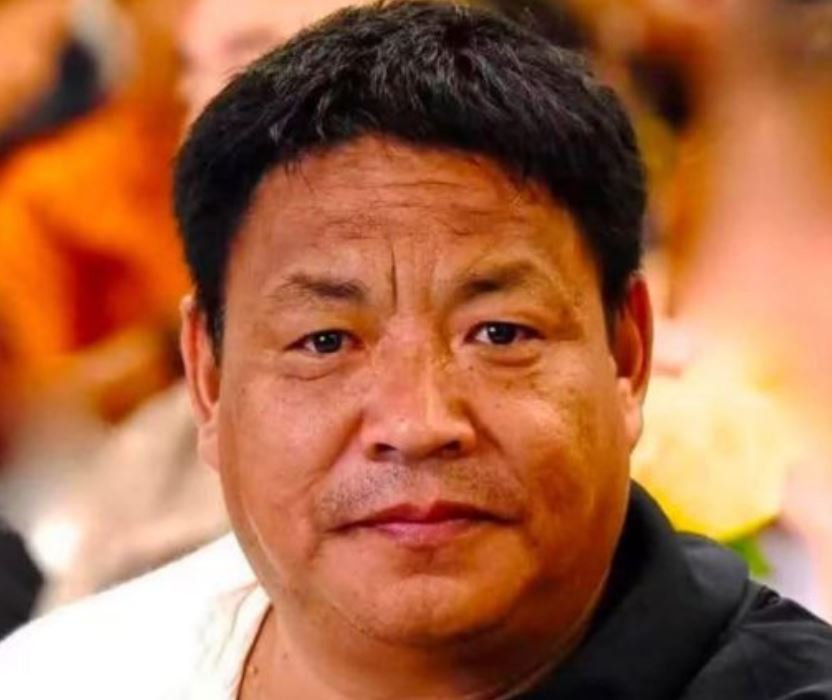
The Parliament’s reaction centered on two urgent appeals. First, it called on the international community—governments, parliaments, and United Nations bodies—to conduct a legal review of China’s new ethnic unity law, warning that decisive action was needed “to prevent a crime of ethnic genocide from taking place.” It urged international actors to investigate and hold accountable those responsible for policies that, in its view, amount to cultural and ethnic destruction. Second, it reiterated its longstanding demand that the Chinese government investigate all self-immolation cases in their political, cultural, and religious contexts, and end what it described as violent repression in Tibet. The statement concluded with a renewed call for meaningful dialogue to resolve the Sino-Tibetan conflict.
In the wake of the New York immolation, the Parliament’s message was that the act was not an isolated tragedy but part of a sustained moral protest against policies perceived as existential threats to Tibetan identity. By linking the incident to the newly implemented ethnic unity law, the Parliament sought to underscore the urgency of international scrutiny and to reaffirm its commitment to peaceful advocacy for Tibetan rights, unity, and national survival.

Uses a pseudonym for security reasons.