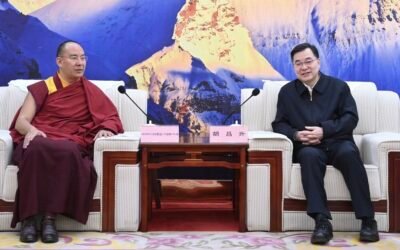
Beijing gathers Tibet experts to reaffirm that research must serve ideology and shape global narratives.
by Lopsang Gurung
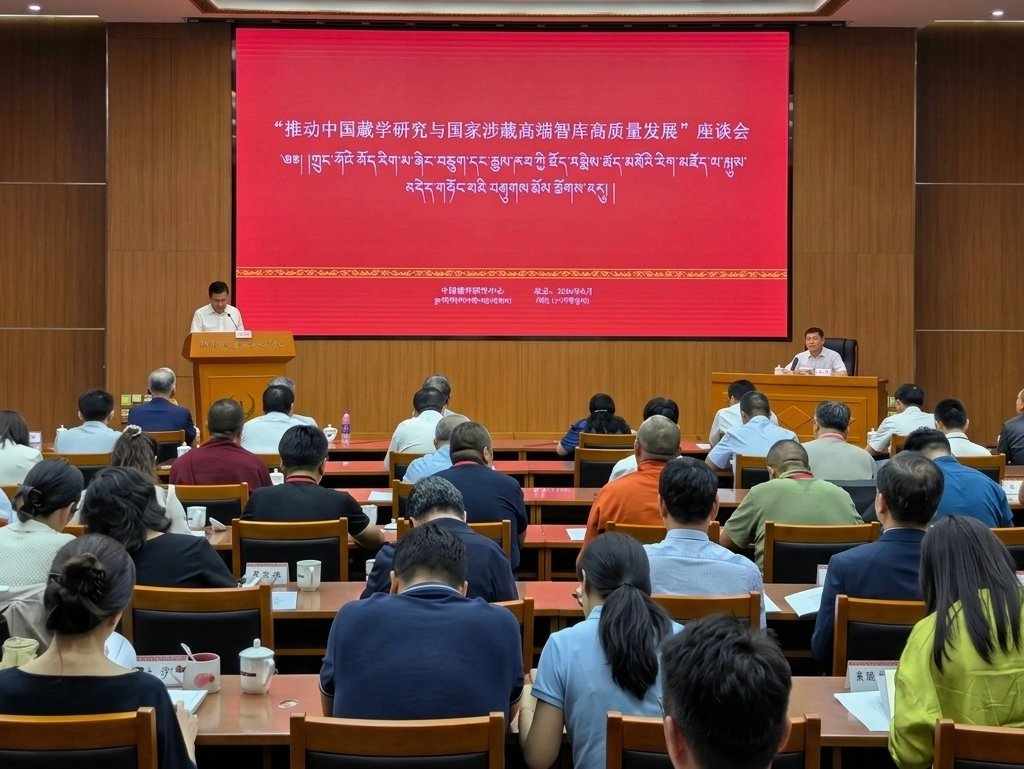
The symposium convened in Beijing on June 3 under the title “Promoting High-Quality Development of China’s Tibetology Research and National High-End Think Tanks on Tibet-Related Matters” offered a revealing glimpse into how the Chinese Communist Party imagines the future of Tibetology. The meeting marked the fortieth anniversary of the China Tibetology Research Center, yet the tone was less commemorative than programmatic. It was an occasion to restate that scholarship on Tibet, both within China and abroad, must follow the Party line with unwavering discipline. Li Ganjie, Politburo member and head of the United Front Work Department, presided over the opening session and delivered a speech that left no ambiguity about the political mission assigned to this field.
Li praised the Center for its role in coordinating Tibetology nationwide and internationally and for guiding researchers toward what he called a Chinese autonomous knowledge system. The formulation echoed the broader ideological project promoted by Xi Jinping, which seeks to reshape the humanities and social sciences so that they reflect the Party’s worldview and reinforce its authority. Tibetology, in this framework, becomes a strategic discipline. It is expected to support the governance of the Tibet Autonomous Region and the Tibetan areas of Sichuan, Yunnan, Gansu, and Qinghai, while also shaping international perceptions of Tibet.
Li described a world in turmoil and a region undergoing a delicate phase of long-term stability and development. In such a context, he argued, Tibetology must strengthen its theoretical foundations and maintain a firm political orientation. Research on Tibet for the CCP is not an academic pursuit guided by open inquiry. It is a political instrument, Li said, designed to consolidate the guiding role of Marxism, promote the Party’s development agenda, and refine the mechanisms through which Tibet is governed. The emphasis on enhancing international discourse power revealed another layer of intent. Tibetology is expected to become a vehicle for external propaganda, capable of countering global criticism of Beijing’s policies and influencing debates on Tibet’s future.
This ambition acquires particular weight at a moment when the question of the Dalai Lama’s succession looms in the background. Although Li did not mention it explicitly, the insistence on shaping global narratives and innovating methods of external communication suggests a coordinated effort to prepare the ideological terrain. Beijing seeks to ensure that its preferred interpretation of Tibetan religion, history, and identity prevails internationally when the succession issue becomes unavoidable. Tibetology, redefined as a high-end think tank rather than science, is expected to supply the arguments, the vocabulary, and the academic façade for this campaign.
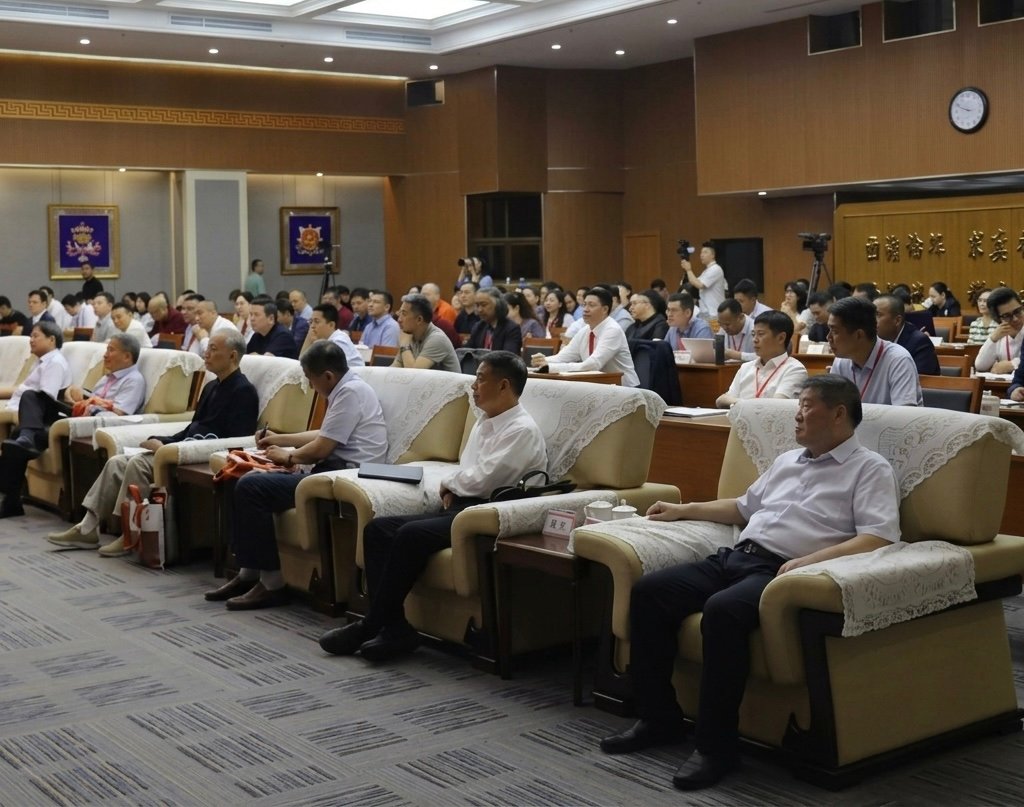
Li also called for better integration of research resources, new mechanisms for transforming think-tank output into actionable policy, and a stronger talent base. These points fit neatly into the Party’s broader strategy of producing scholarship that can be rapidly converted into governance tools. The presence of officials from Tibet and the four provinces with Tibetan areas, along with representatives of academic institutions and selected scholars, underscored the coordinated nature of this effort. Tibetology is being reorganized as a national project in which political loyalty and ideological reliability outweigh methodological independence.
The symposium thus offered a window into the future of a discipline that once aspired to study a culture and a region with scholarly detachment. Under Li Ganjie’s guidance, Tibetology is being reshaped into a branch of statecraft. Its mission is to legitimize Beijing’s policies, reinforce Marxist doctrine, and influence global opinion at a time when the stakes surrounding Tibet’s religious and political leadership are rising. The transformation is presented as modernization and high-quality development, yet its purpose is to ensure that every aspect of Tibetan studies serves the strategic needs of the Party.
How international scholars will react is a matter of interest.

Uses a pseudonym for security reasons.