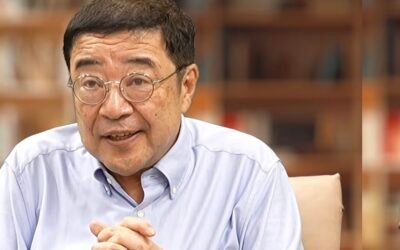
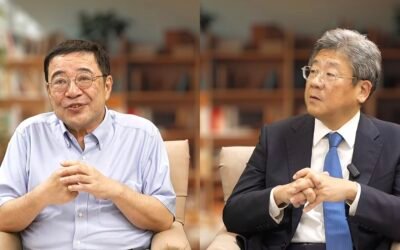
A writer, a lawyer, and a former legislator examine how a single narrative overtook institutions and placed religious freedom at risk.
by Massimo Introvigne
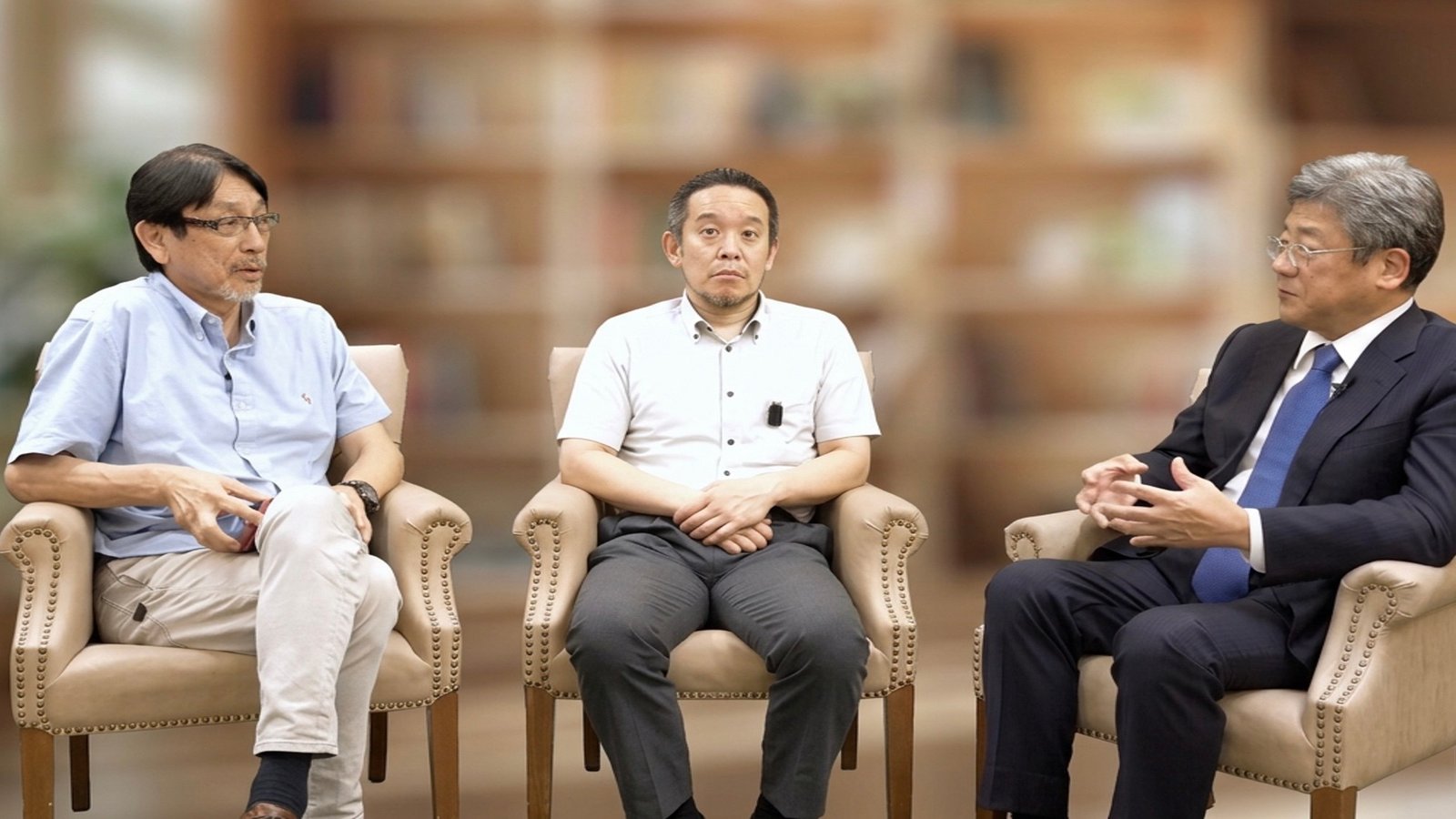
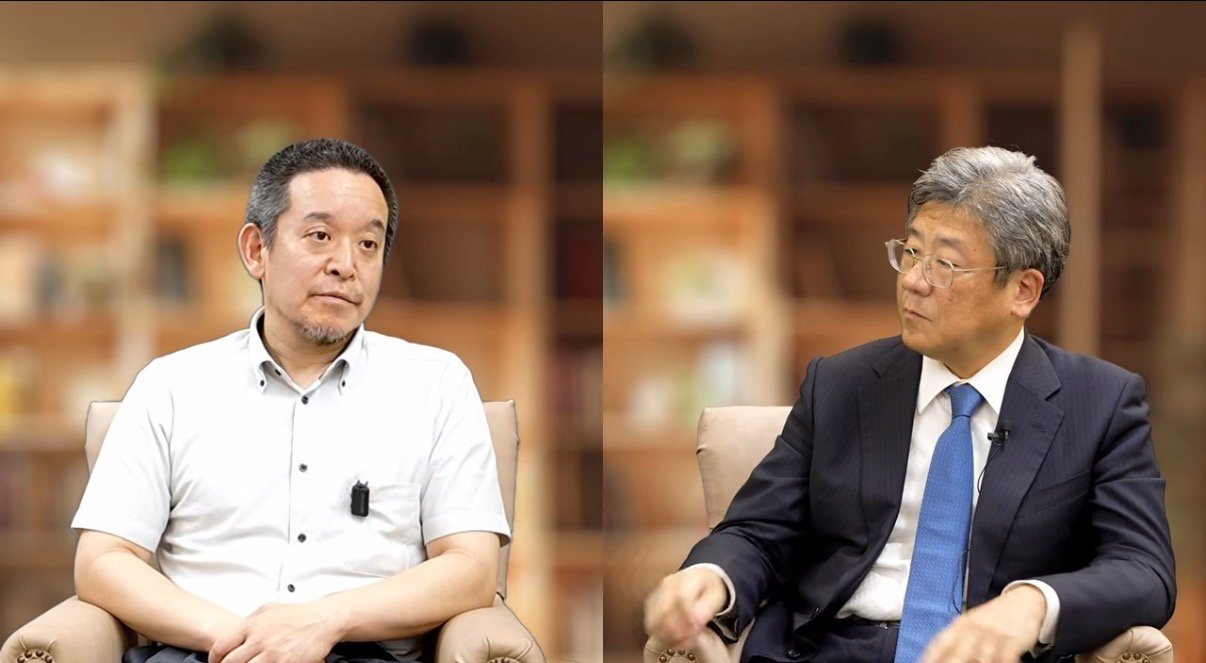
The conversation begins by introducing three figures whose backgrounds rarely converge in ordinary political debate. Eitaro Ogawa is known for his literary criticism and for his long engagement with the distortions that periodically rise in Japan’s public sphere. Shinichi Tokunaga is an attorney who has observed the Family Federation and its related organizations not through rumor but through direct legal work. Satoshi Hamada is a former member of the House of Councilors who entered the controversy from the vantage point of parliamentary procedure and executive accountability. Their dialogue explores how a dissolution order against a religious corporation, the Family Federation for World Peace and Unification (formerly the Unification Church), moved through the courts with a speed and unanimity that surprised even seasoned observers.
Ogawa opens by noting that the individuals who have driven the campaign against the former Unification Church are the same who once led the campaigns against the Abe administration, the historical positions of conservative scholars, and the legitimacy of the Imperial institution. He describes a continuity of actors whose methods and rhetoric have remained unchanged across decades. Tokunaga agrees and adds that the same pattern appears in issues surrounding Yasukuni Shrine and the Imperial Household. The faces, the themes, and the targets do not change.
Hamada recalls the moment when the dissolution order became a political objective. He explains that the assassin of former Prime Minister Abe expressed a desire to destroy the former Unification Church. When the dissolution order proceeded, the assassin’s desire was fulfilled. Hamada describes how Takashi Tachibana, leader of the NHK Party, repeatedly raised this point and how it shaped his sense of urgency. He also recounts how the vice‑chairman of the Unification-Church-related International Federation for Victory over Communism approached him directly, believing that Hamada’s firm stance toward the Japanese Communist Party indicated a willingness to confront entrenched narratives. Hamada submitted a series of written questions to the Cabinet, and through that process he discovered that the legal interpretation governing dissolution orders had been changed in a single day.
Tokunaga describes his own entry point. During his college years, he encountered the Kyoto University Unification-Church-connected CARP student movement. He saw firsthand that the image of the organization circulating in newspapers and on television did not match the reality on campus. When the government moved toward a dissolution order, related organizations approached him for legal assistance. He accepted, believing that the situation required careful examination. He soon witnessed local assemblies and public facilities refusing access to groups solely because they were associated with the Family Federation. He saw discrimination that was not subtle and decisions justified by press conferences in which certain lawyers declared that halls should not be rented to related organizations. Administrative bodies adopted these declarations as if they were legal standards.
Ogawa remarks that the judicial process has become permeable to impressions rather than evidence. He notes that thousands of believers live ordinary lives, work in public institutions, and participate in society without incident. Yet the public has been encouraged to imagine them as figures from a horror film. Tokunaga uses the word “zombie” to describe the way believers have been portrayed. He explains that the public has been led to believe that devotees lack ordinary emotions and ordinary judgment. He explains that this portrayal has made it possible to disregard their rights without hesitation. He explains that the courts have accepted arguments that would never be accepted if directed at any other group.
Tokunaga recounts a trial involving the Women’s Federation for World Peace, another organization connected with the Family Federation although not part of it. The organization had long hosted international speech contests for women. When it attempted to rent a public hall, the hall refused. The refusal was justified by lawyers who said organizations connected with the Family Federation should be excluded. In court, Tokunaga presented the organization’s history and activities. The opposing side responded with narratives about former believers who had been “rescued” and who had allegedly thanked their “rescuers.” Tokunaga recalled that a member of Attorney Kito’s legal team delivered this account in tears. He describes these performances as theatrical, and how the court accepted them, dismissed the organization’s independence, and treated it as a mere extension of the Family Federation. The case remains before the Supreme Court.
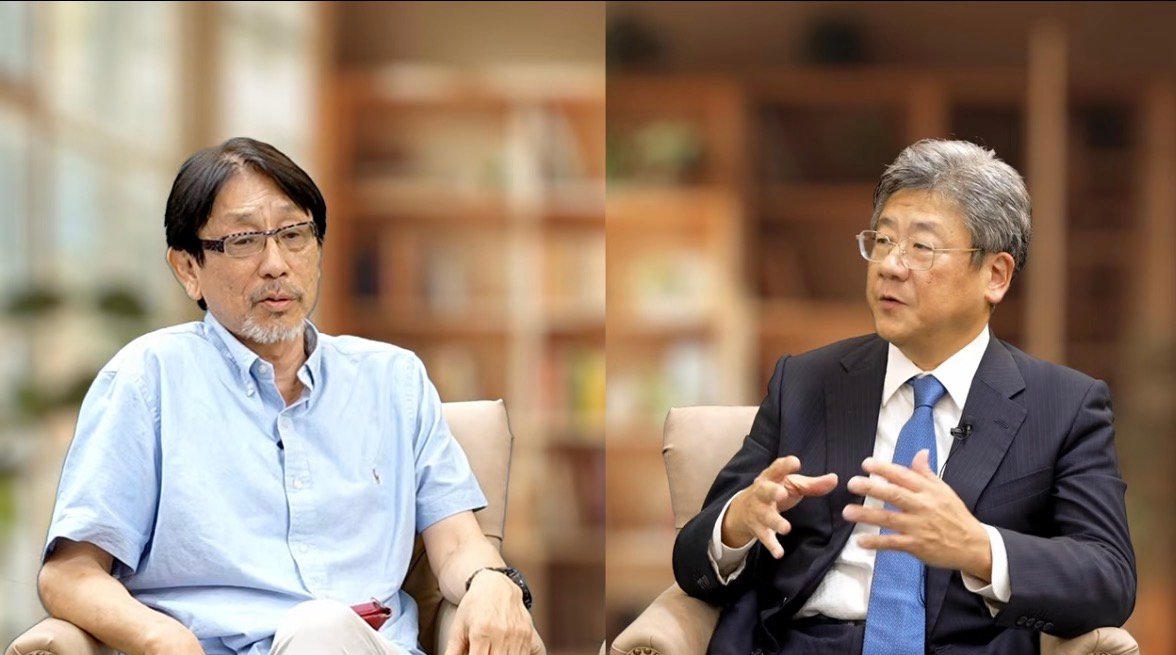
Ogawa reflects on the implications. If a hall can refuse a group because someone in the group has a friend in the Family Federation, then any citizen with such a friend could be refused. He compares the situation to the rough justice of the Edo period and concludes that the present situation is worse. He describes a society in which associative suspicion has replaced legal reasoning.
Hamada returns to the moment of the interpretation change. He explains that dissolution orders had always required criminal convictions. The Family Federation had none. He explains that during an exchange with a legislator, the Prime Minister abruptly announced that civil torts would suffice. Hamada later examined the Prime Minister’s schedule and found no record of the consultations that should have preceded such a change. He submitted written questions asking how the change had been decided, and how a video posted by a legislator who boasted of pressuring the Prime Minister should be understood. Hamada concluded that the public had not grasped the gravity of the situation. The public believed that the dissolution order was a natural consequence of wrongdoing and did not understand that the legal basis had been altered to make the dissolution possible.
The dialogue turns to the media’s role. Ogawa notes that popular programs have shaped the public imagination more than any official report. He mentions the influence of commentators who appear daily and who present their interpretations as fact. Tokunaga describes how these interpretations have been repeated in courtrooms.
Ogawa drew a parallel with the controversy that once surrounded the Hyogo gubernatorial election, noting that in the case of former governor Motohiko Saito the local press had reported every available detail with a diligence that allowed citizens to examine the facts for themselves and eventually correct the narrative that had taken hold. Nothing comparable occurred in the former Unification Church affair. Established media outlets declined to portray believers as they actually lived, present the organization’s own explanations, or investigate discrepancies visible to anyone willing to look beyond the surface. Instead, they amplified only opponents’ claims and shaped public perceptions around those claims. In that vacuum, a judicial decision advanced without resistance and created a fait accompli before the public had any opportunity to understand the underlying reality. The participants agreed that this media-driven distortion of public opinion was one of the decisive conditions that allowed the process to unfold in such an abnormal manner.
Hamada reports how Attorney Kito accused him of supporting the Family Federation during his candidacy for governor of Kyoto. Hamada responded by pointing out Kito’s involvement in cases of confinement and deprogramming. Kito did not reply. Hamada kept posting the same rebuttal, and each time it reached tens of thousands of readers.
The participants thus moved to confront what they regarded as one of the most serious and least acknowledged dimensions of the entire controversy: the large‑scale abduction and confinement of believers for purposes of forced conversion (deprogramming), a phenomenon involving thousands of alleged victims yet almost absent from public awareness. Ogawa pointed to the case of Toru Goto and argued that, despite more than four thousand reported instances and despite the scale of the allegations constituting one of the largest human rights scandals of the postwar era, the matter has received virtually no attention from either the media or the Diet.
Hamada recalled that decades earlier Diet member Hinokida had raised the issue and the National Police Agency had replied that it was a grave concern. In contrast, when he began asking similar questions two years ago, the agency repeatedly said it knew nothing about the matter, a retreat he found deeply troubling. He identified journalist Masumi Fukuda’s work as indispensable for understanding the facts. He noted that lawyers alleged to have participated in abduction and confinement have neither denied the allegations nor offered any rebuttal, choosing instead to ignore them entirely.
Tokunaga added that certain left‑wing Christian groups had operated behind the scenes in these incidents and that these same groups had also been active in litigation over official visits to Yasukuni Shrine, forming an operational network whose influence crossed a line in the political sphere. He emphasized the depth of the problem by pointing out the striking overlap in personnel across campaigns against the religious organization, attacks on the Abe administration, activism surrounding the wartime comfort women issue, and the abduction and confinement of believers. The participants agreed that before Japanese society attempts to settle accounts with the Family Federation, it must first confront and resolve the serious human rights violations represented by the abduction and confinement cases.
Ogawa suggests holding a public debate. He suggests that those who have shaped the narrative should answer questions and that silence is not compatible with the responsibilities of public advocacy. He recalls how, in the early years of the North Korean abduction issue, those who raised the matter were treated as eccentrics, how families were isolated, how the turning point came only when individuals decided that silence was more dangerous than exposure, and how the movement grew from a handful of voices to a national cause.
Hamada, who lost his seat in last year’s election, expressed a clear determination to return to national politics and described how he intends to rebuild his base from the local level upward through the Japan Liberal Party and the regular training sessions he calls the Hamada School, to field candidates in local elections and ultimately return to the Diet in the House of Councilors election two years from now.
Tokunaga added that the broader sequence of events carried implications for national security, warning that dissolving the former Unification Church could serve China’s strategic interests by weakening a movement that has historically advocated anti‑communism, and that the current process may be structured to advance that objective. From this perspective as well, he stressed the need to alter the balance of forces within the Diet, a point on which all participants agreed as they reflected on the path ahead.
The dialogue closes with a shared recognition. The dissolution order is not only a matter concerning one religious corporation. It is a matter concerning the structure of rights in Japan. It concerns the willingness of institutions to resist public pressures and the ability of citizens to speak when a narrative has become dominant. Ogawa, Tokunaga, and Hamada agree that the present moment requires voices that do not bend to the prevailing wind. The issue must be examined with the same seriousness that once transformed the Notth Korean abduction issue from a taboo into a national commitment. They agree that the protection of religious freedom is inseparable from the protection of all other freedoms.
They conclude that the dissolution order has revealed a deeper condition. A society that abandons fair procedure abandons itself. A judiciary that accepts impressions accepts the erosion of its own authority. A public that ceases to listen ceases to understand. The dialogue stands as a record of three individuals who chose to speak at a moment when silence would have been easier.

Massimo Introvigne (born June 14, 1955 in Rome) is an Italian sociologist of religions. He is the founder and managing director of the Center for Studies on New Religions (CESNUR), an international network of scholars who study new religious movements. Introvigne is the author of some 70 books and more than 100 articles in the field of sociology of religion. He was the main author of the Enciclopedia delle religioni in Italia (Encyclopedia of Religions in Italy). He is a member of the editorial board for the Interdisciplinary Journal of Research on Religion and of the executive board of University of Pennsylvania Press’ Nova Religio. From January 5 to December 31, 2011, he has served as the “Representative on combating racism, xenophobia and discrimination, with a special focus on discrimination against Christians and members of other religions” of the Organization for Security and Co-operation in Europe (OSCE). From 2012 to 2015 he served as chairperson of the Observatory of Religious Liberty, instituted by the Italian Ministry of Foreign Affairs in order to monitor problems of religious liberty on a worldwide scale.