Politicians were unable or unwilling to resist media pressure. Christians were conditioned by decades of left-wing propaganda.
by Massimo Introvigne
Article 2 of 2. Read article 1.
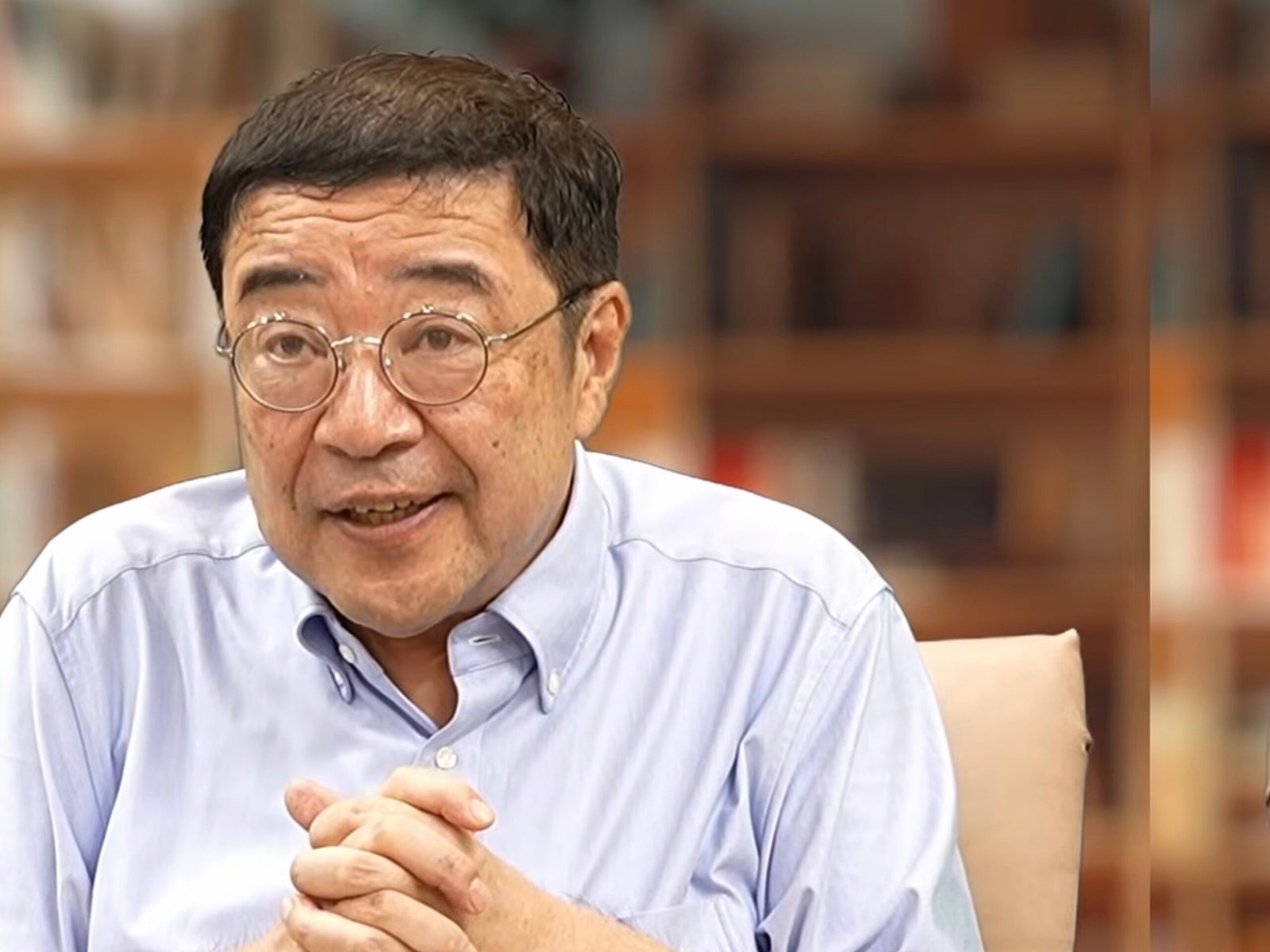
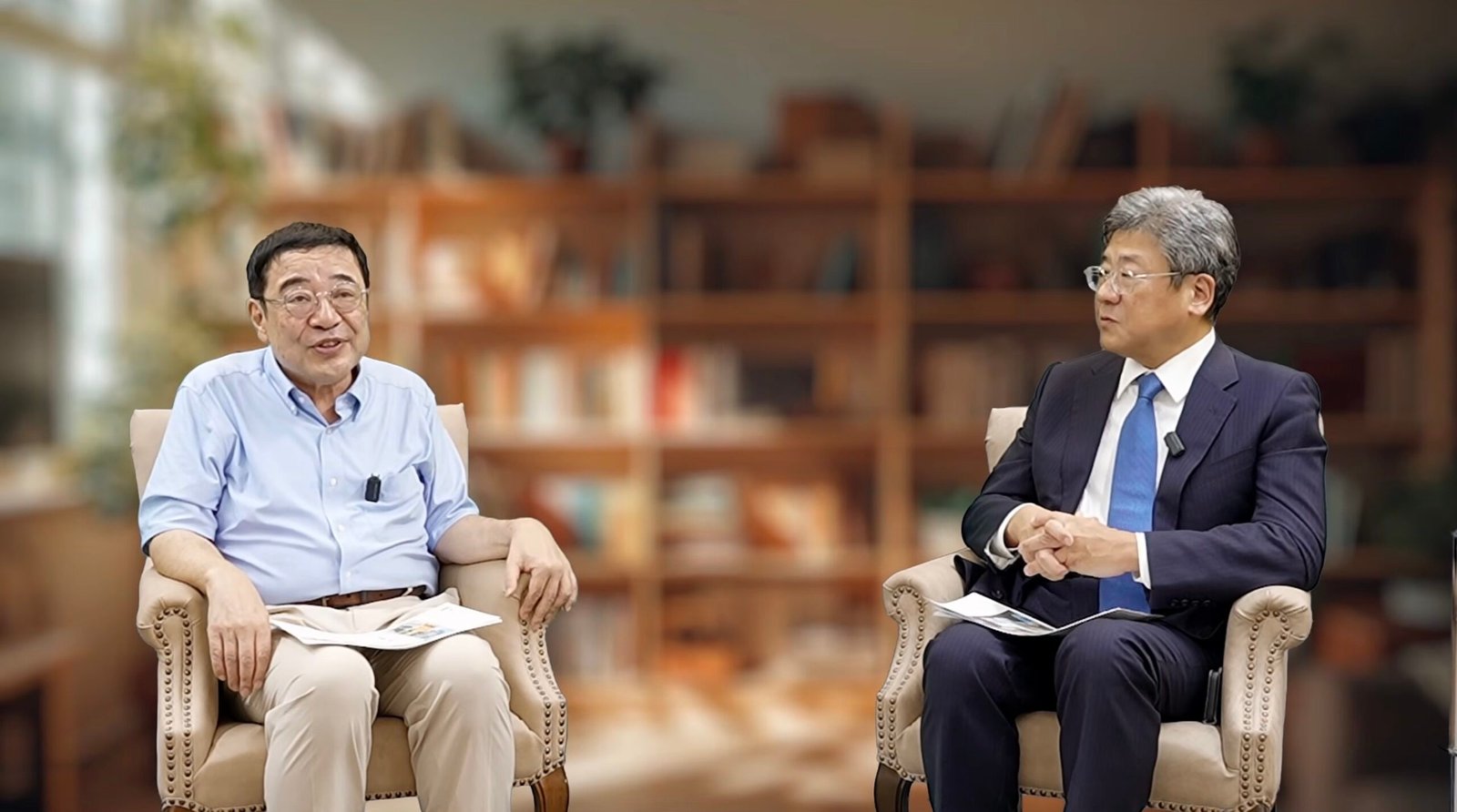
In the dialogue between literary critic Eitaro Ogawa and Reitaku University professor Tsutomu Nishioka on the dissolution of the Family Federation for World Peace and Unification (FFWPU), formerly known as the Unification Church, in Japan, the media’s role is examined in depth.
The moment that alarmed Nishioka most came on October 19, 2022. Until that day, Prime Minister Fumio Kishida had repeatedly affirmed that dissolution under the Religious Corporations Act required criminal violations. The Cabinet’s written answers to parliamentary inquiries said the same. Overnight, the government reversed its position and announced that civil torts under the Civil Code would also qualify.
The sudden change of criteria, without new evidence, suggested that media pressure had overridden legal principle. He feared a precedent had been set: if public anger grew loud enough, any religious group could face dissolution.
Nishioka wrote about this in a column titled “The Former Unification Church Issue from a Christian Perspective,” published on October 31, 2022, through the Japan Institute for National Fundamentals. He expected others to raise similar concerns. Few did. As the process advanced, hearings remained closed, and the non‑contentious procedure allowed judges wide discretion. He continued writing, including a February 2023 column for the Christian opinion site “SALTY” and later a piece responding to the Ministry’s request to dissolve the association. Media outlets rarely offered space for dissenting views. One exception was the monthly magazine “Seiron,” which published a dialogue between Nishioka and a pastor in December 2023. Ogawa notes that another magazine, “Hanada,” also began investigating the case, with journalist Masumi Fukuda conducting extensive research and concluding that the Family Federation had become a convenient offering to satisfy political and media demands.
Ogawa describes his own reaction to the media coverage. In the weeks after Abe’s death, he wrote that the sudden shift in reporting felt abnormal. He initially assumed Kishida’s reversal would be temporary, a response to intense media pressure. He did not expect the process to continue without opposition through the Ministry, the Tokyo District Court, and the Supreme Court. By late 2023, he realized that the momentum would not stop on its own and began speaking publicly.
Nishioka recounts how he and colleagues organized two independent Christian gatherings in 2023, one in Tokyo and one in Osaka, to warn that freedom of belief faced a serious threat. They paid for the venues themselves and made clear that the FFWPU had no role in organizing the events. He insisted that FFWPU participants could attend but would not be given the floor, to avoid any misunderstanding. He explained that he disagrees with the group’s doctrine and rejects its teachings on Japan–Korea relations. Yet disagreement does not justify state coercion. The meetings aimed to reach Christians who might not realize how easily the media and the government could apply the same logic to their own churches.
He then describes the deeper problem within Japanese Christianity. The postwar period produced two major Protestant streams: the large mainline denomination known as the United Church of Christ in Japan, and the evangelical movement influenced by American missionaries. Shaped by wartime consolidation and postwar reflection, the mainline church developed factions that embraced social activism. Some pastors joined the Communist Party, others promoted liberation theology, and theological schools became centers of student activism in the late 1960s and early 1970s. Over time, segments of the mainline church aligned themselves with political causes such as opposition to the relocation of a military base in Okinawa or campaigns against the imperial institution. They maintained ties with North Korean front organizations and avoided discussion of human rights abuses or North Korean abductions. Evangelicals, including Nishioka, resisted this trend and focused on evangelism. Yet the mainline church’s influence remained strong, and younger pastors often felt pressure to conform.
Why did parts of Japanese Christianity embrace radical activism? Nishioka traces the genealogy: postwar guilt, theological reinterpretations, student movements, and the appeal of narratives that divide society into oppressors and oppressed. He explains that compassion for those who suffer is legitimate, but turning suffering into a political idol leads to distortions. He argues that everyone has faults, and that moral clarity requires acknowledging this. He sees this as the foundation of his evangelical approach: a commitment to facts, a recognition of human limits, and a refusal to treat any group as inherently virtuous.
Nishioka recalls leaving Tokyo Christian University a decade earlier. After a major newspaper retracted its reporting on the comfort women issue, a mainline denomination represented on the university’s board attempted to restrict his academic freedom. He chose to leave rather than compromise his research. Former students later told him that his presence had allowed them to speak openly within their congregations. Without him, they felt exposed. This led to the creation of “SALTY,” a small group committed to preserving the salt that prevents moral decay. The group now seeks to remind churches that freedom of belief cannot survive if religious leaders accept political narratives without examination.
The dialogue then turns to the dangers of treating public opinion as a single entity. Nishioka tells his students to understand public opinion as “public opinions,” always plural. He warns that phrases such as “public opinion will not allow this” conceal individual viewpoints behind an imagined collective. He urges students to form their own judgments and to avoid using faith as a shortcut for argument. He says that religious belief in a higher authority allows one to question claims of absolute righteousness, whether from the left or the right.
Ogawa agrees and notes that Japanese society, with its high degree of homogeneity, is especially vulnerable to pressure to conform. He returns to the dissolution order and says that the Supreme Court’s rapid decision, without constitutional review, created a precedent that could erode protections for all religious groups. He fears that the judiciary avoided its responsibility and allowed lower‑court reasoning to stand without scrutiny.
Nishioka responds by recalling the early years of the North Korean abduction issue. For a long time, few believed that abductions had occurred. He wrote about the evidence and feared retaliation. Media outlets ignored the topic. The turning point came when the families of abductees decided to speak publicly. They risked their loved ones’ safety and appealed directly to citizens. Their persistence built public understanding and eventually compelled political leaders to act. He sees a parallel: the dissolution order has advanced because few outside the FFWPU have spoken. He believes appeals to citizens, grounded in facts and made by those outside the organization, can shift the climate.
Ogawa recalls how the families of the abductees were dismissed in the early years. He remembers political parties refusing to listen and activists being treated as eccentrics. Over time, their determination changed the national conversation. He sees the same possibility in the current situation, provided voices willing to confront discomfort keep speaking.
The dialogue closes with a reflection on responsibility. Nishioka says that the protection of freedom of belief cannot be left to the FFWPU alone. Scholars, journalists, and citizens who recognize the danger must speak. He hopes that legislators will emerge who treat the issue as a matter of principle rather than convenience. Ogawa concludes that the conversation has revealed how easily institutions abandon the values they claim to uphold. He believes that the space for genuine debate has narrowed, yet insists that persistence can still shape public understanding.
The exchange ends with a shared conviction: freedom of belief survives only when those outside the threatened community defend it.
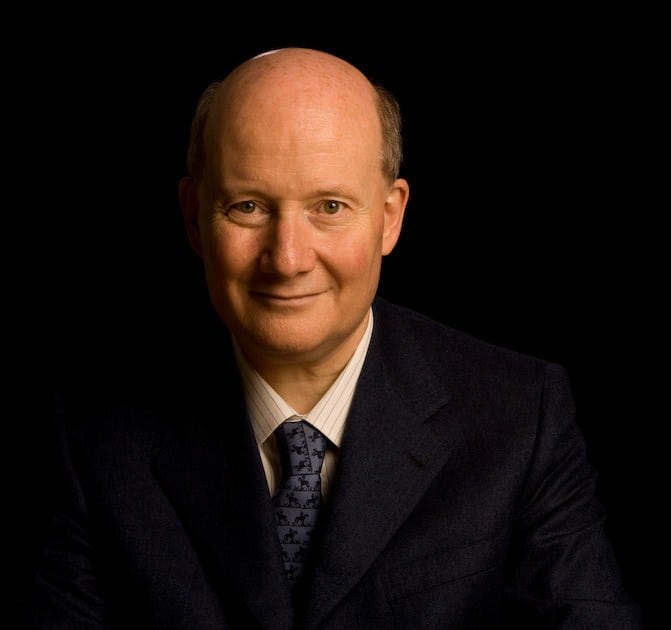
Massimo Introvigne (born June 14, 1955 in Rome) is an Italian sociologist of religions. He is the founder and managing director of the Center for Studies on New Religions (CESNUR), an international network of scholars who study new religious movements. Introvigne is the author of some 70 books and more than 100 articles in the field of sociology of religion. He was the main author of the Enciclopedia delle religioni in Italia (Encyclopedia of Religions in Italy). He is a member of the editorial board for the Interdisciplinary Journal of Research on Religion and of the executive board of University of Pennsylvania Press’ Nova Religio. From January 5 to December 31, 2011, he has served as the “Representative on combating racism, xenophobia and discrimination, with a special focus on discrimination against Christians and members of other religions” of the Organization for Security and Co-operation in Europe (OSCE). From 2012 to 2015 he served as chairperson of the Observatory of Religious Liberty, instituted by the Italian Ministry of Foreign Affairs in order to monitor problems of religious liberty on a worldwide scale.