A dialogue between two public intellectuals reveals how the dissolution order advanced without resistance from those entrusted with defending religious freedom.
by Massimo Introvigne
Article 1 of 2.
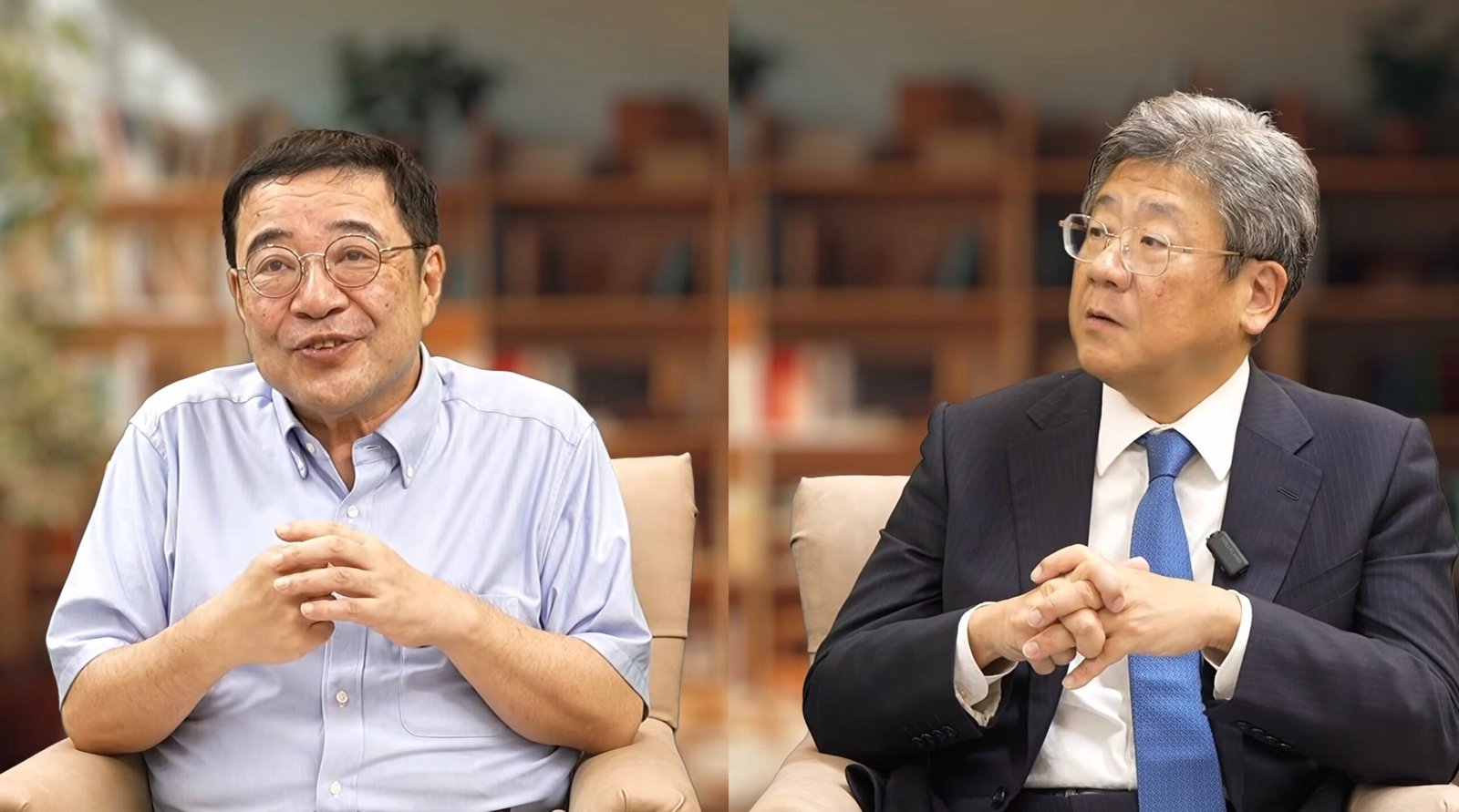
A unique political and religious conversation brought together two figures who spent decades navigating the intersection of politics, history, and public debate in Japan. Eitaro Ogawa is a literary critic known for his work on political culture and civic responsibility. Tsutomu Nishioka is a specialist in Korean affairs, a senior fellow at the Japan Institute for National Fundamentals, and a professor at Reitaku University. He is also a prominent advocate for the families of Japanese citizens abducted by North Korea. Their dialogue reflects on how the dissolution order against the Family Federation for World Peace and Unification (FFWPU), formerly known as the Unification Church, moved through Japanese institutions with almost no resistance from agencies that should have defended the principles at stake.
The exchange begins with a moment that stayed with Nishioka. Before the Ministry of Education issued the dissolution order, it convened an advisory panel of religious experts. The panel included representatives of Christian denominations. One of them had served as president of the Christian university where Nishioka once taught, a man known for devotion to Scripture. Nishioka had expected at least one voice to pause the process and ask whether the state was crossing a boundary. No such intervention came. He says he would have accepted the responsibility himself. The silence revealed how easily religious leaders absorb the surrounding atmosphere.
Ogawa listens and reflects on the deeper pattern. Advisory panels often operate as formalities, yet the issue lies elsewhere. Religious communities once understood that freedom of belief is fragile and that silence under pressure creates consequences that spread. Ogawa wonders how a society that prides itself on pluralism has become unable to resist the media and the momentum of public outrage. He sees a country where the state’s authority is accepted with little hesitation and where media narratives exert a pressure few can withstand.
From here, the dialogue turns to the long history shared by the two men. Ogawa recalls their cooperation during the years of Prime Minister Shinzo Abe, when debates on historical memory, the comfort women controversy, and the abductions of Japanese citizens by North Korea demanded persistence. Nishioka recounts the origins of a parliamentary study group formed in 1997 to examine claims of forced mobilization and sexual enslavement of Korean women. Weekly meetings continued for ten months, with scholars and officials presenting opposing views. The group produced a book and later advised several ministers in Abe’s cabinet. Abe himself, he says, approached historical questions through gradual advance, seeking ways to align public understanding with documented evidence while avoiding unnecessary diplomatic conflict.
Nishioka recounts how the comfort women controversy unfolded. When a major newspaper launched its campaign in 1991, many accepted the claims. He investigated the sources and found contradictions. A man who claimed to have abducted women had fabricated his story. Some women who said they had been taken by force had earlier stated that they had been sold due to poverty. The document presented as evidence of military involvement was actually an order to stop coercive recruitment by private brokers. He realized that the prevailing narrative rested on errors. Publishing his findings required resolve, yet he believed that truth would matter even if recognition came only in the next world.
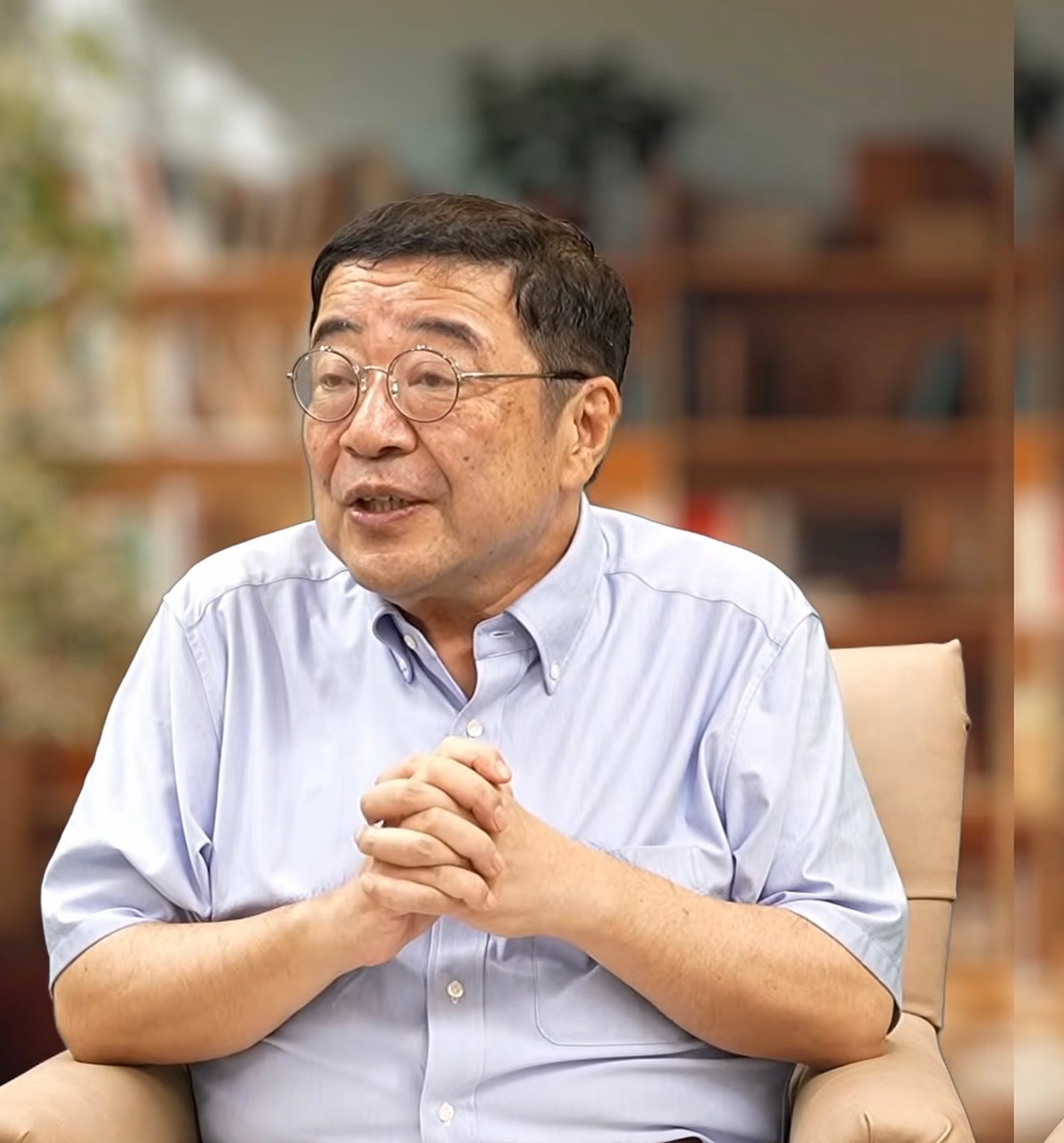
The conversation moves through memories of bureaucratic resistance. Ogawa recalls how the Ministry of Foreign Affairs briefly posted a statement on its website affirming that no evidence supported claims of mass abduction and that the oft-quoted figure that 200,000 women had been made into sex slaves was false, only to bury the document days later. Abe intervened directly, demanding that the statement be restored. Nishioka remembers heated exchanges with ministry officials. Both men describe a period when political leadership attempted to correct distortions that had circulated for decades.
Ogawa responds by noting that ideological movements often begin with theory rather than evidence. He argues that public debate must return to the discipline of examining facts before forming conclusions. He sees this as essential for any intellectual tradition, whether religious or secular.
Abe’s assassination marks a turning point in the dialogue. Nishioka refuses to use the word “assassination,” explaining that it places the perpetrator at the center. He calls Abe’s death a sacrifice in public service and for the nation, emphasizing that Abe acted with full awareness of the risks inherent in political life.
After the killing, he watched commentary shift in a direction he found incomprehensible. Some argued that the murderer’s resentment contained a measure of justification. The claim rested on the idea that Abe had been close to the FFWPU, and that the killer’s mother had donated heavily. Nishioka points out that the mother’s donations were her own decision, and that the son later joined the Self‑Defense Forces, worked, and lived independently. Yet public discussion began to treat him as a victim of circumstances rather than an agent responsible for his actions. Donations based on “unreasonable” beliefs were labeled as not free by definition. Nishioka, as a Christian, explains that belief often departs from common sense. He accepts the virgin birth, the resurrection, and Jesus’ miracles as literal truth. He donates to his church because he chooses to. Freedom of belief exists precisely to protect convictions that differ from majority expectations.

Massimo Introvigne (born June 14, 1955 in Rome) is an Italian sociologist of religions. He is the founder and managing director of the Center for Studies on New Religions (CESNUR), an international network of scholars who study new religious movements. Introvigne is the author of some 70 books and more than 100 articles in the field of sociology of religion. He was the main author of the Enciclopedia delle religioni in Italia (Encyclopedia of Religions in Italy). He is a member of the editorial board for the Interdisciplinary Journal of Research on Religion and of the executive board of University of Pennsylvania Press’ Nova Religio. From January 5 to December 31, 2011, he has served as the “Representative on combating racism, xenophobia and discrimination, with a special focus on discrimination against Christians and members of other religions” of the Organization for Security and Co-operation in Europe (OSCE). From 2012 to 2015 he served as chairperson of the Observatory of Religious Liberty, instituted by the Italian Ministry of Foreign Affairs in order to monitor problems of religious liberty on a worldwide scale.