A Party School teacher’s commentary in the “Beijing Daily” reveals how the statute formalizes assimilation of minorities as state doctrine.
by Hu Zimo

A July 13 commentary on the new Ethnic Unity Law in the “Beijing Daily,” written by Central Party School ethnologist Chen Shanshan, offered an unusually candid explanation of the direction in which China’s ethnic policy is now moving. The Central Party School is where senior party cadres are trained, and her commentary may be considered semi-official.
The article describes the new Ethnic Unity Law as a turning point, which moves from the administration and management of minorities to their assimilation into Chinese Han culture. Chen states that ethnic governance is shifting from what it calls “transactional governance” to “holistic governance.” The first term refers to the management of specific issues and relations. The second refers to the construction of a single (Han-centric) national community with shared cultural identity and shared values. The commentary presents this transition as a natural evolution. It also reveals the ideological foundations of a policy that has already transformed life in several minority regions.
Chen’s article explains that the law elevates ethnic work from administrative practice to legal norm. She states that China has established the core concepts and basic principles of ethnic governance and that the law incorporates “successful experiences.” The commentary does not define success. It does not mention the protests in Southern Mongolia (called by the regime Inner Mongolia) after the replacement of Mongolian with Chinese in core subjects. It does not mention the restrictions placed on Tibetan cultural expression. It does not mention the anxieties of Uyghurs who fear the erosion of their identity. It presents the law as a consolidation of achievements.
Chen links the law to Xi Jinping’s call to forge a strong sense of community for the Chinese nation. She describes ethnic affairs as a cornerstone of territorial integrity, development, and stability. She states that the law links ethnic work to the broader national security perspective and emphasizes patriotic education. It demands accountability from people and organizations that undermine ethnic unity and split the country, including those overseas. The scope of the law therefore extends beyond China’s borders. It reaches into diaspora communities. It frames cultural expression as a matter of national security.
The commentary also highlights the promotion and use of standard Chinese as the national language. It warns that obstructing its use would lead to legal penalties. This warning echoes policies already implemented in Southern Mongolia and other regions where minority languages have been reduced in public life. The commentary presents these changes as part of a broader effort to strengthen ties among all ethnic groups and establish a common foundation for economic development. It does not address the concerns of those who believe that cultural diversity is being compressed into uniformity.
The Ethnic Unity Law came into effect on July 1. It is the first national legislation devoted to constructing what Beijing calls the Chinese national community. The commentary in the “Beijing Daily” describes the law as a move from guidance to codification. It states that ethnic work had previously relied on policy direction, administrative promotion, model examples, and accumulated practice. It insists that legislation now provides a more stable framework. It proclaims that ethnic work will no longer depend on the level of attention paid by certain localities or the intensity of promotion during certain periods. The message is that assimilation is now permanent.
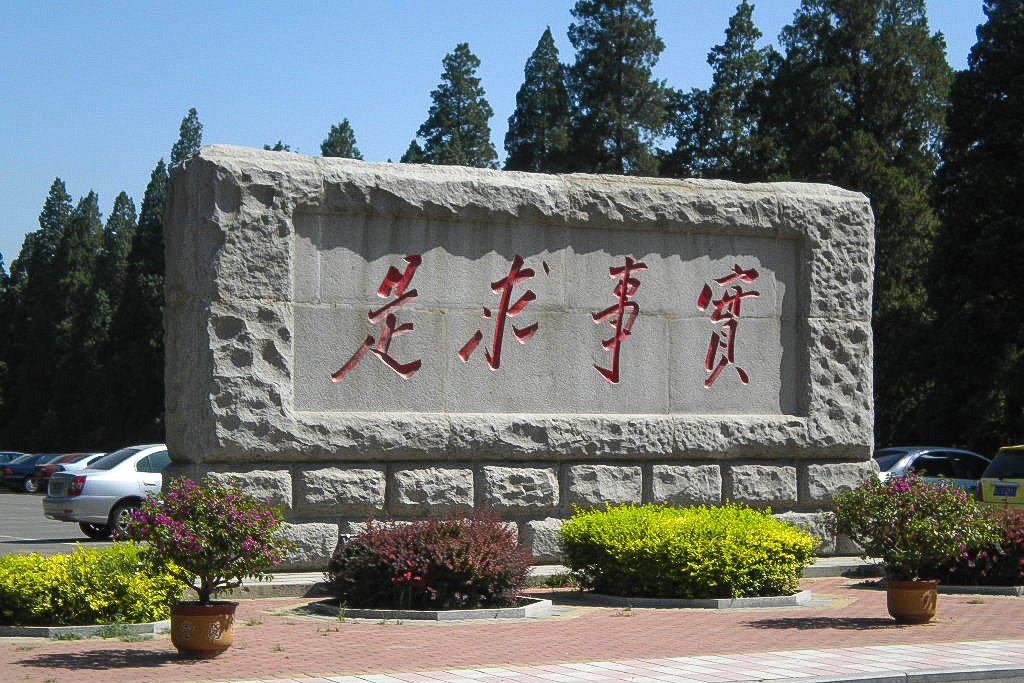
The commentary offers a window into the ideological system that shapes China’s ethnic policy. It shows how the Party School conceptualizes identity, culture and governance, how the state interprets diversity, and how the law transforms political goals into legal obligations. It also confirms that the language of community-building can be used to justify measures that reduce the space for minority expression.
The Ethnic Unity Law presents itself as a project of unity. Its implementation suggests a project of absorption.
China’s ethnic policy has always been tied to national security. The new law deepens that connection. It expands the state’s authority over cultural life. It formalizes practices that have already altered education, language use, and artistic expression in minority regions. The commentary in the “Beijing Daily” frames these changes as progress. It does not acknowledge the fears of those who see their traditions becoming fragile and the tension between unity and diversity, nor the human cost of policies that treat cultural identity as a variable to be managed.
Chen Shanshan presents the law as a step toward stability. For many communities, it may become a step toward disappearance.

Uses a pseudonym for security reasons.