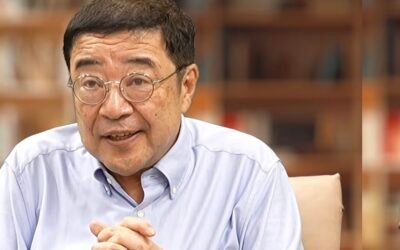
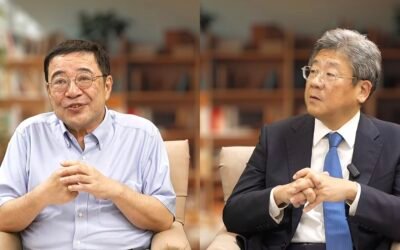
Masaki Nakamasa reflects on how Japan reached a moment where a religious corporation can be dissolved without a real public debate.
by Massimo Introvigne
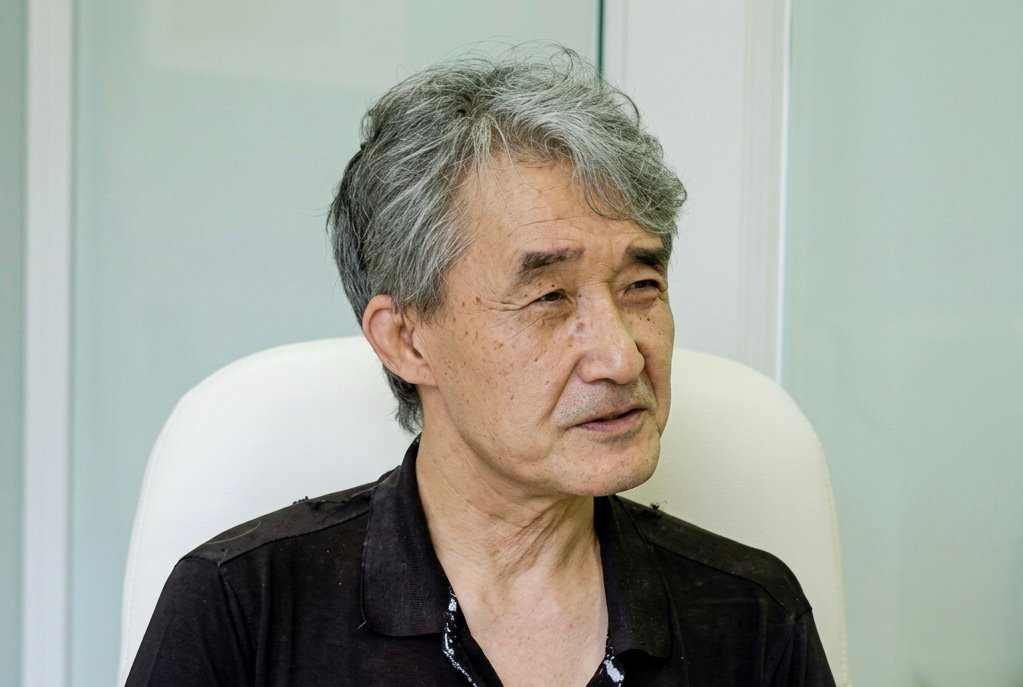
The conversation between literary critic Ogawa Eitaro and political philosopher Masaki Nakamasa unfolds as a portrait of a man who lived inside the world now being judged, left it decades ago, and returned to the public stage only because the current climate leaves almost no one else willing to speak. His account begins in the early 1980s, when the ideological landscape of Japanese campuses still had density and conflict. He entered the Komaba dormitory at the University of Tokyo and found himself in a building where factions effectively controlled rooms. One night he was confronted by members of Minsei, the Communist Party’s student group, who suspected he was attending lectures of the Unification Church’s student organization. He had not yet joined, but the interrogation convinced him that he could not remain in that environment. Members of the group he was merely visiting offered him a place to live, and from there he followed the lectures, attended workshops, and eventually became a believer.
He describes the appeal of those lectures to a young man who felt inadequate and found, for the first time, a form of communication that reached him. His involvement lasted more than a decade, including eight years at university and a period of activity in Germany. After graduation, he worked as a reporter for a newspaper connected with the Unification Church, the “Sekai Nippo,” interviewing politicians and covering national affairs.
His departure from the movement came when his marriage, arranged through the Church’s blessing ceremony, collapsed. The newsroom was strained, finances were tight, and interpersonal conflicts accumulated. He entered graduate school and spent months deciding whether to continue as a believer or leave entirely. He chose to leave, and the divorce followed.
His account challenges the narrative that members cannot exit. He says he left with surprising ease, perhaps because he had been a problematic member, perhaps because the organization did not insist on retaining him. He then spent thirty years without contact, building an academic career, teaching political thought, and writing for journals across the ideological spectrum. He openly acknowledged his past whenever asked. He participated in discussions with former activists of the far left, wrote for conservative magazines, and maintained a position that ideological conflict should be grounded in argument rather than caricature.
Ogawa situates this personal history within a broader decline of ideologies in Japan. In the 1980s, ideological movements collided with intensity, and intellectuals recognized each other even across deep disagreements. Today, he says, the capacity for such engagement has thinned. Decisions move through ministries and courts without the intellectual ballast that once existed. The dissolution order against the Family Federation, in his view, emerged in a society where the people most capable of explaining the relevant traditions of political thought are not consulted. The conversation turns to the reason Nakamasa began speaking publicly in the last two years. He saw that nearly all commentary focused on accusations against the organization, and almost no one attempted to explain why tens of thousands of members continue to remain there, or how the principles of religious freedom and church–state separation should frame the discussion. As a scholar who teaches these principles, he felt he could not remain silent.
He explains that early commentary after the assassination of Abe Shinzo often invoked a simplified notion of church–state separation. Commentators claimed that foreign democracies maintain strict separation while Japan allows political parties to cooperate with religious groups. He notes that such claims ignore basic facts: the British monarch is formally head of the Church of England, American currency carries the phrase “In God We Trust,” and presidential inaugurations include religious elements. Church–state separation does not forbid religious individuals from expressing political views or meeting legislators. It forbids the state from granting official approval to a religious doctrine or allowing a religious authority to command government action. He argues that the media and many academics failed to explain this, allowing a distorted understanding to spread.
The discussion moves to the courts. The Tokyo High Court’s decision, and the reasoning later echoed by the Supreme Court, treated the Family Federation’s doctrine as evidence that future high donations would occur. Nakamasa sees this as a breach of the principle that the state must not interpret religious doctrine. He recalls the Itamandara case, where the Supreme Court held that courts cannot judge the religious value of an object. He recalls the dissolution of Aum Shinrikyo, where the court emphasized that the decision was based on concrete crimes, not doctrine. He notes that even in that extreme case, the judiciary refused to treat doctrine as a basis for legal action.
The High Court’s language shocked him. The decision stated that leaders of the Japanese church had no will or ability to resist instructions from Hak Ja Han. He compares this to political rhetoric, the kind of phrasing found in polemical magazines rather than judicial documents. He remembers similar language used decades ago by scholars aligned with the General Association of Korean Residents in Japan, who insisted that North Korea had no will or ability to engage in military action. He sees the same pattern: a claim about inner intention presented as fact, without evidence and without recognition that courts cannot read minds.
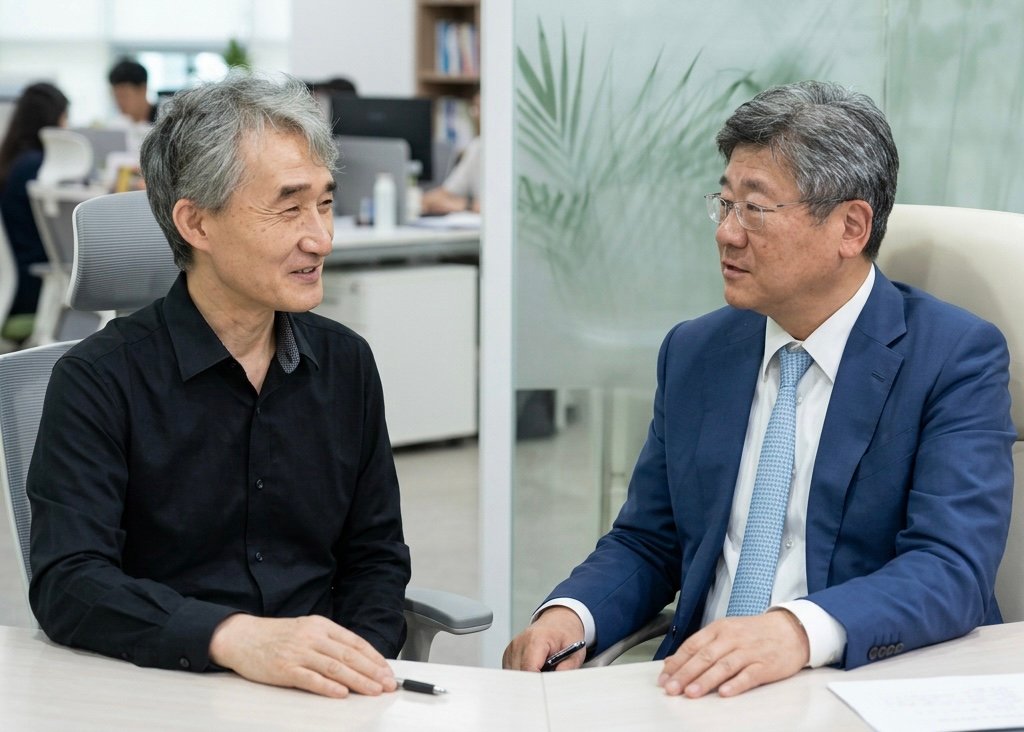
Ogawa expands the point. If doctrine is treated as a predictor of future wrongdoing, then any religious text containing apocalyptic passages could be used to justify state intervention. He mentions the Book of Revelation and philosophical works that have inspired violence. Nakamasa responds by invoking John Stuart Mill’s harm principle: interference is justified only when concrete harm occurs. Mill insisted that inner belief cannot be the basis for state coercion. Western history, from the Thirty Years’ War to the conflicts among Protestant sects in early America, taught that doctrinal disputes become explosive when governments take sides. Religious doctrine belongs to the private sphere, and only actions belong to the public sphere.
He argues that many Japanese commentators respond to the Family Federation with a feeling of disgust. That feeling becomes a substitute for analysis. Research on emotion and law shows that disgust can influence legal reasoning, but liberal traditions require that such impulses be restrained. He recalls that in earlier decades, even hostile left-wing activists would debate doctrine with members. They might exclude them from events, but they would still confront them directly and demand explanations. He remembers similar encounters in Germany. Today, he sees almost no one willing to engage. Members of the second-generation association speak to journalists repeatedly, yet their words never appear. He himself was invited to speak for a month, then invitations stopped.
He and Ogawa describe a society where the ability to absorb disagreement has weakened. The intellectual class avoids confrontation, and the media amplifies only one narrative. He remembers a Communist Party–affiliated professor who defended the principle of open debate and allowed his criticism of Minsei to be printed in a leaflet. He wonders why no comparable figures appear today. He says that in the past, even those who opposed the movement could articulate its doctrine and argue against it. Now, he sees almost no one capable of doing so.
The conversation turns to the legal structure. Dissolution under the Religious Corporations Act is handled through non-contentious proceedings, designed for administrative matters such as temples without successors. It was never designed for conflicts between the state and a religious corporation. After the Aum case, scholars should have examined how the system would function if a religious group faced state action without criminal charges. No such debate occurred. The current case therefore proceeded in a framework that allows judges wide discretion, minimal transparency, and no requirement to hear both sides in a public setting.
Nakamasa stresses that due process requires hearing the affected party, especially when the state imposes severe harm. He says the judiciary used its discretion in a way that disadvantaged the Family Federation at every stage. Judges defined the issues themselves, without showing that both sides had been heard. They treated the case as if it were a routine administrative matter, even though the state had initiated a confrontation with a religious corporation that had committed no violent crime.
Ogawa concludes that the judiciary holds immense power, and citizens must trust that it follows the principles of modern law. He fears that the judges involved do not recognize how far they have departed from those principles. Nakamasa closes with a reflection drawn from contemporary philosophy. Thinkers such as Jürgen Habermas emphasize public communication as the foundation of legitimacy. Liberal scholars once understood intuitively that they must listen even to those they dislike. He believes many academics have lost that instinct. They avoid hearing the doctrine from the people who actually hold it, perhaps because they fear the discomfort of confronting unfamiliar beliefs. He says that knowledge requires overcoming that discomfort. A scholar must listen even when the encounter is unpleasant.
The dialogue ends with Ogawa thanking him and expressing hope for further discussions. The exchange reveals a deeper issue than the dissolution order itself. It shows a society where ideological engagement has thinned, disgust replaces argument, and the judiciary acts without the intellectual scrutiny that once restrained it. Nakamasa’s voice emerges from decades of silence because the space for genuine debate has nearly disappeared, and someone must insist that principles of religious freedom and due process still matter.
Nakamasa spoke. Will Japanese society listen?
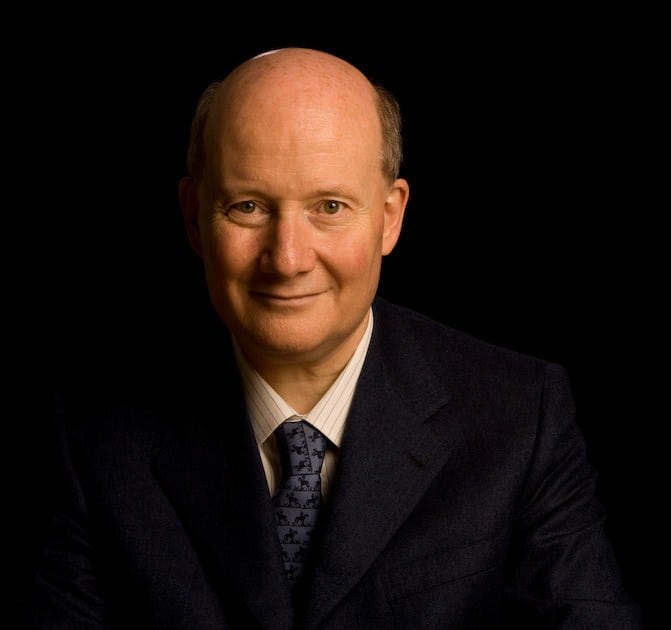
Massimo Introvigne (born June 14, 1955 in Rome) is an Italian sociologist of religions. He is the founder and managing director of the Center for Studies on New Religions (CESNUR), an international network of scholars who study new religious movements. Introvigne is the author of some 70 books and more than 100 articles in the field of sociology of religion. He was the main author of the Enciclopedia delle religioni in Italia (Encyclopedia of Religions in Italy). He is a member of the editorial board for the Interdisciplinary Journal of Research on Religion and of the executive board of University of Pennsylvania Press’ Nova Religio. From January 5 to December 31, 2011, he has served as the “Representative on combating racism, xenophobia and discrimination, with a special focus on discrimination against Christians and members of other religions” of the Organization for Security and Co-operation in Europe (OSCE). From 2012 to 2015 he served as chairperson of the Observatory of Religious Liberty, instituted by the Italian Ministry of Foreign Affairs in order to monitor problems of religious liberty on a worldwide scale.