The anti-cult movement in Australia and internationally has shifted its focus from traditional targets to include conservative Christian groups.
by Bernard Doherty
Article 2 of 2. Read article 1.

The evolving controversy involving Redeemer Baptist School, discussed in the first article of this series, is indicative of two broader trends in contemporary Australia that could have a direct bearing on other religious groups and that this new parliamentary inquiry would be prudent to address at the outset.
First, in recent years, media covering a variety of Christian churches in Australia—primarily Pentecostal and conservative evangelical churches—have been increasingly willing to utilize harmful “cult rhetoric” as a means of othering these sometimes-unpopular groups.
This rhetorical strategy aims to distance such groups both from the secular values espoused by a growing number of Australians, but also for Australian Christians who do not wish to recognise that groups which, by any reasonable criteria, are Christian churches, might also hold beliefs or engage in voluntary practices—sometimes of an ascetic and self-sacrificing nature—which make other Christians uncomfortable, but which are neither coercive nor abusive, let alone illegal.
This media classification of certain churches as “cults” or “cult-like” has achieved some level of political salience—and the ongoing Victorian Inquiry into the Recruitment methods and Impacts of Cults and Organised Fringe Groups has shown how widely the net of the “cult” label has been cast—with several former members who gave testimony to that inquiry’s hearings coming from precisely these kinds of more conservative Pentecostal and evangelical congregations.
This mimics a trend seen elsewhere, where the deployment of the deliberately pejorative term “cult” and associated terminology has been extended to cover an ever-widening number of groups, with little attention to nuance between different groups and their respective practices, or to the impact such labeling might have on how such groups are treated by wider society.
In this current case, we are witnessing a long-established church and community, linked to a registered school, which even the associated reports in the “Sydney Morning Herald” have conceded has an enviably strong academic reputation, being labeled a “cult” or—in the case of the “Sydney Morning Herald” and “60 Minutes” reports—euphemistically called an “authoritarian group.”
Such reporting is not surprising in Australia and draws on a long and ugly history of similar “cult journalism.” Indeed, “60 Minutes” has an established reputation for running salacious “cult exposé” stories going back decades.
While, somewhat to the credit of the producers, the most recent story on Redeemer Baptist School judiciously avoided using the “c-word,” the presence of Steven Hassan, billed as a “world-renowned mental health expert” and expert on “authoritarian groups,” should set off alarm bells for any regular reader of “Bitter Winter.”
In this report, Hassan waxed lyrical about how Redeemer Baptist Church was on the “destructive end of the influence continuum,” offering a diagnosis of this church in another country, which I would wager he had never visited. He based this judgment—it appears—primarily, if not solely, on the video testimony provided by a small number of former members.
I do not wish to cast doubt on any of the claims made by the former members of Redeemer Baptist Church in these reports, but merely to point out that Hassan’s framing of the issues was limited and lacked nuance in addressing the complexities of communal religious life. Indeed, Hassan’s contribution to the report provided little more than a platform for him to spout his expansive and idiosyncratic theories, which even other members of the anti-cult movement have criticized.

Hassan’s presence in this report, and its timing, however, are also indicative of how a resurgent anti-cult movement in Australia and internationally has shifted its focus from many traditional targets to more conservative Christian groups like Redeemer Baptist Church and the way in which Hassan’s work and problematic theories like his “BITE model” are being weaponized in a new, wider anti-religious manner.
This brings me to the second trend.
The appearance of the language of “coercive control” around Redeemer Baptist School—including in the NSW inquiry’s terms of reference—is indicative of a more subtle but troubling shift which we are increasingly witnessing internationally: the surreptitious return of discredited ideas around “brainwashing” via an idiosyncratic and expanded application of Evan Stark’s theory of “coercive control.”
Under the guise of what they call “group-based coercive control,” Australian and international anti-cult activists have sought to co-opt Stark’s theory from its original analytic context for examining intimate partner violence and expand it to any situation where they perceive controlling behavior is present, particularly in church settings with which they ideologically disagree.
The logical consequence of this expansion has perhaps best been spelled out in Be Scofield’s new book “The Savior Complex: How Jesus Became the World’s Ultimate Influencer” (2026)—reviewed recently in “Bitter Winter”—suddenly all religion is “coercive control,” and all religions are “cults.”
This expansion is especially interesting in the case of Redeemer Baptist School, because now we see a private school, and one that has a history of controversy but also of laudable academic achievement, being investigated for “coercive control.”
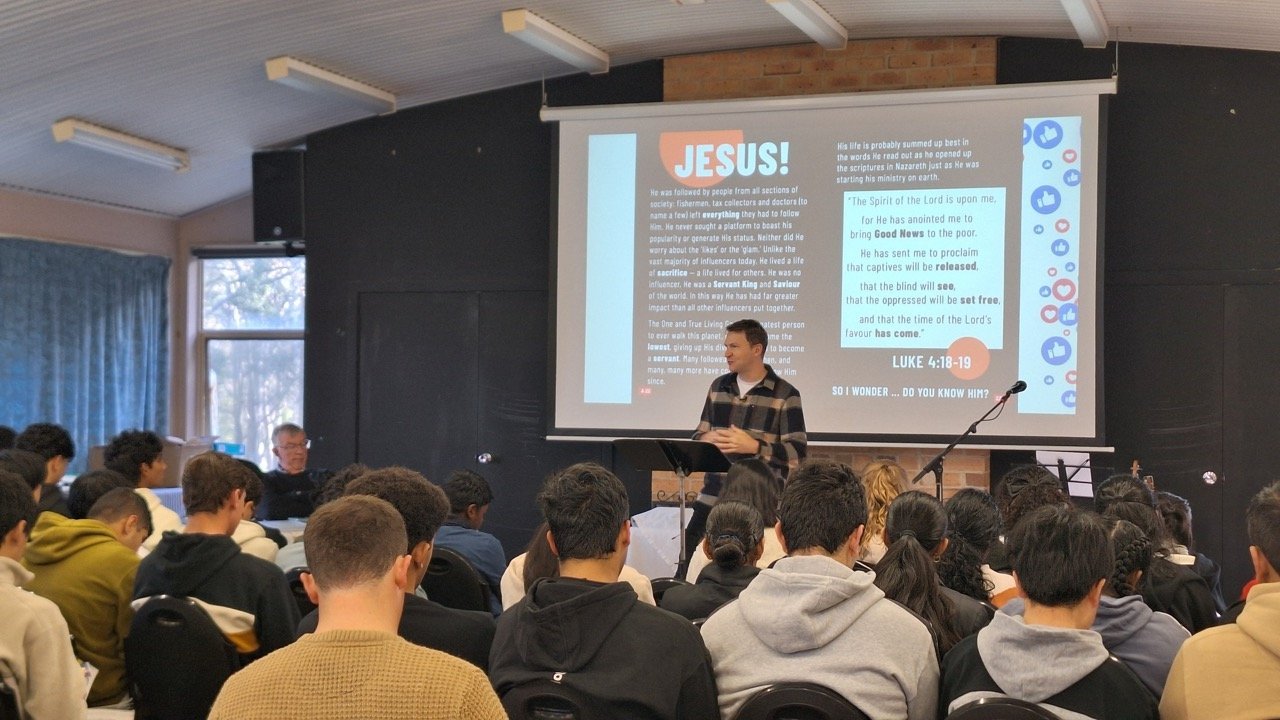
Other Christian schools, which have recently expressed concerns around religious liberty and proposed changes in anti-discrimination legislation, should be nervous here. This is not the first time the NSW Greens have drawn on anti-cult rhetoric to advance their policy agenda against non-government Christian schools—ask the Plymouth Brethren Christian Church.
Secularist sectarianism—like historical Catholic-Protestant sectarianism—is nothing new in Australian education debates, but “coercive control” is an untried weapon in Australia’s “school wars.”
Its introduction here marks a significant legal departure, which appears to extend well beyond the remit of New South Wales legislation—Crimes Legislation Amendment (Coercive Control Act 2022)—which defines “coercive control” as “abusive behavior toward intimate partners” and, importantly, does not envision such legislation applying in group, let alone religious or educational, contexts.
This raises serious questions—which the New South Wales Inquiry would be wise to examine— about the origins of this new idea of “group-based coercive control” and how it has crossed into New South Wales from Victoria.
Should the NSW Inquiry conduct its due diligence, it will soon discover that this dubious theory has no basis in serious research on “coercive control” but rather has deep and troubling roots in the wider anti-cult movement and the long-discredited pseudo-scientific theories of “cultic brainwashing” peddled by the likes of Steven Hassan, Margaret Singer, and others over recent decades.

Bernard Doherty is an associate professor in the School of Theology and a research fellow in the Centre for Religion, Ethics and Society (CRES) at Charles Sturt University, Australia, based at St Mark’s National Theological Centre in Canberra. He is also an Honorary Fellow of INFORM at King’s College, United Kingdom. He has published extensively on new religions in Australia.