The church is unpopular with other Baptists for its conservative theology, but the use of the “cult” and “brainwashing” rhetoric has dangerous ramifications.
by Bernard Doherty
Article 1 of 2
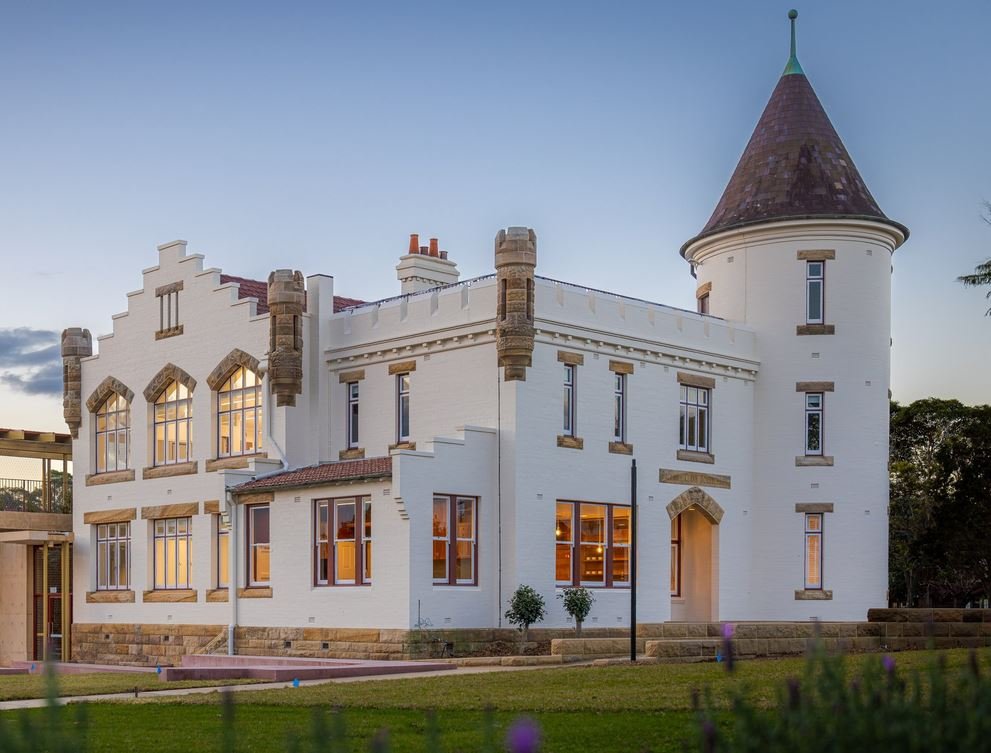
On Sunday, June 19, 2026, Channel 9 Australia’s flagship current affairs program, “60 Minutes,” ran a story on Redeemer Baptist School titled “Praying for Redemption.”
The report discussed the experiences of former members of Redeemer Baptist Church, a Baptist Church formed in 1974 as a breakaway from another congregation in Castle Hill, a suburb in Sydney’s Hills District.
Recent years have witnessed wider controversies among Baptists in the State of New South Wales (NSW). Related to the Australian Marriage Law Postal Survey in 2017, which paved the way for marriage equality for LGBTIQA+ Australians, the denomination underwent a bitter process, which resulted in the disaffiliation of a small number of churches, leading to the formation of a new group known as the Open Baptists.
It must be emphasized at the outset, however, that Redeemer Baptist Church is not affiliated with either the larger body of the Baptist Association of NSW and ACT or the more recently established Open Baptists—indeed, as one Baptist indignantly quipped to me when quizzed about the group: “None of us would have them!”
Over the decades, Redeemer Baptist Church has garnered a controversial reputation among many other Baptists, often because its churches have absorbed those who have left the tight-knit, highly committed Redeemer community.
Over the years, former members have appeared in the media to air their grievances.
In 2005, for example, Channel 9’s now-defunct current affairs program “Sunday” ran a report entitled “Unholy devotion,” in which claims were made that the group “brainwashed” its members and the church was labeled a “cult” by no less a figure than the respected Australian Baptist churchman Reverend Tim Costello.
Further media coverage of its school funding and employment practices was raised in the New South Wales Parliament a few years later. This was driven primarily by the secularist NSW Greens, whose long-term policy goals include abolishing state funding for non-government schools, a historical peculiarity of Australia’s education system with origins in our country’s distinct pattern of sectarian tension.
These allegations went no further.
Put simply, this is not a new controversy; indeed, the political and ecclesial fault lines have existed for some time.
This is important background, as following the “60 Minutes” report on June 19, social media exploded with posts from various Baptists and other evangelical Christians in Sydney sharing stories about Redeemer Baptist Church.
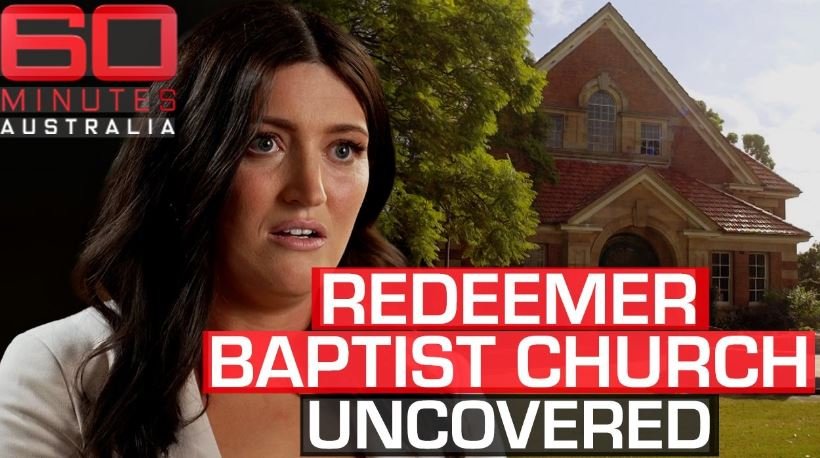
Some people have clearly had very negative experiences with the church and its associated school, and the “60 Minutes” report—followed by a series of articles by the “Sydney Morning Herald” education reporter, Emily Kowal—provided an opportunity for many to share these painful memories on Facebook and other platforms.
As I have examined this situation in recent weeks, I’ve had several conversations with other Christians about the painful experiences of former members of the church, some of whom have found themselves estranged from family still involved and have sought refuge and healing in other evangelical congregations.
These stories have consistently echoed those aired in the Channel 9 report and subsequent articles. They center around a tight-knit community and the alienation experienced by those who choose to leave.
Clearly, these are not isolated cases, but it is also important to note the reply to the allegations made by Redeemer Baptist Church, which maintains that “Just because our practices are unfamiliar, it does not mean they are unlawful, coercive or abusive, and we reject the attempt to portray us as anything other than a law-abiding community with strong Christian faith and practices.”
How we discuss and interpret this situation requires nuance—something easily lost amid the acrimony of social media—and, for those commenting, a resistance to oversimplifying what has taken place in this church over the last fifty years.
We also need to be attentive to the wider context in which this controversy has once again come to the fore.
This controversy hasn’t reappeared out of nowhere. It is directly related to similar media attacks on conservative Christian groups —using the rhetoric of “cults”—which have been occurring in Victoria for the past few years. This culminated in 2025 with the establishment of the Victorian Inquiry into the Recruitment Methods and Impacts of Cults and Organized Fringe Groups.
Within a fortnight of the report airing, New South Wales Greens MP Abigail Boyd, with support from the members of the Australian Labor Party, moved that the Legislative Council’s Education Committee open a wide-ranging Inquiry into Redeemer Baptist School.
This is unprecedented and highly irregular, not least because both the Federal Department of Education and the New South Wales Education Standards Authority (NESA) had already indicated they were investigating Redeemer Baptist School. Moreover, Federal Assistant Minister for Charities Andrew Leigh told reporters he had also referred the matter to the Australian Charities and Not-for-profit Commission (ACNC) for investigation.
Why, we might reasonably ask, given at least three open investigations by duly constituted bodies, was it deemed necessary for Parliament to open an additional and seemingly redundant inquiry?
Something else is clearly afoot here, and when a Baptist minister friend wrote to me asking for my opinion, it soon became clear that this might be about more than just a private school.
Soon after this story broke, I began to observe terms like “cult” and phrases like “cult-like practices” appearing in social media commentary on the situation, quickly followed by the deployment of more recent language around “coercive control.”
When the Inquiry’s Terms of Reference were made available, they listed among the matters to be investigated “any use by the school of coercive control in relation to students, families, guardians, employees and volunteers.”
Also listed on the Inquiry website was a group of support services. Among these was the Olive Leaf Network—one of the most proactive organizations that both lobbied for and appeared at the hearings of the Victorian Inquiry, and which aims to “provide aid and advocacy for former members of high-demand religious groups.”
Suddenly, this all made more sense: the Victorian “cult controversy” had crossed the border into New South Wales.
What began ostensibly as a media investigation into the public funding and employment arrangements of a non-government school—something routine in recent Australian memory, where private school funding has been increasingly on the nose—had morphed into something else, with potentially much wider ramifications.

Bernard Doherty is an associate professor in the School of Theology and a research fellow in the Centre for Religion, Ethics and Society (CRES) at Charles Sturt University, Australia, based at St Mark’s National Theological Centre in Canberra. He is also an Honorary Fellow of INFORM at King’s College, United Kingdom. He has published extensively on new religions in Australia.