While the movement grows in Argentina and beyond, criticism appears to be imported from Korea rather than domestic.
by María Vardé*
*A paper presented at the European Academy of Religion’s Ninth Annual Conference, LUISS University of Rome, July 3, 2026.
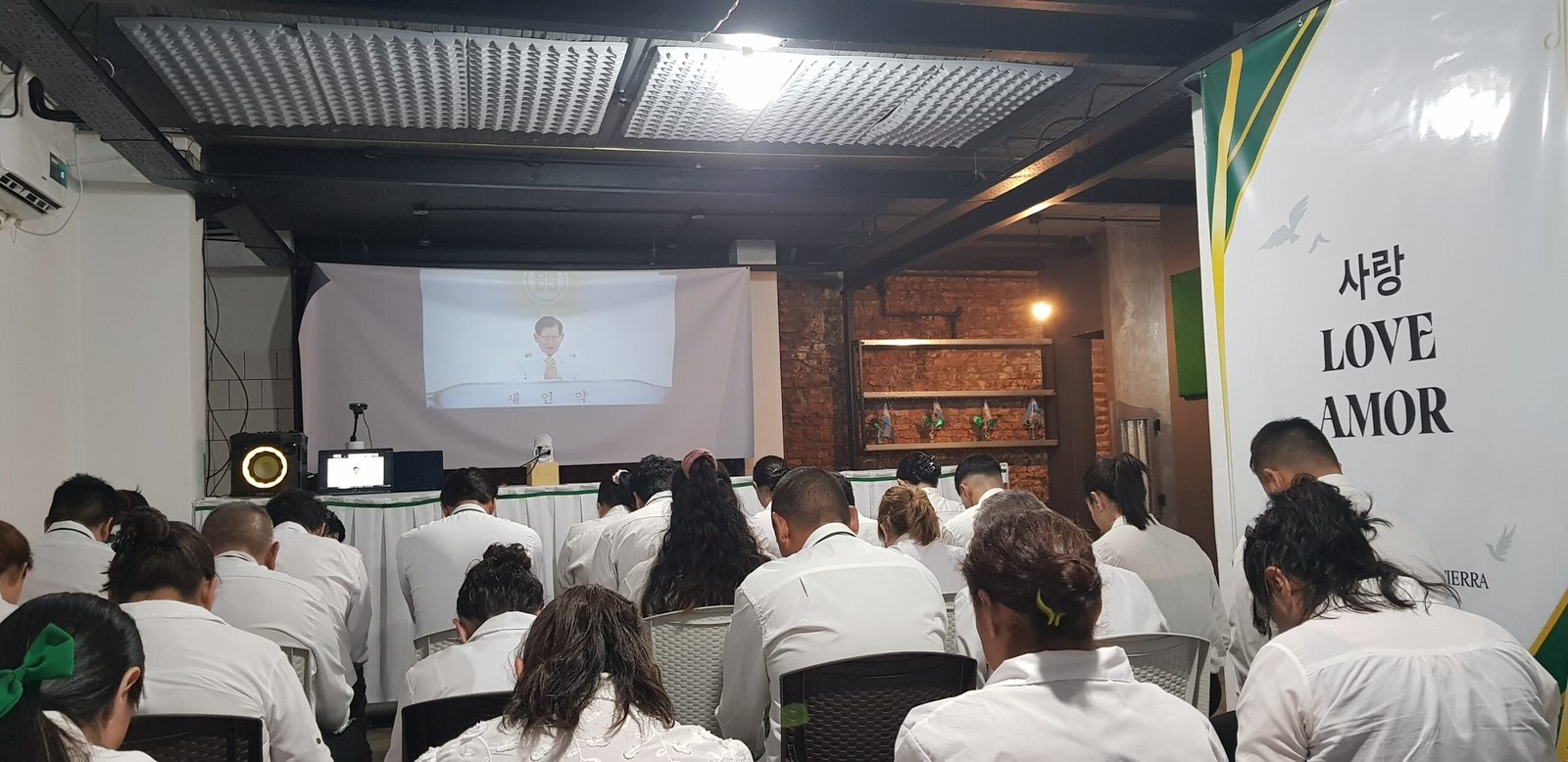
In this paper, I present preliminary findings from an ongoing study of Shincheonji’s recent establishment in Latin America, with particular attention to Argentina. I aim to understand how a young, transnational, and expanding religious community is taking shape, and how this process is conditioned by a field of suspicion organized through anti-cult rhetoric.
The empirical material comes from ethnographic work conducted between January and May 2026, based on observation of activities, semi-structured interviews with members and leaders, analysis of teaching materials, and monitoring of the digital debate surrounding the group. Regionally, Argentina is part of a broader process for Shincheonji that includes communities in Guatemala, Panama, El Salvador, and Mexico. What makes the Argentine case distinctive is that Shincheonji is developing in a context where controversies involving new religious movements have increasingly been framed through anti-cult vocabularies, with terms such as “manipulation,” “human trafficking,” “vulnerability,” and “brainwashing.” In this sense, the case is relevant not only as an example of recent religious establishment but as an ethnographic situation from which to observe how a minority in formation must negotiate, from its earliest stages, the social conditions of its public legibility.
The main point of entry into Shincheonji in Latin America is its Bible courses. These courses are presented as free, public, and oriented toward the systematic study of Scripture. During the pandemic, virtual formats enabled people scattered across vast territories to join classes via Zoom. More recently, this format has begun to articulate with in-person activities: services, classes, praise meetings, informal gatherings with picnics, board games, sports events, spaces for testimony, and street evangelism.
These courses cannot be adequately understood if reduced to a recruitment technique. Rather, they operate as a contact zone: a threshold where the boundaries between curiosity, learning, and conversion are gradually negotiated. Participants learn a vocabulary, a way of reading the Bible, and a particular prophetic temporality. Yet this passage is not automatic. Some attend only a few classes and leave; others interrupt and later return; some complete the course without taking on community tasks; others begin attending services, join local groups, and eventually teach, coordinate, or evangelize. Belonging is built through the accumulation of practices, not through a single act of adhesion.
A recurring theme in the interviews is an experience we might call biblical clarity. Many members, most of them with prior trajectories in evangelical churches and, to a lesser extent, Catholic ones, describe arriving at the courses with questions they had carried for years. What they say they found was not, at least initially, the magnetism of a charismatic figure, but an orderly, coherent explanation that could be verified in the Bible itself. Several contrast this experience with earlier answers such as “you just have to have faith,” which, for them, expressed not spiritual depth but the absence of explanation. In Shincheonji, by contrast, understanding appears as a sign of authenticity. “Understanding the word” is not merely an intellectual operation; it is a way of experiencing religious truth.
This point is central to avoiding a reductive reading of affiliation trajectories. Interviewees describe themselves as people who found a universal truth capable of ordering questions, doubts, and expectations. In their accounts, studying does not mean obeying; it means discerning. Conversion, when it occurs, is narrated as a cognitive, affective, and spiritual process at once. There is enthusiasm, a sense of belonging, and discipline, but also comparisons with previous religious experiences, evaluation of answers, and a strong appreciation of what interviewees perceive as the doctrinal system’s overall coherence, rational clarity, and universal validity.
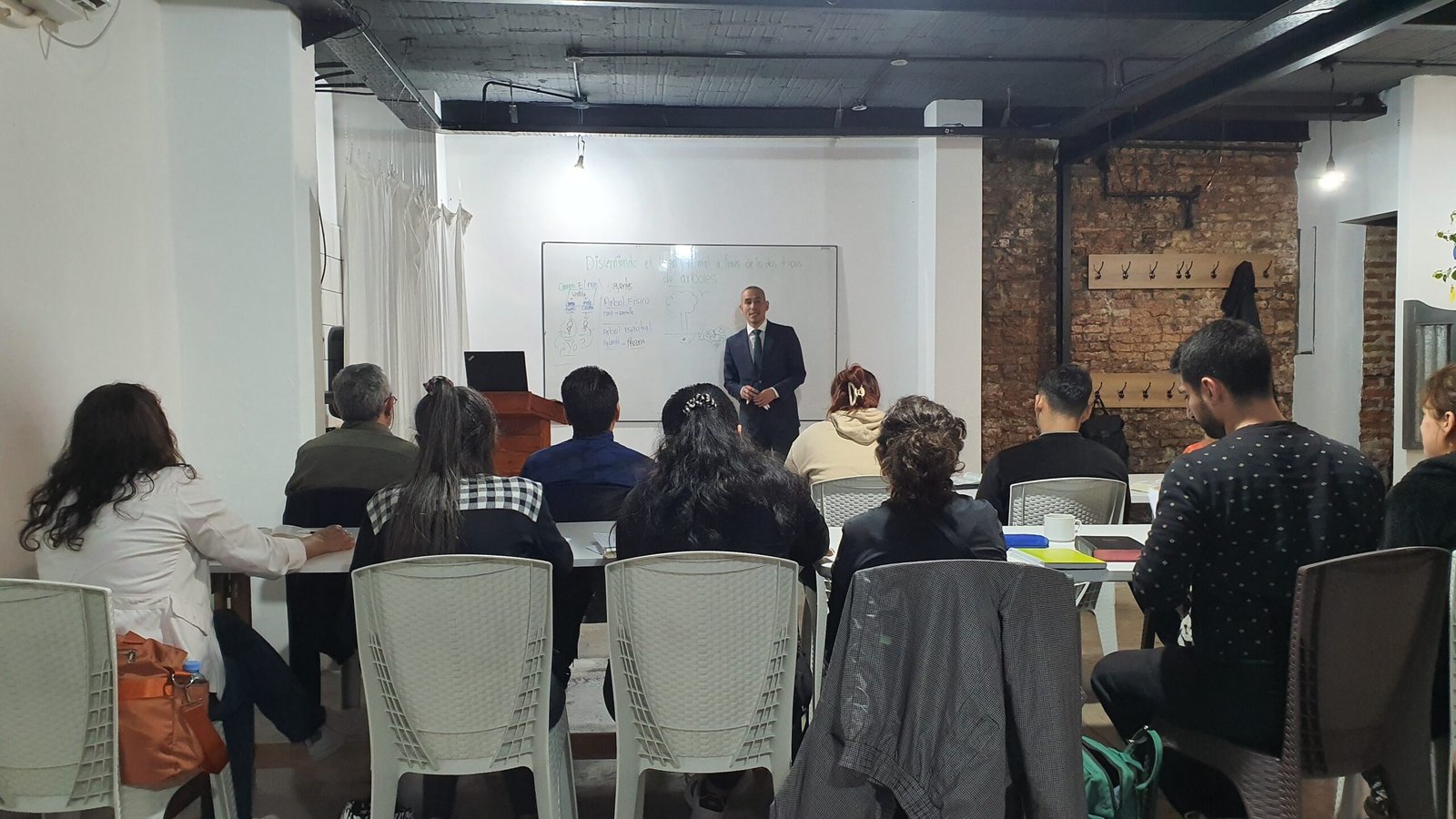
Latin American expansion also shows that virtuality did not produce a weakly delocalized community, but rather a different form of territorial implantation. In Argentina, the initial stage was predominantly online and allowed people from different provinces to join. Later, the opening of a center in Palermo, Buenos Aires, intensified the in-person dimension: services, classes, and open meetings are now held there. In Panama, the shift from Zoom to physical gathering appears closely tied to local growth and the maintenance of a space of their own. In El Salvador, the community is organized regionally, with in-person services and virtual connections for those who live far away. In Mexico, the establishment of a physical meeting point in Hidalgo is presented as the beginning of a national church still in formation. In-person participation does not cancel out virtuality but rearticulates it: it allows members to sing together, share food, gather after services, and give the community a recognizable embodied form.
Yet this gradual learning process is interpreted differently by members and critics. In some introductory settings, the name Shincheonji and the figure of Lee Man Hee are not introduced at the outset. Members and course leaders explain this sequencing as a way to allow participants to engage with the biblical material and assess the teaching before encountering the strongly negative representations circulating about the organization and its leader. They also distinguish the initial purpose of the courses—enabling a broader public to understand the Bible—from the subsequent decision to join Shincheonji, which they describe as a matter of individual free will.
The material gathered so far does not suggest that participants are asked to make any commitment before Shincheonji’s identity is disclosed. Those who continue learn the name of the church and the role of Lee Man Hee before deciding whether to become involved. Formal affiliation occurs only after participants have studied Shincheonji’s teachings, history, and organizational identity and completed a detailed examination of these subjects. Whatever questions may be raised about the timing of initial disclosure, this process makes it difficult to characterize eventual membership as uninformed or deceptive.
In Latin America, criticism of Shincheonji circulates through several registers. The press largely retained the public health frame of 2020, linking the group to South Korea’s COVID-19 outbreak while often overlooking that Korean courts, including the Supreme Court, cleared it of all related charges. Evangelical and apologetic criticism is instead doctrinal, invoking heresy, a false gospel, and spiritual deception. Some of these judgments rely more on inherited apologetic categories and second-hand accounts than on sustained engagement with Shincheonji’s teachings. The dispute therefore concerns not only doctrine but also who has the authority to define legitimate biblical interpretation; the movement’s Korean origin further marks it as external and competitive.

Finally, in more recent forums and reports, a secular anti-cult vocabulary appears: psychological control, “brainwashing,” and covert recruitment. These registers do not have the same support or reach. In Argentina, for example, mainstream media seem to have amplified mainly international narratives linked to COVID. At the same time, the more situated local criticism circulates through churches, social media, family conversations, and warnings among believers.
In line with my broader research over the last few years, and from an anthropological perspective, I propose thinking of the category “cult” as a classificatory technology with anticipatory effects. It does not simply describe a pre-existing reality; it organizes perception and predisposes interpretation. Under this classificatory operation, practices that, in other contexts, could be recognized as ordinary forms of religious socialization are displaced into a semantic field shaped by pre-existing stereotypes and unsubstantiated suspicions. The label does not wait for harm to be established: it produces an expectation of harm and, with it, a demand for surveillance.
The interviews show that members are aware of this climate of suspicion and develop strategies to inhabit it. Some avoid naming Shincheonji in initial exchanges, fearing that the other person will search online and encounter what they regard as false information. Others recount episodes of ostracism in their former churches, family warnings, or the circulation of critical videos. One interviewee of Guatemalan origin recalls that, after a pastor warned other parents that she was in a “cult,” her youth community began to isolate her, even though they had known her since childhood. In Argentina, several interviewees report receiving messages expressing concern, criticism, or attempts at dissuasion. Yet these conflicts do not always lead to definitive ruptures. They often give rise to family negotiations, strategic silences, partial explanations, and forms of relational care.
This dimension matters because it helps avoid two forms of reductionism. The first is to treat religious intensity as inherently dangerous once it is filtered through anti-cult stereotypes. The second is to replace that suspicion with an uncritical idealization of the group. Shincheonji is a demanding community with a strong missionary orientation, a prophetic reading of the present, disciplined study, and a transnational structure supporting local growth. Yet these traits do not by themselves establish coercion. What requires analysis is the social process through which certain forms of religious commitment become legible as danger.
In this sense, Shincheonji allows us to observe not only the formation of a transnational community in real time but also how religious freedom is reconfigured in practice when a minority becomes caught in the public grammars of suspicion. Its Bible courses are spaces of learning, sociability, and gradual commitment; its members think of themselves as believers who have found clarity, truth, and purpose. At the same time, its public presence is conditioned by frames that translate these same practices into the languages of recruitment, manipulation, or control.
To conclude, I propose a future line of inquiry that continues to examine how Shincheonji expands and becomes territorialized in Latin America and that pays particular attention to the conditions under which it can appear publicly as a religion and those under which it is displaced toward the figure of the “cult.” What is at stake is a broader problem: how contemporary societies manage religious difference when that difference does not appear as stable cultural heritage, but as movement, expansion, conversion, and a dispute over truth.

Maria Vardé graduated in Anthropological Sciences at the University of Buenos Aires and is currently a researcher at the Instituto de Ciencias Antropológicas, Facultad de Filosofía y Letras, Universidad de Buenos Aires (Institute of Anthropological Sciences, Faculty of Philosophy and Humanities, University of Buenos Aires). She has written and lectured on archeology, spirituality, and freedom of religion or belief.