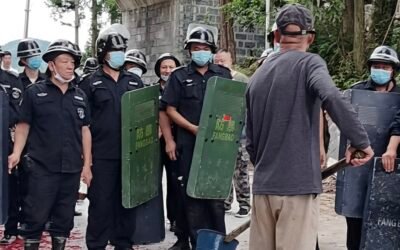
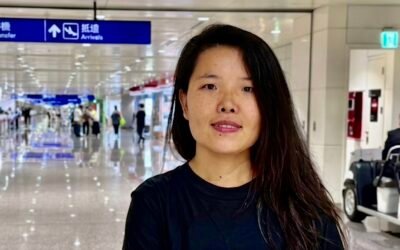
Activists and campaigners pool resources to see the scourge of Uyghur forced labor eradicated in Xinjiang.
by Ruth Ingram
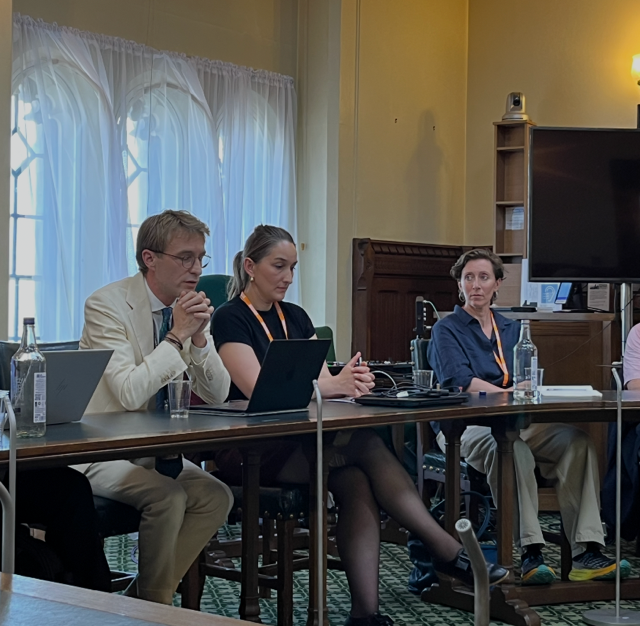
Key advocates recently mobilized in the UK parliament to mount a unified response to apathy and inertia over Uyghur forced labor.
“Nothing has changed,” regretted Rahima Mahmut, since more than one million of her people were rounded up en masse nine years ago and subjected to so-called re-education in a vast network of purpose-built camps around Xinjiang in North West China.
Addressing the roundtable: “From Landmark Case to Legislative Change: Advancing the Fight for Accountability in Forced Labour,” Mahmut, executive director of campaign group Stop Uyghur Genocide, deplored the paralysis that has beset the campaign for justice for her people and to rid her homeland of the scourge of forced labor into which Uyghurs and other Turkic peoples have been conscripted in the intervening years.
Many of the camps might have closed, but this has not meant freedom. Countless individuals have since “graduated” to illegal jail terms. Prominent researcher Adrian Zenz finds that hundreds of thousands of Uyghurs are being channeled into forced agricultural labor to prop up Xinjiang’s supply chains, leaving many without land and pressured to surrender farming rights to Chinese mega-agribusinesses.
Cotton is a major danger area for Uyghurs: Xinjiang produces 20% of global cotton for brands including H&M, Uniqlo, IKEA, Adidas, Nike, and Muji. The minerals, automotive, solar, electronics, and construction materials industries are also riddled with forced labor.
These are the products that feed shamelessly into the UK supply chains, Mahmut said, as she pressed for “urgent action” to “stop this evil.”
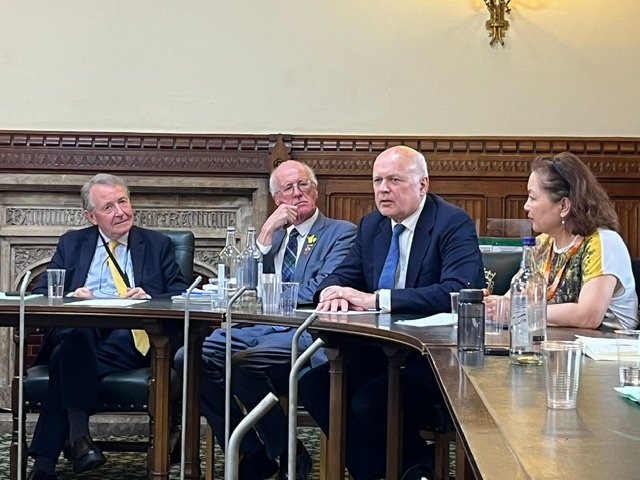
She criticized the UK government’s refusal to declare a genocide against her people. She urged parliamentarians and legal experts, together with journalists, researchers, trade unionists, and civil society representatives, to pursue collective action against forced labor in UK supply chains.
According to Dearbhla Minogue, senior lawyer at Global Legal Action Network (GLAN), despite a 2024 landmark victory in the UK courts banning cotton products from the Xinjiang region from entering the UK and Ireland, high streets are still flooded with cheap cotton goods.
The historic legal precedent was a world first, pitting the World Uyghur Congress against the National Crime Agency on the basis that the UK government was profiting from the proceeds of crime in allowing cotton products from the Uyghur region to enter the UK. After losing in the first round, the WUC won the case on appeal, a judgment set to criminalize retail giants that continued to import goods produced with forced labor and expose them to prosecution. But two years down the line, supply chains remain tainted, and enforcement is woefully inadequate, Minogue said. Companies must be pressured to clean up their supply chains or face criminal liability under the Proceeds of Crime Act.
“Financial Times” journalist Alison Killing outlined the human cost of harsh jail terms, forced labor and cultural destruction in the Uyghur region in her latest investigation. She told the panel that Xinjiang’s genocide had “evolved, not ended,” with detention capacity at 627,000 without overcrowding, giving the region the highest potential custodial rate, relative to its size, in the world.
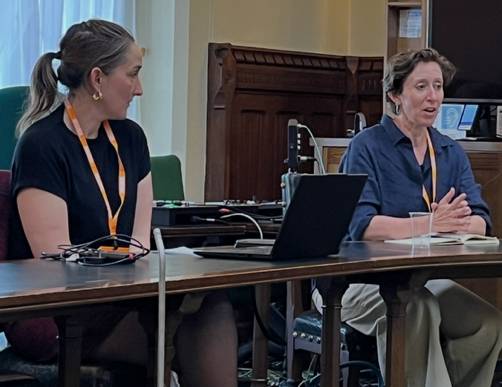
The human cost is devastating. Children are taken from their families and put in boarding schools. Adults are moved around through labor transfer programs. Language loss is breaking communication between parents and grandparents. Together, this is exacting a heavy toll on Uyghur culture and community life. And exiled Uyghurs face threats of reprisals against family at home for speaking out. “Transnational repression is very successful,” said Killing.
Mark Goldring, Interim Chair of Anti-Slavery International, said that the UK’s position as a global leader has faded and that the country risks “becoming a dumping ground” for forced Labor goods if laws are not enforced. If the USA, with its Uyghur Forced Labor Prevention Act, and the EU and Canada can impose import controls on the region, then the UK should too, he said.
Chinese polysilicon is now excluded from the USA, and we need this for the UK too, he said.
Goldring quoted Professor Laura Murphy, an authority on forced labor in Xinjiang, who told the Joint Committee on Human Rights in January 2025 that the UK’s border system is “effectively letting forced Labour goods through unhindered” because there is “no comprehensive import ban.”
Yalkun Uluyol, a China researcher at Human Rights Watch, challenged the government to protect its own companies. It must be alerted to the risk to UK businesses posed by allowing goods made with forced Labor into the UK. “The Labour environment in China is devastating,” said Uluyol. “There is no protection for workers, and there are no unions.”
Quoting Laura Murphy’s research, he said that not only are 100 car manufacturers and parts suppliers worldwide linked to forced labor, but global aluminum supplies are implicated as well. “Governments must protect their own manufacturers and those who purchase the products,” he said.
Luke de Pulford, co-founder and Executive Director of the Inter-Parliamentary Alliance on China (IPAC), urged campaigning groups to call out and contest existing legislation where it falls short on implementation. The Proceeds of Crime Act 2002, the Great British Energy Act 2025, and the Health and Social Care Act 2022 all contain lofty aspirations to tackle forced labor, but none have been challenged in the courts.
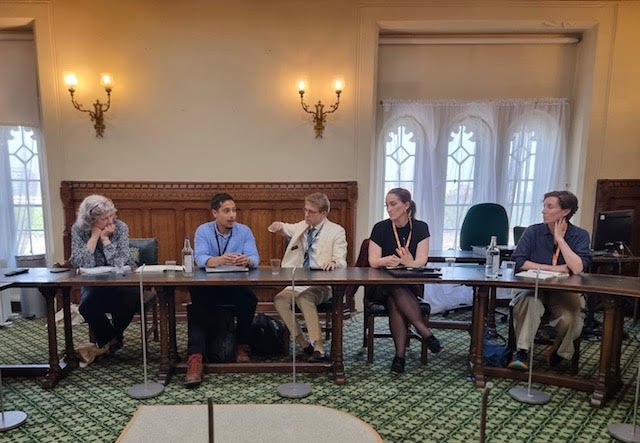
Lord David Alton, co-chair, said the laws existed to prevent the proceeds of forced labor from entering this country. “Where it can be demonstrated that solar panels from Xinjiang are made from the proceeds of forced labor, it is clear that the UK will be benefiting from the proceeds of crime,” he said.
Detailed tracing of supply chains was difficult and beset by barriers. Still, it was vital, said Nicola McBean, Executive Director of the Rights Practice, whose NGO has researched the Chinese penal system and systemic issues in the Uyghur region. “Forced labor in solar panels might not be in the factories in East China, but it will be in Xinjiang, where the elements are dug out of the ground,” she said.
Sir Iain Duncan Smith condemned governments for “paying lip service” to the legislation. “There’s an assumption that China is very difficult to do anything about,” but tackling China needed a “massive will and determination.” It is very important because China is an “egregious offender,” he said.
Cost should not be a factor, he said. Our government refuses to step in “because costs will go up.” “Everyone is opposed to slave labor, but they turn a blind eye.” “We shouldn’t accept any supply chain that has forced or slave labor in it,” he said. “We are allowing our industrial base to be destroyed because we can’t compete with slave labor.”
“This is not difficult to do. The US manages it.”
The truth is, he said, that “the Foreign Office doesn’t want to go against China. We’re scared of losing cheap trade and making China unhappy. But China must go on the dock.”
Public opinion should be mobilized, he said: “We look away too often.” “Abolishing slavery took 40 years, but in the end, the public had to start boycotting goods from the plantations. Sugar was boycotted, and this had a big effect. Once people understand something, they will decide it,” he said.
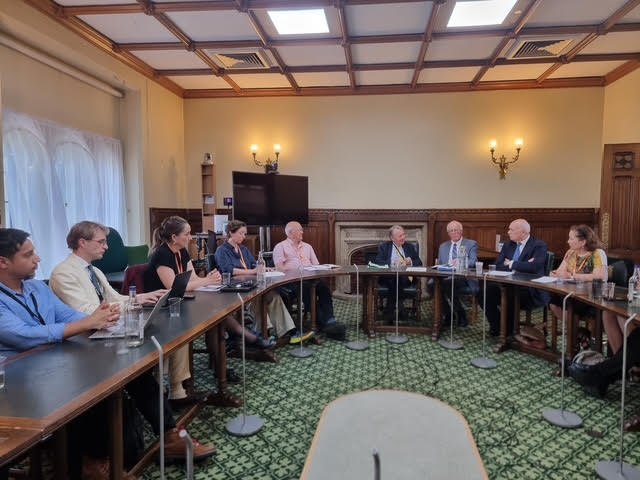
Lord Polak, co-chair, urged advocates not to give up pressing the government. “Getting the government to focus is difficult,” but it can be done with persistence.
Speaking to “Bitter Winter,” Rahima Mahmut was encouraged by the energy and commitment of groups and individuals determined to end the scourge of forced labor in her homeland. “Since 2017, we have worked tirelessly to expose the reality of the Uyghur genocide, from grassroots awareness-raising to parliamentary advocacy, legal action, and international campaigning,” she said.
“While the UK has yet to recognize the genocide, introduce robust import controls, or fully hold perpetrators accountable, we have secured important progress through the determination of survivors, campaigners, researchers, lawyers, and principled parliamentarians such as Lord Alton and Sir Iain Duncan Smith,” she said.
“The round table event was another reminder that this issue is not going away. We will continue to build alliances, pursue accountability, and press for meaningful action until the UK matches its words with action and justice is delivered for the Uyghur people.”

Ruth Ingram is a researcher who has written extensively for the Central Asia-Caucasus publication, Institute of War and Peace Reporting, the Guardian Weekly newspaper, The Diplomat, and other publications.