Growing humanitarian concerns and troubling prosecutorial conduct demand urgent action through an official mechanism that authorities are already reviewing
by Massimo Introvigne
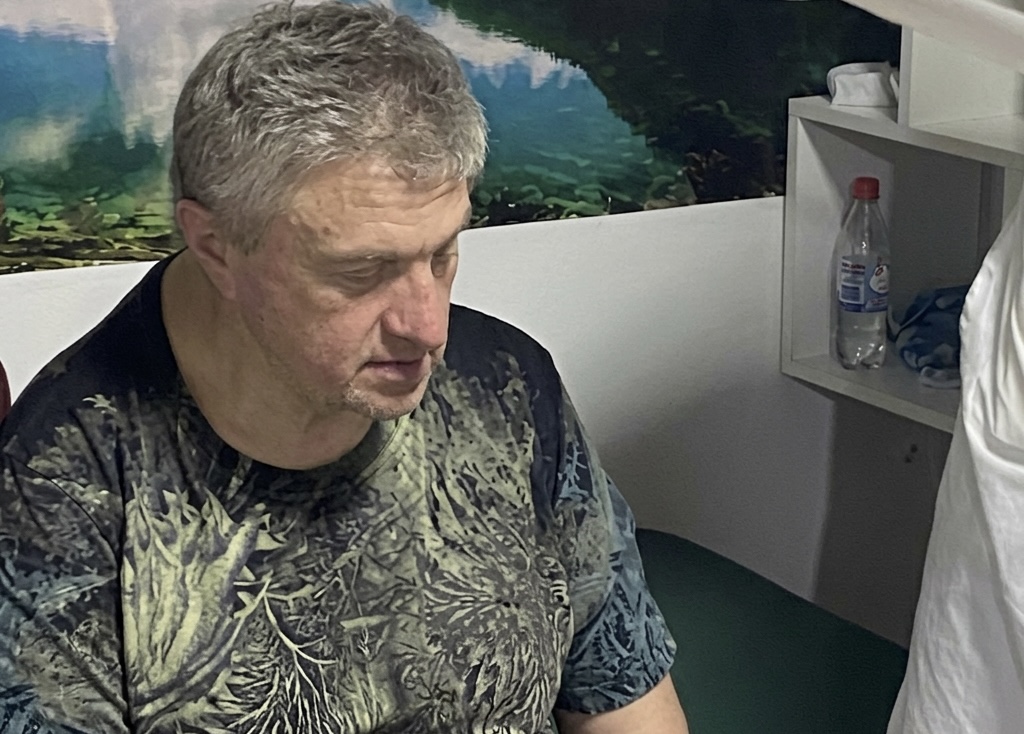
The case of Russian dissident and spiritual teacher Konstantin Rudnev has reached a point where silence carries consequences for a human life. His health has deteriorated to such an extent that any return to prison may expose him to irreversible harm, a risk repeatedly acknowledged by medical professionals and documented in court filings. The Court of Cassation has revoked his house arrest and ordered a new forensic medical examination before transferring him to jail again, a decision that has generated deep concern among observers who have followed the long sequence of procedural irregularities surrounding this case.
Rudnev’s trajectory is well known to readers of this magazine. After years of persecution in Russia, where independent spiritual movements have often been targeted through campaigns of stigmatization, he sought refuge abroad and lived quietly in Argentina. His arrest in Bariloche emerged from a chain of misunderstandings and was later sustained by prosecutorial theories that dissolved when examined by experts. His lawyer has repeatedly stated that the accusations rely on elements unrelated to the facts under investigation and include material imported from Russia without relevance to the Argentine proceedings.
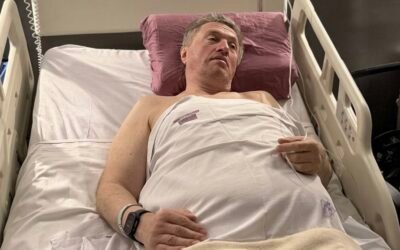
The humanitarian dimension of the case has become increasingly urgent. Rudnev has undergone surgery, experienced interruptions in medical care, and endured prolonged detention that has left him physically fragile. A transfer to a high‑security facility would place him in an environment he is no longer capable of surviving. This is the central concern raised by human rights organizations in their recent appeal to the Argentine Ministry of Justice, the Ministry of Security, and the Office of the President.
Attention has also turned to the conduct of Prosecutor Fernando Arrigo, whose role in the Rudnev case has been examined in a psychological study by Italian scholar Raffaella Di Marzio. Her analysis describes behavioral patterns that reveal an obsessive prosecutorial posture, with consequences that extend beyond a single defendant. Arrigo has been criticized for his handling of the case of Mapuche leader Facundo Jones Huala, where prolonged preventive detention and disregard for humanitarian considerations have also been reported. The recurrence of these patterns across unrelated cases has raised questions about the exercise of prosecutorial power and the risks it poses to vulnerable individuals.
Concerned individuals and NGOs have a mechanism through which statements can be submitted directly to the Argentine Prosecutor’s Office via an official form available at https://denuncias.fiscalias.gob.ar/es. One such submission has already been incorporated into the court record and is being considered by the judges. This demonstrates that the authorities are reviewing these statements and that public intervention through this channel can have a concrete impact on the proceedings.
For this reason, readers of Bitter Winter, as well as NGOs and human rights advocates, are encouraged to use this form to express their concerns. The situation has evolved into a genuine humanitarian crisis. A man in fragile health faces the possibility of being returned to a penitentiary environment that may endanger his life. The form offers a lawful and effective way to bring these concerns directly to the attention of the authorities responsible for evaluating the case.
Those who choose to submit a statement may call for an investigation into the actions of Prosecutor Fernando Arrigo, for his removal from cases in which he has demonstrated bias and cruelty, and for his dismissal from a position in which his decisions have caused suffering to individuals already in vulnerable conditions. They may also urge the competent authorities to ensure that Rudnev receives the medical care he requires and that no measure is taken that could place his life at risk.
This appeal is addressed to all who care about human dignity, the protection of innocent lives, and the rights of religious, spiritual, and cultural minorities. The mechanism exists, it is functioning, and it has already produced an effect. Those who wish to support Rudnev and other defendants exposed to similar dangers now have a direct means to do so. The moment calls for solidarity expressed through responsible action, and the official form offers a channel through which that action can reach the institutions that hold the power to prevent further harm.

Massimo Introvigne (born June 14, 1955 in Rome) is an Italian sociologist of religions. He is the founder and managing director of the Center for Studies on New Religions (CESNUR), an international network of scholars who study new religious movements. Introvigne is the author of some 70 books and more than 100 articles in the field of sociology of religion. He was the main author of the Enciclopedia delle religioni in Italia (Encyclopedia of Religions in Italy). He is a member of the editorial board for the Interdisciplinary Journal of Research on Religion and of the executive board of University of Pennsylvania Press’ Nova Religio. From January 5 to December 31, 2011, he has served as the “Representative on combating racism, xenophobia and discrimination, with a special focus on discrimination against Christians and members of other religions” of the Organization for Security and Co-operation in Europe (OSCE). From 2012 to 2015 he served as chairperson of the Observatory of Religious Liberty, instituted by the Italian Ministry of Foreign Affairs in order to monitor problems of religious liberty on a worldwide scale.