What is happening in Argentina is part of a global trend in which trafficking laws are used against spiritual minorities.
by Massimo Introvigne
Article 2 of 2. Read article 1.
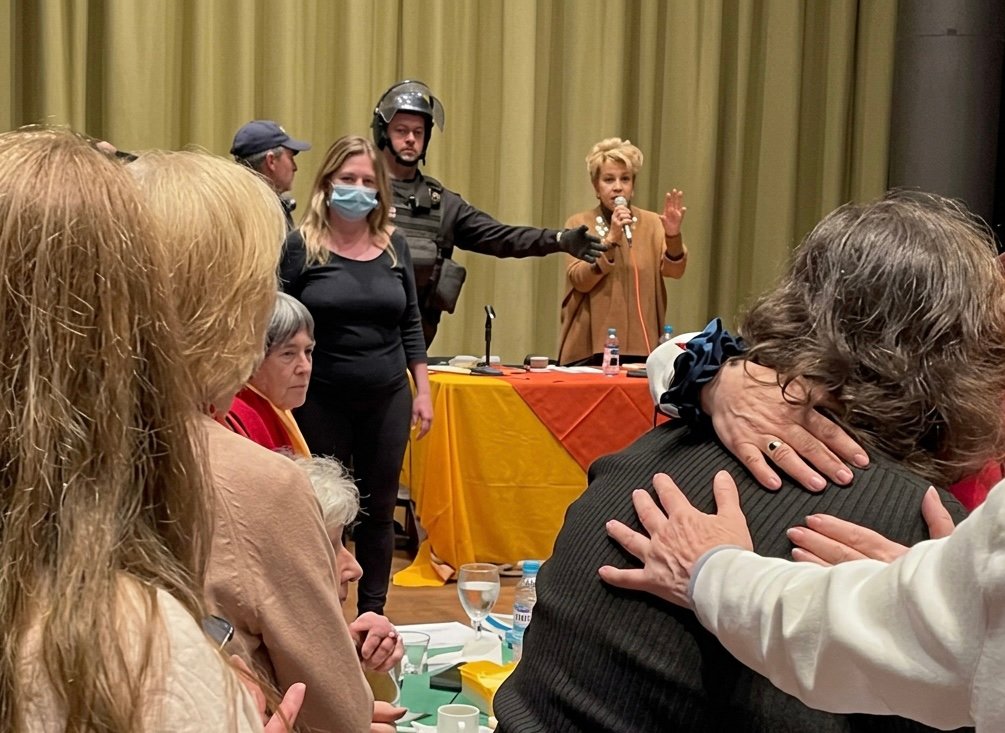
In the latest developments of the case of the Buenos Aires Yoga School in Argentina, particularly troubling is the treatment given to the autonomy of adults. Years after the raids, the alleged victims continue to deny being victims, and their forensic evaluations—conducted by the Forensic Medical Corps of the Argentine Supreme Court and party-appointed experts—concluded that they have full mental capacity. Moreover, previous expert reports conducted in an earlier investigation reached similar conclusions, and all charges were dismissed. Nevertheless, the proceeding continues to rest on the theory that these adults were incapable of giving genuine consent to being part of the group because of supposed “coercive persuasion.”
This reflects an increasingly expansive and controversial use of the concept of vulnerability. In its legitimate formulation, the doctrine of vulnerability exists to protect people from exploitation, trafficking, and abuse. But in recent years it has been documented that, in Argentina, the concept acquires a dangerous elasticity in cases involving spiritual or religious minorities. Courts begin to assume that adults who make unconventional decisions cannot possess genuine autonomy. The reasoning is circular: if they joined a group labeled as a “cult,” it must be because they did not act autonomously—although the experts say otherwise—and then that alleged lack of autonomy proves that the group is a “cult.” The result is a profound form of paternalism and discrimination. Individuals who insist that they acted voluntarily are treated as unreliable narrators of their own lives.
This pattern has appeared before in proceedings driven by anti-cult discourses in different parts of the world. For decades, sociologists of religion and human rights specialists have warned about the emergence of “moral panics” around nontraditional religious or spiritual communities. Within those interpretive frameworks, ordinary hierarchical structures, charismatic leadership, intensive study, community mechanisms of economic assistance, or heterodox beliefs come to be reinterpreted as evidence of manipulation in themselves.
The BAYS case presents several features compatible with this dynamic. Moral panic also appears in the way prosecutors sought to reinterpret the psychological expert evaluations. Forty-one days after the deadline for filing observations had expired, experts appointed by the Public Prosecutor’s Office submitted what they called a “supplementary report” to the expert evaluations, although they had previously signed the conclusions of the Forensic Medical Corps without dissent. In that late submission, they claimed that the women were “individually capable” but “incapable as a group.”
Beyond the serious concerns that this kind of “group analysis” raises for individual rights, the evidentiary problem is even more basic: the records show that they signed the report without having interviewed many of the persons evaluated, without following any recognizable protocol, and without opening the mandatory technical discussion with the members of the Forensic Medical Corps.
Sandra Victoria Abudi—co-author, among other works, of “Forensic Practice Manual for Psychology Professionals”—later evaluated the original expert assessments of the Forensic Medical Corps and the prosecution’s “supplementary report.” She also personally interviewed the alleged victims. On that basis, she sharply criticized both the procedure followed and the conclusions advanced in that report.
According to Abudi, the prosecution experts relied on their own hypothesis—the existence of “coercive persuasion”—to disqualify as “inconsistent” the women’s statement that their membership in BAYS had been free and voluntary. The problem, she noted, was that this hypothesis was “absolutely contrary” to the results of the Forensic Medical Corps’ evaluations. Nor did it arise from indicators obtained through interviews or psychological techniques. In her words, the experts had “no scientific basis” for those claims. For Abudi, “It seems that third-party influences led them to write something strategically convenient, but not grounded in science or in the study of psychology. And that is a serious fault.”
Human trafficking legislation arose to combat real horrors: sexual exploitation, labor exploitation, practices analogous to slavery, and organized abuse. But the moral legitimacy of those norms also creates a temptation. Their enormous symbolic force makes it easier for them to be used expansively in contexts where the evidence of actual coercion is ambiguous or contested.
That risk increases even further when media sensationalism, public alarm, and anti-cult narratives converge.
In the BAYS case, for example, some journalists continue to repeat accusations that were proven false years ago: that there were “sexual encounters in the apartments of the building”—although it was shown that these were the privately owned residences of some of the students, which is why they were never closed down—; that “the sexual encounters were videotaped,” which forced the police to review more than 8,200 hours of video before finally disproving it; that there were 200 victims, although the only seven women regarded as such by the judge have denied it for four years; that there were minors among them, although their ages at the start of the case ranged from 36 to 60; that some “entered when they were minors,” although a final judgment determined that no unlawful act had existed at that time; and so on.
Added to this is another media insistence: some outlets continue to present the case as “sent to trial,” as if that expression by itself closed any evidentiary discussion. But that decision to send the case to trial had already been annulled, as “Bitter Winter” reported, because of substantial problems in the assessment of the evidence and because the investigation had been closed prematurely. Its current repetition only shows the capacity of the prosecution narrative to persist despite repeated refutation. All of this reinforces social pressure against the group.
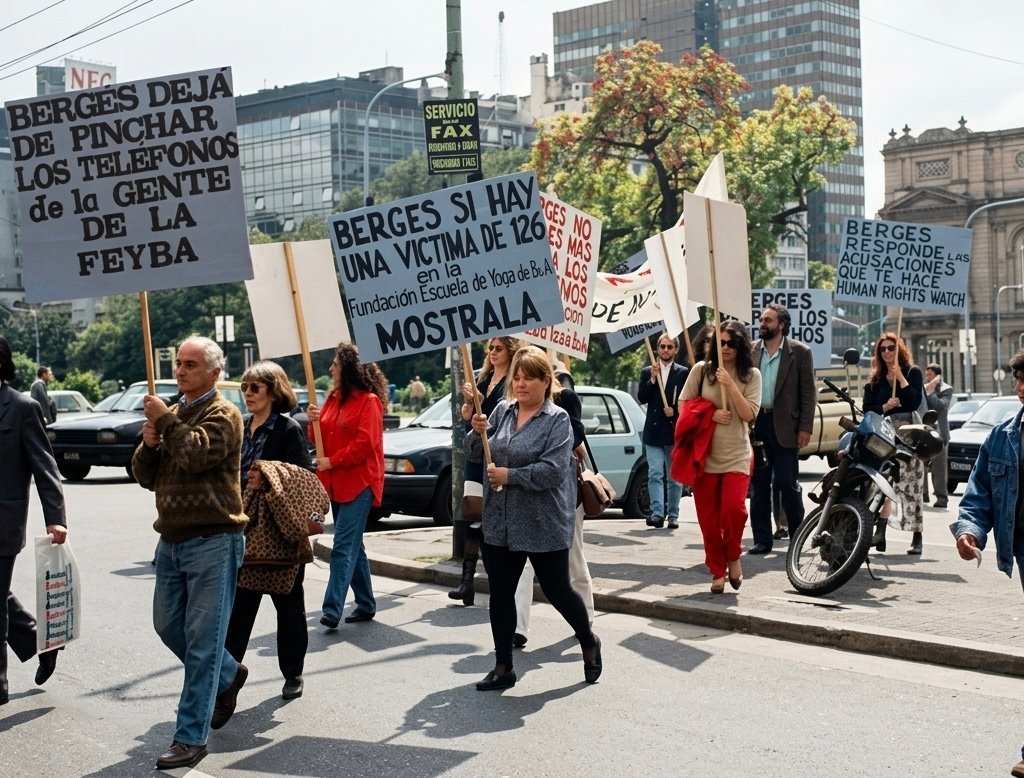
It is therefore unsurprising that the BAYS case has attracted international attention. CAP-LC, an NGO with consultative status before the United Nations Economic and Social Council (ECOSOC), submitted a written statement criticizing the way in which the investigation was conducted in its initial stages and warning of possible human rights violations. Likewise, Human Rights Without Frontiers documented concerns related to due process, freedom of belief, and the treatment of the defendants.
None of this necessarily implies that all the accused are innocent or that criminal organizations cannot exist within spiritual settings. Religious, spiritual, or philosophical institutions are not immune to abuse. But constitutional democracies cannot allow criminal law to operate on the basis of ideological presumptions: the burden of proof remains with the State, which must demonstrate concrete criminal conduct through verifiable evidence, not infer guilt from personal ties or shared philosophies.
The danger posed by the Buenos Aires Yoga School case transcends Argentina. In many contemporary democracies, there is growing pressure to expand criminal-law categories in response to moral panic. Concepts such as “trafficking,” “coercive control,” “psychological manipulation,” and “vulnerability” are invoked with increasing breadth and without sufficiently precise conceptual limits. Without rigorous evidentiary discipline, such concepts can become instruments for punishing people who hold different views.
The central question raised by these proceedings is not only whether crimes were committed. The deeper question is whether modern legal systems retain the capacity to distinguish between genuine exploitation and ideological suspicion. That distinction is essential. When courts begin to treat heterodox communities as presumptively criminal, freedom of belief is placed at risk.
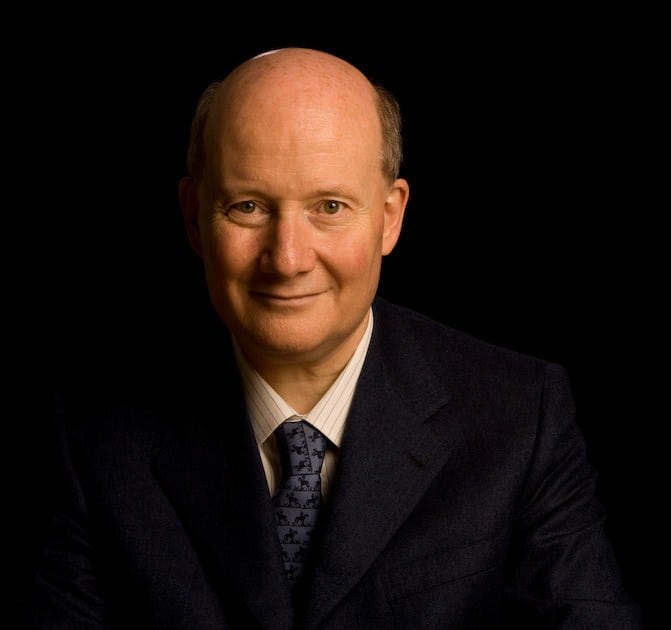
Massimo Introvigne (born June 14, 1955 in Rome) is an Italian sociologist of religions. He is the founder and managing director of the Center for Studies on New Religions (CESNUR), an international network of scholars who study new religious movements. Introvigne is the author of some 70 books and more than 100 articles in the field of sociology of religion. He was the main author of the Enciclopedia delle religioni in Italia (Encyclopedia of Religions in Italy). He is a member of the editorial board for the Interdisciplinary Journal of Research on Religion and of the executive board of University of Pennsylvania Press’ Nova Religio. From January 5 to December 31, 2011, he has served as the “Representative on combating racism, xenophobia and discrimination, with a special focus on discrimination against Christians and members of other religions” of the Organization for Security and Co-operation in Europe (OSCE). From 2012 to 2015 he served as chairperson of the Observatory of Religious Liberty, instituted by the Italian Ministry of Foreign Affairs in order to monitor problems of religious liberty on a worldwide scale.