New measures now focus on reshaping the upbringing of minors from believing families, raising serious concerns about parental rights and ideological neutrality.
by Patricia Duval. Article 2 of 4. Read article 1.
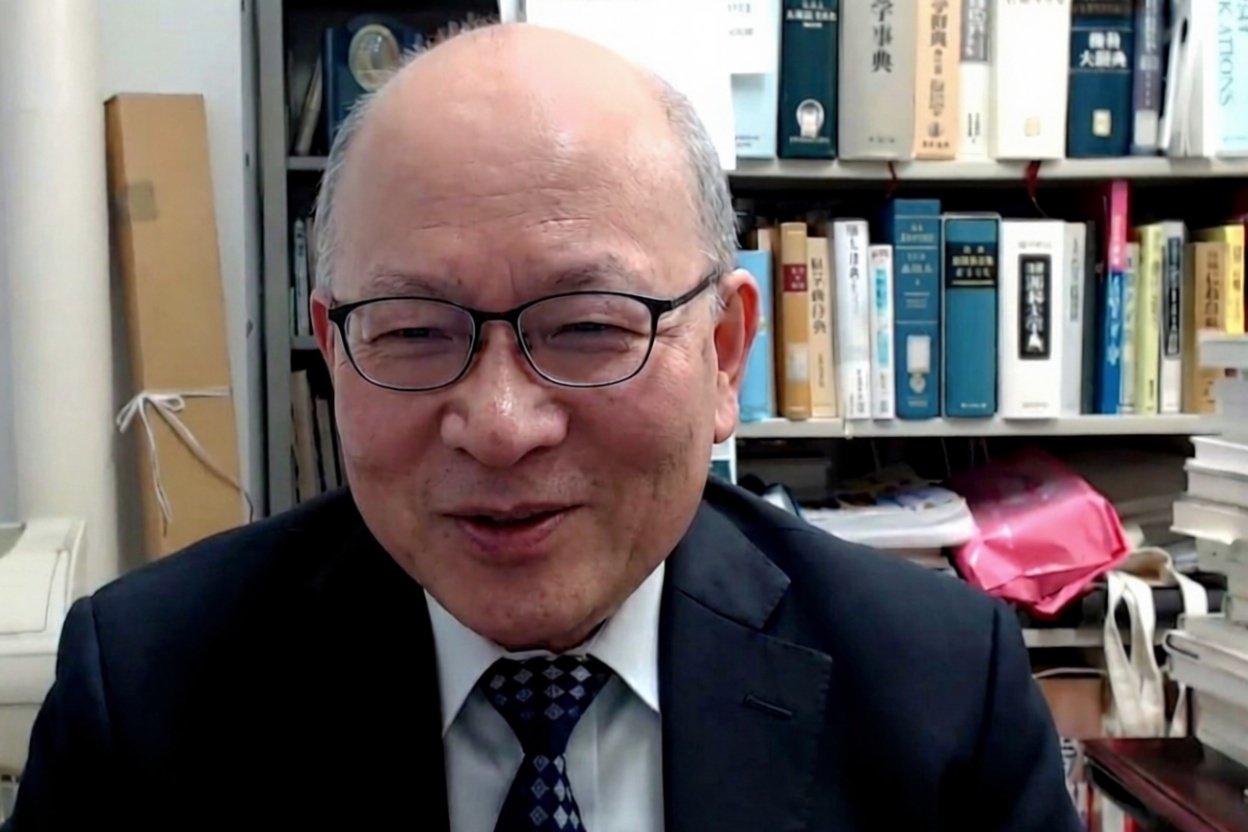
Yoshihide Sakurai, another leading figure in the fight against heresy and “cults” in Japan, a professor of sociology at Hokkaido University, and a Nichiren Buddhist priest, recently gave an interview to the Asahi Shimbun on April 18, 2026. He stated that he had long recommended the dissolution of the Church and was pleased that it had been decided, but insisted that this measure was not sufficient. According to him, “the problems associated with the former Unification Church will not simply disappear. Many believers will continue practicing their faith even if the group loses its status as a religious corporation.”
In particular, he expressed concern that second-generation believers “continue to suffer, well into adolescence and adulthood, from the effects of what may be called ‘religious abuse’ during their formative years”—referring to their religious education—“to the point that their ability to make free decisions and even their grasp of ordinary social norms may be impaired.” He added that “even when such children do not inherit the faith, they often remain strongly affected by their parents’ cognitive biases and by the worldview of the group.”
According to these advocates of thought control, the problem with parents’ religious beliefs lies in the worldview they instill in their children, which, they argue, prevents them from grasping the social norms and appropriate ways of thinking in Japanese society. This constitutes an unacceptable violation of the right to freedom of conscience and belief, as well as the right to live according to one’s chosen worldview and to raise one’s children accordingly.
It should be noted that it was precisely based on “social norms” that the civil courts ruled against the Church and that the High Court ordered the dissolution of its religious association. However, social norms must under no circumstances be used to determine whether a religion should be tolerated or not. All beliefs deserve protection, and the State has a duty to remain neutral in religious matters, as emphasized by the Human Rights Committee in its General Comment No. 22, which gives directions to State parties to the International Covenant on Civil and Political Rights (ICCPR): “Article 18 protects theistic, nontheistic and atheistic beliefs, as well as the right not to profess any religion or belief. The terms ‘belief’ and ‘religion’ are to be broadly construed. Article 18 is not limited in its application to traditional religions or to religions and beliefs with institutional characteristics or practices analogous to those of traditional religions. The Committee therefore views with concern any tendency to discriminate against any religion or belief for any reason, including the fact that they are newly established, or represent religious minorities that may be the subject of hostility on the part of a predominant religious community.”
In contravention of these international standards, antiheresy and anticult activists are making increasingly extreme statements, calling for measures to prevent the practice of the Unification Church faith and “worldview” in Japan. Relying on the fallacious argument that religious education exerts undue influence, they proposed—and the government adopted—measures aimed at systematically “deindoctrinating” children from the education provided by their parents.
In their Opinion submitted to the government, NNLASS lawyers argued that children do not voluntarily adopt their parents’ religious beliefs because of their young age. Yet it is precisely the right of parents to educate their children in accordance with their own convictions that States Parties, including Japan, have sought to protect through Article 18(4) of the ICCPR: “The States Parties to the present Covenant undertake to have respect for the liberty of parents and, when applicable, legal guardians to ensure the religious and moral education of their children in conformity with their own convictions.”
In violation of this protected right, NNLASS argues that, to enable children to regain their ability to choose “freely,” they must be provided with “critical” information that challenges their parents’ beliefs, so that they can regain their “critical thinking skills.”
In their Opinion submitted to the government in December 2023, these lawyers provided the following description of the “problem” to justify the reeducation of children: “Individuals raised by parents who practice a particular religion—especially when they are forced to adopt that religion or are educated according to its teachings—are generally referred to as ‘second-generation religious followers.’”
“Second-generation followers” are viewed as victims who have not yet realized the extent of their indoctrination and who must be reeducated to turn away from their parents’ faith: “It has also become clear that individuals who grow up in such environments during the formative years of their personality often remain unable to break away from the religious doctrines instilled in them, even after reaching adulthood, resulting in longterm psychological instability and ongoing difficulties in daily life.”
It is clear from this explanation that the goal is to prevent the children of Unification Church members from becoming believers and followers of that religion in the future.
The plan published by the government in January 2024—titled “Proposed Measures to Enhance and Strengthen Support for Victims of the ‘Former Unification Church’”—is entirely designed to reeducate the children of Unification Church members, who are considered victims even though they have not complained about anything. They are presumed to be under mind control and must be deindoctrinated so that they turn away from their parents’ religion.
The argument that second-generation followers “suffer” and need help is a fabrication designed to justify the indoctrination of these children in Japanese public schools. The following developments show that, in reality, if there is any suffering, it is the result of the Japanese authorities’ policy of stigmatization and the destruction of families.

Patricia Duval is an attorney and a member of the Paris Bar. She has a Master in Public Law from La Sorbonne University, and specializes in international human rights law. She has defended the rights of minorities of religion or belief in domestic and international fora, and before international institutions such as the European Court of Human Rights, the Council of Europe, the Organization for Security and Co-operation in Europe, the European Union, and the United Nations. She has also published numerous scholarly articles on freedom of religion or belief.