In a strange turn of events in a case that should have been closed long ago, a new judge copied more than 400 pages from a previous judge removed because of his biases.
by Massimo Introvigne
Article 1 of 2
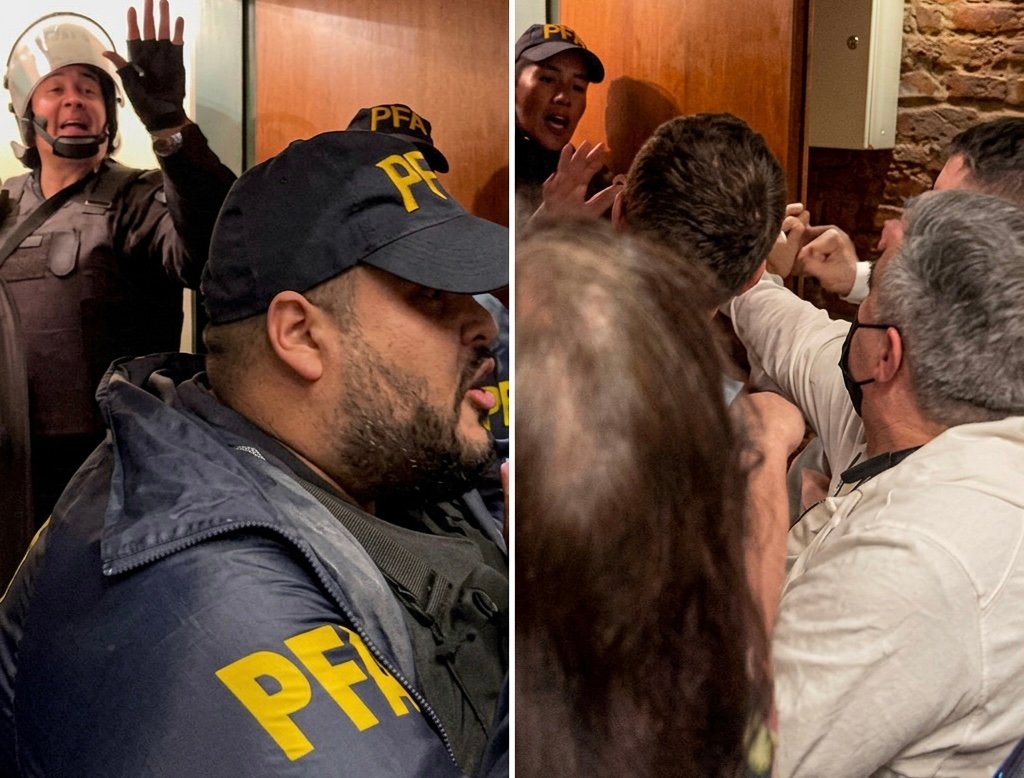
The ongoing criminal prosecution of members of the Buenos Aires Yoga School (BAYS) is becoming something more than a court case. It increasingly appears to be a paradigmatic example of how modern criminal law can extend beyond its constitutional limits when judges, prosecutors, and media actors approach little-known minorities through a preexisting ideological framework rather than on the basis of evidence.
What is at stake is not only the fate of the defendants, whose responsibilities are far from being definitively established, but also the growing tendency to reinterpret ordinary social, educational, economic, and affective relationships as criminal indicia when they take place within communities labeled as “cults” or “coercive organizations.” The recent hearing before the Court of Appeals in the BAYS case exposed, with unusual clarity, the risks of that transformation.
At the center of the controversy lies an extraordinary procedural fact. Just six working days after receiving a case file containing nearly five years of investigation and a vast amount of documentary evidence, Judge María Romilda Servini issued a 491-page order of indictment that literally reproduced a previous decision signed by Judge Ariel Lijo, a ruling that had been annulled following Lijo’s recusal due to concerns about his impartiality. According to the comparative analysis submitted by the defense and by the alleged victims, approximately 94% of the text remained identical.
Criminal justice in a constitutional democracy must operate through individualized reasoning. For this reason, a copied ruling, particularly when it reproduces a previously annulled decision, raises troubling questions as to whether the court actually reevaluated the evidence or simply ratified a narrative that had already been constructed.
That narrative rests on a problematic and highly controversial premise: that BAYS itself constitutes an intrinsically coercive and criminal structure and that, therefore, every interaction developed within it must be interpreted under a presumption of illegality. This is a logical error in which the conclusion precedes the investigation and the evaluation of the evidence. Once that premise is accepted, any ordinary conduct ceases to be ordinary.
Thus, Servini’s ruling (or should we say Lijo’s) treats the teaching of philosophy classes plainly as evidence of “indoctrination” and “depersonalization” (brainwashing). What is problematic about this assertion is that BAYS’s classes and teaching materials were analyzed and classified by the police themselves as “of no interest to the investigation,” because no indication of inducement to commit a crime, coercion, or incitement to prostitution was found in them. Even a former criminal appellate judge attended those classes for years while in office without noticing the existence of criminal indoctrination.
One particularly revealing episode involves a 1989 class cited by Judge Lijo, in which a student asked whether a prostitute could be spiritual. Juan Percowicz, the founding teacher, answered that she could, and that it depended on the woman. According to the judge, this answer to a question from more than 30 years ago was evidence that the classes blurred sexual boundaries. One wonders whether the judge would incriminate all Christian pastors and priests who read to their devotees the Gospel of Matthew 21:31, where Jesus tells the priests of the Temple of Jerusalem that “the prostitutes are entering the kingdom of God ahead of you.”
The judge also omitted that, immediately afterward in the same class, Percowicz had expressly condemned all unwanted sexual activity and equated it with rape, even within marriage (anticipating Argentine law by 20 years). The judge’s omission is significant because it reverses the meaning of the material cited. On the basis of this single interpretation, he came to consider that 39 years of classes were aimed at “depersonalizing” the students.

The ruling also treats administrative tasks, such as paying taxes and teaching classes, as evidence of “human trafficking,” but it does not actually explain how those actions could have contributed to any alleged trafficking activity. Assistance and economic cooperation among members of the group were read as “coercive indebtedness,” but Servini never verified that the members had incurred extortionate debts—because, in fact, neither she nor Lijo summoned the more than one hundred students who had asked to testify.
The treatment of the economic accusations raises the same evidentiary problem: assets, inheritances, professional income, and ordinary transactions were read as indicia of illegality, effectively shifting the burden of proof onto the defendants.
The real estate agencies of a member and a former member of BAYS were described as money-laundering structures despite the absence of illegal transactions. The ruling even treated an unsigned draft real-estate document as evidence of a multimillion-dollar acquisition… determining the illicit origin of a payment that did not exist.
The arguments presented at the appellate hearing repeatedly pointed out these problems. The hearing revealed the logic behind Servini’s decision (or Lijo’s), according to which every lawful act becomes an incriminating element while every absence of participation is proof of hidden authority.
To take an example, in the appealed order, Marcelo Guerra Percowicz (known as “Chelo”) was indicted because he taught classes “intended to depersonalize” students—even though those classes were classified as “of no interest to the investigation,” and attended for years by a criminal appellate judge who never detected anything criminal in them. In a 2003 class, Juan Percowicz said: “I dreamed of a very refined, very beautiful Café, with an original pedagogical center for philosophy, with advanced technology, and, well, Chelo has fulfilled that dream for me.” The judge treated this as incriminating because classes were held there.
He was also indicted because he handled tax filings, performed other legal and tax-related work, and received money from BAYS. Since he was an accountant performing those activities, this would seem more an indication of normality than of criminal activity. Finally, “in addition to this, he continued going to the Café,” which the judge interpreted as proof of his “superlative influence,” although the Café was visited by all members, as well as by their families and friends.
The only thing close to questionable conduct came from a note by a psychologist who was a friend of Carlos Barragán, the 1997 world magic champion and BAYS student whose prosecution has already been dismissed in this same case. According to that note, in 2007 Barragán complained that Guerra Percowicz, then the producer of his magic show, was taking too long to deliver a payment.
Barragán later filed a strongly worded complaint with the court, explaining that the delay had been caused only by a client and not by Guerra Percowicz, who had faithfully fulfilled his obligations, even contributing his own money to pay the staff. Barragán added that Guerra Percowicz had helped prepare the show that won the 1997 World Championship of Magic, and that he had nothing to claim against him.
The same inversion governed what Guerra Percowicz did not do. He was not interviewing students and did not take part in working groups, which the judge cited as evidence of “a higher hierarchy” and a leading role; he had only two students out of the school’s 179. None of his students is mentioned as a victim. In ordinary evidentiary terms, these facts would point in the opposite direction: they describe someone who was not directing the school, not forming students on any significant scale, and not involved in its daily organization.
This was confirmed by the wiretaps, which do not show him issuing instructions or receiving leadership-related inquiries. His communications involved only personal matters, health issues, and birthday greetings. Even the conversations attributed to other members confirm that distance, noting that he did not participate, that he spoke only with close friends, and even that it would be better if he did not teach classes again.
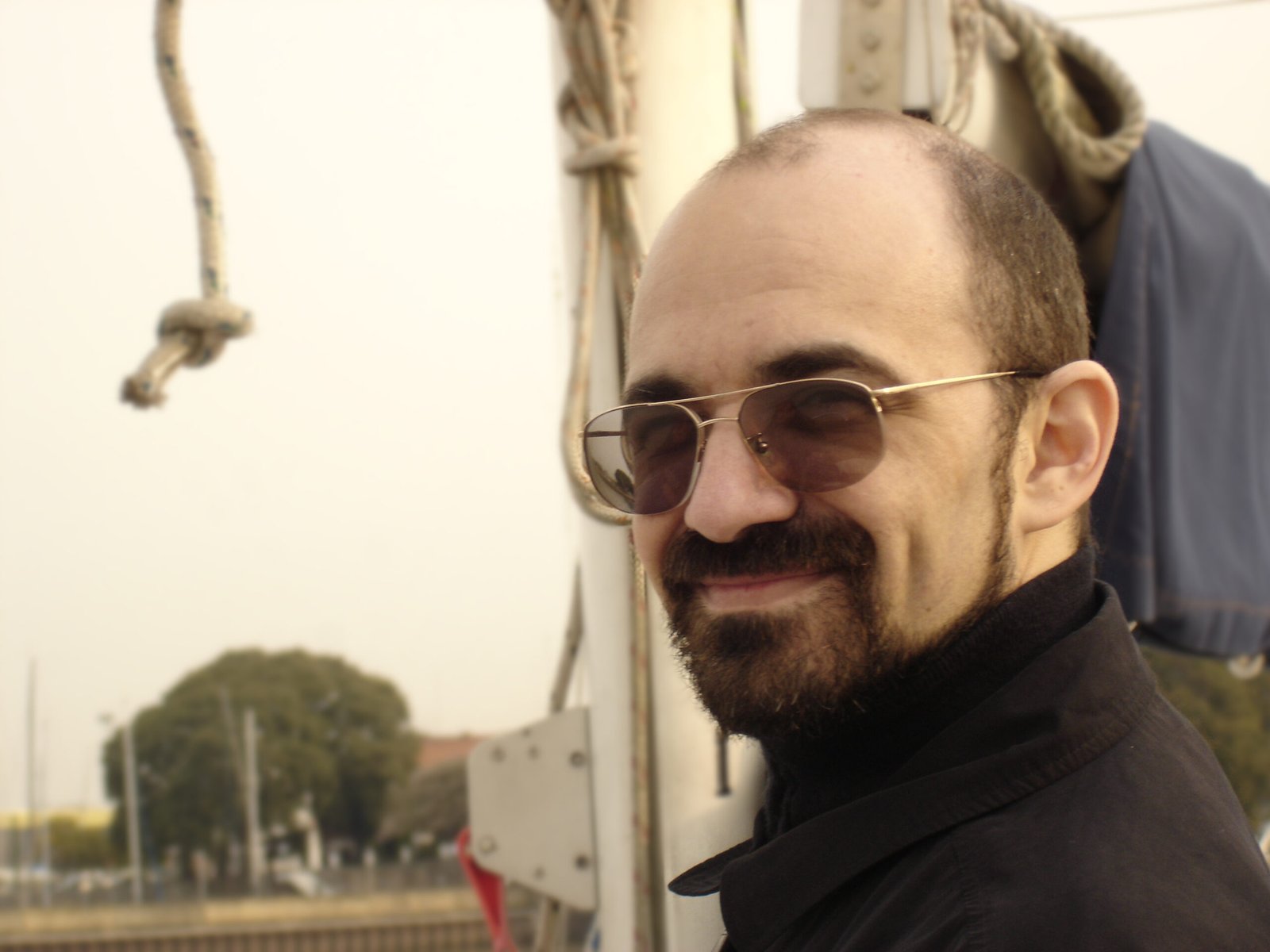
Against that background, the only call involving Guerra Percowicz cited in the appealed order becomes particularly revealing. Lijo/Servini claims that “His participation can be observed up to the year 2022, since the court-ordered wiretaps in the case file show that in that year Guerra Percowicz gave his opinion to Juan Percowicz regarding updated instructions the latter had written for when he died, ‘concerning the administration of the school.’” Yet the ruling does not reproduce the call. Its content points in the opposite direction. We reproduce it here briefly:
“Chelo: Hi, Dad. Do you have a minute?
Juan: Yes.
C: I’m a little worried; I received the note you sent me. Points 2 and 3 [replacement of Guerra Percowicz by other people as successors in the leadership] are a confirmation of what has been happening for some time (…), but point 1 [granting promotions by vote] worries me. Let me explain: you always kept the final decision on hierarchies for yourself; here, not only do you not have the final decision, but you also did not keep even an extra half-point for tie-breaking cases. (…) What worries me very much is that you are doing this considering that you will not have command tomorrow. You are leaving guidelines in place for that case. That worries me a lot. (…) Is there any health problem, Dad? Is there something worrying you?
J: No, no, no, I feel very well, but I think something will happen to me someday and I want to leave it a little organized.
C: One can organize it at forty. My question is: is there any basis for this? (…) All my life I saw you make twenty-year plans. And this worries me because it is not a twenty-year plan.
J: The truth is that I am preparing things so that it will be easier for everyone, right? For now I think that nothing will happen in twenty years, but I don’t know.
C: Can I rest assured that you are in good health?
J: Yes, yes, I’m perfectly fine.
C: (…) What you said in point two, why did you make it official now if it has been working that way for ten years? You are thinking about not being here; I’m worried.
J: No, no, no, it’s not that I am worried; it is just in case.
C: I can rest assured if that is so.”
That is the “opinion” that the appealed order uses as proof that “his participation can be observed up to the year 2022” and of his “high level of leadership”: a conversation in which Guerra Percowicz, after expressing agreement with the formalization of his retirement that had taken place more than 10 years earlier, deduces that Juan Percowicz is thinking about his death and asks him about his health.
It is now understandable why the call is not transcribed.
A far from minor point is that the document to which the conversation referred was not ignored by the prosecutors. It was cited by the Public Prosecutor’s Office itself in the 2024 request for referral to trial, where it was stated that Juan Percowicz would be replaced by other people. In other words, the document that supposedly demonstrated Guerra Percowicz’s continued role in leadership set out exactly the opposite in writing: he would not be in charge of the leadership, nor of promotions, nor of any relevant institutional aspect.
The example of Guerra Percowicz is especially revealing because he is not a peripheral defendant used as a minor case. He did not participate in any conversation or record evidencing activities related to sex, prostitution, coercion, trafficking, or illegal operations. The searches conducted at his home and the examination of his electronic devices likewise revealed no criminal activity. Nevertheless, the ruling continued to present him as a decisive figure within a criminal organization. Precisely for that reason, the evidentiary contrast is more serious.
If the case chosen to demonstrate that supposed leadership rests on the elements described above, the problem is no longer that the evidence is insufficient. The problem is that the available evidence contradicts the hypothesis that is being advanced.
All of this is compatible only with author-based criminal law, focused on the defendant’s identity and associations rather than on proven criminal acts.

Massimo Introvigne (born June 14, 1955 in Rome) is an Italian sociologist of religions. He is the founder and managing director of the Center for Studies on New Religions (CESNUR), an international network of scholars who study new religious movements. Introvigne is the author of some 70 books and more than 100 articles in the field of sociology of religion. He was the main author of the Enciclopedia delle religioni in Italia (Encyclopedia of Religions in Italy). He is a member of the editorial board for the Interdisciplinary Journal of Research on Religion and of the executive board of University of Pennsylvania Press’ Nova Religio. From January 5 to December 31, 2011, he has served as the “Representative on combating racism, xenophobia and discrimination, with a special focus on discrimination against Christians and members of other religions” of the Organization for Security and Co-operation in Europe (OSCE). From 2012 to 2015 he served as chairperson of the Observatory of Religious Liberty, instituted by the Italian Ministry of Foreign Affairs in order to monitor problems of religious liberty on a worldwide scale.