The path to full freedom of association in France was long and not easy. What was achieved there has inspired scholars of the Japanese Constitution.
by Manabu Ishizaki
Article 3 of 6. Read article 1 and article 2.
1. The French Legal System and Public Law Scholarship
Next, I will outline—drawing on Inoue’s research—the legal system, constitutional court decisions, and public law theories concerning freedom of association in France, to which Inoue refers.
(1) The 1901 Law on Associations
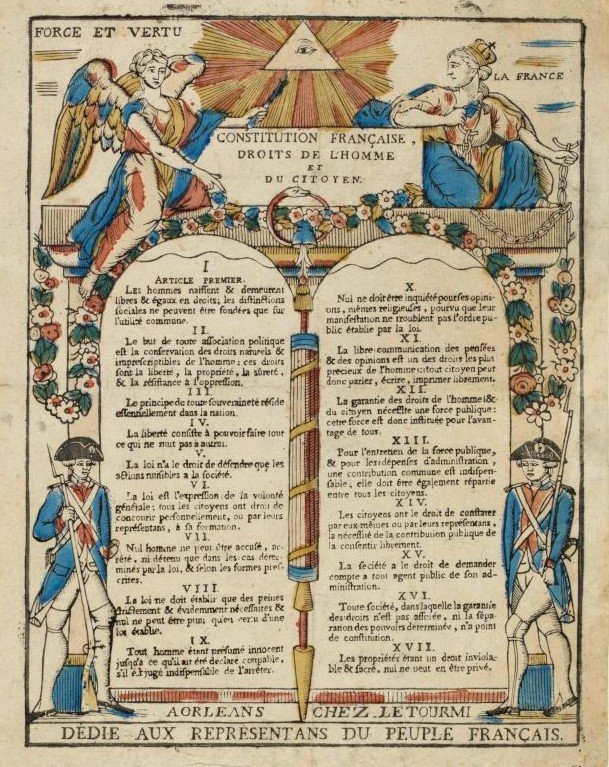
In France, often described as the birthplace of human rights, freedom of association was not guaranteed for a century following the French Revolution. The Declaration of the Rights of Man and of the Citizen contained no provision on freedom of association. Associations were, as a rule, suppressed throughout the 19th century under measures such as the Le Chapelier Law (Decree of 14 June 1791) and the offense of “association” under the Napoleonic Penal Code (Articles 291–294) (Takeshi Inoue, op. cit., pp. 17–20).
However, “from the latter half of the nineteenth century onward, the activities of various associations in France became increasingly impossible to ignore” (Takeshi Omura, op. cit., p. 59) and the so-called Law of 1 July 1901 on the Contract of Association (hereinafter “the Law on Associations”) established freedom of association (Takeshi Inoue, op. cit., p. 353 et seq.). During this period (the Third Republic), the constitutional laws contained no provisions on the rights of citizens and “the ideals of human rights since the 1789 Declaration” were regarded as best realized by Parliament; accordingly, “the protection of liberties was pursued through a series of legislative enactments” (Yoichi Higuchi, “Comparative Law” [3rd ed.], Seirin Shoin, 1998, pp. 160–161). The Law on Associations was one such legislative measure aimed at securing civil liberties.
The Law on Associations grounded freedom of association in the “freedom of contract” (Article 1), required notification for associations to receive legal protection (Articles 2 and 5), and provided for the conferral of legal personality in stages (Articles 2, 6, and 11) (Takeshi Omura, op. cit., p. 59). In particular, Article 6 is a groundbreaking provision, as it recognizes a certain legal capacity—namely, legal personality—for “all” non-profit associations that have been lawfully declared.
(2) Constitutionalization of the Principle of Freedom of Association
Although the Law on Associations remains part of French positive law, its position within the legal order was fundamentally transformed by a 1971 decision of the Constitutional Council (Decision No. 71-44 DC, 16 July 1971).
In that decision, the Council held that “the principle of freedom of association is among the fundamental principles recognized by the laws of the Republic and solemnly reaffirmed by the preamble to the Constitution; this principle underlies the general provisions of the Law of 1 July 1901 on the contract of association” (Patrick Gaïa et al., “Les grandes décisions du Conseil constitutionnel,” 19th ed., Dalloz, 2018, pp. 446–47). In this way, the Council accorded legal status to the principle of freedom of association underlying the Law on Associations.
The decision further held, with respect to Article 3 of the proposed amendment to the Law on Associations, that “the provisions of Article 3 of the law referred to the Council for review of constitutionality before promulgation are intended to establish a procedure whereby the acquisition of legal capacity by declared associations may be made subject to prior judicial control as to their legality,” and that such provisions were contrary to the Constitution (Patrick Gaïa et al., op. cit., p. 447). This reasoning reflects an intention to subject the acquisition of legal personality by declared associations to prior judicial review and may be read as recognizing legal value in such acquisition.
Regarding this holding, Inoue interprets it as one that “squarely recognizes the legal guarantee of the right to acquire legal personality” (Takeshi Inoue, op. cit., p. 148). French public law scholar Jean Morange, citing this decision, similarly states that “associations may thus freely acquire legal personality, enabling them to make full use of the means necessary for their activities” (Jean Morange, “Droits de l’homme et libertés publiques”, 5th ed., PUF, 2000, p. 260).
Thus, in France, the principle of freedom of association was accorded constitutional value by the 1971 decision of the Constitutional Council, and this principle is understood to include the right of associations to acquire legal personality.

(3) The Right of Associations to Acquire Legal Personality in French Public Law Theory
Jean Morange (“The Birth of Human Rights’ [Japanese translation], Yushindo Kobunsha, 1990), a leading French public law scholar, explains the indispensable nature of legal personality for associations as follows.
Some types of groups may be able to achieve their objectives without possessing any particular means. “However, as soon as an association reaches a certain scale, and as soon as it wishes to engage in some activity in the outside world, that stage is surpassed.” Even where an association is “purely intellectual” in character, “if it is expected to develop, it is difficult for it to dispense with legal personality.” More concretely, “the ownership of premises and a minimum number of permanent, paid staff soon become necessary.”
Morange then explains the indispensability of legal personality for associations from both legal and practical perspectives.
Namely, “legal personality is indispensable if an association is not content to remain a closed circle, but seeks to engage in certain external activities and to exert some influence on local or national life.” He further states that “legal personality is doubly useful for associations: legally, to act in the legal sphere; and practically, to act in reality—whether by sending letters or pamphlets, publishing newspapers, using advertisements, organizing public meetings, or staging performances. Its purposes may be charitable or self-interested, but they may also be eminently political in the broad sense of the term” (Jean Morange, “La liberté d’association en droit public français,” PUF, 1977, pp. 155–156).
Based on this understanding of the indispensability of legal personality for associations, Morange strongly emphasizes the necessity of the means by which associations may realize their purposes—namely, legal personality. He states that “recognizing a constitutional foundation for freedom of association, establishing the principle of freedom of association, and guaranteeing protection for their individuality would mean nothing if associations were not provided with the means to realize their objectives” (Jean Morange, “La liberté d’association en droit public français,” cit., p. 155; Gilles Lebreton, “Libertés publiques et droits de l’Homme,” 8th ed., 2009, p. 539).
Thus, in France, the necessity for associations to acquire legal personality has long been advocated by leading public law scholars.
2. Interim Conclusion and Summary of This Section
As set out above, following the 1996 Decision, Japan’s legal system concerning the acquisition of legal personality by intermediate groups has undergone fundamental reform. Today, the interest of such groups in acquiring and maintaining legal personality should by no means be left to the broad discretion of the legislature or administrative authorities; rather, it has acquired legal and normative value for the citizenry. At the same time, constitutional scholarship has evolved significantly, and the view that the acquisition of legal personality by intermediate groups falls within the freedom of association guaranteed by Article 21, paragraph 1, of the Constitution has gained increasing support. In France, moreover, the right of associations to acquire legal personality is recognized as having legal value as part of the content of freedom of association, and leading public law scholars have also emphasized its indispensability for associations.
In light of these developments, recognizing the right of associations to acquire legal personality as one of the freedoms guaranteed under Article 21, paragraph 1, of the Constitution is not only natural but indeed necessary within a modern understanding of Japan’s constitutional order.
The foregoing constitutes legal scholarship concerning the freedom of association guaranteed by Article 21, paragraph 1 of the Constitution. It follows, as a matter of course, that this also applies to the freedom of religious association guaranteed by Article 20, paragraph 1, which serves as a special provision. Since the issue in the present case concerns the freedom of association of religious organizations, the argument in this opinion will proceed on the premise that the right to acquire legal personality is included within the freedom of religious association guaranteed by Article 20, paragraph 1.
Finally, Nobuyoshi Ashibe (Constitutional scholar and former Professor Emeritus of the University of Tokyo), in discussing the right to pursue happiness under Article 13 of the Constitution, sets out criteria for recognizing a claimed right as constitutional in nature, namely: “historical legitimacy as something fundamental to the lives of the people over a long period; universality, in that it is frequently exercised or capable of being exercised by many people; and public character, in that it does not (or only minimally) infringe upon the fundamental rights of others” (Nobuyoshi Ashibe, “Constitution [8th ed.],” Iwanami Shoten, 2023, pp. 124–25). Even when measured against these three criteria, there appears not to impede deriving a right of associations to acquire legal personality from Article 21, paragraph 1 of the Constitution.

Manabu Ishizaki (photo omitted for privacy reasons) is a Japanese constitutional scholar and professor in the Department of Law, Faculty of Law, Ryukoku University. Born in 1968 in Kanagawa Prefecture, he graduated from the Department of Law at the Faculty of Law, Meiji University, in 1992. He completed the doctoral program at the Graduate School of Law, Ritsumeikan University, in 1997. He became an assistant at the Faculty of Law, Asia University in 1998, a full-time lecturer in 1999, and an associate professor in 2002. He became a professor at the Ryukoku University Law School in 2010 and at the Faculty of Law, Ryukoku University, in 2017. Professor Ishizaki specializes in constitutional law, with research focusing on modern human rights theory, Article 9 of the Japanese Constitution, and the rights of persons with a psychiatric disability. His major publications include “The Transition of Human Rights” and “Real Constitutional Law” (co-edited).